
In the modern baking industry, maintaining softness, moisture, and a clean-label formulation is more important than ever. As consumers shift toward natural and allergen-free ingredients, manufacturers are turning to organic potato starch powder as a versatile solution for enhancing the quality and consistency of their baked goods.
How Organic Potato Starch Improves Texture in Baked Goods
Potato starch is added to a dough for a specific reason: it changes how the finished crumb behaves, not how the dough feels. The starch granules swell during baking, take up water and starch the crumb structure, and the result is a softer, more tender crumb that stays that way longer than the same product made with wheat flour alone. It is also a useful carrier for fat, which is what allows part of the butter or oil in a formula to be reduced without the product losing its richness.
| Application | What potato starch contributes | What to adjust in the formula |
|---|---|---|
| Cookies and biscuits | A tender, short crumb and a clean snap | Reduce sugar slightly, since it adds no sweetness but does add body |
| Soft cakes and muffins | Moisture retention and a finer, less gummy crumb | Reduce liquid, as the starch carries more water than plain flour |
| Crackers and wafers | Lamination, flakiness and a light bite | Watch the fat ratio, which is usually already lean |
| Bread and rolls | Softness over a longer shelf life | Adjust dough hydration, and keep the addition modest |
| Coated and filled products | Binding of the filling without a gummy mouthfeel | Cook the filling to the final texture before assembly |
The two variables that decide whether the addition works are the rate and the water. Because potato starch absorbs noticeably more water than the flour it replaces, a formula that gains starch without losing liquid will end up tighter and drier than intended. The practical rule is to replace part of the flour rather than add starch on top, and to reduce the liquid by a matching amount. A trial bake at a modest rate, then a second trial one step higher, is usually faster than working from a calculated ratio.
For industrial-scale production, the same logic applies with the specification in front of you: organic potato starch is supplied in powder grades with the granulation stated per order, and the granulation decides how the starch disperses in the mixer. A fine grade hydrates quickly in a hot liquid and suits a batter; a coarser grade keeps its identity in a dough and suits a laminated product. Our complete guide to organic starches compares the starch types side by side, and organic cornstarch is the natural alternative where a neutral, more powdery crumb is wanted instead.
Whether you’re producing gluten-free bread, muffins, cookies, or cakes, organic potato starch powder can play a crucial role in improving texture, mouthfeel, and shelf life—all while aligning with organic and sustainable standards.
1. What Makes Organic Potato Starch Powder Unique in Baking?
Organic potato starch powder is extracted from organically grown potatoes through a physical separation process—without chemicals or synthetic additives. It’s 100% plant-based, gluten-free, and naturally white, with a neutral flavor profile that integrates smoothly into baked formulations.
Unlike other starches, potato starch has large granules and a high water-binding capacity, which gives it unique functional benefits:
- Improves moisture retention
- Enhances softness and elasticity
- Creates a light, tender crumb structure
- Contributes to longer freshness and stability
For professional bakers and food manufacturers, these properties make organic potato starch an essential ingredient for both clean-label and high-performance bakery products.
2. Improving Texture and Moisture Retention
Dry or crumbly textures are common challenges in gluten-free and reduced-fat baking. Organic potato starch helps overcome these issues by acting as a natural moisture-retaining agent.
When heated during baking, the starch gelatinizes—absorbing and holding water within the dough or batter. This process:
- Keeps cakes and muffins moist even after several days
- Prevents cookies from becoming too hard or brittle
- Maintains elasticity in gluten-free breads and rolls
For instance, substituting a portion of wheat flour with organic potato starch powder (typically 10–20%) can significantly improve the softness and volume of the final product.
3. Supporting Gluten-Free and Clean Label Baking
Organic potato starch is naturally gluten-free, making it a key ingredient in the growing gluten-free bakery market. It works particularly well when blended with other gluten-free flours such as rice, tapioca, or buckwheat to create a balanced texture.
In addition, because it’s certified organic and non-GMO, potato starch supports clean-label product claims—a major selling point for consumers who value transparency and sustainability. It allows manufacturers to simplify their ingredient lists while maintaining excellent baking performance.
4. Enhancing Shelf Life and Freshness
Starch retrogradation—where starch molecules realign and expel water—is a major cause of staling in baked goods. Organic potato starch powder helps delay staling by reducing this retrogradation effect.
By retaining water and improving internal structure, it extends the softness and freshness of baked products during storage. This is particularly beneficial for commercial bakeries producing items for extended distribution or export.
5. Tips for Using Organic Potato Starch in Bakery Formulations
To get the best performance from organic potato starch powder, consider these practical tips:
- Usage Level: Replace 10–20% of flour weight for enhanced tenderness.
- Hydration: Mix thoroughly with dry ingredients before adding liquids to prevent clumping.
- Heat Sensitivity: Potato starch thickens at around 60–70°C (140–158°F); avoid overbaking to preserve texture.
- Combination Ingredients: Combine with organic tapioca starch or xanthan gum for gluten-free elasticity.
- Product Types: Ideal for cakes, muffins, pancakes, waffles, pie fillings, and bread coatings.
These adjustments can improve both sensory qualities and production efficiency in industrial baking lines.
6. Ideal for Industrial and Artisanal Bakeries
From small organic bakeries to large-scale manufacturers, organic potato starch powder offers reliable functionality across various production scales. It blends easily with other dry ingredients and performs consistently under standard baking conditions.
Because it provides superior moisture management without chemical additives, it’s an excellent choice for producers targeting premium, organic-certified bakery lines.
7. Sustainable and Ethical Ingredient Choice
Sustainability is an increasingly important factor for today’s food brands. Organic potato starch powder supports eco-friendly production by using organically cultivated potatoes grown without pesticides or synthetic fertilizers.
Choosing this ingredient allows manufacturers to reduce their environmental footprint while appealing to the growing segment of eco-conscious consumers.
Organic potato starch powder is more than just a thickener—it’s a multifunctional ingredient that enhances texture, softness, and shelf life in baked goods. Its clean-label nature and functional versatility make it an ideal solution for today’s baking industry, where performance and natural origin must go hand in hand.
At BIOSTARCH, we supply high-quality organic potato starch powder that meets international organic certification standards and provides consistent performance in bakery formulations.
Contact us today to learn how our organic ingredients can help you create soft, moist, and sustainable baked goods that meet your brand’s clean-label goals.
Q: How much potato starch should I add to a cookie recipe?
A: Start modest, typically a small proportion of the flour weight, and raise it in a second bake if the crumb is not tender enough. Potato starch is strong in this role, and because it also takes up water, the liquid in the formula usually needs to come down at the same time or the dough will tighten.
Q: Does potato starch make baked goods softer or firmer?
A: Sofmer over the shelf life. The swollen starch granules hold water in the crumb and slow the firming that comes from starch retrogradation, so a product made with potato starch stays tender longer than the same product made with wheat flour alone. In a cracker or wafer the same effect reads as flakiness and a cleaner snap.
Q: Can I replace part of the flour with potato starch?
A: That is the normal way to use it, rather than adding starch on top of the existing flour. Replace part of the flour weight with potato starch and reduce the liquid by a matching amount, since the starch absorbs more water than the flour it replaces. A gluten-free formula usually goes further and replaces the flour entirely.
Q: Is potato starch suitable for gluten-free baking?
A: Yes. Potato starch is naturally gluten free and the separated starch carries no gluten proteins, which makes it a standard component of gluten-free bakery systems. The finished product still needs to be controlled for cross-contamination on the line, and the batch documentation is what supports the claim.
Recommended Products
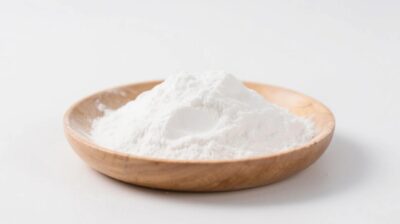
Organic Potato Starch Powder
Organic potato starch powder is a certified-organic native starch from non-GMO potatoes. With high…
Related Posts


