
From 2016 to 2020, at the main producing areas, the corn starch price trend generally moved down first and then up. After 2016, corn starch prices entered a broad upward phase. The first rising stage ran from 2017 to 2018, when prices rose steadily and room for further gains gradually opened up. In 2019 the industry entered a consolidation stage, and the overall price trend fluctuated within a range and looked relatively stable. From 2020, however, corn starch market prices began to climb strongly on the support of costs and supply and demand, and corporate prices kept rising as well. With spot price movements becoming more frequent in 2021-2022 and room for market prices to move higher opening up, corn starch prices are expected to stay on an upward track.
Corn starch spot prices soared in 2020. According to relevant data, the gap between corn starch prices in 2020 and 2019 widened considerably.
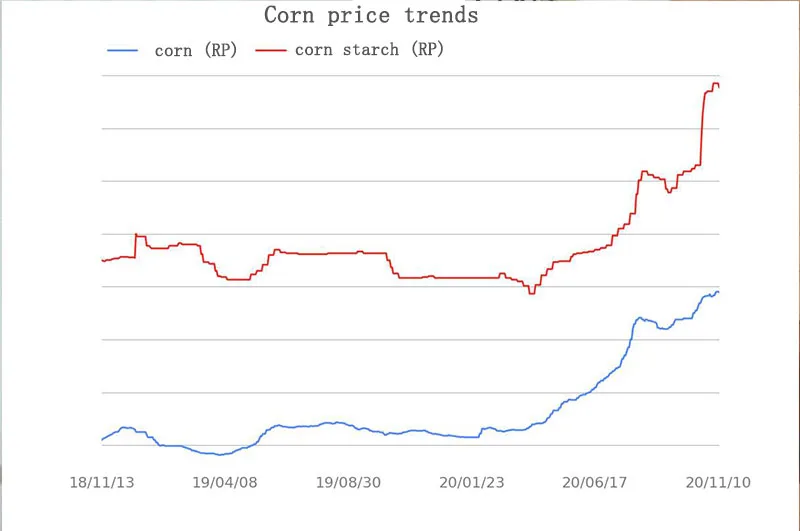
In Q1, corn starch spot prices were dominated by a mix of weakness and fluctuation. There were two main reasons. First, logistics and transport were not smooth around the Spring Festival, so corporate orders piled up and shipments were blocked, leaving no choice but to cut prices. Another important reason was the impact of the public health emergency: downstream enterprises resumed operations late, the rate of workers returning was insufficient, operating rates were low, and demand recovery was slow, all of which forced producing-area prices down. After the price cuts in February, the profit margins of corn starch producers were completely squeezed and their losses grew steadily wider.
From Q2 onward, corn starch prices stopped falling and rebounded, rising steadily. The increase was driven mainly by higher corn prices. Temporary reserve corn auctions began in April and May, but auction settlement prices kept climbing and the award rate held at 100% across four consecutive auctions. With the support of high auction prices, traders held strongly bullish sentiment and moderated the pace of their shipments; deep-processing enterprises received small volumes of raw material and could maintain normal production only by paying more for corn, so their cost burden kept growing. At the same time, fructose demand entered its peak consumption season, and as demand for beverages, cold drinks and beer grew steadily, corn starch demand rose as well. On top of that, the state encouraged the development of the “street-stall economy”, and the resumption of work and schooling in various regions gave consumption a further boost, so demand rebounded in industries such as food and paper packaging. Together these provided ample favorable factors to support continued gains in corn starch prices.
In Q3, corn starch prices mainly followed a rise-fall-rise pattern, with wide swings and frequent price changes. In July, the premium at temporary reserve auctions kept exceeding market expectations. As high premiums and high award rates at temporary reserve auctions continued, bullish sentiment in the market strengthened. Traders were reluctant to release stock from their warehouses for shipment, so the effective supply in the corn market was short. With strong upward pressure from costs, corn starch prices set new highs day after day, and prices in the main producing areas climbed to the level of the same period in 2015, the highest since corn entered the market. From August, however, the pace of raw material price increases slowed and could no longer support high starch prices. On top of that, market operating rates rebounded steadily and downstream demand weakened one segment after another, so price cuts and order solicitation became the main means of competition among enterprises, and corn starch prices entered a downward channel. After roughly a month of weak correction, demand for the double holidays (Mid-Autumn Festival and National Day) surged, corporate shipments improved, and prices entered an upward channel again.
Q4 is the stage when the new grain crop comes to market. In October, lodging (flattening) in some fields at the producing areas slowed harvest progress and supplies of good-quality grain were short, while deep-processing enterprises bought actively, so corn prices showed strength. At the same time, stocks in the downstream end market were low and restocking demand was substantial, and the corn starch market tightened, so prices rose again from a high level. Under the influence of a range of factors including costs, demand, market sentiment and weather, corn starch prices fluctuated frequently in Q4. In November in particular, the market went through a rise-fall-rise pattern over about half a month, and both upstream and downstream markets took a cautious, wait-and-see stance.
The overall increase in demand in 2020 was less affected by the public health event than in the same period. Corn starch spot prices, held back by demand in Q4 in particular, fell several times. Under strong cost support, however, a sharp decline in corn starch prices is unlikely. As year-end stockpiling demand begins from December to January, market trading should pick up and corn starch spot prices may show an overall trend of greater volatility. Influenced by weather, supply and demand, and raw materials, price swings are expected to become even more frequent.
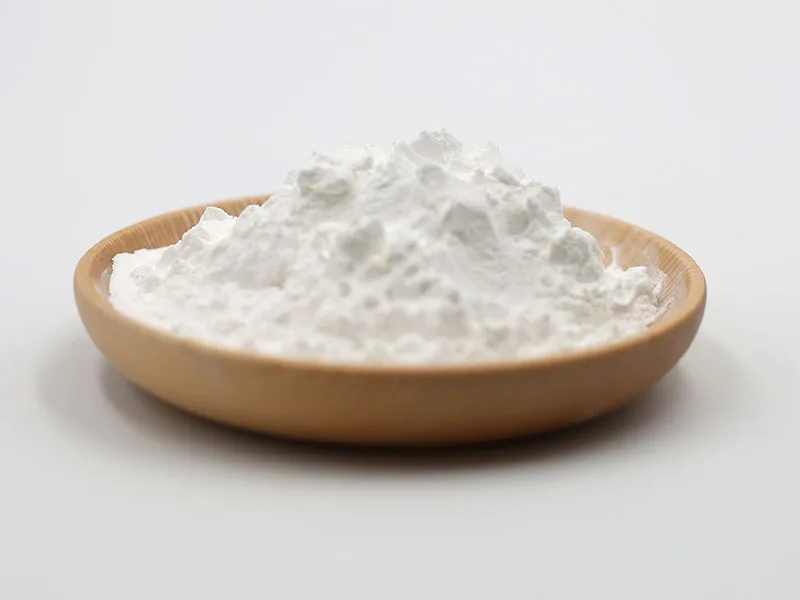
As the year draws to a close, major manufacturers have begun preparing for destocking and plant shutdowns, and a considerable number of suppliers are now under pressure to ship out inventory. At the same time, for custom production more factories are choosing to wait and see. We stocked up enough corn raw material early on, and in November we also received sufficient organic corn raw material from our own organic farms. So even with supply tight across all suppliers, we hold large volumes of organic corn starch(and regular corn starch) inventory and non-standard custom production capability.
Related Posts


