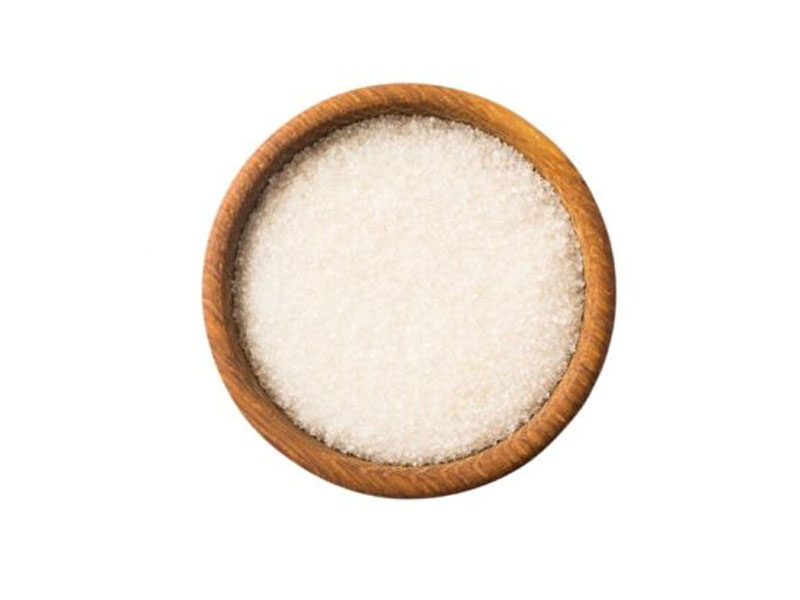
Our cane sugar is produced from Saccharum officinarum grown without synthetic pesticides, herbicides, or GMOs. We offer multiple grades to suit diverse applications:
- Raw Cane Sugar – light golden color, mild molasses notes
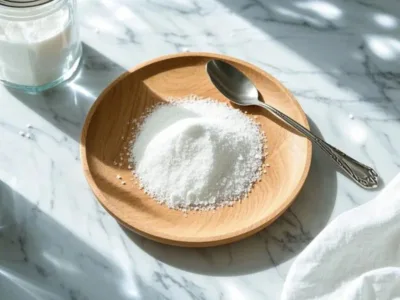
- Granulated Cane Sugar – bright white, neutral taste, free-flowing crystals
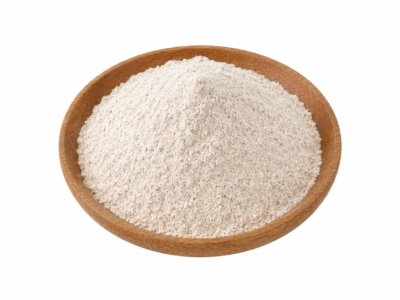
- Powdered Cane Sugar – ultra-fine, ideal for icings and beverages
All variants are processed without bone char, chemical bleaching agents, or sulfites—ensuring a truly clean, vegan-friendly sweetener that aligns with non-GMO, and fair-trade values.
Sustainability Commitment: Sourced from farms practicing regenerative agriculture, water conservation, and fair labor standards.
What Is Cane Sugar?
Unlike conventional white sugar (often refined using bone char), cane sugar is derived solely from sugarcane fields and processed using mechanical and thermal methods only. The juice is extracted, evaporated, crystallized, and dried—retaining trace minerals (e.g., calcium, potassium, magnesium) in raw grades while achieving high purity in refined versions.
Key characteristics:
- 100% sucrose (refined grade) or 96–98% sucrose + natural molasses (raw grade)
- Caloric value: 4 kcal/g
- Glycemic Index: ~65 (similar to conventional sugar)
- Fully soluble, heat-stable, and compatible with all food systems
Also Known As: Names and Synonyms in the Trade
Cane sugar is a chemical name, a commodity name and a grade name at the same time, and the three do not always agree from one document to the next. A specification may use the chemical term, a retail pack may use a trade wording, and the grade name that sits between them describes how far the material was refined.
- Sucrose – the chemical name, and the name the FDA regulation lists alongside cane sugar and beet sugar
- Saccharose – the older synonym used in the Codex Standard for Sugars and in European specification sheets
- Table sugar – the retail wording for the same material, used in consumer-facing copy and in retail pack listings
- Granulated sugar – the trade name for the free-flowing crystalline grade, which on this page is the granulated cane sugar grade
- Refined cane sugar – the wording used when the refining route has to be stated separately from the botanical source
- Evaporated cane juice – a label wording that has been used for unrefined cane sugar; the FDA has stated that this is not the common or usual name of the ingredient and that the sweetener should be declared as sugar
The botanical source and the grade have to be stated separately, because cane sugar and beet sugar are the same chemical and a buyer who specifically needs cane origin will only see it written on the specification rather than in the chemical name. For organic material the certification scope has to match the ingredient being declared before artwork is finalised.
Product Grades & Specifications
| Parameter | Raw Cane Sugar | Granulated Cane Sugar | Powdered Cane Sugar |
|---|---|---|---|
| Appearance | Light golden-brown crystals | Bright white, uniform crystals | Fine white powder |
| Flavor Profile | Mild caramel/molasses note | Neutral, clean sweetness | Neutral |
| Sucrose Content | ≥96% | ≥99.5% | ≥97% (includes ≤3% corn/tapioca starch anti-caking agent) |
| Moisture Content | ≤0.5% | ≤0.1% | ≤0.5% (with 3% corn starch anti-caking agent*) |
| Particle Size | 0.4–0.8 mm | 0.3–0.6 mm | ≤0.15 mm (95% through 100 mesh) |
| Bulk Density | 0.75–0.85 g/mL | 0.70–0.80 g/mL | 0.50–0.60 g/mL |
| Solubility | Fully soluble in hot/cold water | Same | Instantly dispersible |
* Powdered version contains ≤3% corn starch or tapioca starch as anti-caking agent—clearly labeled per regulation.
Sourcing, Certification and Regulatory Status
| Jurisdiction / Standard | Regulatory status | Legal name | Notes |
|---|---|---|---|
| European Union | Food (a sugar); not a food additive, so no E number applies | Sucrose (saccharose) | Declared as a sugar under Regulation (EU) No 1169/2011. Organic cane sugar has to be certified under Regulation (EU) 2018/848, which replaced Regulation (EC) No 834/2007; check that the certificate covers the grade and the origin being shipped. |
| United States | Affirmed as GRAS as a direct food substance | Sucrose (sugar, cane sugar, or beet sugar) | 21 CFR 184.1854 affirms sucrose and lists sugar, cane sugar and beet sugar among its names; use is limited only by current good manufacturing practice. Organic material is certified under the USDA National Organic Program (7 CFR Part 205). |
| Japan | Processed food | Sugar | Sugar is classified as a processed food under the Food Labelling Standards issued under the Food Labelling Act, in force since 1 April 2015. Name, ingredients, origin of the main ingredient and any additive carried by the powdered grade are declared under those rules; confirm the category for the grade being shipped. |
| Codex Alimentarius | Commodity standard applies | White sugar; raw cane sugar | The Standard for Sugars (CXS 212-1999) defines white sugar as purified and crystallised sucrose with a polarisation of not less than 99.7 (degrees Z), and raw cane sugar as partially purified sucrose crystallised from partially purified cane juice and characterised by crystals covered with a film of cane molasses. A sulphur dioxide limit is set for each sugar type. |
For this product the compliance points are the polarisation or sucrose content, the moisture and ash figures, the particle size distribution and, in the powdered grade, the anti-caking agent that has to be declared on the label. Confirm the legal name, the organic scope and the origin declaration with the destination market before the first shipment.
Technical & Safety Data
| Parameter | Specification |
|---|---|
| Botanical Source | Saccharum officinarum (sugarcane) |
| pH (10% solution) | 5.5 – 7.0 |
| Ash Content | Raw: ≤0.8%; Refined: ≤0.04% |
| Heavy Metals | Pb ≤0.1 mg/kg; As ≤0.1 mg/kg; Cd ≤0.05 mg/kg |
| Microbiological Criteria | TPC ≤1,000 CFU/g; Yeast/Mold ≤100 CFU/g; E. coli, Salmonella, Listeria: Absent |
| Allergen Status | Gluten-Free (<5 ppm), Soy-Free, Dairy-Free, Nut-Free |
| Processing Aids | None (no bone char, no sulfur dioxide) |
| Certifications | Non-GMO Project Verified, Fair Trade Certified (optional), Kosher, Halal, Vegan |
Complies with FDA 21 CFR 184.1854, EU Regulation (EC) No 834/2007, and Codex Stan 212.
Applications
- Beverages: Cold brew coffee, kombucha, RTD teas, smoothies
- Bakery: Cakes, cookies, muffins, breads
- Confectionery: Caramels, fudge, chocolate coatings
- Dairy & Alternatives: Yogurt, ice cream, plant-based desserts
- Sauces & Condiments: Ketchup, BBQ sauce, dressings
- Tabletop Use: Packets, jars, and bulk dispensers
Format and Grade Selection
Two questions are settled before a specification is agreed: which grade, and whether the material has to be certified organic.
- Raw cane sugar – sucrose 96% or more with the natural molasses left in, 0.4–0.8 mm crystals and moisture at or below 0.5%; chosen when the less refined story on the pack has to be supported by the specification
- Granulated cane sugar – sucrose 99.5% or more, moisture at or below 0.1% and 0.3–0.6 mm crystals; the drop-in replacement where the formulation was built around white sugar
- Powdered cane sugar – sucrose 97% or more with up to 3% corn or tapioca starch as an anti-caking agent, 95% through 100 mesh; the grade for icings, dusting and instant mixes, and the one where the second ingredient has to be declared
- Certification scope – conventional or organic, and where relevant fair trade; the certificate has to name the grade and the origin before the claim can be printed
- Processing route – the grades on this page are produced without bone char, chemical bleaching agents or sulfites, which is what makes the vegan and clean-label wording defensible
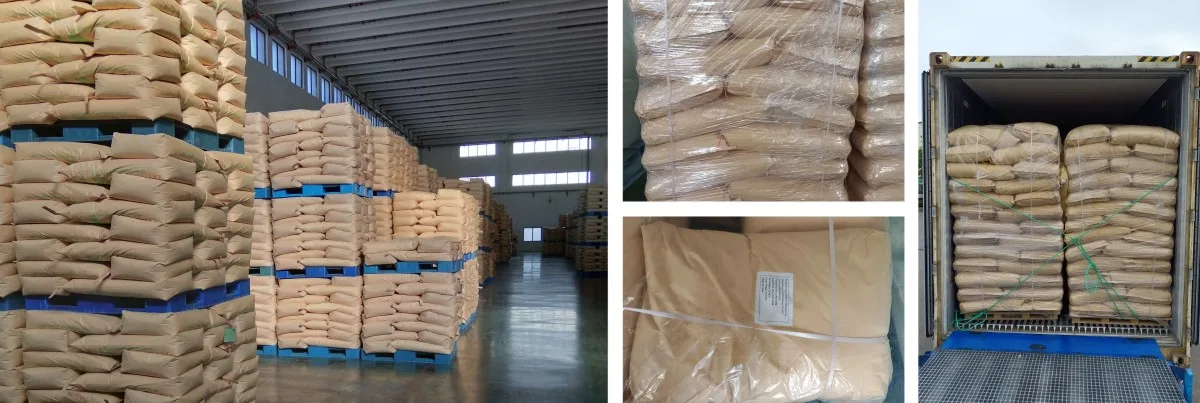
- Pack format – 1 lb or 1 kg retail pouches, 5 lb and 10 lb food service bags, 25 kg multi-wall paper bags with a PE liner, or 500–1,000 kg FIBCs; the powdered grade is the one that picks up moisture, so it is the one that benefits most from the lined pack
Handling Note: Caking is a moisture problem rather than a quality problem, so the powdered and raw grades are the ones to specify a moisture barrier for, and the ones to keep on a shorter re-order cycle.
Send the application, the annual volume and the certification that has to appear on the pack, and we will quote the grade and the pack format together. Where the material is going into an organic-certified product, include the certification scope so the documentation matches the claim.
Why Choose Our Cane Sugar?
We partner directly with certified sugarcane cooperatives in Latin America and Asia that prioritize soil health, water stewardship, and fair wages. Every batch is tested for purity, heavy metals, and integrity.
Available in multiple formats:
- Raw: For artisanal and “less processed” positioning
- Granulated: Drop-in replacement for white sugar
- Powdered: For dusting, icings, and instant mixes
Custom packaging and private labeling supported.
Packaging Options
- Retail: 1 lb / 1 kg stand-up pouches or glass jars
- Food Service: 5 lb / 10 lb bags
- Industrial: 25 kg multi-wall paper bags with PE liner
- Bulk: 500 kg–1,000 kg FIBCs
All packaging is food-grade, moisture-resistant, and recyclable where facilities exist.
FAQs
Q: How does cane sugar differ from white sugar?
A: Our raw cane sugar grade is less refined, retaining natural molasses and minerals, while our granulated and powdered grades are refined through crystallization and filtration (without bone char) to achieve high purity.
Q: Is it suitable for vegan diets?
A: Yes! It’s plant-based and free from animal-derived additives.
Q: Can I use it 1:1 as a sugar substitute?
A: Absolutely! It replaces refined sugar at a 1:1 ratio in recipes.
Q: Does it work in beverages?
A: Yes—dissolves well in both hot and cold drinks with a subtle caramel note.
Q: Do you offer bulk pricing?
A: Yes! Discounts available for orders above 500kg.
Packing