
Tired of compromising between taste and wellness? Organic xylitol might just be the game-changer you’ve been searching for. Unlike artificial sweeteners or refined sugar, this plant-derived gem offers guilt-free sweetness with surprising perks—and it’s quietly revolutionizing pantries worldwide. Let’s explore why savvy health enthusiasts and eco-conscious consumers are making the switch.
How Xylitol Behaves in a Baking Formula
The reason to reach for xylitol in a formula is rarely that it tastes like something else. It tastes close enough to sucrose that most recipes need no change at all, and what is worth understanding is that it behaves differently from sugar once heat, water and time are involved. Xylitol is a polyol, which means it is a chemically reduced sugar rather than a compound sugar built from two linked units. That structural difference is what shows up in a bake. It does not caramelise, it sets into a different crystal when it cools, and it holds onto water more actively than sugar does, so a formula that uses it needs a different hand in the pan rather than a different quantity.
| Property | Xylitol | Granulated sugar |
|---|---|---|
| Sweetness relative to sugar, measured by weight | Roughly equal, so it can be exchanged measure for measure in most formulas | The reference point that every other sweetener is compared against |
| Colour and flavour developed on its own | Does not caramelise. The colour in the bake comes from browning reactions with the proteins in the flour rather than from the sweetener itself | Caramelises readily, and that is where the amber colour and the deeper toasted note in a bake come from |
| Crystal structure as a syrup cools | Sets into a fine, even crystal with a smooth texture, and turns grainy if it is disturbed while setting | Sets into a coarser crystal that is more easily knocked out of shape while still warm |
| Moisture behaviour in a dough or batter | Holds water more actively, which keeps a bake soft for longer but also gives more spread and a denser crumb | Less active at holding water, so the crumb is drier and the spread is tighter |
| Effect on baker’s yeast | Does not feed the yeast, so it is not a usable sweetener in a yeasted dough | Feeds the yeast readily and takes part in the rise |
| Behaviour in a cold drink | Dissolves readily in cold liquid without any heat and leaves no graininess behind | Dissolves more slowly in cold liquid, and undissolved crystals can remain at the bottom of the glass |
| Behaviour in a hot drink or a sauce | Dissolves readily and adds no body of its own beyond the sweetness | Dissolves readily once hot, and adds a rounded body that carries other flavours |
In a beverage the mechanism is a much simpler one than it is in the oven, and it comes down to solubility. Xylitol dissolves readily in water at both cold and warm temperatures, which is what makes it usable in a cold drink without a warm-up step and without the risk of a sugary residue in the bottom of the glass. The other side of that is worth noticing as well: it contributes very little body. Sucrose at the same sweetness level gives a drink a rounded weight that spreads across the palate, and a drink built on xylitol alone will read as thinner and more sharply sweet. That is a legitimate reason to blend rather than to replace outright, and it is also a reason to be deliberate about what else is in the glass, since a thinner drink has fewer components carrying the flavour.
Storing Xylitol: Moisture, Caking and Temperature
Storage is the part of xylitol that surprises people most often, and the mechanism is the same one that makes it useful in a bake. Xylitol is hygroscopic, which means it draws moisture out of the air around it rather than keeping it out. Left open in a warm or humid kitchen it will absorb enough water over a few weeks to turn from a free-flowing powder into soft lumps and eventually into a solid block, at which point it has to be broken up before it will pour. The same hygroscopicity works for the shelf life of a bake and against the shelf life of the bag, and it is why the packaging on a shelf-stable bag is doing more work than it appears to.
| Storage condition | What it produces | How to manage it |
|---|---|---|
| An open bag in a warm or humid kitchen | The crystals clump together and the bag moves from free-flowing to soft lumps within a few weeks | Decant into a container that closes properly, and keep the container shut between uses |
| A wide-mouth jar opened and closed repeatedly | Moisture reaches the whole surface instead of only the top few centimetres, so caking begins sooner than it would in a narrow container | Use a narrow-necked container, or a wide jar with a close-fitting lid |
| A container moved from a cold store into a warm room | Condensation forms on the crystals as the cold material meets the warm air | Let the container stand at room temperature before opening it |
| A bulk purchase sitting open in a working kitchen | Caking concentrates at the top and along the edges of the pile, so part of the batch is affected long before the rest | Split a bulk order into smaller sealed units and mark each with the date it was opened |
| A cool, dry, dark cupboard with the bag sealed | The product stays free-flowing and the sweetness is unchanged | Nothing needs to be done beyond keeping the seal intact |
For a kitchen that uses xylitol regularly, the practical routine is short. Keep it in a container that closes, keep it away from the stove and out of the sun, and use a dry spoon rather than one that has been rinsed. Bulk buyers should note that a lot opened in a busy production kitchen will start to cake faster than a retail pack, which is one of the reasons the condition of the seal on arrival is worth checking before the pallets go into storage. BIOSTARCH supplies organic xylitol with the lot-level documentation that makes it possible to match one delivery to the next, and our notes on cooking and baking with organic starches cover how the same ideas about water and heat carry across to the starches used alongside it. For the wider range of jobs a pantry sweetener can take on outside the oven, see everyday uses of organic starches.
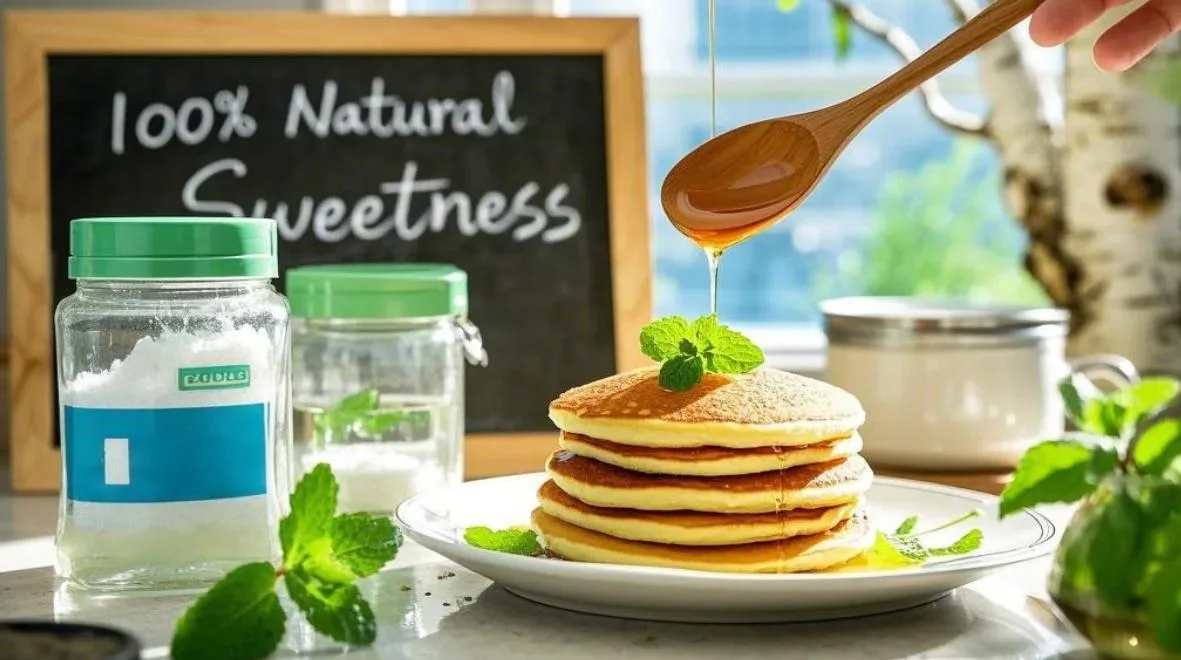
Why Organic Xylitol Stands Out in the Sugar-Free Crowd
While most sugar alternatives fall short in flavor or function, organic xylitol strikes the perfect balance:
- Natural Origins: Sourced from birch bark or non-GMO corn, certified organic xylitol skips synthetic chemicals and pesticides.
- True Sugar-Like Taste: No bitter aftertaste—just clean, crystalline sweetness that works in coffee, baking, or smoothies.
- Dental Superpower: Proven to reduce cavity-causing bacteria (even dentists approve!).
- Low Glycemic Hero: With a glycemic index of 7, it’s safe for diabetics and keto dieters.
4 Creative Ways to Use Organic Xylitol (Beyond Coffee!)
Break free from boring sweetener routines with these inspired ideas:
- Tooth-Friendly Treats: Bake cookies, granola, or energy balls that actually protect your smile.
- Probiotic Partner: Sweeten homemade kombucha or yogurt without harming beneficial bacteria.
- Savory Glazes: Balance spicy or umami dishes—think chili-lime nuts or teriyaki tofu.
- DIY Skincare: Mix with coconut oil for a gentle, antibacterial scrub (yes, it’s that versatile!).
Pro Tip: Substitute 1:1 for sugar in recipes, but reduce baking temps slightly to prevent over-browning.
Debunking Myths: Is Organic Xylitol Safe?
Let’s address top Google searches head-on:
- “Is xylitol toxic?” Safe for humans, but keep away from pets (dogs especially).
- “Does it cause bloating?” Start with small doses (5–10g/day) to let your gut adjust.
- “Is it eco-friendly?” Organic certification ensures sustainable farming and water-conscious production.
How to Choose High-Quality Organic Xylitol
Not all xylitol is created equal. Look for:
- Non-GMO Project Verified: Avoid corn-based xylitol from genetically modified crops.
- Birch-Sourced Options: Preferred by purists for its minimal processing.
- Fine Granule Texture: Ensures smooth dissolution in both hot and cold foods.
FAQ Section
Q: Can organic xylitol help with weight management?
A: Its low calorie count (40% fewer than sugar) and minimal blood sugar spike make it a smart choice for mindful eaters.
Q: Is organic xylitol keto-approved?
A: Absolutely! With near-zero net carbs, it’s a staple in keto-friendly pantries.
Q: Where to buy organic xylitol?
A: Check health stores like Whole Foods or trusted online retailers (e.g., Amazon, Thrive Market). If you need bulk organic xylitol, you can contact us!
Q: Is xylitol as sweet as sugar?
A: By weight it is close to equal, which is why a 1:1 exchange works in most recipes. The two are not identical in use, however, because xylitol behaves differently once the formula is heated, and it does not feed yeast. Sugar also contributes body and caramelised flavour that xylitol does not, so a formula built around sugar will usually need a small adjustment in liquid rather than a simple swap.
Q: Why has my xylitol hardened into a solid block?
A: Xylitol is hygroscopic, so it draws moisture out of the air and binds it. An open bag in a warm or humid kitchen will therefore go from free-flowing powder to soft lumps and eventually to a hard block. The fix is prevention rather than repair: decant it into a container that closes properly, keep it away from heat and sunlight, and use a dry spoon. A block that has already formed usually breaks up again once it has been dried out.
Q: Why do my cookies spread out more with xylitol than with sugar?
A: Two effects are working together. Xylitol holds onto water more actively than sugar does, and the extra water in the dough makes the cookies spread further and can make the centre denser at the same time. It also does not set into the same coarse crystal as a cooled sugar syrup, so there is less structure in the dough holding its shape. If the shape matters more than the keeping quality, a shorter and slightly cooler bake, or a partial rather than full substitution, will give a tighter result.
Q: Does xylitol dissolve properly in cold drinks?
A: Yes, and this is one of its clearer advantages in a beverage. Xylitol dissolves readily in cold water without any heat and without leaving undissolved crystals at the bottom of the glass, where granulated sugar often does. The trade-off is body. Xylitol gives sweetness without the rounded weight that sugar contributes, so a drink built on it alone can taste thin, and blending it with a smaller amount of sugar or a body-building ingredient usually reads better than using it on its own.
Related Posts


