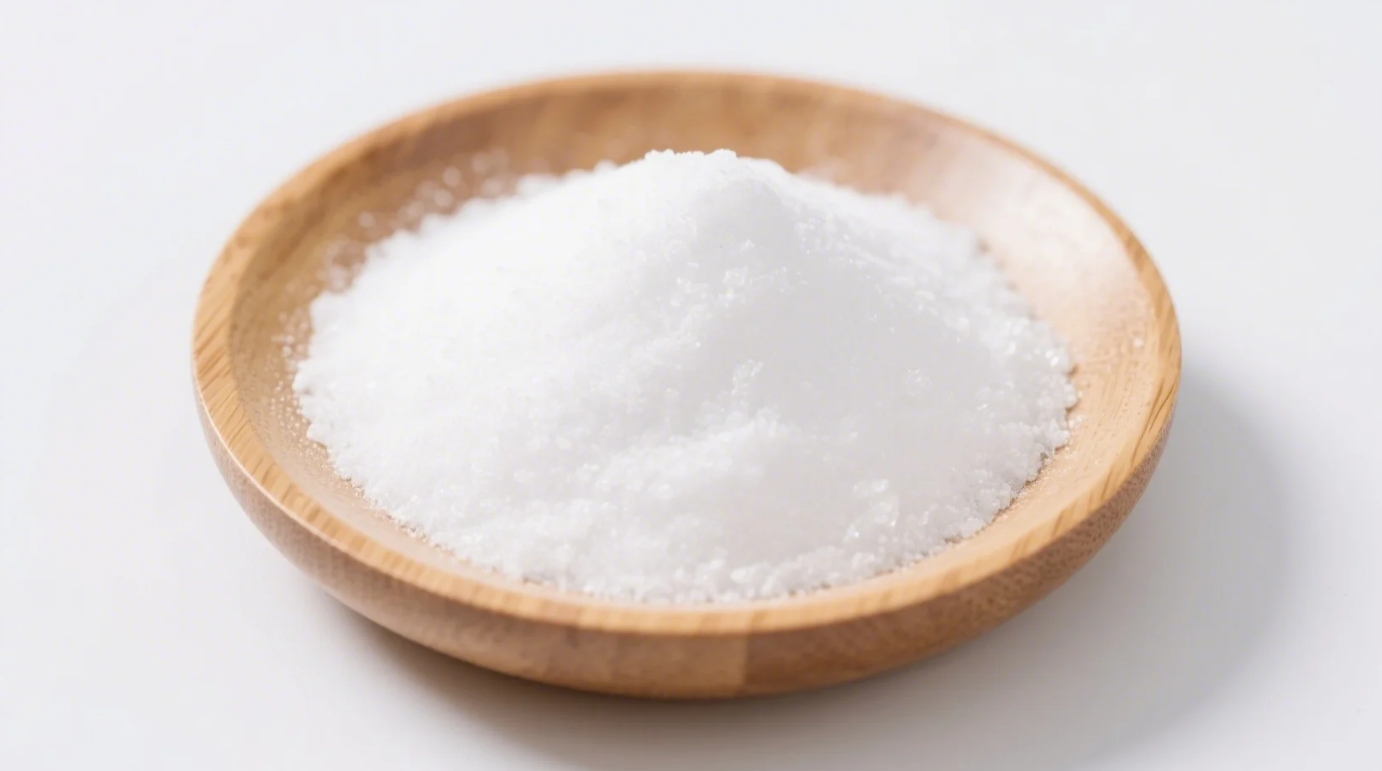
Introducing our certified organic xylitol powder—a plant-based sugar alcohol derived from non-GMO, sustainably sourced organic corn cobs or birch wood. With a sweetness profile nearly identical to sucrose and 40% fewer calories, xylitol delivers clean, refreshing sweetness with minimal glycemic impact and without feeding harmful oral bacteria.
Widely recognized for its dental health benefits and compatibility with low-carb, keto, and low-glycemic diets, our organic xylitol meets the highest global standards for purity, safety, and sustainability.
What Is Organic Xylitol?
Xylitol (C₅H₁₂O₅) is a five-carbon sugar alcohol naturally found in small amounts in fruits and vegetables. Our organic xylitol powder is produced through a controlled hydrogenation process from certified organic xylan-rich biomass, followed by rigorous purification to ensure food-grade quality.
Unlike artificial sweeteners, xylitol has no aftertaste and performs exceptionally well in baking, beverages, and confectionery. It is non-cariogenic (does not cause tooth decay) and has a glycemic index of just 7–12, compared to 65 for table sugar.
Key Benefits
- 40% fewer calories than sugar (2.4 kcal/g vs. 4 kcal/g)
- Minimal impact on blood glucose and insulin levels
- Supports oral health by inhibiting Streptococcus mutans
- Clean-label, non-GMO, and free from synthetic additives
- Excellent solubility and cooling effect in the mouth
- GRAS-affirmed and approved for use in foods worldwide
Also Known As: Names and Synonyms in the Trade
Xylitol appears under several names in specifications, pharmacopoeial monographs and retail labelling, and the term a document uses often signals which feedstock or which grade is meant. The list below covers the names that come up most often in enquiries, technical data sheets and customs paperwork.
- D-Xylitol – the configurational form quoted in pharmacopoeial monographs and biochemical datasheets, marking the enantiomer that the commercial grade corresponds to
- Xylitol (E 967 / INS 967, CAS 87-99-0) – the regulatory name and identifier pair quoted on specifications and customs paperwork, pairing the EU E number with the Codex INS number and the CAS registry number
- Birch sugar – the retail and marketing name used where the feedstock is birch wood, common on consumer-facing labels and in enquiries from that channel
- Birch xylitol – the supplier-side form of the same distinction, used to separate birch-derived material from corn-cob-derived material
- Xylitolum – the Latin heading used in pharmacopoeial monographs, which is the name a European specification quotes when it cites the monograph
- 1,2,3,4,5-Pentanepentol – the systematic chemical name, which appears on older certificates of analysis and in CAS index entries
- Xylitab – a trade name for direct-compression grades, still found in tableting literature and in enquiries about excipient grades
The name on the label has to agree with the name on the specification sheet, and the specification has to state the assay, the feedstock and the particle size. Two offers both called xylitol can differ in both feedstock and grind, so line up the assay, the bulk density and the organic certificate before treating them as equivalent.
Specifications
| Parameter | Organic Xylitol Powder |
|---|---|
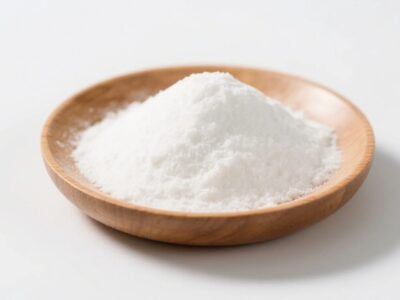
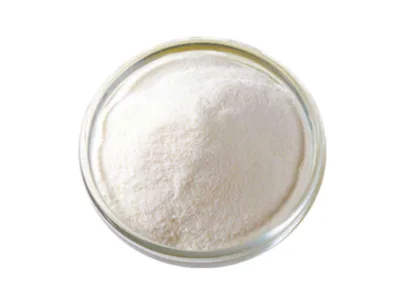
| Appearance | White, crystalline, free-flowing powder |
| Odor | Odorless |
| Taste | Sweet, with characteristic cooling effect |
| Xylitol Purity (Assay) | ≥99.5% (dry basis) |
| Moisture Content | ≤0.5% |
| pH (10% aqueous solution) | 5.0 – 7.0 |
| Specific Rotation | +18.0° to +20.0° |
| Caloric Value | 2.4 kcal/g |
| Solubility | Highly soluble in water (≈160–170 g/100 mL at 25°C) |
| Shelf Life | 24 months (stored sealed in cool, dry conditions) |
| Heavy Metals (Maximum Limits) | |
| – Lead (Pb) | ≤0.1 mg/kg |
| – Arsenic (As) | ≤0.1 mg/kg |
| – Cadmium (Cd) | ≤0.05 mg/kg |
| – Mercury (Hg) | ≤0.01 mg/kg |
| Microbiological Criteria | |
| – Total Plate Count | ≤1,000 CFU/g |
| – Yeast & Mold | ≤100 CFU/g |
| – Escherichia coli | Absent in 10 g |
| – Salmonella spp. | Absent in 25 g |
| – Listeria monocytogenes | Absent in 25 g |
| Certifications | USDA Organic, EU Organic, Non-GMO Project Verified, Kosher, Halal (available), GRAS (FDA compliant) |
All testing conducted in ISO 17025-accredited labs using validated analytical methods (e.g., HPLC for purity, ICP-MS for heavy metals). Complies with FCC, USP, EU Directive 2009/32/EC, and Codex Stan 290.
Sourcing, Certification and Regulatory Status
| Jurisdiction / Standard | Regulatory status | Legal name | Notes |
|---|---|---|---|
| European Union | Authorised sweetener (E 967) | Xylitol (E 967) | Listed in the Union list in Annex II to Regulation (EC) No 1333/2008 as a Group IV polyol, with purity criteria in Regulation (EU) No 231/2012; as a sweetener it is authorised food category by food category rather than for food in general, so the permitted categories have to be read product by product. EFSA’s re-evaluation of xylitol is ongoing, and foods carrying more than 10% added polyols fall under the laxative warning requirement of Regulation (EU) No 1169/2011. |
| United States | Permitted food additive; permitted in foods for special dietary uses | Xylitol | 21 CFR 172.395 permits xylitol in foods for special dietary uses, provided the amount used is no greater than that required to produce its intended effect; it is also used in dietary supplements and chewing gum, US labelling counts it at 2.4 kcal/g, and it is one of the sugar alcohols named in 21 CFR 101.80(c)(2)(ii)(A), the provision that sets the conditions for a “does not promote tooth decay” claim. |
| Japan | Permitted food additive | Xylitol | Food additives in Japan are controlled under the Food Sanitation Act, which requires a substance to appear on the list of designated additives or on the List of Existing Food Additives; xylitol is a long-established sweetener in Japan, particularly in chewing gum and oral-care products, and each import consignment passes through the MHLW quarantine-station notification. |
| Codex Alimentarius | Food additive; permitted in accordance with GMP | Xylitol (INS 967) | JECFA evaluated xylitol in 1983 and assigned an ADI “not specified”; the polyols sit in the General Standard for Food Additives (CXS 192-1995), where they are permitted in food in general, in accordance with good manufacturing practice. |
Compliance turns on the assay, the particle size and the microbiological limits rather than on the naming convention, so those are the figures to line up when comparing offers. Organic status is a separate question from additive approval and is carried by the organic certificate. Confirm the legal name, the permitted category and the organic certificate with the destination market before the first shipment.
Applications
Our organic xylitol powder is ideal for a wide range of formulations:
- Oral Care: Toothpaste, chewing gum, mouthwash (supports enamel health)
- Bakery & Confectionery: Sugar-free candies, cookies, cakes (provides bulk and texture)
- Beverages: Low-sugar drinks, functional waters, powdered mixes
- Nutraceuticals: Chewable tablets, lozenges, dietary supplements
- Dairy Alternatives: Sweetens plant-based yogurts and desserts without aftertaste
Note: Not recommended for pet consumption (toxic to dogs).
Format and Grade Selection
Two questions are settled before a specification is agreed: which feedstock, and which grind. Both follow from the formulation rather than from the label.
- Birch-wood derived – the feedstock behind the retail birch sugar positioning, chosen when the label has to carry the wood-sourced story
- Corn-cob derived – the feedstock behind most industrial volume, chosen when supply continuity and cost per tonne matter more than the retail story
- Fine powder – the route into beverages, oral-care pastes and dry mixes, where fast dissolution matters
- Granulated or direct-compression grade – the route into chewing gum, chewable tablets and lozenges, where flow and compressibility are the controlling variables
- High-assay grade – chosen when the dry-basis assay has to stay at 99.5% or above and the cooling effect has to be reproducible from batch to batch
Handling Note: Xylitol dissolves readily at around 160–170 g/100 mL at 25°C and does not brown on baking, so a 1:1 swap changes colour and texture even where the sweetness matches.
Ask for the feedstock declaration, the particle-size distribution and the organic certificate when requesting a sample, and we will quote the feedstock and the grind that fit the process. The figures in the specification table above are the ones the certificate of analysis is written against.
Why Choose Our Organic Xylitol?
We partner with certified organic farms and use eco-conscious processing methods to deliver consistent, high-purity xylitol that meets global regulatory requirements. Every batch comes with full documentation—including Certificates of Analysis (CoA), Organic Certificates, and Safety Data Sheets (SDS)—ensuring traceability and compliance.
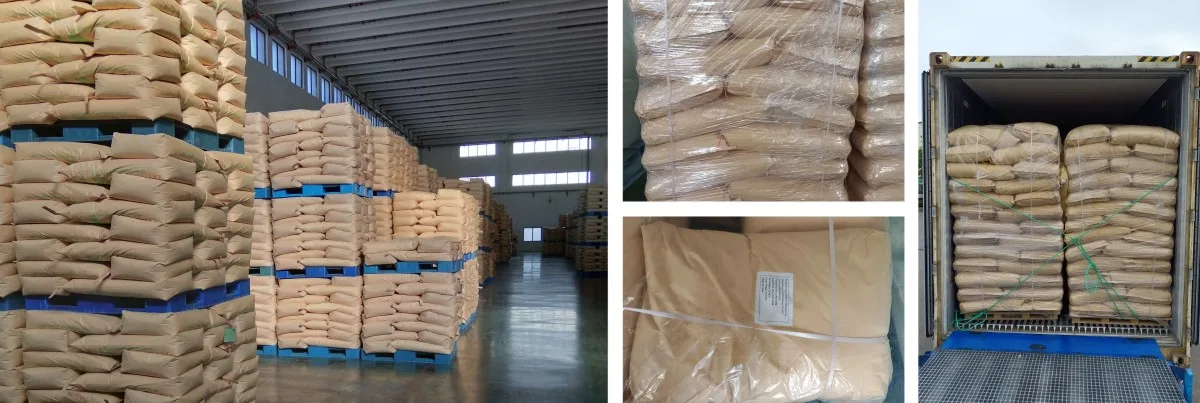
Available in flexible packaging options: 1 kg retail bags, 25 kg multi-wall paper bags with PE liner, or bulk tote containers.
FAQs
Q: What are the primary sources of your Organic Xylitol?
A: Our Organic Xylitol is primarily sourced from organic birch wood or organic non-GMO corn cobs, both recognized as high-quality, sustainable sources for xylitol production.
Q: How does Organic Xylitol benefit dental health?
A: Organic Xylitol cannot be metabolized by Streptococcus mutans, the primary bacteria responsible for tooth decay. This reduces acid production in the mouth, inhibits bacterial growth, and may help support dental health by encouraging the remineralization of tooth enamel.
Q: What’s the typical shelf life and recommended storage for bulk quantities?
A: Our Organic Xylitol typically has a shelf life of 24 months from the manufacturing date when stored in a cool, dry place (below 75°F / 24°C), away from direct sunlight and moisture, in its original sealed, airtight packaging. It should be kept well-sealed to prevent moisture absorption.
Q: Is Organic Xylitol suitable for low-glycemic diets?
A: Yes, Organic Xylitol is generally recognized as safe for human consumption. Its low glycemic index makes it a suitable sugar substitute for low-glycemic formulations, as it does not cause rapid spikes in blood sugar or insulin levels. However, as with any dietary change, individual dietary advice should always be followed.
Q: Can Organic Xylitol be used as a 1:1 replacement for sugar in recipes?
A: In terms of sweetness, Organic Xylitol is very close to a 1:1 replacement for sugar. In terms of bulk and texture, it also performs very similarly to sugar in many applications. However, in large quantities, it can have a mild laxative effect. For baking, some adjustments might be needed depending on the recipe, as it does not caramelize or brown in the same way as sucrose.
Packing