
Fructooligosaccharides (FOS) have gained considerable attention as food manufacturers and health-conscious consumers seek alternatives to refined sugars and artificial sweeteners. Yet alongside this growing popularity come persistent questions about safety. Does FOS cause digestive distress? Is it actually a natural ingredient or a laboratory-created sweetener in disguise? What does the scientific record say about its effects on blood glucose and gut health?
These are reasonable questions. The story of FOS is more nuanced than either enthusiastic endorsement or blanket caution suggests. Understanding where the real risks lie—and where the concerns are overstated—requires looking at what FOS actually is, how regulatory bodies have evaluated it, and what clinical research reveals.
Is FOS an Artificial Sweetener?
The confusion is understandable. FOS tastes sweet, approximately 30 to 50 percent as sweet as sucrose depending on the chain length and source. It appears in ingredient lists for reduced-sugar products. But chemically and functionally, fructooligosaccharides are not artificial sweeteners.
FOS belongs to a class of carbohydrates called prebiotic fibers. It is composed of short chains of fructose molecules, typically linked by β(2→1) glycosidic bonds that human digestive enzymes cannot break down. This structural feature is precisely what makes FOS functionally distinct from both sugar and artificial sweeteners. Whereas sucrose is rapidly hydrolyzed by sucrase in the small intestine and absorbed as glucose and fructose, FOS passes through the upper digestive tract intact.
The production process for organic FOS begins with natural plant materials. The most common commercial sources are organic sugar cane or organic agave. Through enzymatic hydrolysis using fructosyltransferase, the long-chain inulin molecules in these plants are partially broken down into shorter chains: fructooligosaccharides. This is not a synthetic process in the sense of building molecules from petrochemical feedstocks.
Artificial sweeteners such as aspartame, sucralose, and saccharin are chemically synthesized compounds that bear no structural resemblance to naturally occurring carbohydrates. They activate sweet taste receptors without providing meaningful caloric value. FOS, by contrast, provides approximately 1.5 to 2 calories per gram, delivers sweetness alongside actual fiber content, and serves as a substrate for beneficial gut bacteria.
The distinction matters. Artificial sweeteners pass through the body largely without metabolic interaction. FOS interacts extensively with the gut microbiota. The safety questions that surround FOS are primarily about digestive tolerance rather than systemic toxicity.
It is also worth noting that the term “artificial” in food labeling carries regulatory meaning. In the United States, the FDA defines artificial flavors and artificial sweeteners in ways that unambiguously exclude naturally derived substances like FOS. Organic certification standards explicitly prohibit synthetic sweeteners.
Regulatory Status and Safety Assessments
The safety profile of fructooligosaccharides has been evaluated by regulatory authorities in multiple jurisdictions, drawing on decades of toxicological studies, clinical trials, and post-market surveillance data.
In the United States, FOS has received GRAS (Generally Recognized As Safe) status from the FDA. The GRAS determination rests on a substantial history of consumption in human diets and an extensive body of scientific literature confirming safety at intended use levels. FOS occurs naturally in many commonly eaten foods: bananas, onions, garlic, asparagus, Jerusalem artichokes, and leeks all contain measurable amounts of fructooligosaccharides.
The FDA’s GRAS notifications for FOS cover its use in baked goods, dairy products, beverages, and dietary supplements. The approved use levels reflect the intended functional properties and the recognized threshold for digestive tolerance.
In the European Union, the European Food Safety Authority (EFSA) has evaluated FOS and inulin-type fructans. EFSA issued a favorable scientific opinion on the safety of FOS as a novel food ingredient and has authorized health claims related to bowel function and the growth of beneficial intestinal bacteria. The EFSA assessments considered subchronic toxicity, genotoxicity, carcinogenicity, reproductive toxicity, and other standard toxicological endpoints.
Health Canada has also evaluated FOS and approved its use in various food categories. The ingredient is permitted in Japan as a FOSHU (Foods for Specified Health Uses) component, reflecting its accepted status in Asian markets.
The global regulatory picture is consistent: fructooligosaccharides are recognized as safe for consumption within established use levels. No major regulatory authority has issued restrictions or warnings that would suggest inherent toxicity or unacceptable risk at typical consumption levels.
This regulatory consensus is grounded in consistent toxicological evidence. Acute toxicity studies in animals have established LD50 values that are extraordinarily high. Subchronic and chronic toxicity studies did not reveal treatment-related adverse effects. Reproductive and developmental toxicity studies have not identified risks.
Genotoxicity studies have consistently returned negative results for FOS. Carcinogenicity studies have not shown increased cancer risk. The weight of evidence supports the conclusion that FOS does not pose a genotoxic or carcinogenic hazard.
Regulatory safety assessments confirm that FOS is not toxic, not mutagenic, and not harmful at intended use levels. They do not guarantee that every individual will experience no digestive discomfort. The safety questions that remain are primarily questions of tolerance.
Does FOS Affect Blood Sugar?
One of the more persistent questions about FOS concerns its effects on blood glucose and insulin. Because FOS is sweet and is used as a sugar substitute, it is reasonable to ask whether it produces the same metabolic effects as sucrose or high-fructose corn syrup.
The answer is no. FOS does not produce a meaningful spike in blood glucose or insulin in healthy individuals or in people with diabetes.
The reasons are physiological. FOS is not digested by human enzymes in the small intestine. It does not yield absorbable monosaccharides in the upper gastrointestinal tract. Instead, it reaches the colon intact, where it is fermented by anaerobic bacteria. The fermentation process produces short-chain fatty acids, which are absorbed and can contribute a small amount of energy—approximately 1.5 to 2 kcal per gram, compared to 4 kcal per gram for sucrose. But the glucose response is minimal.
Multiple clinical studies have measured the glycemic index (GI) of FOS-containing foods. FOS itself has a glycemic index close to zero. When FOS replaces sucrose, the product’s glycemic index decreases in proportion to the replacement amount.
For people with diabetes, this property of FOS is relevant. Several randomized controlled trials have examined the effects of FOS supplementation on glycemic control in people with type 2 diabetes. Some studies have reported modest improvements in fasting blood glucose and HbA1c after 4 to 12 weeks of supplementation. The mechanisms are not fully elucidated but may involve improved insulin sensitivity mediated by short-chain fatty acids.
It is appropriate to be measured in interpreting these findings. The improvements observed are generally modest. FOS is not a treatment for diabetes. But the evidence is clear that FOS does not exacerbate hyperglycemia.
Digestive Side Effects and Tolerance
The most common adverse effects associated with FOS consumption are digestive: gas, bloating, abdominal discomfort, and occasionally loose stools when intake exceeds tolerance.
These effects are not signs of toxicity. They are the predictable physiological consequence of rapid fermentation in the colon.
When FOS reaches the large intestine, it is metabolized by resident bacteria—primarily species of Bifidobacterium and Lactobacillus. The fermentation process produces gases: carbon dioxide, hydrogen, and in some individuals, methane. The accumulation of gas within the colon produces the sensation of bloating and distension.
The intensity of these effects depends on several factors: the dose of FOS consumed, the individual’s baseline gut microbiota composition, the existing level of FOS consumption in the diet, and individual differences in colonic sensitivity.
Dose matters substantially. In clinical studies, doses below 5 grams per day are generally well tolerated by healthy adults. Doses between 5 and 10 grams per day may produce mild gas or bloating in some individuals. Doses above 10 grams per day, particularly when introduced rapidly, commonly produce noticeable digestive symptoms.
The pattern of introduction matters as much as the total dose. Individuals who consume FOS regularly develop a degree of adaptation. The gut microbiota shifts over time to more efficiently metabolize FOS, and the production of gas becomes less pronounced.
This is the basis for the standard recommendation to introduce FOS gradually. Starting with 2 to 3 grams per day and increasing by 1 to 2 grams every few days allows the microbiota to adjust. Most people who follow this approach can eventually tolerate 5 to 10 grams per day without significant symptoms.
The digestive effects of FOS are transient. They do not cause intestinal damage, and they do not produce lasting changes in gastrointestinal function. When FOS consumption is reduced or discontinued, the symptoms resolve.
It is also worth noting that the same fermentation process that produces gas also produces the short-chain fatty acids that are responsible for many of the documented benefits of FOS consumption: improved bowel regularity, increased abundance of beneficial bacteria, and production of anti-inflammatory metabolites.
FOS and FODMAP Sensitivity
FODMAP is an acronym for Fermentable Oligosaccharides, Disaccharides, Monosaccharides, and Polyols. FOS falls within the “O” of FODMAP: oligosaccharides.
For individuals with irritable bowel syndrome (IBS) or functional gastrointestinal disorders, FODMAPs can trigger or worsen symptoms including bloating, abdominal pain, gas, and altered bowel habits. This has led some to conclude that FOS is problematic for anyone with digestive sensitivity.
The reality is more specific. The low-FODMAP diet restricts FODMAP intake for a period of 4 to 6 weeks, then systematically reintroduces individual FODMAP types to identify which ones trigger symptoms in a given individual. Not all people with IBS react to all FODMAPs. Many tolerate FOS without difficulty.
The clinical guidance for individuals with IBS is to work with a knowledgeable dietitian to determine personal tolerance levels. A blanket avoidance of FOS is not necessary for all people with IBS. For those who do identify FOS as a trigger, the threshold dose varies.
It is also relevant that FOS occurs naturally in many wholesome foods: onions, garlic, asparagus, and wheat, among others. For individuals without IBS or diagnosed FODMAP sensitivity, there is no evidence that avoiding FOS is necessary or beneficial.
There is an additional consideration for people with small intestinal bacterial overgrowth (SIBO). In SIBO, bacteria that normally reside in the colon are present in abnormal numbers in the small intestine. Fermentable carbohydrates like FOS can be metabolized by these bacteria before reaching the colon, producing gas in the small intestine and intensifying symptoms.
Recommended Dosage Guidelines
Establishing appropriate dosage guidelines for FOS requires distinguishing between several contexts: FOS as a food ingredient, FOS as a dietary supplement, and FOS naturally present in whole foods.
In the context of fortified foods and beverages, typical use levels range from 1 to 5 grams of FOS per serving. This reflects both the functional properties of FOS and the desire to keep the product within a range that most consumers will tolerate without digestive discomfort.
As a dietary supplement, FOS is available in powder form and is sometimes included in prebiotic or synbiotic formulations. Supplement doses typically range from 3 to 10 grams per day. The broad guidance from clinical research suggests that 5 grams per day is a reasonable starting point for most healthy adults.
For children, the appropriate dose is lower. Clinical studies in children have used doses ranging from 1 to 4 grams per day, depending on age and body weight. As with adults, gradual introduction is recommended.
There is no official recommended daily allowance (RDA) for FOS or other prebiotic fibers. The Institute of Medicine has established an Adequate Intake (AI) for total fiber—38 grams per day for men and 25 grams per day for women. FOS contributes to this total when it is present in the diet.
The practical approach for most people is to consider FOS as one source of dietary fiber among many. For those who choose to use FOS powder as a supplement, starting with 2 to 3 grams per day and assessing tolerance before increasing is a sensible approach.
Who Should Avoid FOS?
While FOS is safe for the vast majority of people, there are specific populations for whom caution or avoidance is appropriate.
Individuals with irritable bowel syndrome (IBS) who have identified FOS as a personal trigger should limit or avoid FOS during symptom-active periods. This does not necessarily mean permanent avoidance. Many people with IBS can reintroduce FOS in small amounts once symptoms are under control.
Individuals with small intestinal bacterial overgrowth (SIBO) may need to avoid FOS and other fermentable fibers until the underlying overgrowth is addressed. FOS can worsen symptoms in SIBO because fermentation occurs in the small intestine rather than the colon.
Individuals with fructose malabsorption may experience symptoms from FOS. Although FOS is not digested to free fructose in the small intestine, trace amounts of free fructose can be present in commercial FOS preparations.
Individuals taking certain medications should be aware that FOS can alter the absorption of co-ingested substances. Because FOS slows gastric emptying and alters gut transit time, it can affect the rate at which orally administered drugs are absorbed. For drugs with a narrow therapeutic index, timing FOS consumption separately from medication dosing may be advisable.
There is limited safety data on high-dose FOS consumption during pregnancy and lactation. Animal studies have not identified reproductive or developmental toxicity, and FOS is naturally present in foods that are commonly consumed during pregnancy. But as a precaution, pregnant and lactating individuals who wish to use FOS supplements should discuss this with their healthcare provider.
People with hereditary fructose intolerance (HFI) should exercise caution with FOS. While FOS itself is not broken down to free fructose in the small intestine, the theoretical risk of trace free fructose in commercial preparations warrants medical guidance.
Finally, individuals who have undergone certain types of gastrointestinal surgery may have altered digestive capacity and tolerance. The introduction of FOS or any fiber supplement should be discussed with a healthcare provider.
For the general population without these specific conditions, FOS is a safe and well-tolerated ingredient that can contribute to fiber intake goals and support a healthy gut microbiota when consumed within commonly recommended ranges.
About Our Organic FOS
Our organic FOS powder and syrup are derived from organic sugar cane through enzymatic hydrolysis, yielding a clean-label ingredient for food manufacturing and direct-to-consumer applications. Certified organic, non-GMO, and manufactured to food-grade quality standards.
The information in this article is for educational purposes and does not constitute medical advice. Individuals with digestive conditions or specific health concerns should consult a qualified healthcare provider before making significant changes to their diet.
Recommended Products
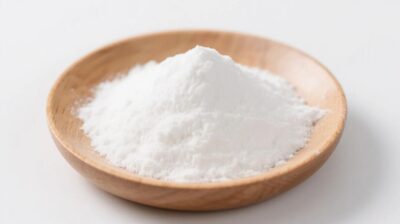
Fructooligosaccharides
Fructooligosaccharides (FOS) is a prebiotic fiber at 95% purity from non-GMO sugarcane or chicory.…
Organic Isomaltooligosaccharides
Organic isomaltoligosaccharides (IMO) powder is a certified-organic prebiotic fiber (90%+) from non-GMO corn or…
Related Posts


