
When you think of potato starch, your mind probably goes straight to baking or thickening sauces. But what if this versatile powder could do so much more? Organic potato starch powder is a true multitasker, with a range of uses that extend far beyond your recipe book. It’s an eco-friendly and natural alternative to many commercial products you already use.
The Industrial Side of the Same Powder
The household jobs described above are one-off experiments that any kitchen can try with a food-grade bag. Industrial applications run on a different footing, because there the powder is bought against a process specification rather than out of curiosity. The granule is the same one: a polysaccharide that absorbs water, swells with heat, and forms a film as it dries. What changes is the standard the material has to meet, which is why an industrial conversation about starch is really a conversation about granulation, viscosity behaviour, and repeatability from one lot to the next. The industrial applications of organic starches overview sets out the wider landscape of where starch sits in manufacturing.
| Industrial area | What the starch contributes | What decides whether the grade fits |
|---|---|---|
| Paper, board and packaging | Binder, sizing and coating components that raise surface strength and hold a sheet together, and a film-forming role in some compostable laminates | The target is a repeatable mechanical and print performance, so granulation and viscosity have to hold from one delivery to the next |
| Bioplastics and compostable materials | A structural component in starch-based plastics and compostable films, where it sets stiffness and limits the cracking that a dry matrix would otherwise show | Conditioning and moisture handling decide whether the finished piece flexes or snaps |
| Adhesives, pastes and sealing | A natural binder and tack component in paper and board adhesives, and a controlled body in sealants and pastes | Open time and set time have to match the speed of the line, not the patience of a bench trial |
| Drilling fluids and mineral processing | A fluid-loss control role in water-based drilling fluids, and a viscosity and flocculation aid in mineral processing | The additive has to be compatible with the rest of the fluid and with the downstream separation step |
| Textiles and non-wovens | A sizing component that gives yarn strength through weaving, and a thickener in printing pastes and coating baths | How the sizing behaves during weaving, and how readily it is removed afterwards, drive the recipe |
One practical distinction matters when a plant approaches a supplier. The material sold as organic potato starch is a native starch, and native starches carry the properties of the crop itself. Converters who need a heat-stable or high-shear variant normally work with a modified starch instead, because modification is what supplies that behaviour. Where a native starch with a documented food-grade specification is what the process requires, the organic material is a sensible starting point, and BIOSTARCH supplies it with lot-level documentation, so a plant running more than one delivery can have the grade settled on paper before it is settled on the line rather than after the first batch has run.
What an Industrial Buyer Checks Before Running a Trial
Buying for a production line is a paperwork exercise before it is a price exercise, and the paperwork is not the same document that a food buyer asks for. A food-grade specification describes a material for eating, while an industrial trial has to answer a different set of questions about how the powder moves through a plant and what it leaves behind when the run is over. The items below are the ones worth settling early, and the questions in the last column are the ones worth putting to a supplier before a sample is dispatched.
| Part of the trial | What actually decides the outcome | Question to settle before the sample arrives |
|---|---|---|
| How the powder reaches the plant | Bagged material, bulk deliveries and the transfer between them all create dust and handling steps that have to be contained | Is the material supplied in the format the dosing point actually handles, and what does the site do with the empty packaging? |
| How it behaves on the line rather than in a beaker | A line pumps, shears and holds material far longer than a laboratory trial, and a paste that behaves in a glass beaker can behave very differently there | Does the viscosity hold through the residence time and the shear of the process rather than only at the point of mixing? |
| What happens at a wash-down or a changeover | Materials that leave a residue in the equipment cost a plant time and product at every switch between batches | How does the material clean out of the line, and does it leave a film behind in the pipework? |
| What the finished product looks like | Colour, opacity, surface finish and the way the material prints, seals or bonds are what the end customer actually sees | Has the material been trialed on a finished piece rather than only as a slurry in a lab beaker? |
| Whether the grade matches the use | A material supplied for food contact and a material supplied for industrial use carry different documentation and different expectations | Does the documentation for this grade match the regulatory status of the end product it goes into? |
A conversation with a technical supplier is more productive when it starts from the process rather than from the powder. Naming the equipment, the operating temperature, the shear level and the end use usually reveals within a few minutes whether the material in front of you is the right starting point or whether the process needs a different starch entirely. The complete guide to organic starches is a useful reference to have open during that discussion, since it sets out how different starches differ in swelling, film formation and thickening behaviour.
Potato Starch at Work in the Kitchen
Before it reaches a laundry basket, organic potato starch earns its keep in cooking and in commercial food production. Roughly three-quarters of each granule is amylopectin, and those chains carry phosphate groups, which is why it swells faster and thickens more strongly than most cereal starches.
Thickening Sauces, Soups, and Gravies
Potato starch typically starts to gelatinize between 58 °C and 65 °C, lower than corn starch, so it thickens earlier in the cooking process. A practical starting point is 8 to 12 g of starch per 250 ml of liquid for a light sauce, or roughly double that for a gravy that has to hold its shape.
Two caveats matter. Potato starch loses viscosity if boiled hard or stirred for a long time, so it is usually added near the end of cooking. Very low pH with prolonged heat can also reduce its thickening power. Cooks wanting more ideas will find them in our round-up of ways to cook with potato starch beyond gravy.
Gluten-Free Baking and Binding
In gluten-free baking, potato starch contributes tenderness rather than structure. It contains no gluten, and because it gelatinizes early and holds water well, it keeps the crumb moist and slows staling. A typical blend uses 10 to 20% potato starch by weight of the total flour blend, balanced against a protein-rich flour such as rice flour or a hydrocolloid like xanthan gum that supplies the elasticity gluten would have provided. Our notes on organic potato starch in gluten-free baking cover how that balance is set in practice.
Coatings and Crisp Texture
Dusted onto vegetables, tofu, or fish before frying, potato starch forms a thin film that dehydrates quickly and fries to a light, brittle crust. It is usually applied at 3 to 5% of the food’s weight and picks up less oil than a wet batter.
Clean-Label Formulation and Industrial Use
For manufacturers the appeal is a short ingredient list: on a label the material reads simply as potato starch or organic potato starch, with no modified starch designation, no additive number, and no declaration among the major allergens. It appears in instant soups, sauces, ready meals, plant-based dairy alternatives, and gluten-free baked goods, where it also improves freeze-thaw stability.
Food-Grade and Certified Organic: What Buyers Should Verify
The same powder that thickens a gravy is also sold to industry as a food ingredient, and that is the specification worth checking. Certified organic potato starch comes from potatoes grown without synthetic pesticides or fertilizers, processed on a line that keeps the organic stream separate. Buyers should expect a specification sheet covering moisture, pH, viscosity, and particle size, a per-lot certificate of analysis, and an organic certificate naming the finished product.
BIOSTARCH supplies organic potato starch powder in food-grade form with organic certification, a non-GMO statement, and allergen and heavy-metal declarations. Brands weighing it against modified starches will find the trade-offs in our article on organic potato starch as a clean-label thickener.
Beyond the Kitchen: Four Unexpected Uses for Organic Potato Starch
The ideas below extend the same physical properties to household jobs. They are home suggestions rather than product claims: a food-grade starch is not a registered cosmetic ingredient, and personal care follows a different set of rules.
Natural Dry Shampoo
Hate that greasy feeling but don’t have time to wash your hair? A small amount of organic potato starch can be your new best friend. Simply sprinkle a little onto your roots, let it sit for a minute, and then brush it through. It absorbs excess oil and adds volume, leaving your hair looking fresh and clean. Unlike many commercial dry shampoos, it’s free from propellants, perfumes, and other chemicals.
DIY Face Mask
Looking for a simple way to soothe and brighten your skin? Potato starch has natural anti-inflammatory properties that can calm irritated skin and reduce redness. Mix a spoonful with a little water or plain yogurt to create a smooth paste. Apply it to your face, let it dry for 10-15 minutes, then rinse with warm water. Your skin will feel soft and refreshed.
All-Natural Deodorant
For those with sensitive skin, finding a deodorant that works without causing irritation can be a challenge. Organic potato starch is a fantastic base for a homemade deodorant. Its absorbent properties help keep you dry, while its neutral nature is gentle on the skin. Mix it with baking soda and a carrier oil like coconut oil, and you have a simple, effective, and natural deodorant.
Gentle Laundry Stain Remover
Got a fresh stain on your favorite shirt? Before reaching for harsh chemicals, try this trick. Mix potato starch with a little water to form a thick paste. Apply the paste directly to the stain and let it dry completely. As it dries, it will pull the stain out of the fabric. Once the paste is dry, simply scrape it off and wash the garment as usual.
A Powder That Earns Its Place in the Pantry
From your kitchen to your beauty routine and even your laundry, organic potato starch powder is a simple, natural solution to a surprising number of everyday problems. It’s a testament to the fact that some of the most powerful products are those that are the least processed.
About Our Organic Potato Starch
BIOSTARCH supplies organic potato starch powder milled from certified organic potatoes and processed to food-grade specification. It is a fine white native starch, free from gluten and the major allergens, and is offered in bulk to food and beverage manufacturers. Buyers can request a sample, a specification sheet, and current organic certification before ordering.
Q: Is organic potato starch used in paper and packaging production?
A: Yes. Native potato starch appears in paper and packaging as a binder, sizing and coating component, and as a film former in some compostable laminates. The commercial question is not whether starch works in principle, but whether a particular grade matches a particular process, so granulation, viscosity profile and lot consistency are the points to settle before a trial is scheduled.
Q: Can potato starch be used in drilling fluids?
A: Starch and its derivatives have a long record as fluid-loss control additives in water-based drilling fluids, and starch is also used for viscosity and flocculation in mineral processing. These are not food applications, so the supplier should be asked to confirm the grade, the documentation and the additive status of the product for that specific use before any volume is committed.
Q: What does starch contribute to compostable bioplastic films?
A: In starch-based films and plastics, the starch forms the continuous phase of the material. It sets the stiffness of the finished piece and, with the right conditioning, reduces the brittleness that an unconditioned starch matrix would show. Conditioning and moisture handling are the two variables that decide whether the material flexes or snaps, so a film trial is decided as much by storage as by the formulation.
Q: How does an industrial starch evaluation differ from a kitchen test?
A: A kitchen test asks whether the powder thickens a sauce. An industrial evaluation asks whether it behaves the same way every week, at line speed, in the equipment the plant already runs, with paperwork that matches the end product. Repeatability across lots, the viscosity profile under real conditions, and a specification sheet that can be handed to a quality team carry far more weight than a single good result.
Recommended Products
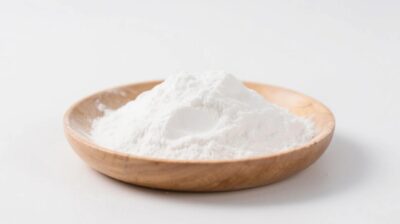
Organic Potato Starch Powder
Organic potato starch powder is a certified-organic native starch from non-GMO potatoes. With high…
Related Posts


