
In today’s food industry, clean-label products are more important than ever. Consumers are looking for natural, recognizable ingredients without unnecessary additives. When it comes to natural thickeners, organic potato starch powder and cornstarch are both popular options—but which is better for clean-label applications?
Expansion Factor: How Much Powder a Formula Actually Needs
Expansion is the question a formulator asks before anything else, because it sets the addition rate, the water demand and therefore the cost per finished unit. The two starches expand differently because the granules are built differently, and the difference shows up in the pan rather than in the datasheet. Potato starch granules are the larger of the two, and the gel they form is smooth, cohesive and glossy. Cornstarch produces a tighter, more opaque gel with a shorter, slightly powdery character in the mouth.
The number that matters commercially is not the swelling of the granule in isolation but the grams of powder required to reach a target body inside a real matrix. That figure moves with the liquid, the fat, the solids and the heat history of the product, so the honest way to state the difference is directional rather than numerical: in many applications potato starch reaches the required body with a smaller addition and a lower water demand than cornstarch, while in sauces that are held for a long time or reheated, cornstarch holds its viscosity better. A single bench trial against the actual formula settles it faster than any general rule.
| Factor in the finished product | Organic potato starch | Organic cornstarch | Decision impact for a clean-label line |
|---|---|---|---|
| Swelling behaviour | Large granules that swell generously and form a smooth, cohesive gel | Faster swelling that produces a tighter, more opaque gel | Determines the addition rate and how much liquid the powder carries into the formula |
| Appearance of the thickened phase | Glossy and translucent, which keeps a light sauce looking light | More opaque, which reads as a richer body in a pale sauce | Decides whether a clear-looking sauce can be presented as such |
| Mouthfeel | Smooth, fine and elastic, with a clean melt | Shorter and slightly powdery, with a firmer bite | Matters most in dairy-free desserts and puddings, where the mouthfeel carries the product |
| Water demand | Holds a substantial amount of water within the gel | Takes up water differently and often needs adjusting liquid in the formula | Directly affects the hydration of a batter or dough, and the yield per batch |
| Behaviour under long heat | Body holds through a gentle simmer, but a hard boil shears the gel and the sauce thins | More tolerant of prolonged boiling and of high-shear mixing | The deciding factor for products that are cooked in bulk, held, and reheated |
| Stability after cooling and reheating | Holds well in a sauce that is chilled and reheated gently | Can separate or weep on thawing, depending on the formulation | Decisive for frozen meals, ready-to-eat pouches and chilled sauces |
| Contribution to structure | Enhances the performance of the other flours and starches in the mix | Works alone or blended, and is easy to substitute in an existing formula | Determines how much rework a recipe change causes on the line |
Label Real Estate and the Cost of the Decision
A clean-label brief is not only a formulation problem. It is a review problem, and the ingredient choice feeds straight into how the finished pack reads and how many supporting documents have to be assembled for it. Here the two options are closer than they are in the pan. Both are single, recognisable words on an ingredient list, both are free from the declarable allergens, and neither requires a long parenthetical explanation. The difference sits in the evidence behind the panel rather than in front of it.
| Commercial consideration | Organic potato starch | Organic cornstarch | How to weigh it |
|---|---|---|---|
| Ingredient list wording | Reads as a single distinctive starch with its own identity | Reads as a familiar pantry staple | Both are short; the choice should be made on performance, not on wording |
| Certification evidence | Organic status applies directly to the potato crop and the starch itself | Requires an organic source for the corn, since conventional corn is largely genetically modified | Confirm that the organic claim applies to the actual lot shipped, not to the crop category |
| Cost per finished unit | Set by the addition rate, so a lower addition rate reduces the material cost | Often lower per kilogram, but the higher addition rate narrows the gap | Compare the cost of the finished batch rather than the price per kilogram |
| Rework risk on a formula change | Changes to the starch alter the water balance and the gel structure | Switches easily between starch systems already in the range | Runs larger on a portfolio that carries several product formats |
| Supply and documentation | Lot-level records that support the claims printed on the pack | Comparable records are available for certified organic corn starch | Ask for the documentation before the specification is signed, not after |
One further point on combining the two. Blending starches is common in clean-label ranges, and a blend often performs better than either component alone, because the gel strengths complement each other. The caveat is that a blend has to be treated as a specification in its own right, since the ratio between the two becomes part of the product. Our complete guide to organic starches sets out how the other starches in the range behave, and BIOSTARCH supplies both organic potato starch and organic cornstarch with the lot documentation needed to run that comparison on real product rather than on a purchased sample.
For a kitchen rather than a production line, the same comparison simplifies to the finished plate. Potato starch suits a clear, glossy sauce and a smooth set dessert; cornstarch suits a sauce that will be boiled hard or held warm for a long time. Where both are on the shelf, the deciding factor is usually the heat history of the dish rather than the ingredient list, and a small side-by-side batch settles it in the time it takes to make two sauces.
1. Source and Processing
- Organic Potato Starch Powder: Derived from organically grown potatoes, minimally processed, and free from GMOs.
- Cornstarch: Typically extracted from genetically modified corn unless labeled organic, and may require chemical processing.
2. Functional Differences
| Feature | Organic Potato Starch Powder | Cornstarch |
|---|---|---|
| Thickening Power | High, smooth, glossy | Moderate, can appear opaque |
| Freeze-Thaw Stability | Excellent | Poor, tends to separate |
| Neutral Flavor | Yes | Yes |
| Texture | Soft, elastic, fine | Can be pasty if overcooked |
| Clean Label Appeal | Strong (organic, non-GMO) | Moderate, may require organic certification |
3. Advantages of Organic Potato Starch for Clean Label
- Superior Texture: Organic potato starch powder provides smooth, tender, and elastic textures for baked goods, sauces, and soups.
- Better Freeze-Thaw Stability: Ideal for frozen meals and ready-to-eat products, maintaining consistent quality.
- Organic and Allergen-Free: Meets the increasing demand for natural, gluten-free, non-GMO ingredients.
- Versatility: Works well in vegan, gluten-free, and low-carb recipes, while also enhancing the performance of other flours and starches.
Applications in Clean-Label Products
- Gluten-free bakery products
- Sauces, gravies, and soups
- Frozen meals and ready-to-eat foods
- Plant-based and vegan products
B2B Insight
For food manufacturers aiming to produce clean-label products, organic potato starch powder offers a clear advantage over conventional cornstarch. BIOSTARCH provides certified organic potato starch powder with consistent quality, excellent functionality, and full compliance with international organic standards—helping brands meet consumer expectations for transparency and natural ingredients.
Common Mistakes to Avoid with Potato Starch
When comparing organic potato starch powder with cornstarch, one frequent mistake is swapping them one to one. Potato starch thickens quickly at lower temperatures and works best when added near the end of cooking, while prolonged boiling can thin a sauce again. Treating them as identical often leads to textures that feel different from what the recipe intended.
Another common slip is skipping a cold-water slurry before adding the powder, which invites lumps, or storing the bag where humidity settles. Keeping it sealed in a dry place preserves its fine texture. If you would like guidance on choosing between the two starches, BIOSTARCH is happy to share advice and supply options.
While both potato starch and cornstarch can act as thickeners, organic potato starch powder stands out in clean-label applications due to its organic sourcing, superior texture, freeze-thaw stability, and versatility. It’s the smart choice for modern food innovation and clean-label product development.
Q: Does potato starch swell more than cornstarch?
A: The two expand differently, and the direction of the difference depends on what you are measuring. Potato starch forms a larger, smoother and more cohesive gel, while cornstarch tends to give a tighter and more opaque one. What a formulator actually needs is the addition rate inside the real formula, and that figure shifts with the liquid, the fat and the heat history, so a bench trial against the actual product is the reliable answer.
Q: Which is more stable in a frozen or ready-to-eat product?
A: It depends on the heating step and the matrix rather than on the starch alone. Potato starch holds its body well in a sauce that is chilled and reheated gently, while cornstarch can separate or weep on thawing depending on the formulation. For products that are cooked in bulk and then reheated hard, cornstarch is generally the more tolerant option. Testing the actual pack format is what settles it.
Q: Is potato starch or cornstarch cheaper for a clean-label product?
A: The price per kilogram is only half of it, because the material cost per finished unit depends on how much powder the formula needs to reach the target body. Where potato starch achieves the body with a smaller addition, the gap narrows considerably. Compare the cost of the finished batch rather than the price of the raw material, and factor in the rework avoided when the starch is swapped in a formula.
Q: Can I blend potato starch and cornstarch in the same product?
A: Yes, and blending is common in clean-label ranges because the gel strengths of the two complement each other. The caveat is that the ratio between them becomes part of the product specification, so the blend needs to be defined and tested as its own system rather than assembled from whatever is on the shelf. Once fixed, it gives a consistency that is easier to reproduce from batch to batch.
Recommended Products
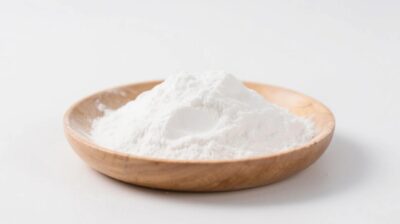
Organic Potato Starch Powder
Organic potato starch powder is a certified-organic native starch from non-GMO potatoes. With high…
Related Posts


