
Corn syrup is the name most buyers know, and it is the name that causes the most confusion in a specification, because the term covers several different products and excludes one that shares it. On a standard corn syrup the word is simple: it is a starch hydrolysate from corn, sold as a viscous liquid and specified by its Dextrose Equivalent. The confusion starts with two neighbours, corn syrup solids and high-fructose corn syrup, which are not the same thing and are not interchangeable. This guide sets out what each name refers to, how a buyer specifies corn syrup for a bulk order, and where it sits in relation to glucose syrup and to the other liquid sweeteners on the market.
| Field | Value |
|---|---|
| Product | Corn syrup, DE 20-40 and DE 40-60 |
| Source | Non-GMO corn starch |
| Conversion | Enzymatic hydrolysis, then vacuum concentration |
| Controlling specification | Dextrose Equivalent (DE) |
| Solids (Brix) | 78-82% |
| Sweetness | About 30-50% of sucrose at DE 20-40, 50-70% at DE 40-60 |
| Supply form | Bulk liquid, drums, IBC totes and tank loads |
| Supplier | BIOSTARCH |
What Is Corn Syrup?
Corn syrup is produced by hydrolysing corn starch. Enzymes cut the long starch chains into glucose, maltose and oligosaccharides, and the resulting liquid is concentrated until it reaches a stable solids content. What distinguishes one corn syrup from another is not the source, which is always corn, but the extent of the hydrolysis, which is measured as the Dextrose Equivalent.
The DE scale runs from 0, which is unhydrolysed syrup, to 100, which is pure glucose. A low DE corn syrup keeps more of the original long chains and behaves as a body and moisture agent. A high DE corn syrup has been hydrolysed further and carries more simple sugars, which means more sweetness, lower viscosity and faster browning. Most food applications sit at DE 42 or DE 60, and the grade is the only number that really defines the product.
Because the production method is identical, a DE 60 corn syrup and a DE 60 glucose syrup made from tapioca are the same product with a different feedstock. That is why the name on the order is a description of the source rather than a specification of quality.
Corn Syrup, Corn Sugar and Corn Syrup Solids
Three related names appear on purchase orders and it is worth separating them, because each one describes a different physical product.
Corn syrup is the viscous liquid described above, supplied in drums, IBC totes or tank loads at 78-82% solids. Corn syrup solids, often abbreviated CSS, are the same material dried into a powder or granular form, and they are used where a dry ingredient is required, for example in a dry blend or a seasoning system. Corn sugar, in European usage, is the older commercial name for the same family of starch-derived sweeteners, and it is worth noting that in some markets the phrase also appears in the context of the crystalline sugar derived from corn.
For a buyer, the practical rule is to specify the physical form and the DE range rather than the trade name. A request for corn syrup powder that does not state a DE range will produce quotations that cannot be compared, because the functional behaviour of the material is set by the DE, not by the word powder.
Corn Syrup and High-Fructose Corn Syrup
High-fructose corn syrup is the one product that shares the name but behaves differently. It is produced from corn syrup by enzymatically converting a portion of the glucose into fructose, which raises the sweetness profile to a level close to sucrose. That conversion is what separates it: it is sweeter, more hygroscopic, and in most jurisdictions it carries its own labelling requirements.
A plain corn syrup at DE 42 or DE 60 is not a high-fructose corn syrup and is not made from one. When a specification calls for a DE range and a solids figure, it describes the hydrolysate, and if a converted product is required it has to be stated separately, usually as a fructose content rather than as a DE.
How to Choose a Grade
The lower DE grades are chosen when the recipe needs body, moisture retention and resistance to crystallisation, which covers bread and soft baked goods, filled biscuits and confectionery that has to stay soft on the shelf. The higher DE grades are chosen when more sweetness per unit of solids is needed, when the recipe is a beverage or a sauce, or when a fast colour development is wanted in a glaze or a coating.
| Property | DE 20-40 | DE 40-60 |
|---|---|---|
| Sweetness vs sucrose | About 30-50% | About 50-70% |
| Viscosity | Higher, thicker | Lower, more fluid |
| Moisture retention | Moderate | Higher |
| Fermentability | Partially fermentable | Highly fermentable |
| Browning | Promotes golden colour | Faster, more reducing sugar |
| Typical use | Bakery, fillings, binders | Confectionery, beverages, sauces |
The full behaviour of each grade, including the effect on freezing point and the reasons a formulation reacts differently when a grade is swapped, is set out in our glucose syrup guide for food manufacturers, which applies equally to a corn-based syrup.
Applications
In bakery, corn syrup is used as a humectant and a binder, in confectionery as a sweetener and a set-control agent, and in beverages as a source of body alongside other sweeteners. It is also the base for caramel and for a range of sauces and dressings, where the higher DE grades give more sweetness per unit of solids and keep the finished profile lighter.
Where a formulation is developed on a syrup and then moved to a dry plant, corn syrup solids are the route, and the DE range has to be matched for the recipe to behave the same way. That substitution is one of the most common specification changes in a bulk order, and it is worth writing into the order as a requirement rather than negotiating it per delivery.
Buying Corn Syrup in Bulk
For a bulk order, the specification has to state the DE range, the solids content, the starch source, the physical form and the packing. A current certificate of analysis covering Brix, DE, pH, ash, sulphur dioxide, heavy metals and microbiological counts should accompany each lot, together with the organic certificate for the batch.
Packing matters more than it first appears. Bulk quantities arrive in drums, IBC totes or tank loads, and the format should be agreed before production so the syrup is not pumped or reheated repeatedly. Each transfer adds moisture and a small contamination risk, and both affect a product that is used at high inclusion rates.
Questions Buyers Ask About Corn Syrup
Q: Is corn syrup the same as glucose syrup?
A: For a standard corn syrup, yes. Corn syrup is glucose syrup produced from corn starch, with the same production method and the same DE specification. The name describes the feedstock rather than a difference in quality, which is why the grade is the number that defines the product.
Q: What is the difference between corn syrup and corn syrup solids?
A: They are the same material in two forms. Corn syrup is the liquid at 78-82% solids, and corn syrup solids are the dried powder or granular version used where a dry ingredient is required. The DE range should be specified in both cases, because the functional behaviour is set by the DE and not by the form.
Q: Is corn syrup the same as high-fructose corn syrup?
A: No. High-fructose corn syrup is produced from corn syrup by converting part of the glucose into fructose, which raises the sweetness and creates its own labelling requirements. A plain corn syrup at DE 42 or DE 60 is the hydrolysate and is not made from the converted product.
Q: What DE should I specify for bakery?
A: A lower grade such as DE 20-40 is the usual starting point for bakery, because it holds moisture, gives body and resists crystallisation in a dough or filling. Higher grades are used where more sweetness per unit of solids or a faster browning is wanted.
Q: Can corn syrup replace sugar one to one?
A: Not directly. The syrup is 78-82% solids, so a kilo of syrup brings roughly 0.2 kg of water into the batch. The usual approach is to replace the sugar by its soluble solids content and then adjust the water in the recipe.
Q: Do you supply corn syrup in bulk?
A: Yes. Corn syrup is supplied in DE 20-40 and DE 40-60, from non-GMO corn starch, in drums, IBC totes and tank loads. Each lot is issued with a certificate of analysis, an organic certificate, a specification sheet and a safety data sheet.
Corn Syrup Solids in Dry Blends
Moving a formulation from liquid corn syrup to corn syrup solids is one of the more common changes in a bulk order, and it has to be treated as a specification change rather than a substitution. The DE range has to be matched, because the DE governs body, water retention, browning rate and crystallisation behaviour, and a solids material at a different DE will not behave like the liquid it replaces.
Once the grade is matched, the practical change is at the plant. A liquid syrup is dosed by weight or by volume into a mixing step, while a dry solid needs dispersion, and the hydration behaviour of the powder determines whether lumps form. In systems where the powder is blended into a dry mix, such as a seasoning or a powdered drink base, the dispersion requirement is usually the deciding factor, and a granulated grade is often specified for that reason.
Storage and Handling of Bulk Corn Syrup
Corn syrup is delivered in drums, IBC totes or tank loads and is stored at ambient temperature in a clean area, protected from direct heat and from freezing. The container should stay closed, because the syrup takes on moisture from the air and, over time, that moisture uptake shows up in the Brix figure on the incoming analysis. Bulk quantities that will be held for a long period are better allocated across several containers rather than kept in one, so that the oldest stock is used first.
Before a tank or tote is emptied into a smaller vessel, the line should be checked for residue and for water ingress, since both can dilute the batch and, at high inclusion rates, affect the texture of the finished product. Where the same material is used in several lines, a scheduled rotation of the containers keeps the working stock moving and reduces the time any single batch spends open.
Products from BIOSTARCH
BIOSTARCH supplies the wider organic sweetener range that usually accompanies corn syrup in a formulation. Organic glucose syrup is available in both DE ranges in bulk liquid form, from non-GMO corn or tapioca starch, with full batch documentation. Organic fructose covers the crystalline grade where a higher sweetness profile is required, and organic dextrose powder covers the dry monosaccharide form. For applications that need starch structure alongside the syrup, organic cornstarch is supplied in bulk powder grades.
Recommended Products
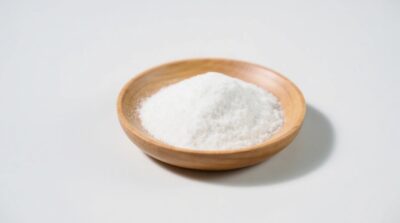
Organic Dextrose Powder
Organic dextrose powder is a certified-organic monosaccharide from non-GMO corn starch, supplied as monohydrate…

Organic Glucose Syrup
Organic glucose syrup is a certified-organic liquid sweetener (DE 20–60, multiple grades) from non-GMO…
Related Posts


