
Allulose sits at an unusual intersection in the sweetener market: a rare sugar with the taste and functionality of sucrose but virtually no calories, produced through a specialized enzymatic process rather than simple extraction or fermentation. For procurement professionals, this means the supply chain is narrower, the manufacturing expertise more concentrated, and the stakes for supplier evaluation higher than for commodity sweeteners.
This guide covers what buyers need to know when sourcing organic allulose: how it is made, what quality specifications to verify, which certifications matter by market, and how to distinguish reliable supply from the pitfalls that come with a constrained global production base.
How Allulose Is Made: The Production Pathway
Allulose occurs naturally in small quantities — dried figs, jackfruit, maple syrup — but commercial production uses enzymatic epimerization, a process that converts fructose into allulose at industrial scale.
The production chain begins with corn starch as the raw carbohydrate source. Starch is enzymatically hydrolyzed into glucose, which is then isomerized to fructose. The fructose stream undergoes the critical step: epimerization by D-psicose 3-epimerase (DPEase), an enzyme that rearranges the molecular structure at the C-3 position, converting D-fructose to D-allulose. The reaction reaches equilibrium at roughly 20–30% conversion, producing a mixture of fructose and allulose.
Separation is the most technically demanding stage. Simulated moving bed (SMB) chromatography — using ion-exchange resin columns — separates allulose from residual fructose based on differences in their affinity for the resin. The purified allulose stream is then concentrated, crystallized, and dried to produce the white crystalline powder used in food manufacturing. For syrup-grade product, the concentration and formulation step replaces crystallization.
The entire process — hydrolysis, isomerization, epimerization, separation, purification — must operate under conditions that meet organic processing standards when the final product carries organic certification. This means no synthetic solvents, and the enzymes used must comply with organic processing requirements.
Why Organic Allulose Carries a Different Weight
Allulose is already a premium ingredient by virtue of its production complexity. Organic certification adds a distinct layer that buyers should understand before comparing quotes.
Organic allulose means two things: the source corn is certified organic, grown without synthetic pesticides, herbicides, or fertilizers on land that has met the three-year transition requirement; and the processing pathway meets organic standards, using allowed processing aids and enzymes, with documented segregation from conventional materials throughout production.
Conventional allulose may be cheaper, but it does not carry the same assurance of agricultural practice or processing oversight. For brands positioned as organic, clean-label, or minimally processed, organic allulose provides a certifiable link between ingredient sourcing and the claims on the finished product label. For brands not making an organic claim, conventional allulose remains a functional option — the sweetening performance is identical. The choice is about certification and market positioning, not functionality.
A practical point: the organic corn supply for allulose production is not unlimited. Organic corn acreage, particularly outside North America, is a finite resource that competes with demand from organic starch, organic sweetener, and organic feed markets. Buyers planning long-term organic allulose programs should discuss supply security with their supplier — not just price per kilogram — before committing to a formulation.
Reading the Specification Sheet
The specification sheet and batch certificate of analysis (CoA) are the starting documents for any supplier evaluation. Here are the parameters that matter for organic allulose and what to look for in each.
Purity (allulose content, dry basis). Crystalline allulose powder should test at ≥ 99.0% purity. Values below this indicate incomplete separation during chromatography or fructose carryover. Liquid allulose products typically range from 70–95% concentration, with the balance being water; the exact specification depends on the formulation and should be clearly stated by the supplier.
Moisture content. Powder should be ≤ 1.0%. Higher moisture compromises flowability, increases caking risk during storage, and can affect microbial stability over shelf life. For syrup, moisture is a formulation parameter rather than a purity concern.
Particle size distribution. For crystalline powder, 60–100 mesh is typical for B2B applications. Coarser material dissolves more slowly; finer material creates dusting issues during handling. Particle size is not always on a standard CoA — request D10, D50, and D90 values if your manufacturing process is sensitive to dissolution rate or powder flow characteristics.
pH. A 10% aqueous solution of allulose should register near neutral, typically 4.0–7.0. Deviation outside this range may indicate acid or alkaline residues from processing.
Specific rotation. Allulose has a specific optical rotation of approximately -4.5° to -5.5° (c=1, water). This is a narrow window — significant deviation suggests the presence of other sugars or degradation products. Import testing laboratories use this parameter as a verification tool, and it should be consistent batch to batch.
Heavy metals. Lead should be below 0.1 mg/kg, arsenic below 0.1 mg/kg, with cadmium and mercury below comparable thresholds. Values approaching these limits warrant scrutiny of the source starch and processing water. Suppliers who consistently test well below regulatory limits are operating tighter processes.
Microbiological specifications. Standard parameters apply: total aerobic plate count ≤ 1,000 CFU/g, yeast and mold ≤ 100 CFU/g, and absence of E. coli, Salmonella, and Listeria in 25g samples. Detection of any pathogen is a rejection criterion.
Shelf life. Crystalline allulose is chemically stable with a typical stated shelf life of 24 months when stored in cool, dry conditions in sealed packaging. Syrup products may have shorter shelf life depending on formulation and preservative system.
Certifications: What Matters by Market
Allulose sold across multiple regions often carries several certifications simultaneously. Each serves a different market requirement.
USDA Organic. For the United States market, the USDA National Organic Program (NOP) seal confirms that the source corn was grown on certified organic land and the processing facility is certified by a USDA-accredited certifying agent. Request a current organic certificate listing the specific product — organic allulose — not just the facility or a general ingredient category.
EU Organic. The EU organic regulation (2018/848) governs organic claims in European markets. The requirements overlap with USDA NOP but are not identical — the EU places additional emphasis on biodiversity and has distinct rules on processing aids. EU-bound product must be certified by an approved EU control body or an equivalency-recognized third country. Confirm that your supplier’s EU certification is current under the post-2021 equivalency framework.
Non-GMO Project Verified. While organic certification inherently prohibits GMOs, North American buyers frequently request separate Non-GMO Project verification as an additional label claim. This involves PCR-based testing for GMO presence and adds a layer of consumer-facing assurance.
Kosher and Halal. Both certifications confirm compliance with religious dietary laws and are issued by third-party agencies following facility audits. For allulose, the primary concern is enzyme sourcing — DPEase and other processing enzymes must be derived from acceptable sources — and segregation from non-compliant materials during production.
Food safety certifications. For manufacturing facilities, Global Food Safety Initiative (GFSI) benchmarked certifications — FSSC 22000, BRC, or SQF — are standard requirements for B2B supply. These confirm that the facility operates a documented food safety management system with HACCP-based controls, traceability, and corrective action procedures. ISO 22000 provides an alternative framework, though GFSI-benchmarked schemes are more commonly specified by multinational buyers.
Gluten-free. Allulose derived from corn is inherently gluten-free, but cross-contamination can occur if the facility also processes wheat-based ingredients. Confirm testing below 20 ppm and request a gluten-free statement where required.
Regulatory Status by Region
Allulose has a longer regulatory history in some markets than others, and the landscape continues to shift. Buyers distributing finished products internationally should verify the status in each target market before committing to a formulation dependent on allulose.
United States. The FDA issued a GRAS (Generally Recognized as Safe) determination for allulose in 2014, with subsequent guidance in 2019 confirming that allulose is excluded from total and added sugars on Nutrition Facts labels and assigned a caloric value of 0.4 kcal/g. Allulose is permitted in all standard food categories.
Japan. Allulose has been consumed in Japan since the 1990s, where it was first commercialized following the discovery of DPEase by Dr. Ken Izumori at Kagawa University. It is classified as a food ingredient under the Foods for Specified Health Uses (FOSHU) framework and has a well-established regulatory and consumer acceptance history.
South Korea. The Ministry of Food and Drug Safety (MFDS) approved allulose as a food ingredient in 2014, and it can be labeled as zero-sugar in finished products under Korean labeling regulations.
Singapore. The Singapore Food Agency approved allulose as a novel food ingredient in 2020, allowing its use in food products sold in Singapore.
Mexico. Allulose is permitted as a food ingredient under COFEPRIS regulations. It does not require novel food pre-market approval.
Canada. Health Canada approved allulose as a novel food ingredient in 2022, with labeling provisions that exclude it from total sugars and assign a caloric value of 0.4 kcal/g, consistent with FDA guidance.
Australia and New Zealand. FSANZ is currently evaluating an application for allulose as a novel food ingredient. As of publication, approval is pending.
European Union. Allulose is subject to the EU Novel Food Regulation (EU 2015/2283). An application for novel food authorization is under EFSA review. Until authorization is granted, allulose cannot be legally marketed as a food ingredient in the EU. Buyers targeting European markets should monitor EFSA’s published opinions for status updates and plan formulations accordingly.
Supply Chain: Capacity, Lead Times, and Pricing
The global allulose supply chain is concentrated among a limited number of manufacturers — primarily in Japan, South Korea, China, and the United States — each operating proprietary or licensed DPEase technology. This concentration means that supply availability can tighten when demand spikes, and it limits the pool of qualified suppliers for buyers who require multiple certifications.
Lead times for organic allulose typically range from 4–8 weeks for standard orders, with longer lead times for non-standard packaging or documentation requirements. Minimum order quantities (MOQs) vary by manufacturer but generally start at 100–500 kg for samples and trial orders, scaling to metric ton quantities for commercial supply. MOQs for organic-certified product may be higher than for conventional because the manufacturer must run organic production campaigns with full cleaning and line clearance between conventional and organic batches.
Pricing for organic allulose is higher than commodity sweeteners — typically above erythritol and competitive with premium natural high-intensity sweeteners on a sweetness-equivalent basis. The premium reflects both the complexity of the enzymatic production process and the organic certification premium on the source corn. Prices have trended downward as production capacity has increased, but organic allulose is unlikely to reach parity with conventional bulk sweeteners in the near term.
Shipping and storage requirements are straightforward: store in a cool, dry environment (below 25°C, relative humidity below 60%), in sealed packaging to prevent moisture uptake. Crystalline allulose is hygroscopic — exposure to humid air will cause clumping and, over time, degradation of flow properties. For ocean shipments passing through tropical zones, moisture-barrier packaging and desiccant inserts are standard practice. For syrup, temperature-controlled shipping may be specified in warmer months to prevent microbial growth if the product is unpreserved.
How to Evaluate Allulose Suppliers
A clean specification sheet and a set of certificate images are the beginning of supplier evaluation, not the end. Suppliers that deliver consistent quality over years earn that track record through systems, not isolated batch results.
Documentation checklist. Before placing a first order, request the following from any candidate supplier: certificate of analysis for a recent production batch, valid organic certificate listing the specific product, Non-GMO certificate (if claimed), Kosher and Halal certificates (current, with scope clearly indicating allulose), third-party heavy metal test results (ISO 17025-accredited laboratory preferred), process flow chart, allergen statement, gluten-free statement, nutrition data sheet, and safety data sheet (SDS). The quality and completeness of this documentation package is a reliable indicator of the supplier’s overall operational organization. A supplier that produces all ten documents promptly and clearly is running a tighter operation than one that provides three and promises the rest later.
Sample evaluation protocol. When samples arrive, evaluate beyond sensory checks. Split the sample and send one portion to an independent ISO 17025-accredited laboratory for verification against the supplier’s CoA. Run application testing: does the allulose dissolve at the rate you expect in your formulation? Does it crystallize or recrystallize under your processing conditions? Does it perform consistently in baked goods, beverages, or confectionery — whichever your application demands? A sample that passes specification on paper but behaves unexpectedly in application warrants a conversation with the supplier’s technical team. For more on allulose behavior across product categories, see our guide on using allulose in food manufacturing.
Audit considerations. For commercial-scale supply relationships, an on-site or virtual audit is standard practice. Review the supplier’s organic segregation procedures — how they clean lines between organic and conventional campaigns, how they document raw material receipt and traceability, and whether their mass balance records reconcile. Examine their quality control laboratory: equipment calibration records, proficiency testing participation, and the qualification of analysts. Review non-conformance and corrective action records — a supplier with no non-conformances is either extraordinary or not looking carefully enough.
Traceability. A supplier should be able to trace a specific batch of allulose back through each production step — from the finished product lot number, through the chromatography and epimerization batch records, to the incoming fructose lot, and ultimately to the organic corn starch and the farm or cooperative of origin. Full chain-of-custody documentation is the foundation of organic integrity.
Responsiveness. How quickly and completely a supplier responds to technical inquiries during the evaluation phase is a reliable predictor of how they will perform once the commercial relationship begins. A supplier that takes two weeks to produce a CoA during evaluation is unlikely to become faster after the purchase order is issued.
Common Sourcing Pitfalls
Conventional allulose sold as organic. The allulose molecule is identical regardless of certification status, so there is no analytical test that distinguishes organic from conventional allulose. Verification depends entirely on documentation — organic certificates, traceability records, and mass balance. If a supplier cannot provide a current organic certificate listing allulose specifically, treat the organic claim as unverified. Price that seems too attractive for organic-certified allulose is a risk signal.
Purity variances between batches. Allulose production at industrial scale involves chromatography separation, a step where column performance degrades over time. If a supplier’s purity drifts batch to batch — 99.2%, then 98.7%, then 99.1% — this may indicate inadequate column regeneration scheduling. A tight purity window (≥ 99.0%, consistently) is a process control indicator.
Moisture issues during shipping. Crystalline allulose arrives at port with moisture content above specification more often than most buyers expect. The powder picks up moisture from ambient air if packaging is compromised or if desiccant was insufficient for the transit conditions. Include moisture content as an acceptance criterion in purchase agreements and check it on receiving — a quick moisture balance test takes minutes and can prevent weeks of production troubleshooting.
Documentation gaps. A supplier that has organic certification for the facility but not for the allulose product is not selling organic allulose — they are selling allulose from an organic-certified facility, which is a different claim. Similarly, a Kosher certificate that expired three months ago or a Halal certificate that lists “sweetener” rather than “allulose” specifically may not satisfy your own customers’ requirements. Check certificate scopes and expiry dates before relying on them.
For a broader understanding of what allulose is, how it behaves in the body, and why it has gained attention as a sugar alternative, our complete guide to allulose covers the fundamentals. For product specifications and current availability, visit our organic allulose sweetener page or contact us.
Recommended Products
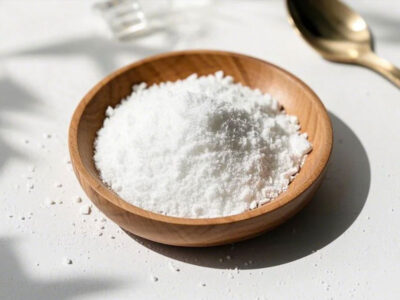
Allulose Sweetener
Allulose sweetener is a rare sugar with about 70% of sucrose sweetness and almost…


