
Reducing sugar in manufactured food products has historically meant choosing between taste, texture, and label appeal. Organic allulose changes that equation. With approximately 70% of sucrose’s sweetness, near-zero calories, and functional behavior that closely mirrors sugar in processing, allulose gives formulators a single ingredient that addresses multiple challenges simultaneously. This guide covers practical formulation parameters across major food categories — from bake temperatures to usage rates — so your R&D team can move from concept to production with confidence.
For a foundational understanding of allulose properties as an ingredient, including its molecular structure and regulatory status, refer to our earlier guide. This article focuses specifically on the formulation knowledge that matters on the production floor.
Bakery: Cookies, Cakes, Muffins, and Bread
Bakery applications present the widest range of formulation considerations for allulose, because sugar performs so many roles beyond sweetness: it contributes to browning, moisture retention, tenderization, and volume. Allulose addresses most of these functions well, but there are specific adjustments worth making.
Usage rate and sugar replacement. Formulators typically achieve 30–100% sugar replacement with allulose depending on the product. Cookies and muffins tolerate higher replacement levels (70–100%) because their texture is less dependent on sugar’s structural role. Cakes and laminated doughs may require a blended approach at the lower end (30–50%) to maintain crumb structure and aeration, supplementing with a small amount of sucrose or a bulking agent like inulin.
Maillard browning advantage. Unlike many alternative sweeteners, allulose actively participates in Maillard reactions. In fact, it browns slightly faster than sucrose. This is a genuine advantage in bakery — golden crusts on cookies and appealing color on muffin tops develop naturally without added colorants or extended bake times. The key is managing that reactivity.
Adjust bake temperature. Because allulose browns more readily, reduce oven temperature by approximately 15°C from your standard sugar-based recipe. A cookie that bakes at 180°C with sucrose should bake at 165°C with allulouse. Monitor color development closely during initial production trials; the faster browning can shift your optimal bake window.
Moisture retention. Allulose is mildly hygroscopic, which works in your favor for soft-baked products. Cookies and muffins formulated with allulose tend to retain moisture over shelf life better than those made with sugar alcohols, which can dry out or become brittle. For crisp cookies, this hygroscopicity requires attention — consider a slightly lower allulose percentage or packaging with controlled humidity.
Texture impact. In bread, high allulose replacement (above 50%) can reduce loaf volume slightly because sugar contributes to yeast activity and gluten development during fermentation. For reduced-sugar breads, a 30–40% replacement level typically preserves volume while meaningfully lowering sugar content. In cakes, allulose produces a slightly more tender crumb, which is generally desirable but may require adjusted leavening in very delicate formulations.
Form choice. Use allulose powder for dry mixes, cookie doughs, and batter systems. The syrup form integrates well into glazes, fillings, and liquid batter components.
Beverages: RTD Drinks, Carbonated Beverages, and Powdered Mixes
Beverages are among the most straightforward applications for allulose, with the primary decision being form factor selection and usage rate calibration.
Syrup form preferred for liquids. For ready-to-drink (RTD) beverages and carbonated drinks, allulose syrup dissolves rapidly and eliminates the need for additional processing steps to ensure complete solubility. The syrup integrates seamlessly into cold-fill and hot-fill processes alike. Powdered drink mixes benefit from allulose powder, which blends uniformly with other dry ingredients.
Usage rate. Typical allulose usage in beverages ranges from 3–8% w/v depending on target sweetness and the product’s flavor profile. At the lower end (3–4%), allulose works as part of a sweetener system — often paired with a high-intensity sweetener to reach target sweetness. At 6–8%, allulose can serve as the primary sweetener in products designed for reduced-sugar claims.
No aftertaste advantage. This is a meaningful differentiator over stevia and monk fruit in beverage applications. Allulose has no licorice-like or metallic aftertaste, and its sweetness onset and decay closely match sucrose. In blind sensory panels, beverages sweetened with allulose are frequently indistinguishable from full-sugar controls, particularly in flavored water, iced tea, and light juice categories.
Solubility data. Allulose is highly soluble in water — approximately 60 g/100 mL at 25°C — exceeding both erythritol and sucrose. This eliminates crystallization concerns in concentrated beverage bases and syrups stored at ambient or refrigerated temperatures.
Carbonation compatibility. Allulose does not affect carbonation retention or mouthfeel in sparkling beverages. It does not increase viscosity perceptibly at typical usage levels, so the sensory profile of carbonated drinks remains clean.
Confectionery: Gummies, Hard Candies, Chocolates, and Chewing Gum
Confectionery demands a bulk sweetener that delivers both sweetness and body — and allulose fulfills both roles.
Gummies. Allulose functions effectively as a bulk sweetener in gummy systems, typically replacing 50–80% of the sugar or corn syrup. One critical advantage: allulose does not cause syneresis (weeping) the way some sugar alcohols do, particularly at high replacement levels. Gummy texture remains stable over shelf life. For formulations requiring high total solids, allulose syrup provides the necessary body and chew.
Hard candies. Allulose can replace a significant portion of sugar in hard candy, but achieving the proper glass transition requires attention. Allulose has a slightly different boiling point behavior than sucrose. Formulators should target a final moisture content of 1–2% and verify glass formation during trials. A blend of allulose with a small amount of isomalt or maltitol can improve the snap and shelf stability of hard candies in humid environments.
Chocolates. In chocolate, allulose contributes to the smooth mouthfeel expected from fine confectionery. It melts cleanly and does not produce the cooling effect characteristic of erythritol and xylitol — a sensory advantage in chocolate applications where cooling is perceived as a defect. Allulose powder should be milled to the same particle size as your standard sugar to ensure proper conching and texture. Typical replacement levels range from 40–70% in dark chocolate and 30–50% in milk chocolate (where lactose from milk powder also contributes sweetness).
Chewing gum. Allulose serves as both sweetener and bulking agent in gum base formulations. Its non-cariogenic nature supports dental health claims. Combined with a high-intensity sweetener for prolonged sweetness release, allulose provides the chew volume and texture that sugar-free gum requires.
Cooling effect comparison. Unlike erythritol, xylitol, and most sugar alcohols, allulose produces no cooling effect. This matters in chocolate, caramel, and baked confectionery, where cooling is a negative sensory attribute.
Dairy and Frozen: Ice Cream, Yogurt, and Flavored Milk
Dairy and frozen applications benefit significantly from allulose’s functional similarity to sucrose, particularly its effect on freezing point depression.
Ice cream. This is where allulose’s formulation advantage is most pronounced. Freezing point depression with allulose is very close to that of sucrose, meaning scoopability and mouthfeel in allulose-sweetened ice cream closely match full-sugar products. This is a major advantage over erythritol, which raises the freezing point and produces a harder, less scoopable product. Allulose also contributes to the smooth texture and overrun characteristics that define quality ice cream. Typical usage: 8–12% in the base mix, replacing 50–80% of the sugar.
Yogurt. Allulose can be added pre-fermentation without inhibiting common yogurt cultures (Streptococcus thermophilus, Lactobacillus bulgaricus). Unlike some high-intensity sweeteners that can interfere with culture activity at certain concentrations, allulose is metabolically inert to lactic acid bacteria. This simplifies production: add allulose with the milk base before culturing, proceed with standard fermentation. For flavored and fruit-on-the-bottom yogurts, allulose syrup integrates well into fruit preparations.
Flavored milk. Allulose syrup dissolves readily in cold milk without clouding or sediment formation. Usage rates of 4–6% achieve sweetness comparable to reduced-sugar flavored milk products. The clean flavor profile of allulose avoids interference with delicate flavor notes in vanilla, strawberry, and chocolate milk.
Plant-Based Products: Dairy Alternatives, Desserts, and Protein Bars
Plant-based product development demands clean-label compatibility, and allulose fits naturally into this positioning.
Plant-based desserts and dairy alternatives. In oat, almond, and coconut-based ice creams and yogurts, allulose provides the same functional benefits described for dairy applications above — freezing point depression, smooth texture, clean sweetness. The organic designation of organic allulose sweetener aligns with the ingredient expectations of plant-based consumers, who tend to scrutinize labels closely.
Protein bars. Allulose syrup serves as an effective binder and sweetener in protein bar formulations, contributing to the soft, chewable texture that consumers prefer. It does not crystallize over shelf life the way some sugar alcohols do, which helps maintain bar texture during extended distribution.
Compatibility with pea and soy protein systems. Allulose does not interact negatively with plant protein isolates. It does not cause precipitation, phase separation, or off-flavor development in pea protein or soy protein systems. This is relevant for protein-fortified beverages, shakes, and meal replacements, where ingredient compatibility is essential for product stability.
Clean-label positioning. The combination of “organic” and “allulose” on an ingredient panel resonates with plant-based consumers who avoid artificial sweeteners. Unlike sucralose, aspartame, or acesulfame potassium, allulose carries no consumer perception baggage and no E-number in markets where that matters.
Keto and Low-Carb Products: Claims and Labeling
Allulose is particularly relevant for keto and low-carb product formulators because of its regulatory treatment regarding carbohydrate content.
Net carb calculation. Per FDA guidance issued in 2019, allulose is excluded from the “Total Carbohydrate” and “Sugars” declarations on Nutrition Facts labels. This means allulose does not count toward total or net carbs in the US market. For a keto product, this is significant: a protein bar with 15 g of allulose and 5 g of other carbohydrates declares 5 g total carbohydrate, not 20 g. This regulatory position makes allulose the most keto-compatible bulk sweetener available.
Qualifying claims. Products formulated with allulose as the primary sweetener can typically support “no added sugar,” “low sugar,” “keto-friendly,” and “zero net carb” claims depending on the complete formulation. Always verify claim compliance with regulatory counsel for each target market.
Product labeling. Allulose must still be listed in the ingredient statement. The preferred listing is “organic allulose” or “organic D-psicose.” On the Nutrition Facts panel, allulose is declared under “Total Carbohydrate” with a footnote or sub-line for allulose content per the FDA’s labeling guidance.
Clean-Label Strategy: Ingredient Panel Positioning
The way allulose appears on your ingredient panel directly affects consumer perception and market acceptance.
“Organic allulose” on the ingredient panel. The word “organic” preceding allulose immediately signals to label-reading consumers that this is not a synthetic sweetener. In a market where consumers increasingly reject unfamiliar chemical names, the organic designation provides immediate credibility. This is not a minor point: consumer surveys consistently show that “organic” modifies perception of ingredient acceptability, even among consumers who cannot articulate what allulose is.
Consumer perception vs. artificial sweeteners. Allulose occupies a favorable position in consumer perception. It is a rare sugar that occurs naturally in small quantities in figs, raisins, and jackfruit. This natural origin — combined with the organic certification — places allulose firmly outside the “artificial sweetener” category in consumer minds. For brands transitioning away from sucralose or aspartame, allulose provides a defensible reformulation path that avoids the negative sentiment associated with artificial sweeteners.
E-number-free positioning in EU markets. As of this writing, allulose does not have an assigned E-number in the European Union. This is an advantage: products sold in EU markets can list allulose by name on the ingredient panel without an E-number designation, which avoids the consumer aversion that some E-numbers trigger. For sourcing and quality considerations for allulose, including organic certification and supply chain reliability, see our dedicated guide.
Formulation Decision Framework
When integrating allulose into your product development pipeline, these are the key decisions:
- Form selection: Powder for dry mixes, bakery, and confectionery; syrup for beverages, dairy, and liquid systems
- Replacement level: Start at 50% sugar replacement and adjust based on product-specific sensory and functional targets
- Temperature adjustment: Reduce bake temperature by 15°C in bakery applications
- Blending strategy: Consider pairing with a high-intensity sweetener for products requiring higher sweetness intensity without additional bulk
- Regulatory review: Confirm labeling and claim requirements for each target market before finalizing packaging
For a detailed comparison of how allulose stacks up against erythritol, xylitol, maltitol, and other bulk sweeteners across these same application categories, see our guide on comparing allulose to other bulk sweeteners.
Moving From Trial to Production
Allulose formulation is fundamentally straightforward because the ingredient behaves like sugar in most processing conditions. The adjustments required — temperature reduction in bakery, form selection for solubility, and replacement level calibration — are incremental, not fundamental. Your existing production equipment requires no modification.
BIOSTARCH supplies organic allulose in both powder and syrup forms, produced under organic certification with full documentation for regulatory filings. For formulation support, sample requests, or bulk pricing, Contact Us.
Recommended Products
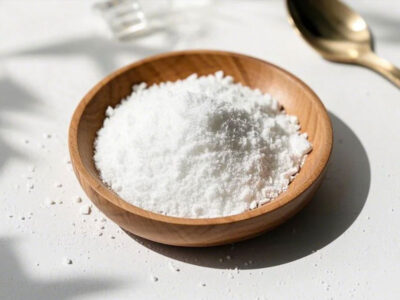
Allulose Sweetener
Allulose sweetener is a rare sugar with about 70% of sucrose sweetness and almost…
Isomaltitol Powder
Isomaltitol powder is a sugar alcohol from sucrose with a clean sugar-like taste and…
Related Posts