
Infant Formula: The Primary Application for GOS
Infant formula represents the dominant commercial application for galacto-oligosaccharides. Human milk contains approximately 5 to 15 g/L of human milk oligosaccharides (HMOs), which serve as the primary prebiotic substrate for developing the infant gut microbiome. Since bovine milk contains only trace amounts of oligosaccharides, formulators add GOS to close this gap and more closely approximate the prebiotic profile of human milk.
The standard industry practice pairs GOS with fructo-oligosaccharides (FOS) at a 9:1 ratio. This blend was established based on the molecular weight distribution and glycosidic linkage patterns found in human milk oligosaccharides. GOS provides the predominant galactose-based chains with beta-1,4 and beta-1,6 linkages, while the FOS fraction complements the shorter-chain oligosaccharide profile. Typical inclusion rates in standard infant formula range from 0.3 to 0.8 g per 100 mL of reconstituted product, delivering approximately 4 to 6 g of GOS per day for an average feeding infant.
Regulatory frameworks governing GOS use in infant formula vary by market. In the European Union, GOS is authorized as a novel food ingredient under Regulation (EU) 2015/2283, with purity and specification requirements outlined in Commission Delegated Regulation (EU) 2016/127. The EU permits GOS at levels up to 0.8 g per 100 mL in infant formula and up to 1.2 g per 100 mL in follow-on formula.
In China, GOS received approval from the former Ministry of Health in 2008 and is listed as a permitted nutritional fortifier in GB 14880. Chinese regulations require GOS purity of at least 57% on a dry basis for infant formula applications, and finished products must comply with GB 10765 for infant formula and GB 10767 for older infant formula. Maximum usage levels are specified by product subcategory.
The United States FDA considers GOS as Generally Recognized as Safe (GRAS) for use in infant formula based on published notifications. Typical GRAS determinations cover both GOS syrup and powder forms with specifications aligned to the 9:1 GOS:FOS blend. Inclusion follows current Good Manufacturing Practices, with maximum levels generally aligned to European standards.
Manufacturers operating across multiple markets typically source GOS that meets the most stringent applicable standard among their target regions. Organic GOS derived from lactose sourced from certified organic dairy operations adds an additional compliance layer, requiring adherence to organic certification standards in parallel with infant formula regulations.
Dairy Products: Yogurt, Fermented Milk, and Cheese
Dairy products offer a natural matrix for GOS incorporation. The ingredient’s origin from milk lactose creates inherent compatibility with dairy processing, and GOS contributes to multiple aspects of fermented dairy formulation.
In yogurt and fermented milk drinks, GOS demonstrates compatibility with standard starter cultures including Streptococcus thermophilus and Lactobacillus delbrueckii subsp. bulgaricus. The acidification curve during fermentation follows expected trajectories with GOS addition rates up to 3% by weight, which is a practical advantage, since some prebiotic fibers can slow culture metabolism or alter organoleptic profiles during fermentation.
The texture contribution of GOS in dairy applications merits attention. At typical inclusion levels of 1 to 3% in yogurt, GOS adds modest body and mouthfeel through its water-binding capacity. While not a primary texturant, GOS can partially offset the loss of solids when formulating reduced-fat or reduced-sugar dairy products. Formulators often pair GOS with a small amount of modified starch or pectin to achieve the target viscosity and syneresis control.
Synbiotic potential is a significant value proposition for GOS in dairy. Combining GOS with probiotic strains such as Bifidobacterium animalis subsp. lactis BB-12, Lactobacillus rhamnosus GG, or Lactobacillus acidophilus creates a synbiotic system where the prebiotic selectively supports probiotic viability during refrigerated shelf life. Studies report improved probiotic survival rates at four weeks when GOS is present at 1.5 to 2.5% in fermented milk matrices.
In cheese applications, GOS has been evaluated in processed cheese spreads, fresh cheeses, and semi-hard varieties. At 2 to 4% inclusion in processed cheese, GOS replaces a portion of fat while contributing to spreadability without compromising melt characteristics. In fresh cheeses such as quark and fromage frais, GOS adds prebiotic functionality without altering the clean flavor profile expected in these products.
Functional Beverages and Liquid Nutrition
Functional beverages present distinct formulation challenges for prebiotic ingredients. GOS performs well across the critical parameters manufacturers evaluate for liquid applications.
Dissolution is straightforward with GOS powder or syrup forms. Powdered GOS dissolves rapidly in water at ambient temperature with gentle agitation, reaching full dissolution within two to three minutes at concentrations up to 10% by weight. The resulting solution is clear to slightly hazy. Syrup forms, typically 75% dry matter, disperse almost instantly and are preferred for continuous liquid batching operations.
pH stability is strong across the acidic range relevant to most beverages. GOS maintains structural integrity at pH 3.0 to 7.0 for shelf-life durations of 6 to 12 months at ambient storage. Below pH 3.0, some hydrolysis of glycosidic bonds can occur over extended storage, particularly at elevated temperatures. For highly acidic formulations such as wellness shots, manufacturers should conduct accelerated shelf-life testing to confirm GOS stability in their specific matrix.
Thermal processing compatibility makes GOS suitable for the full range of beverage manufacturing methods. GOS withstands High-Temperature Short-Time pasteurization at 72 degrees Celsius for 15 seconds with no measurable degradation. Ultra-High Temperature processing at 135 to 140 degrees Celsius for two to four seconds similarly preserves GOS structure. Retort sterilization at 121 degrees Celsius for 10 to 15 minutes results in loss typically below 5%, making GOS viable for shelf-stable ready-to-drink formats.
Application examples in the current market include protein-fortified beverages with GOS at 2 to 4 g per serving to support protein digestion, meal replacement shakes where GOS contributes to the fiber declaration and satiety signaling, and wellness shots where GOS serves as the prebiotic backbone in 60 mL concentrated formats. At approximately 2 kcal per gram, GOS is favorable for calorie-conscious formulations compared to digestible carbohydrates at 4 kcal per gram.
Clinical and Medical Nutrition
Clinical nutrition applications require ingredients that combine functional benefits with demonstrated tolerance and safety in vulnerable populations. GOS meets these requirements and has been incorporated into a range of medical nutrition products.
In enteral nutrition formulas, GOS serves as a source of fermentable fiber that supports gut barrier function and helps maintain bowel regularity in tube-fed patients, a population at elevated risk of both constipation and diarrhea. Typical inclusion ranges from 1.0 to 2.0 g per 100 mL, often as part of a multi-fiber blend that combines GOS with other prebiotic fibers to provide fermentation across the length of the colon.
Digestive tolerance is well-characterized for GOS in adult populations. Clinical studies report that daily doses up to 10 to 15 g are well tolerated, with mild transient digestive symptoms at the upper end of this range. Below 5 g per day, symptoms are generally comparable to placebo. For patients with compromised gut function, an incremental introduction protocol starting at 2 to 3 g per day is recommended.
For elderly nutrition, GOS addresses several age-related nutritional concerns. Constipation affects a significant proportion of older adults, and the bifidogenic effect of GOS contributes to improved stool frequency and consistency. Evidence also suggests that GOS-mediated changes in gut microbiota may support calcium absorption, relevant for elderly populations at risk of osteoporosis, and immune function, which declines with age. Elderly nutritional products typically incorporate GOS at 2.5 to 5 g per serving.
Low glycemic response is a further advantage in clinical applications. GOS is not digested by human enzymes in the small intestine and does not raise blood glucose, making it suitable for diabetic and pre-diabetic patient populations and for specialized nutrition products formulated for glycemic management.
Bakery, Snacks, and Cereal Products
Integrating prebiotic fibers into baked goods and snacks presents both opportunities and technical considerations. GOS addresses these effectively across multiple product formats.
In bread and baked goods, GOS participates in the Maillard reaction during baking, contributing to crust color development. Formulators can reduce or eliminate added reducing sugars when GOS is present, as the galactose units released during early-stage Maillard browning provide sufficient reducing ends for color formation. Typical inclusion in bread ranges from 2 to 5% of flour weight, delivering approximately 1 to 2.5 g of prebiotic fiber per slice.
Water retention is another functional contribution in bakery systems. GOS binds water through hydrogen bonding, reducing moisture migration during storage and extending perceived freshness. In accelerated shelf-life testing, bread containing 3% GOS showed measurable improvements in crumb softness at day seven compared to control formulations without added humectants.
In snack bars and cereal products, GOS functions as both a prebiotic fiber source and a binder syrup in liquid form. Bar formulations incorporating GOS syrup at 8 to 12% of total formula weight achieve acceptable cohesion and texture while delivering 3 to 5 g of prebiotic fiber per 40 g bar. For extruded cereal products, GOS powder can be incorporated into the dry mix pre-extrusion, though processors should note that expansion ratios may decrease slightly at addition levels above 5% due to water-binding properties.
Crackers and flatbreads benefit from GOS at lower inclusion levels of 1 to 3%. At these levels GOS contributes to the nutritional profile without affecting lamination and sheeting properties. The clean taste profile of GOS, mildly sweet at approximately 30 to 35% of sucrose sweetness on an equal weight basis, allows flavor systems to remain uncompromised.
Pet Food Manufacturing
Pet food manufacturing has emerged as a growing application area for GOS, driven by consumer demand for functional pet nutrition that mirrors trends in human food.
Extrusion stability is a critical parameter in dry pet food production. Standard extrusion conditions with temperatures of 120 to 150 degrees Celsius, pressures of 20 to 40 bar, and residence times of 30 to 90 seconds result in GOS degradation typically below 10%. This thermal resilience allows pre-extrusion incorporation into the dry mix, simplifying manufacturing compared to post-extrusion coating required for more heat-sensitive functional ingredients.
Palatability testing indicates that GOS at inclusion rates of 0.5 to 2.0% in dry dog food does not negatively affect acceptance, and the mild sweetness may contribute a slight positive signal. In cat food applications, higher inclusion levels above 1.5% have been associated with reduced acceptance in some formulations, suggesting that species-specific optimization is warranted.
Efficacy data in companion animals focuses on gut health outcomes. Research in dogs demonstrates that GOS supplementation at 0.5 to 1.0 g per day leads to significant increases in fecal Bifidobacterium and Lactobacillus populations, reductions in fecal pH, and improved stool quality scores. In cats, similar bifidogenic effects have been observed at 0.3 to 0.7 g per day. These outcomes support inclusion in both standard maintenance diets and therapeutic gastrointestinal formulas.
For wet pet food, GOS syrup integrates into the gravy or gel matrix during retort thermal processing. Inclusion at 0.5 to 1.5% contributes to the fiber declaration while supporting digestive health claims.
Processing Considerations for Manufacturers
Manufacturers evaluating GOS for their product lines should consider several practical parameters that influence formulation success and production efficiency.
Physical Form and Handling
The physical form of GOS determines handling requirements. GOS powder, typically at least 90% dry matter with GOS content of at least 57% on a dry basis, is free-flowing but moderately hygroscopic. Storage at 25 degrees Celsius or below and 60% relative humidity or below in sealed containers prevents caking and maintains flowability. GOS syrup, typically 75% dry matter, requires heated storage at 35 to 45 degrees Celsius to maintain pumpable viscosity and should be transferred through insulated or heat-traced lines.
Application Suitability by Product Category
| Product Category | Typical GOS Inclusion | Key Processing Parameter | Primary Technical Benefit |
|---|---|---|---|
| Infant Formula (Standard) | 0.3–0.8 g/100 mL | Heat treatment stability | Mimics HMO prebiotic profile |
| Infant Formula (Specialty) | 0.5–1.2 g/100 mL | Regulatory compliance | Digestive comfort support |
| Yogurt/Fermented Milk | 1–3% (w/w) | Fermentation compatibility | Synbiotic system with cultures |
| Cheese Products | 2–4% (w/w) | Melt and texture impact | Fat replacement with prebiotic claim |
| Functional Beverages | 2–4 g/serving | pH stability (3.0–7.0) | Soluble prebiotic fiber delivery |
| Clinical/Enteral Nutrition | 1.0–2.0 g/100 mL | Osmolality management | Digestive tolerance for patients |
| Bread and Bakery | 2–5% of flour weight | Maillard browning contribution | Water retention and fiber enrichment |
| Snack Bars | 8–12% of total formula | Binding and cohesion | Prebiotic fiber delivery in bars |
| Dry Pet Food | 0.5–2.0% (w/w) | Extrusion stability to 150 °C | Gut health for dogs and cats |
| Wet Pet Food | 0.5–1.5% (w/w) | Retort process stability | Digestive health claims |
Labeling and Regulatory Considerations
Labeling requirements vary by jurisdiction. In the EU, GOS is declared as galacto-oligosaccharides in the ingredients list and contributes to the dietary fiber declaration under Regulation (EU) No 1169/2011. In the US, GOS may be declared as galacto-oligosaccharides or GOS and contributes to the dietary fiber content for Nutrition Facts labeling purposes, provided it meets the FDA definition of dietary fiber with demonstrated physiological benefit. In China, GOS is declared in accordance with GB 28050 for prebiotic and dietary fiber labeling.
Analytical Methodology
Manufacturers should verify the analytical method used to quantify GOS in finished products. High-performance anion-exchange chromatography with pulsed amperometric detection provides reliable quantification of individual oligosaccharide species from DP2 through DP8. Enzymatic methods offer a simpler but less specific approach suitable for routine quality control. Method selection should align with the intended label claim and regulatory filing requirements.
Sensory Properties
Sensory considerations are minimal for GOS compared to many fiber alternatives. The ingredient carries a neutral to mildly sweet taste at approximately 0.3 to 0.35 relative sweetness versus sucrose and does not introduce off-notes, bitterness, or astringency at typical use levels. This sensory neutrality allows manufacturers to add prebiotic fiber without reformulating flavor systems, a practical advantage for product developers working within established flavor profiles.
About Our Organic GOS
Our organic GOS is produced from certified organic lactose through an enzymatic conversion process that delivers consistent chain-length distribution and reliable prebiotic activity. The ingredient meets EU Organic, USDA NOP, and China Organic certification standards, and complies with purity and specification requirements for infant formula applications across major global markets.
Recommended Products

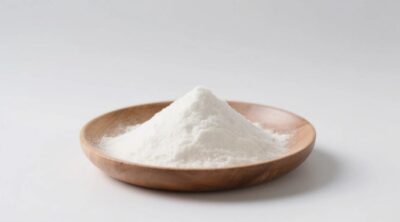
Galactooligosaccharides Powder
Galactooligosaccharides (GOS) is a prebiotic from lactose that selectively feeds bifidobacteria. Heat and acid…
Organic Isomaltooligosaccharides
Organic isomaltoligosaccharides (IMO) powder is a certified-organic prebiotic fiber (90%+) from non-GMO corn or…
Related Posts


