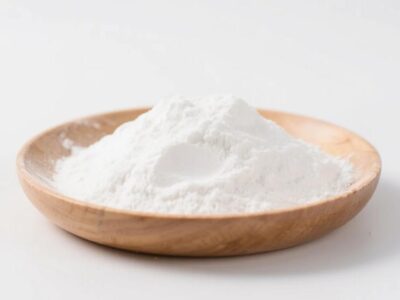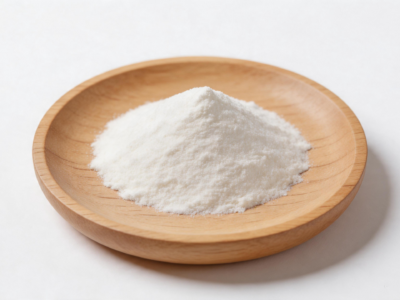
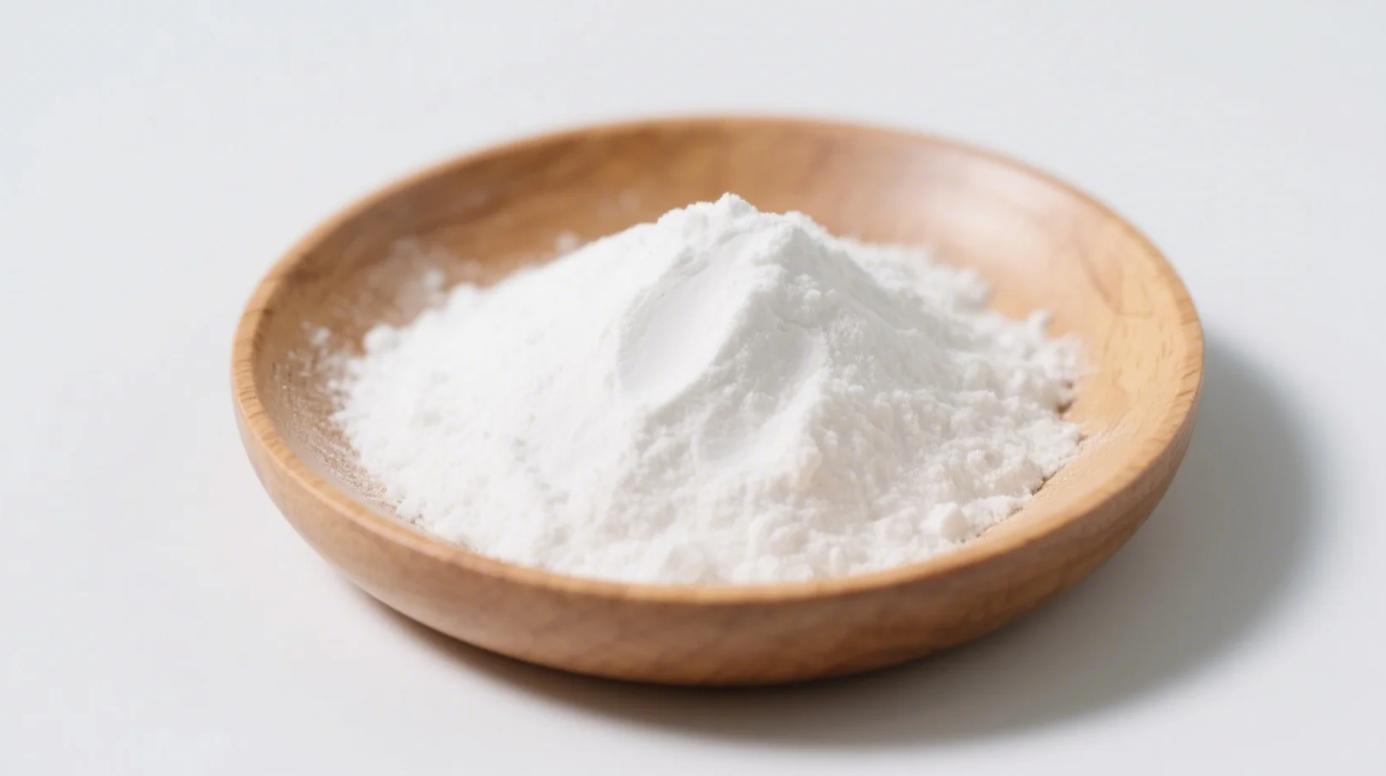
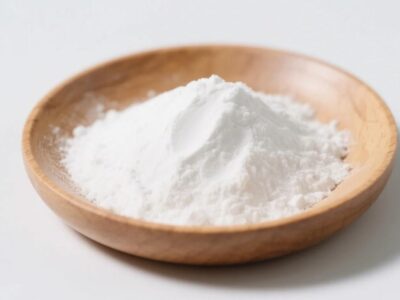
Our certified organic inulin powder is a natural, plant-based dietary fiber extracted from organically grown chicory root (Cichorium intybus). With its mild sweetness, excellent solubility, and proven prebiotic benefits, it serves as a multi-functional ingredient for sugar reduction, fiber enrichment, fat mimicking, and digestive wellness.
Ideal for clean-label, keto-friendly, low-glycemic, and gut-health-focused products, our organic inulin meets global standards for purity, sustainability, and performance.
What Is Organic Inulin?
Inulin is a fructan—a chain of fructose molecules—naturally found in plants like chicory, Jerusalem artichoke, and garlic. Our organic inulin powder is produced through a gentle hot-water extraction process from certified organic chicory roots, followed by filtration, concentration, and spray-drying. No chemical solvents or synthetic additives are used.
It contains 90%+ dietary fiber (as soluble fiber), provides only 1–2 kcal/g, and has a glycemic index near zero—making it suitable for low-sugar and low-calorie formulations.
Also Known As: Names and Synonyms in the Trade
Inulin is referred to by a number of names that reflect either the source plant or the analytical fraction. The list below covers the terms used in specifications, in regulatory dossiers and on retail labels.
- Chicory inulin – the source-qualified name for material from chicory root
- Chicory root fiber – the label-friendly US designation
- Chicory root extract – the ingredient-deck name used in some markets
- Jerusalem artichoke inulin – the equivalent material from Helianthus tuberosus
- Agave inulin – material from a different botanical source, with a shorter chain length
- Prebiotic fiber – the functional claim name
- Soluble fiber – the claim name used when the prebiotic claim is not made
- Fructan – the chemical family: β-2,1 linked fructose polymers
Inulin is a fructan: a chain of fructose units, usually terminated by a glucose unit, with a degree of polymerisation that depends on the source and the harvest. Chicory root gives the medium-chain material most often used in food, while Jerusalem artichoke gives a comparable fructan from a different crop. Our standard grade is chicory-root inulin at ≥90% inulin content and an average DP of 10–12; material from other botanical sources can be discussed for specific projects. Oligofructose is a separate, shorter-chain fraction and is not interchangeable with inulin in a formulation.
Technical Specifications
| Parameter | Organic Inulin Powder |
|---|---|
| Source | Chicory root (Cichorium intybus) |
| Appearance | Fine, white to off-white free-flowing powder |
| Odor & Taste | Mild, slightly sweet |
| Inulin Content (Dry Basis) | ≥90% |
| Dietary Fiber (Total) | ≥90% (as soluble fiber) |
| Moisture Content | ≤5.0% |
| pH (10% aqueous solution) | 5.0 – 7.0 |
| Ash Content | ≤0.5% |
| Degree of Polymerization (DP) | Average DP 10–12 (short-chain to medium) |
| Solubility | Soluble in warm water (~10–15 g/100 mL cold; higher at elevated temperatures) |
| Shelf Life | 24 months (stored sealed in cool, dry conditions) |
| Heavy Metals (Maximum Limits) | |
| – Lead (Pb) | ≤0.1 mg/kg |
| – Arsenic (As) | ≤0.1 mg/kg |
| – Cadmium (Cd) | ≤0.05 mg/kg |
| – Mercury (Hg) | ≤0.01 mg/kg |
| Microbiological Criteria | |
| – Total Plate Count | ≤1,000 CFU/g |
| – Yeast & Mold | ≤100 CFU/g |
| – Escherichia coli | Absent in 10 g |
| – Salmonella spp. | Absent in 25 g |
| – Listeria monocytogenes | Absent in 25 g |
| Certifications | USDA Organic, EU Organic, Non-GMO Project Verified, Kosher, Halal (available), Gluten-Free Certified (<5 ppm), Allergen-Free |
All testing conducted in ISO 17025-accredited laboratories using validated methods (e.g., HPLC for inulin content, ICP-MS for heavy metals). Complies with FDA 21 CFR, EU Regulation (EC) No 1333/2008, and Codex guidelines for dietary fiber ingredients.
Sourcing, Certification and Regulatory Status
| Jurisdiction / Standard | Regulatory status | Legal name | Notes |
|---|---|---|---|
| United States | GRAS; affirmed food ingredient | Chicory root fiber, inulin | Dietary fiber declaration supported by AOAC 2001.03 and AOAC 2011.25 |
| European Union | Regulated as a food ingredient | Inulin, chicory inulin | Organic certification to (EU) 2018/848; fiber claim available at ≥3 g per 100 g |
| Codex Alimentarius | Codex Stan 192 compliant | Inulin | Used in dietary foods and supplements across export markets |
| Retail labeling | Allergen and organic statements | Organic inulin | Chicory-sourced material keeps the allergen statement short |
The two numbers that decide how inulin behaves in a recipe are the inulin content and the degree of polymerisation. A higher DP fraction dissolves more slowly and ferments further along the colon; a lower DP fraction is sweeter and more soluble. Both are reported per batch on the certificate of analysis.
Applications
Organic inulin powder enhances both nutrition and functionality across diverse categories:
- Beverages: Adds soluble fiber to juices, smoothies, and RTDs without cloudiness
- Dairy & Alternatives: Improves mouthfeel in yogurts, ice cream, and plant-based milks
- Bakery: Replaces sugar/fat, retains moisture, and extends shelf life in breads and muffins
- Nutraceuticals: Base for prebiotic supplements, powders, and chewables
- Confectionery: Used in soft candies and gummies for fiber enrichment
- Infant Formula & Clinical Nutrition: Used as a fiber ingredient in some regulated infant formula applications (subject to local regulatory approval)
Note: High doses (>15–20 g/day) may cause mild digestive discomfort in sensitive individuals; gradual introduction is recommended.
Format and Grade Selection
| Application | Recommended use | Typical use level | Formulation note |
|---|---|---|---|
| Plant-based yogurt and drinks | Direct dry blend | 1.5–4 g per 100 g | Adds body and supports the prebiotic claim |
| Bakery and biscuits | Dry blend | 3–8% of the flour weight | Improves crumb and replaces part of the sugar solids |
| Cereal and protein bars | Dry blend | 3–8 g per bar | Contributes bulk with mild sweetness |
| Capsules and sachets | Direct fill or blend | 1–4 g per dose | Free-flowing when kept dry |
| Powdered drink mixes | Dry blend | 2–5 g per serving | Dissolves clear in warm water |
| Fat reduction in dairy | Hydrated in the water phase | 0.5–2% of the recipe | Mimics the mouthfeel lost when fat is reduced |
Inulin works best when the dose is built up rather than added at once, and when the formulation has a water phase to carry it. Start with a 3 g per serving fiber claim, confirm the mouthfeel, then increase if the recipe allows.
Why Choose Our Organic Inulin?
We partner with certified organic chicory growers and use eco-friendly extraction methods to preserve bioactivity and purity. Our production facility follows GMP and HACCP protocols, with dedicated lines to prevent cross-contact with major allergens.
Every shipment includes full documentation: Certificate of Analysis (CoA), Organic Certificate, Gluten-Free Statement, and Safety Data Sheet (SDS)—ensuring regulatory compliance and formulation confidence.
Packing
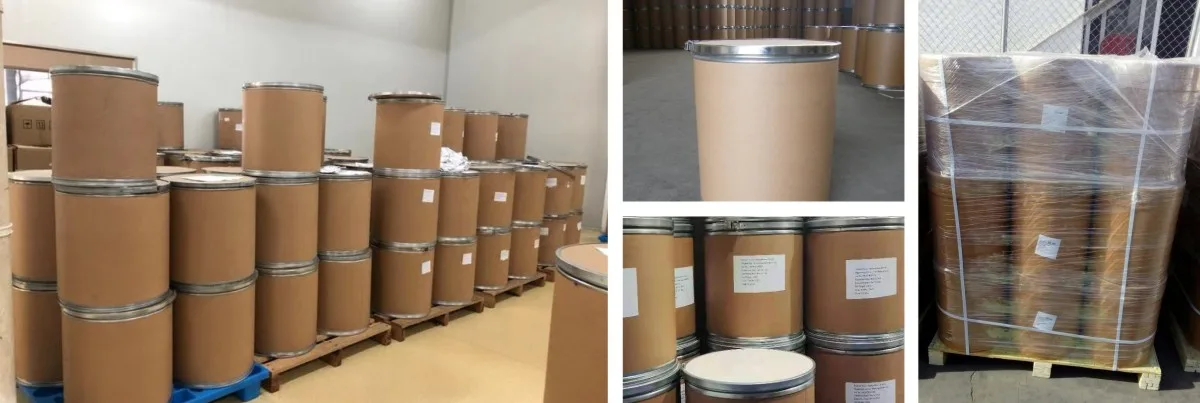
Available packaging: 10 kg or 25 kg food-grade multi-wall paper bags with PE liner; bulk options upon request.
FAQs
Q: Can chicory inulin replace sugar?
A: It is mildly sweet (about 10% of sucrose) and reduces sugar by improving mouthfeel in low-calorie products.
Q: Is inulin suitable for keto diets?
A: Both variants are low-carb (~10g net carbs per 100g) and suitable for keto formulations.
Q: Does inulin cause bloating?
A: Start with small doses (5g/day) to allow gut adaptation.
Q: Do you offer private labeling?
A: Yes! Custom branding available for both inulin types.