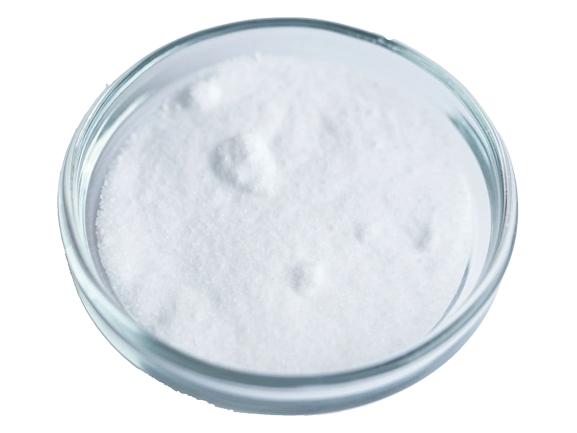
What is trehalose powder?
Trehalose, also known as mycose, is a natural alpha-linked disaccharide formed by an α,α-1,1-glucoside bond between two α-glucose units. In 1832, H.A.L. Wiggers discovered trehalose in ergot of rye, and in 1859 Marcellin Berthelot isolated it from trehala manna, a substance made by weevils, and named it trehalose.
It can be synthesized by bacteria, fungi, plants, and invertebrate animals. It is implicated in anhydrobiosis — the ability of plants and animals to withstand prolonged periods of desiccation.
It has high water retention capabilities and is used in food and cosmetics.
The sugar is thought to form a gel phase as cells dehydrate, which prevents disruption of internal cell organelles, by effectively splinting them in position. Rehydration then allows normal cellular activity to be resumed without the major, lethal damage that would normally follow a dehydration/rehydration cycle.
Also Known As: Names and Synonyms in the Trade
Trehalose is named after the manna it was first isolated from, and the older names still turn up on data sheets and in catalogue entries. Three things are worth separating at the outset: the anhydrous and the dihydrate forms carry different registry numbers and different water contents, the α,α-1,1 linkage is what makes the molecule non-reducing, and maltose is a different disaccharide that is sometimes offered as a lower-cost substitute. The list below covers the names that come up in enquiries and reference-standard catalogues.
- Mycose – the older synonym, used in the nineteenth-century isolation literature and still listed in chemical catalogues
- Trehalose dihydrate – the crystalline form in which food-grade material is usually supplied, with its own registry number (CAS 6138-23-4); the water content on the specification sheet is what identifies it
- α-D-Glucopyranosyl-α-D-glucopyranoside – the systematic name, which states the α,α-1,1 linkage that makes the molecule non-reducing
- FEMA 4600 – the flavouring-substance number recorded for trehalose dihydrate in the FDA inventory
- Trehalose (anhydrous, CAS 99-20-7) – the water-free form, specified where the water content of the finished system has to be held down; it is not interchangeable with the dihydrate on a weight-for-weight basis
- D-(+)-Trehalose – the catalogue form of the name, which states the configuration explicitly
Match the form on the label to the form on the certificate of analysis. The anhydrous and the dihydrate materials differ in water content, so a dosage written for one is not a dosage written for the other, and the name written into the contract and the specification is the one that governs the shipment.
Specification
| Product Name | Trehalose Powder |
|---|---|
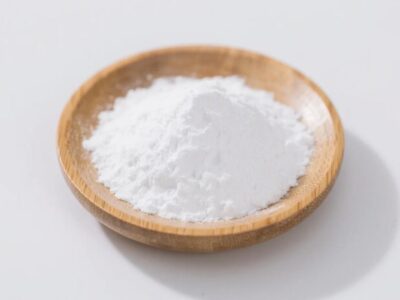
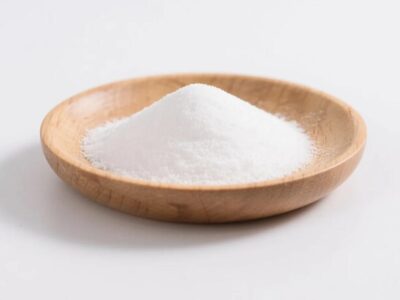
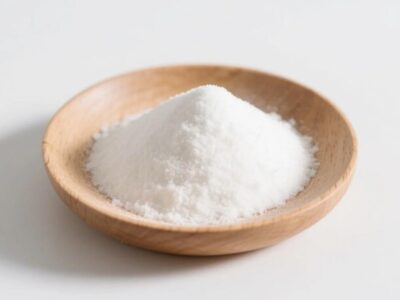
| Appearance | White Crystalline Powder |
| Purity (Trehalose) | ≥98% |
| Loss on drying | ≤1.5% |
| Residue on ignition | ≤0.05% |
| pH | 5.0-6.7 |
| Arsenic | ≤0.5mg/kg |
| Lead | ≤0.5mg/kg |
| Color | ≤0.1 |
| Turbidity of solution | ≤0.05 |
| Viable counts | ≤300cfu/g |
| Yeasts and molds | ≤100cfu/g |
| Pathogenic | Negative |
| Coliform organisms | ≤30mpn/100g |
Sourcing, Certification and Regulatory Status
| Jurisdiction / Standard | Regulatory status | Legal name | Notes |
|---|---|---|---|
| European Union | Authorised novel food, carried in the Union list of novel foods | Trehalose | Authorised by Commission Decision 2001/721/EC of 25 September 2001 as a novel food or novel food ingredient, and now carried in the Union list established by Commission Implementing Regulation (EU) 2017/2470. The labelling has to carry the designation “trehalose” with a prominently displayed footnote stating that trehalose is a source of glucose, set in type at least as large as the ingredient list |
| United States | Affirmed GRAS; use limited only by good manufacturing practice | Trehalose | FDA issued a letter of no objection to GRAS Notice 000045 in October 2000. The dihydrate is also recorded in the substances-added-to-food inventory as a flavouring agent under FEMA No. 4600 |
| Japan | Food additive approval held since 1995 | Trehalose | Sold in Japan under a food additive approval from November 1995, with no restriction on the food categories in which it may be used. Claim-bearing use runs through the Foods with Function Claims and FOSHU routes and has to be confirmed for the finished product |
| Codex Alimentarius | Evaluated by JECFA; ADI not specified | Trehalose | JECFA evaluated trehalose in 2000 at its 55th meeting and allocated an ADI of “not specified”; the specifications are published in the FAO Combined Compendium of Food Additive Specifications. No product-specific Codex standard applies |
Nothing in the regulatory position is unusual for a disaccharide, and the practical questions are the ones that apply to sucrose: which crystalline form, what the water content is, and how the material is counted on the nutrition panel. Because trehalose is fully available to the body as glucose, most markets count it as a sugar rather than as a fibre or a bulk sweetener, so confirm the labelling treatment and any claim wording with the destination market before the first shipment.
Application
1 Bakery products and cakes Products
2 Sweets Products
3 Pudding & Ice-cream Products
4 Beverages Products
5 Rice and Flour Products
6 Aquatic products & seafood
Cosmetics Industry
Trehalose can help protect epidermal cells and provide moisturizing properties in cosmetic formulations, supporting skin hydration and smoothness.
Format and Grade Selection
Two questions are settled before a specification is agreed: which crystalline form, and which purity. Both follow from the process rather than from the label.
- Trehalose dihydrate – the standard food-grade crystal, the form to specify where the water content of the finished system is not the binding constraint
- Anhydrous trehalose – the form to specify where the water contribution has to be held down; the two are not interchangeable by weight, so the specification sheet has to state which form is quoted
- ≥98% purity – the assay on our specification sheet, with loss on drying held to ≤1.5% and residue on ignition to ≤0.05%
- Colour and turbidity limits – colour is held to ≤0.1 and the turbidity of the solution to ≤0.05, which is the pair that matters where the crystal has to disappear into a clear beverage
- Bakery, confectionery and frozen formats – cakes and bakery products, sweets, puddings and ice cream, beverages, and rice and flour products, the applications where the water-retention behaviour is the reason for choosing trehalose
- Aquatic products and seafood – the application where the cryoprotectant behaviour is used rather than the sweetness
Handling Note: Trehalose is non-reducing and only lightly sweet, so it browns very little in a bake and can be used where a reducing sugar would colour or react. A formulation built on glucose or maltose has to be adjusted rather than simply swapped.
Tell us the application and the process temperature when requesting a sample, and we will quote the form and the purity that fit it, together with the specification sheet for the grade so that the form is unambiguous on paper before the first order.
FAQs
Q: How is the crystalline form and the water content confirmed?
A: Loss on drying is limited to ≤1.5% on our specification sheet and the figure is reported for every lot on the Certificate of Analysis. If your process calls for a particular hydrate form, tell us which one and we will state it explicitly in the specification rather than leaving it to the label.
Q: What does each lot’s certificate of analysis cover?
A: Purity (trehalose) ≥98%, loss on drying ≤1.5%, residue on ignition ≤0.05%, pH 5.0–6.7, arsenic ≤0.5 mg/kg, lead ≤0.5 mg/kg, colour ≤0.1 and turbidity of solution ≤0.05, together with viable counts ≤300 cfu/g, yeasts and moulds ≤100 cfu/g, coliform organisms ≤30 mpn/100 g and pathogens negative.
Q: Is trehalose a reducing sugar, and does that matter in a bake?
A: It is a non-reducing disaccharide: the two glucose units are joined through an α,α-1,1 bond, so it does not take part in browning the way glucose or maltose does. That is the reason it is chosen where a formulation needs water retention and stability rather than colour, and it also means a recipe built around a reducing sugar has to be adjusted rather than simply substituted.
Q: Which applications is trehalose used in, and can it replace maltose or sucrose?
A: The established uses are bakery products and cakes, sweets, puddings and ice cream, beverages, rice and flour products, and aquatic products and seafood, with cosmetic uses alongside. It is not a weight-for-weight substitute for maltose or sucrose: the sweetness and the browning behaviour differ, so the recipe has to be rebalanced rather than the sugar swapped.
Q: How is trehalose declared on the nutrition panel?
A: Trehalose is fully available to the body as glucose, so it is counted as a sugar rather than as a fibre or a bulk sweetener in the markets where it is used. In the EU the ingredient list also has to carry a footnote stating that trehalose is a source of glucose. Confirm the exact declaration with the destination market before the artwork is signed off.