
Dietary Fiber Market Overview
The global dietary fiber market was valued at approximately $10 billion in 2024 and is projected to grow at a compound annual growth rate (CAGR) of roughly 9 percent through 2029, according to The Business Research Company. This growth is propelled by rising consumer awareness of gut health, increasing demand for functional foods, and regulatory support for fiber fortification across North America, Europe, and Asia-Pacific.
Asia-Pacific is the largest regional market, accounting for roughly 40 percent of global consumption in 2024 (The Business Research Company), with Europe and North America following. Europe’s demand is driven by stringent sugar reduction targets and an established functional foods culture. For a deeper understanding of how polydextrose functions in food systems, see our guide on why polydextrose is added to food and its multifunctional benefits.
Polydextrose occupies a distinctive position in this landscape, serving simultaneously as a bulking agent, humectant, fermentable soluble fiber, and sugar replacer—a multifunctionality that appeals to formulators across baked goods, beverages, and confectionery. The global polydextrose market was estimated at approximately $430 million in 2025 and is projected to grow at a CAGR of about 13 percent through 2031, according to Mordor Intelligence, as sugar reduction mandates expand and clean-label fiber fortification becomes mainstream.
Quick Comparison at a Glance
The table below provides a side-by-side evaluation of eight dietary fibers commonly used in food and beverage applications.
| Fiber | Calories (kcal/g) | Fiber Content | Prebiotic Effect | Heat Stability | pH Stability | Taste Impact | Typical Cost | Tolerance (g/day) | Best Applications | Key Limitation |
|---|---|---|---|---|---|---|---|---|---|---|
| Polydextrose | ~1 | ~90% | Bifidogenic (fermented by gut microbiota) | Excellent (up to 200 deg C) | Excellent (pH 2.5-7.0) | Neutral, slight sweetness | Moderate | 30-50 (well tolerated) | Beverages, bars, baked goods, confectionery, dairy | Lower prebiotic potency per gram vs FOS |
| Inulin | ~1.5 | ~90% | Strong at low dose (2-5g) | Moderate (degrades above 160 deg C) | Moderate (hydrolyzes below pH 4) | Neutral, slight sweetness | Low-moderate | 10-20 (gas/bloating above) | Dairy, bakery, breakfast cereals, snack bars | Gas/bloating, crystallizes at high concentration, poor acid stability |
| Resistant Dextrin | ~2 | ~85% | Strong, specific strains | Excellent (up to 180 deg C) | Excellent (pH 2-7) | Neutral, clean | Moderate-high | 40-60 (excellent tolerance) | Beverages, clear liquids, nutritional supplements, bars | Higher calorie vs polydextrose, weaker bulking/humectant properties |
| FOS | ~1.5 | ~95% | Very strong at low dose (2-5g) | Low (degrades above 140 deg C) | Low (rapid hydrolysis below pH 4) | Mildly sweet | Moderate | 10-15 (GI discomfort above) | Low-acid dairy, dry blends, supplements, cereal bars | Poor processing stability, low tolerance threshold |
| Soluble Corn Fiber | ~1 | ~85% | Moderate | Good (up to 180 deg C) | Good (pH 3-7) | Neutral | Low | 30-50 | Beverages, baked goods, bars, confectionery | Less documented prebiotic research, limited organic availability |
| Maltodextrin | ~4 | 0% (NOT a fiber) | None | Good | Good | Neutral to mildly sweet | Low | Not applicable (digestible carbohydrate) | Bulking, texture, spray-drying carrier | Fully digestible, spikes blood sugar, no fiber claim, often mistaken for fiber |
| Psyllium | ~2 | ~80% (mostly insoluble) | Weak (primarily bulking) | Moderate (gelatinizes, thickens) | Moderate | Earthy, can be gritty | Low | 10-15 (GI tolerance varies) | Supplements, breads, gluten-free products | Strong gelling, gritty texture, flavor masking often required |
| Acacia Fiber | ~2 | ~90% | Strong, highly tolerable | Good | Good (pH 3-7) | Neutral, bland | High | 40-50 (excellent tolerance) | Beverages, clear liquids, premium applications | High cost, moderate viscosity at high concentrations |
This comparison highlights the multifunctional advantage of polydextrose: excellent processing stability, meaningful fiber content, low caloric value, above-average gastrointestinal tolerance, and moderate cost. Inulin offers stronger prebiotic potency at low doses but struggles in acidic and high-heat applications, while resistant dextrin delivers superior tolerance but at higher cost and caloric load. Maltodextrin, though often grouped with fibers in formulation conversations, is a fully digestible carbohydrate with no fiber claim eligibility.
Polydextrose vs Inulin
Inulin is arguably the most recognized prebiotic fiber in the global market, widely used in dairy, bakery, and nutritional bars. Derived primarily from chicory root, it stimulates beneficial gut bacteria at doses of 2 to 5 grams per day. However, a detailed polydextrose vs other dietary fibers comparison reveals important functional differences that favor polydextrose in many commercial applications.
Prebiotic potency is one area where inulin often holds an edge: it selectively feeds bifidobacteria with notable efficiency, with effects documented across dozens of clinical studies, while polydextrose produces a broader fermentation profile across the colonic microbiota. For products where a strong, specific prebiotic claim is the primary marketing objective, inulin may be the preferred choice, provided processing conditions permit.
Where polydextrose pulls ahead decisively is in processing robustness: inulin begins to degrade at ~140–160 degrees Celsius and hydrolyzes significantly below pH 4, making it unsuitable for fruit-flavored beverages, acidic confectionery, and many high-temperature extrusion or baking processes. Polydextrose remains stable to 200 degrees Celsius and maintains its structural integrity from pH 2.5 to 7. For shelf-stable, low-pH beverage products, organic polydextrose syrup offers specific advantages in healthy beverage formulations that inulin simply cannot match.
Gastrointestinal tolerance is another critical differentiator: inulin can cause bloating, gas, and abdominal discomfort at doses as low as 10 grams per day in sensitive individuals, limiting its inclusion rate in products aiming for meaningful per-serving fiber claims. Polydextrose users typically tolerate 30 to 50 grams per day without significant digestive complaints, enabling higher inclusion levels and stronger on-pack fiber declarations.
Cost and functionality round out the comparison: inulin is slightly more affordable per kilogram, but crystallization at high concentrations and degradation in acidic systems often lead to reformulation costs. Polydextrose functions as both a bulking agent and a humectant—an efficiency inulin cannot replicate in most matrices.
Polydextrose vs Resistant Dextrin
Resistant dextrin has emerged as a strong competitor in the soluble fiber category, prized for its exceptional digestive tolerance and clean sensory profile. Both fibers dissolve clearly and withstand demanding processing conditions, but they diverge in several commercially important dimensions.
Caloric density presents the first meaningful difference: polydextrose delivers approximately 1 kilocalorie per gram, while resistant dextrin contributes roughly 2. For formulators pursuing aggressive calorie reduction targets, this difference is significant in applications where fiber inclusion reaches 5 to 10 grams per serving, and polydextrose aligns more closely with low-calorie, high-fiber product positioning.
Prebiotic specificity represents a second point of divergence: resistant dextrin demonstrates strong, specific effects on particular bacterial strains with well-characterized fermentation kinetics, while polydextrose provides a broader but less concentrated prebiotic spectrum. In products where a scientifically precise prebiotic claim targeting specific strains is required, resistant dextrin may offer advantages. Our organic resistant dextrin product serves as a companion ingredient for formulators who need a complementary prebiotic profile alongside the multifunctional benefits of polydextrose.
Functional properties are where polydextrose distinguishes itself more clearly: as a humectant it binds water effectively in baked goods, bars, and intermediate-moisture products, and its bulking capability provides the physical mass and mouthfeel that sugar and fat normally contribute—a direct one-to-one replacement in many formulations that resistant dextrin cannot match.
Tolerance is excellent for both fibers, with resistant dextrin slightly ahead at 40 to 60 grams per day compared to polydextrose at 30 to 50 grams. Both perform well in clear, low-pH beverage systems, and cost favors polydextrose with a moderate price point versus the moderate-to-high position of resistant dextrin.
Polydextrose vs Fructooligosaccharides (FOS)
FOS are among the most potent prebiotic fibers available, stimulating beneficial bacterial growth at doses as low as 2 to 5 grams per day, which has made them popular in dietary supplements, infant nutrition, and functional dairy. However, closer comparison reveals significant processing and tolerance limitations that restrict the commercial applicability of FOS.
The prebiotic potency of FOS is indisputable: it is fermented rapidly and selectively by bifidobacteria, producing measurable increases in beneficial bacterial populations at lower doses than any other fiber in this comparison, while polydextrose requires higher inclusion levels, typically 5 to 10 grams or more per serving, to achieve comparable outcomes. For applications where prebiotic efficacy at minimal dose is paramount and processing conditions are gentle, FOS remains an excellent choice.
The critical weakness of FOS lies in its processing stability: it degrades above approximately 140 degrees Celsius and hydrolyzes rapidly below pH 4, making it unsuitable for pasteurized acidic beverages, high-temperature baked goods, retorted products, and any application involving prolonged heat or acid exposure. Polydextrose, stable to 200 degrees Celsius and across a pH range of 2.5 to 7.0, withstands all common food processing conditions without meaningful degradation.
Gastrointestinal tolerance further limits FOS: it reaches its tolerance threshold in most individuals at 10 to 15 grams per day, beyond which bloating, cramping, and loose stools commonly occur. Polydextrose users tolerate two to three times this amount, expanding the formulation range significantly.
Sweetness is a nuanced consideration: FOS carries a mild sweetness roughly 30 to 50 percent of sucrose—beneficial in reduced-sugar formulations but problematic in savory products—while polydextrose has a neutral taste with only the faintest sweetness, suitable across sweet and savory applications. For detailed guidance on using polydextrose powder in low-calorie and high-fiber formulations, refer to our article on how organic polydextrose powder supports low-calorie high-fiber food formulations.
Polydextrose vs Maltodextrin — The Critical Difference
No comparison in the fiber category is more frequently misunderstood than the distinction between polydextrose and maltodextrin. Many formulators, procurement professionals, and even some regulatory submissions conflate these two ingredients despite fundamental differences in their chemistry, metabolism, and regulatory classification.
Maltodextrin is not a dietary fiber. It is a partially hydrolyzed starch with a dextrose equivalent (DE) of 3 to 20—a fully digestible carbohydrate delivering approximately 4 kilocalories per gram with a glycemic response comparable to glucose. Digestive enzymes break it down completely in the small intestine, triggering insulin secretion, so it provides bulking and textural functionality but contributes fully to the caloric load and carbohydrate count of a product.
Polydextrose, by contrast, is a synthetic, indigestible polysaccharide that resists enzymatic hydrolysis in the small intestine and delivers approximately 1 kilocalorie per gram because it is partially fermented by colonic bacteria. The FDA classifies polydextrose as a dietary fiber that qualifies for fiber declarations on Nutrition Facts panels; maltodextrin receives no such classification and cannot support fiber claims.
The practical implications are significant: maltodextrin contributes fully digestible carbohydrate at 4 calories per gram with no fiber claim benefit, whereas the same formulation built on polydextrose contributes roughly 1 calorie per gram while adding 0.9 grams of dietary fiber.
The confusion persists because both are corn-derived soluble powders that provide body and texture, but any formulation strategy that treats them as interchangeable represents a fundamental error with regulatory and commercial consequences.
Market Trends and Growth Drivers
Several major trends are reshaping the dietary fiber market and influencing the adoption patterns of polydextrose and its competitors.
Sugar reduction remains the dominant growth driver. Regulatory bodies in over 50 countries have implemented sugar taxes, mandatory sugar labeling, or voluntary reduction targets, and Fortune Business Insights values the global sugar substitutes market at roughly $9.5 billion in 2025 with a projected CAGR of about 9 percent through 2034. Polydextrose is particularly well positioned here, providing the bulking, mouthfeel, and humectancy that are lost when sugar is removed.
Fiber fortification has moved from niche to mainstream: products carrying “high fiber” or “good source of fiber” claims consistently outperform their conventional counterparts, and regulatory frameworks in the United States, European Union, and several Asian markets explicitly recognize polydextrose as a dietary fiber.
Clean label expectations continue to rise, and organic certification has become a meaningful differentiator for premium positioning—organic polydextrose meets clean-label requirements while delivering the same technical performance as conventional material.
Plant-based foods, functional beverages, and keto and low-carbohydrate product development are accelerating in parallel. Polydextrose contributes mouthfeel and binding in dairy alternatives and meat analogues, dissolves clearly in ready-to-drink teas, enhanced waters, and sports nutrition drinks, and aligns with keto requirements through its negligible glycemic impact.
Choosing the Right Fiber for Your Application
The breadth of fiber options available to formulators makes the selection process both an opportunity and a challenge. The following five-criterion framework provides a structured approach, with guidance on when polydextrose is the optimal choice.
Application format is the logical starting point: liquid systems demand solubility and clarity, where polydextrose and resistant dextrin both dissolve to form clear solutions, while inulin may crystallize and psyllium forms gels. Dry applications prioritize dispersibility and particle size, where polydextrose powder blends consistently in bars, baking mixes, and powdered beverages.
Target calorie reduction comes next: polydextrose at approximately 1 kilocalorie per gram is preferable to resistant dextrin at 2 or maltodextrin at 4 when reduction targets are aggressive.
Fiber claim requirements matter as well—products targeting a “good source of fiber” claim at 2.5 grams per serving have more flexibility than those pursuing “excellent source” status at 5 grams or more, and tolerance becomes critical at higher inclusion levels, favoring polydextrose and resistant dextrin over FOS or inulin.
Taste and color sensitivity are critical in delicate flavor profiles, where polydextrose and resistant dextrin excel over psyllium and some inulin grades.
Cost tolerance completes the framework: psyllium and maltodextrin are the least expensive options, but their functional and nutritional limitations often increase total formulation cost, whereas polydextrose’s multifunctional benefits can reduce or eliminate other ingredients.
As an applied example, a sugar-reduced clear functional beverage with a “good source of fiber” claim and a 12-month ambient shelf life points directly to polydextrose or resistant dextrin, with polydextrose preferred when maximum calorie reduction and humectancy are required. A cost-sensitive granola bar seeking a “high fiber” claim with neutral taste would benefit from polydextrose as the primary fiber, potentially with a small addition of FOS for boosted prebiotic labeling.
About Our Organic Polydextrose
BIOSTARCH supplies certified organic polydextrose powder and syrup manufactured to international food safety standards. Our organic polydextrose meets the dietary fiber definition under FDA and EU regulatory frameworks. Contact our technical team for specification sheets, sample requests, and application-specific formulation guidance.
Recommended Products
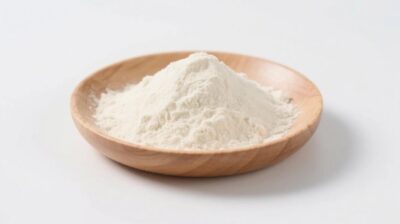
Organic Resistant Dextrin
Organic resistant dextrin is a certified-organic soluble dietary fiber (≥90% dry basis) from non-GMO…
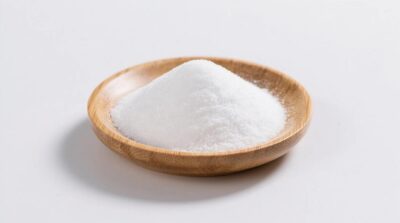
Polydextrose Powder
Polydextrose powder is a non-GMO soluble fiber with ≥90% total dietary fiber (dry basis)…
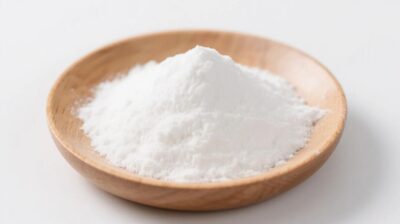
Fructooligosaccharides
Fructooligosaccharides (FOS) is a prebiotic fiber at 95% purity from non-GMO sugarcane or chicory.…


