
As consumers increasingly demand clean-label and natural ingredients, food manufacturers are turning to organic fructose syrup as a reliable sweetening solution. Also referred to as organic fructose liquid or natural fructose syrup, this versatile syrup offers numerous benefits for a wide range of natural food products.
Natural Sweetness Without Compromise
Organic fructose syrup provides a gentle, natural sweetness that complements rather than masks the flavors of your ingredients. Compared to traditional refined sugars, it allows your products to taste naturally sweet while maintaining a wholesome image.
Fructose is the sweetest of the common natural sugars, with a relative sweetness typically quoted at 1.2 to 1.7 times that of sucrose, and the ratio climbs as the product gets colder. That single property lets a formulator cut total sweetener solids without losing the perception of sweetness, which matters in a market where sugar reduction is a headline requirement.
Versatility Across Food Categories
From baked goods and granola bars to dairy products and sauces, organic fruit sugar syrup is adaptable and easy to incorporate. Its smooth consistency enhances texture and helps achieve a balanced sweetness in every product.
In beverages it is normally dosed at 20–50% of the total sweetener solids, blended with glucose syrup or cane sugar to keep the sweetness profile round rather than sharp. In cereal bars and fruit preparations it doubles as a binding syrup and a humectant. In sauces and dressings it balances acidity and salt without the granular mouthfeel that dry sugar can leave if it is not fully dissolved. Because it is a liquid, it also removes a dissolution step from the process line.
Supports Health-Conscious Branding
With growing consumer awareness about sugar sources, using organic fructose liquid communicates a commitment to transparency and quality. Being organic and non-GMO, it aligns perfectly with natural food products, functional foods, and healthy snacks.
On the panel, fructose syrup is declared simply as organic fructose or organic fructose syrup, without the additive codes that consumers often scan for and reject. Fructose also has a lower glycaemic index than sucrose, which is a factual property formulators use when positioning a product; any health claim built on it still has to satisfy the local regulatory framework in the market where the product is sold.
How Fructose Syrup Behaves in a Formula
Fructose is the most water-soluble of the common sugars and it is strongly hygroscopic, meaning it pulls and holds moisture from its surroundings. That is the source of two useful effects: baked goods stay softer for longer, and syrups and confections resist crystallisation because the fructose interrupts the sucrose lattice. Fructose also depresses the freezing point of a mixture more than sucrose does at the same solids level, which is why ice cream and frozen desserts made with it stay scoopable at lower temperatures.
One behaviour to plan for is browning. Fructose takes part in Maillard reactions and caramelises at lower temperatures than sucrose, so a formula switch can darken a cookie or a baked bar noticeably. Reduce oven temperature slightly, shorten the bake, or accept a deeper colour as part of the product’s character. Commercial fructose syrups are usually supplied at 70–77 °Brix; viscosity rises sharply as they cool, so lines handling them often warm the syrup to 25–35 °C for easy pumping.
Improved Shelf Stability and Texture
Beyond sweetness, natural fructose syrup contributes to better moisture retention, texture, and mouthfeel in various products. It helps maintain freshness, prevents crystallization, and improves overall product stability.
Its high osmotic pressure also works in your favour microbiologically: at equal solids, a fructose-dominant syrup leaves less free water available for spoilage organisms than an all-sucrose system. In bakery fillings and fruit preparations this can extend the usable shelf life without adding a preservative, and it keeps the filling glossy and pourable rather than firm and grainy.
Eco-Friendly and Sustainable Option
Choosing organic fructose syrup also supports sustainable sourcing. Many organic fructose syrups are derived from responsibly farmed fruits, making them a more environmentally conscious choice for food manufacturers.
Organic certification covers the whole chain from the orchard or the starch crop through to the processing plant, and it excludes synthetic pesticides and genetically modified material. Buyers should ask for the organic certificate naming the actual production site, a non-GMO statement, and a batch certificate of analysis reporting dry solids, fructose content, pH, colour, and microbiological results. That documentation is what allows a finished product to carry an organic claim in export markets. The sustainable journey from harvest to finished drum is traced in this look at organic fructose syrup from farm to bottle.
Where It Fits in Beverages and Baked Goods
Carbonated soft drinks, flavoured waters, ready-to-drink teas, and sports drinks are the largest volume applications, where the syrup delivers sweetness and body at a lower total solids load. In baked goods it carries moisture through the shelf life of cakes, muffins, and bars, and in breakfast cereals it doubles as a coating syrup. Snack and beverage brands that have already made the switch describe the same advantages in why beverage and snack brands choose organic fructose syrup. For home and small-batch baking, the practical side is covered in how to use organic fructose syrup in your recipes.
Specifying Organic Fructose Syrup for Your Product
For food producers seeking a sweetener that combines natural taste, versatility, and clean-label appeal, organic fructose syrup is the ideal choice. Whether used as organic fructose liquid or organic fruit sugar syrup, it sweetens natural food products while helping brands meet consumer expectations for both flavor and wellness.
Start with a small substitution: replace 20–30% of the sucrose in an existing formula, hold the remaining sweetener blend constant, and evaluate sweetness, browning, and texture after a full shelf-life cycle. Most reformulation work at that level needs no other change to the process, which keeps the switch low-risk.
About Our Organic Fructose
Our organic fructose is produced from organically grown crops and supplied as a clear, free-flowing syrup with a clean, neutral sweetness. It is certified organic and non-GMO and carries no allergen declaration, so it suits beverages, bakery, dairy, confectionery, and sauces. BIOSTARCH supplies it in bulk with specification sheets, certificates of analysis, and organic certificates for each lot, and we can advise on dosage and handling for your process.
Recommended Products
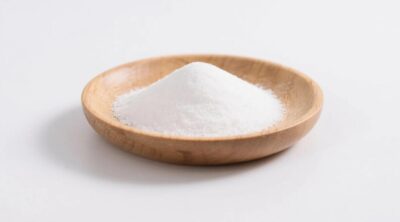
Organic Fructose Powder
Organic fructose is a certified-organic monosaccharide from non-GMO corn with high relative sweetness and…
Related Posts


