
Organic dextrose is one of the most versatile ingredients in the food, pharmaceutical, and sports nutrition industries. Yet despite its widespread use, many buyers and formulators still struggle with one fundamental question: should they choose the monohydrate or the anhydrous form?
The answer depends on what you are making, where you are storing it, and how you need it to perform. This guide covers both forms in detail — from molecular structure to real-world applications — so you can make an informed choice.
What Is Organic Dextrose?
Dextrose is a simple sugar chemically identical to glucose (C₆H₁₂O₆). It occurs naturally in fruits, honey, and — in its commercial form — is derived from the enzymatic hydrolysis of starch, typically from organic corn or tapioca.
The “organic” designation means the source crops are grown without synthetic pesticides, herbicides, or genetically modified organisms. The processing itself uses enzymatic methods rather than chemical bleaching or acid treatment, preserving the ingredient’s natural purity. Organic dextrose typically tests at 99.0% purity or higher, with third-party laboratory verification for contaminants including heavy metals, pesticide residues, and microbial load.
Dextrose is about 70-80% as sweet as sucrose (table sugar). It dissolves readily in water, provides rapid energy, and carries a neutral flavor profile that does not interfere with other ingredients — qualities that make it indispensable across a remarkably wide range of products. To understand how the body metabolizes dextrose and why athletes rely on it for glycogen replenishment, see our guide on dextrose and energy metabolism.
Monohydrate vs. Anhydrous: The Core Difference
Both forms share the same molecular backbone — C₆H₁₂O₆ — but the monohydrate carries one additional water molecule per glucose unit, giving it the formula C₆H₁₂O₆·H₂O. This single difference in hydration creates two ingredients with meaningfully different physical behavior.
Organic Dextrose Monohydrate
Dextrose monohydrate contains approximately 7.0–9.0% moisture by weight. It appears as a white crystalline powder with a slightly coarser texture and a bulk density of 0.60–0.80 g/mL. Because the crystal lattice already incorporates water, the monohydrate form is more stable in humid environments — it resists caking and does not aggressively pull moisture from the air.
This makes monohydrate the preferred choice for:
- Pharmaceutical tablet binding, where moisture content contributes to compressibility
- Dry blends and baking mixes stored in standard warehouse conditions
- Fermentation processes where gradual, sustained carbohydrate release is beneficial
- General-purpose food manufacturing where humidity control is limited
For a detailed look at how both forms perform across different production environments, our guide to dextrose in food manufacturing covers formulation parameters and process optimization in depth.
Monohydrate dissolves at approximately 91 g per 100 mL of water at 25 °C. Its dissolution is slightly slower than the anhydrous form, which can be an advantage in applications that require sustained energy release rather than an instant spike.
Organic Dextrose Anhydrous
Anhydrous dextrose carries no crystalline water and contains less than 1.0% moisture. It is a finer, brighter white powder with a bulk density of 0.50–0.70 g/mL. Because it is fully dehydrated, it dissolves significantly faster — up to 120 g per 100 mL at 25 °C — and delivers energy more rapidly into solution.
The trade-off: anhydrous dextrose is more hygroscopic. In humid conditions, it will absorb atmospheric moisture and may clump or harden if packaging is not adequately sealed. This makes proper storage and packaging critical.
Anhydrous dextrose shines in:
- Instant beverage powders and effervescent tablets requiring rapid dissolution
- Sports gels and energy shots targeting immediate glycogen replenishment
- Low-moisture confectionery, where added water content is undesirable
- Clinical nutrition solutions and intravenous preparations demanding the highest purity
Production: How Organic Dextrose Is Made
The production pathway begins with organic, non-GMO starch — most commonly from corn, though tapioca-based dextrose is increasingly available for markets with corn allergen concerns.
The starch slurry undergoes enzymatic hydrolysis using alpha-amylase and glucoamylase enzymes. These naturally occurring biocatalysts break the long starch polymer chains into individual glucose molecules without the harsh chemical treatments (sulfuric acid, bleaching agents) used in conventional dextrose manufacturing.
The resulting glucose solution is then purified through filtration, ion exchange, and carbon treatment to remove impurities. Crystallization follows, controlled to produce either the monohydrate or anhydrous form depending on temperature, concentration, and seeding parameters. The crystals are centrifuged, dried to specification, and milled to the target particle size.
Organic certification requires full traceability from farm to finished powder. Every batch must be documented: seed source, field location, harvest date, processing conditions, and quality test results. This documentation trail is what differentiates certified organic dextrose from conventional product — and it is also what gives buyers confidence in consistency and safety.
Technical Specifications at a Glance
| Parameter | Monohydrate | Anhydrous |
|---|---|---|
| Molecular formula | C₆H₁₂O₆·H₂O | C₆H₁₂O₆ |
| Glucose content (dry basis) | ≥ 99.0% | ≥ 99.5% |
| Moisture | 7.0 – 9.0% | ≤ 1.0% |
| Appearance | White crystalline powder | White fine crystalline powder |
| Bulk density | 0.60 – 0.80 g/mL | 0.50 – 0.70 g/mL |
| Specific rotation | +52.5° to +53.0° | +52.5° to +53.0° |
| pH (5% solution) | 4.0 – 6.0 | 4.0 – 6.0 |
| Sulfated ash | ≤ 0.1% | ≤ 0.1% |
Heavy metal limits are tight across both forms: lead ≤ 0.1 mg/kg, arsenic ≤ 0.1 mg/kg, cadmium ≤ 0.05 mg/kg, and mercury ≤ 0.01 mg/kg. Microbiological standards require total plate count below 1,000 CFU/g, yeast and mold below 100 CFU/g, and absence of E. coli, Salmonella, and Listeria in specified sample sizes.
Both forms are inherently free from gluten, soy, and dairy. Certified organic dextrose also carries the assurance of non-GMO status and is available with Kosher and Halal certification.
How to Choose the Right Form
The decision between monohydrate and anhydrous comes down to five questions:
What is your moisture budget? If your product is a dry powder blend and you want minimal added moisture, anhydrous is the clear choice at ≤ 1.0% moisture. If your product benefits from a small amount of bound water — as in tablet compression or certain baked goods — monohydrate at 7–9% may work in your favor.
How fast does it need to dissolve? For instant beverages, effervescent tablets, and rapid-energy sports products, anhydrous delivers noticeably faster dissolution. For applications where slower, more gradual release is acceptable, monohydrate performs well.
What are your storage conditions? If your facility or distribution chain involves high humidity, monohydrate is more forgiving. Anhydrous requires sealed, moisture-barrier packaging and climate-controlled storage to maintain its flowability.
What purity level is required? For clinical nutrition, IV solutions, and pharmaceutical applications, anhydrous at ≥ 99.5% purity (dry basis) is typically specified. For most food applications, monohydrate at ≥ 99.0% is entirely sufficient.
What is your cost tolerance? Anhydrous dextrose generally commands a modest premium over monohydrate, reflecting the additional drying and handling steps in its production. For volume-sensitive applications where the performance difference is marginal, monohydrate often represents the better value.
Before committing to a supplier, reviewing certification requirements is essential. Our organic dextrose sourcing guide walks through USDA Organic, EU Organic, and Non-GMO verification protocols, as well as the quality benchmarks that differentiate reliable suppliers.
Shelf Life and Storage
Both forms carry a 24-month shelf life from the date of manufacture when stored in original sealed packaging. Recommended conditions are cool, dry, and away from direct sunlight. Once opened, the product should be resealed promptly. Anhydrous dextrose is particularly sensitive to ambient moisture after opening and should be consumed more quickly or transferred to airtight secondary containers.
For full specifications, batch-level certificates of analysis, and ordering information for both monohydrate and anhydrous forms, browse our organic dextrose products.
Recommended Products
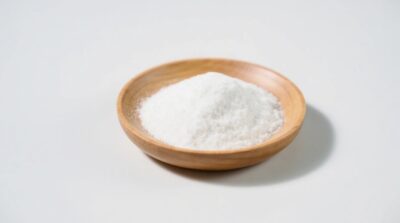
Organic Dextrose Powder
Organic dextrose powder is a certified-organic monosaccharide from non-GMO corn starch, supplied as monohydrate…
Related Posts


