
Every cell in your body runs on glucose. It is the primary fuel for your brain, your muscles during exercise, and virtually every metabolic process that keeps you alive. Dextrose — chemically identical to the glucose circulating in your bloodstream — delivers that fuel in its most direct, rapidly absorbable form.
This article explains what actually happens when dextrose enters your body: how it is absorbed, how it affects blood sugar and insulin, and why it has become a staple ingredient in sports nutrition and clinical care. For the full technical breakdown of monohydrate and anhydrous forms, refer to our definitive guide to organic dextrose.
What Happens When You Consume Dextrose
Unlike complex carbohydrates — which must be broken down through multiple enzymatic steps before absorption — dextrose requires no digestion. It is a monosaccharide, meaning it is already in the form your cells can use directly.
When dextrose powder or a dextrose-containing food reaches your small intestine, it passes through the intestinal wall via SGLT1 and GLUT2 transporter proteins. From there, it enters the portal vein and travels to the liver, where a portion is stored as glycogen and the remainder enters general circulation. This entire process — from mouth to bloodstream — can begin within minutes.
The result is a rapid rise in blood glucose. For a healthy adult consuming 25 grams of dextrose dissolved in water, blood glucose typically peaks within 30–45 minutes. This is faster than sucrose (table sugar), which must first be split into glucose and fructose, and considerably faster than starch-based carbohydrates, which require extended enzymatic breakdown.
Dextrose and Insulin: The Glycemic Response
Dextrose carries a glycemic index (GI) of 100 — by definition, since GI is measured relative to pure glucose. This means it produces the fastest and highest blood glucose peak of any carbohydrate.
The rise in blood glucose triggers the pancreas to release insulin, the hormone that signals cells to absorb glucose from the bloodstream. For a healthy person, this is a normal, tightly regulated response. The glucose is rapidly shuttled into muscle tissue (as glycogen), liver tissue (also as glycogen), and other cells for immediate energy use.
For athletes, this rapid insulin response is not a drawback — it is the mechanism they are deliberately activating. Insulin is an anabolic hormone that promotes nutrient uptake into cells, including amino acids. This is why dextrose is frequently paired with protein in post-workout recovery formulations: the insulin response helps drive amino acids into muscle tissue alongside the glucose, accelerating repair and glycogen replenishment.
Athletic Performance and Recovery
The use of dextrose in sports nutrition is grounded in well-established physiology. During intense or prolonged exercise, muscle glycogen stores become depleted. The rate and completeness of glycogen resynthesis after exercise is a major determinant of recovery quality and readiness for the next training session or competition.
Research published in the Journal of Applied Physiology has demonstrated that consuming high-glycemic carbohydrates immediately after exercise produces roughly double the rate of glycogen synthesis compared to delaying intake by two hours. Dextrose, with its high GI and rapid absorption, is among the most efficient carbohydrates for this purpose.
Practical applications in sports include:
Post-workout recovery drinks. A combination of dextrose and whey or plant protein — typically in a 2:1 or 3:1 carbohydrate-to-protein ratio — consumed within 30 minutes of training, has been shown to maximize glycogen resynthesis and muscle protein synthesis simultaneously.
Endurance events. Marathon runners, cyclists, and triathletes use dextrose-based gels and drinks during events lasting longer than 90 minutes to maintain blood glucose and spare muscle glycogen. Because dextrose has low osmolality relative to its carbohydrate content, it is gentle on the stomach and less likely to cause gastrointestinal distress than some alternative carbohydrate sources.
Pre-workout energy. A small dose of dextrose 15–30 minutes before high-intensity training can top off liver glycogen and ensure blood glucose stability during the session, particularly for athletes training in a fasted state.
For practical recipes and dosage guidelines — including homemade sports drinks, energy gels, and baking substitutions — our consumer guide to using dextrose at home covers everyday applications in detail.
It is worth noting that dextrose does not suit every athletic context. For steady-state, low-intensity activity, a lower-GI carbohydrate source may provide more sustained energy with less of an insulin spike. The choice of carbohydrate should always match the specific demands of the activity.
Medical and Clinical Applications
Beyond sports, dextrose plays an essential role in clinical medicine. The World Health Organization includes glucose (dextrose) in its standard formulation for Oral Rehydration Salts (ORS), which have saved millions of lives by treating dehydration from diarrheal disease. The mechanism relies on the sodium-glucose co-transport system: glucose actively facilitates the absorption of sodium and water across the intestinal lining, making rehydration faster and more effective than water alone.
In hospital settings, dextrose solutions (typically 5% or 10% dextrose in water) are administered intravenously to provide hydration and calories to patients who cannot eat. Dextrose is also used to treat hypoglycemia (low blood sugar) — its rapid absorption makes it the first-line intervention when blood glucose drops dangerously low.
For individuals with diabetes or insulin resistance, dextrose requires careful management. Because it produces a rapid and pronounced blood glucose rise, it should be consumed in controlled amounts and ideally in a context — such as post-exercise — where insulin sensitivity is naturally elevated and the glucose will be preferentially directed toward muscle glycogen rather than circulating in the bloodstream.
How Dextrose Compares to Other Sugars
Relative to sucrose (table sugar), dextrose is about 70–80% as sweet, but it absorbs faster because it does not require enzymatic splitting into glucose and fructose. This makes it a useful sweetener when rapid energy delivery matters more than maximum sweetness.
Fructose, by contrast, is metabolized primarily in the liver and produces a much lower glycemic response. Some sports products combine dextrose and fructose to take advantage of multiple intestinal transport pathways, increasing total carbohydrate absorption during prolonged endurance events. This “multiple transportable carbohydrate” strategy has been shown to improve performance in events exceeding 2.5 hours.
Maltodextrin — a glucose polymer with a longer chain length — produces a somewhat slower, more sustained blood glucose response than dextrose. It is less sweet, making it preferable in applications where a neutral taste profile is essential. Our comparison of dextrose, sucrose, and maltodextrin explores these functional and metabolic differences in greater depth, including a decision framework for matching each carbohydrate to specific product requirements.
Considerations for Daily Use
For most healthy people, moderate amounts of dextrose — consumed as part of a balanced diet and ideally timed around physical activity — are unproblematic. The body is well-equipped to handle glucose; it is what every cell uses for energy.
The concern with any rapidly absorbed sugar, dextrose included, is not the molecule itself but the context and quantity of consumption. Large doses consumed while sedentary produce insulin spikes that, over time, can contribute to insulin resistance. This is no different from the metabolic effect of other high-GI carbohydrates. The key variable is not which sugar you consume but how much, how often, and in what metabolic context.
Recommended Products
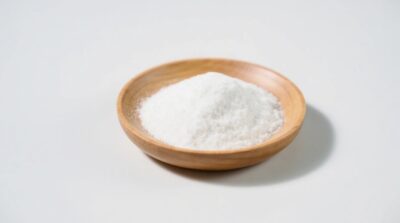
Organic Dextrose Powder
Organic dextrose powder is a certified-organic monosaccharide from non-GMO corn starch, supplied as monohydrate…
Related Posts


