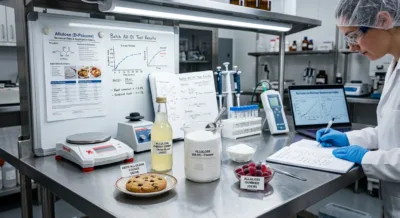
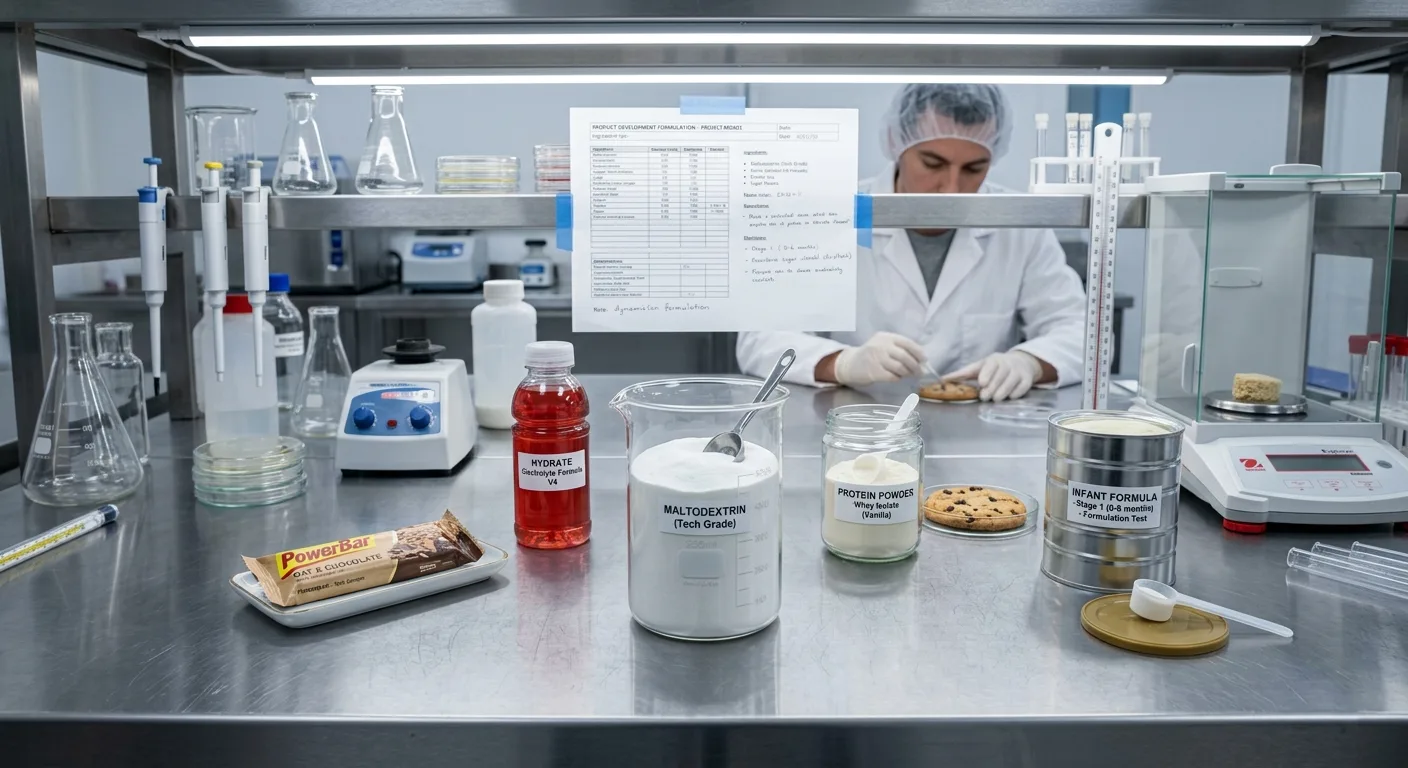
When a product development team sits down to formulate a new sports drink, an encapsulation system for heat-sensitive probiotics, or a clean-label infant formula, one ingredient appears on the bench with remarkable frequency: maltodextrin. Its versatility across such different product categories comes from a set of physical and chemical properties that make it one of the most broadly applicable carbohydrate ingredients in industrial food manufacturing. For formulators working with organic specifications, understanding exactly how maltodextrin functions in each application — and how DE value, botanical source, and processing conditions influence that function — determines whether a formulation succeeds or stalls.
This guide walks through the major industrial application categories for organic maltodextrin powder, with practical formulation parameters, typical usage rates, and DE selection guidance for each.
Carrier and Encapsulation: Maltodextrin’s Core Industrial Function
Encapsulation represents maltodextrin’s most technically sophisticated application and its single largest industrial use. The mechanism is straightforward in principle: maltodextrin forms a continuous glassy matrix around active compounds during spray drying or freeze drying, physically isolating them from oxygen, moisture, and light. In practice, getting the matrix right requires attention to DE value, solids concentration, and drying parameters.
DE 10-15 maltodextrin is the standard choice for carrier applications. At this dextrose equivalent, the polymer chains are long enough to form a coherent film upon drying, yet short enough to maintain adequate solubility for spray drying at commercially viable concentrations. The resulting glass transition temperature (Tg) sits high enough that the encapsulate remains stable under normal storage conditions without crystallization or collapse.
Common encapsulation targets include:
- Flavors and essential oils — protecting volatile aroma compounds from oxidation during storage; maltodextrin typically comprises 40-60% of the dry blend, often paired with gum arabic or modified starch as an emulsifier
- Vitamins — fat-soluble vitamins (A, D, E, K) in particular benefit from maltodextrin encapsulation, which slows oxidative degradation; typical carrier ratio 50-70% maltodextrin
- Probiotics — spray-dried probiotic powders use maltodextrin as a protective matrix that improves survival during drying and shelf storage; see our guide on maltodextrin properties and DE system for DE-matching details
- Natural colors — beetroot red, turmeric, spirulina extracts; maltodextrin encapsulation protects against light and pH-induced color fading
Feed solids for spray drying typically range 30-45% with inlet temperatures of 160-190°C. Higher DE maltodextrins (DE 15-20) permit higher solids loading due to lower viscosity but produce encapsulate powders with greater hygroscopicity, which shortens shelf life if moisture barrier packaging is not used.
Bakery: Moisture Management and Shelf-Life Extension
In baked goods, maltodextrin functions primarily as a humectant and texture modifier. Its ability to bind water without contributing excessive sweetness makes it particularly useful in reduced-sugar formulations where sugar’s functional roles — moisture retention, crumb softening, browning — must be replaced by other ingredients.
For bread and rolls, maltodextrin at 2-4% of flour weight improves crumb softness and slows staling. The mechanism involves interference with starch retrogradation: maltodextrin molecules intersperse among amylose and amylopectin chains, physically hindering the recrystallization that causes crumb firming over time. Water activity remains stable longer, and sensory panels typically report softer texture through day 5-7 compared to controls.
In cakes and muffins, usage rates of 3-5% of flour weight contribute to:
- Even crumb structure with finer, more uniform cell distribution
- Improved volume through better batter viscosity control
- Surface browning via Maillard reaction participation (particularly DE 15-20 grades with higher reducing sugar content)
Cookies and biscuits benefit from maltodextrin’s effect on dough rheology. At 2-3% of flour weight, it reduces dough stickiness during sheeting and improves machinability on high-speed lines. The finished product shows more uniform spread ratio and a cleaner snap texture, particularly in rotary-molded varieties.
Beverages: From Powdered Mixes to Ready-to-Drink
Beverage applications split broadly into two categories with distinct formulation requirements: dry mixes and liquid RTD products.
Powdered drink mixes use maltodextrin as both a bulking agent and flow aid. At 30-60% of dry blend weight, DE 10-15 maltodextrin provides bulk without excessive sweetness, while its low hygroscopicity (compared to sugar or high-DE maltodextrin) prevents caking during storage. The roughly spherical particle morphology of spray-dried maltodextrin improves powder flow through filling lines and reduces dusting — a practical manufacturing concern that directly affects line speed and package weight consistency.
RTD beverages leverage maltodextrin differently. At 3-8% w/v, it builds body and mouthfeel without the sharp viscosity increase that would come from an equivalent weight of starch or gum. In sports drinks specifically, maltodextrin at 6-8% provides carbohydrate energy with an osmolality advantage over simple sugars: a 6% maltodextrin solution has roughly one-quarter to one-third the osmolality of a 6% sucrose solution, which translates to faster gastric emptying and reduced risk of gastrointestinal distress during exercise. This property is directly linked to DE value and molecular weight distribution, as explained in our quality specifications and certifications resource.
Confectionery: Texture Control and Process Improvement
Confectionery manufacturing presents extremes of processing conditions — high-temperature boiling, rapid cooling, controlled crystallization — and maltodextrin’s thermal stability and solubility profile make it a reliable ingredient across multiple confection categories.
Gummies and jellies use DE 15-20 maltodextrin at 5-15% of total solids as a texture modifier. It reduces the rubbery, overly firm texture that can develop with gelatin-only formulations, producing a softer chew with reduced stickiness and cleaner release from starch molds. In pectin-based jellies, maltodextrin extends the setting window slightly, which improves depositing accuracy on high-speed lines.
Hard candies incorporate maltodextrin at 3-8% to control sucrose crystallization. Without a crystallization inhibitor, hard candy syrups can grain during cooling or storage, producing an unacceptable cloudy, gritty product. Maltodextrin’s branched polymer structure physically interferes with crystal lattice formation while contributing minimal sweetness.
In chewing gum coating, maltodextrin at 10-25% of the coating syrup forms a smooth, hard shell with good adhesion to the gum base. Chocolate applications use maltodextrin at 2-5% to reduce coating viscosity without adding sugar solids, useful in enrobing and panning where thin, even coverage is critical.
Dairy and Frozen Desserts
Maltodextrin’s water-binding and freeze-point depression properties drive its use in frozen and refrigerated dairy products.
Ice cream formulations benefit from maltodextrin at 2-5% of mix weight through several mechanisms:
- Partial fat replacement — maltodextrin mimics the body and mouthfeel that fat provides, allowing fat reduction without the thin, icy texture that typically results
- Ice crystal growth inhibition — by increasing the viscosity of the unfrozen phase, maltodextrin slows water migration and ice crystal ripening during temperature cycling
- Improved stand-up and melt resistance — the product holds shape longer at serving temperature
Yogurt applications add maltodextrin at 1-3% before fermentation. It serves as an additional carbohydrate source for starter cultures while contributing to final texture. Post-fermentation, it reduces syneresis (whey separation) during shelf life, a common quality defect in stirred and set yogurts.
Processed cheese uses maltodextrin at 1-3% as an emulsifying aid that supports the protein matrix during heating and shearing, producing a smoother melt and better sliceability in analogue and processed cheese products.
Infant Formula and Baby Food
The infant nutrition segment holds the highest bar for ingredient quality and safety, and organic certification is particularly critical here. Maltodextrin serves as a carbohydrate source in infant formulas designed to approximate the carbohydrate profile of human breast milk, which contains a combination of lactose and glucose polymers.
DE 10-15 maltodextrin is the grade almost universally used in infant formula for several reasons:
- Lower osmolality than equivalent caloric loads from simple sugars, reducing osmotic stress on the infant’s developing gut
- Gradual digestion profile that avoids sharp blood glucose fluctuations
- Good solubility and dispersibility in water at feeding temperature (35-40°C)
Usage rates in infant formula range 15-30% of total carbohydrates, depending on the lactose-to-maltodextrin ratio being targeted. In follow-on formulas and growing-up milks, maltodextrin may constitute a higher proportion as the carbohydrate profile shifts away from lactose dominance.
In baby food purees and cereals, maltodextrin at 5-15% improves spoonability and prevents phase separation during shelf storage without contributing sweetness that would train early sweet preferences. The organic certification difference matters here — conventional maltodextrin can carry trace residues from agricultural inputs that have no place in infant nutrition. For how organic maltodextrin specifications ensure this level of purity, refer to how organic maltodextrin differs from conventional.
Sports Nutrition: Carbohydrate Delivery Systems
Sports nutrition represents maltodextrin’s fastest-growing application segment, driven by the product category’s demand for clean-label, rapidly digesting carbohydrate sources that deliver energy without gastrointestinal side effects.
Maltodextrin’s advantage in sports products comes from its digestion kinetics. Unlike simple sugars (glucose, fructose, sucrose), which create a rapid osmotic load in the stomach, maltodextrin’s longer polymer chains are cleaved to glucose gradually by amylase enzymes, producing a sustained but controlled rise in blood glucose. This translates to practical formulation advantages:
- Energy gels — maltodextrin at 60-75% w/w forms the carbohydrate backbone; DE 10-15 provides the right balance of viscosity (pumpable but not watery) and osmolality
- Recovery blends — combined 2:1 or 3:1 with protein (whey or plant-based); maltodextrin at 40-60% of total powder weight triggers the insulin response that drives amino acid uptake into muscle
- Electrolyte drink mixes — maltodextrin at 70-85% of the carbohydrate fraction with electrolytes and flavor; low osmolality aids fluid absorption
- Pre-workout powders — maltodextrin at 20-40% as a carrier for active ingredients (caffeine, beta-alanine, citrulline) while providing rapidly available energy
Typical inclusion rates in RTD sports beverages are 4-8% w/v, delivering 16-32 grams of carbohydrate per 500ml serving — within the established range for exercise carbohydrate recommendations.
Plant-Based Foods: Bulking, Texture, and Clean-Label Positioning
The plant-based food sector creates unique formulation challenges because removing animal-derived ingredients also removes their functional contributions. Maltodextrin helps fill several of these functional gaps.
In meat alternatives, maltodextrin at 2-5% improves the cohesive, sliceable texture that plant proteins alone often fail to deliver. It acts as a binder between texturized vegetable protein particles, reducing crumbliness in burger patties and improving slice integrity in deli-style products. During cooking, it contributes to browning reactions that build meat-like color and aroma notes.
Plant-based milks (oat, almond, soy) use maltodextrin at 1-3% to build body and improve mouthfeel. Many plant milks are naturally thin, and maltodextrin adds perceived richness without the fat content or the allergen profile of dairy ingredients. It also reduces the sedimentation that causes consumer-perceived quality issues in shelf-stable cartons.
For both categories, organic maltodextrin supports the clean-label positioning that drives much of the plant-based market. A product labeled “organic oat milk” with organic maltodextrin in the ingredient deck reinforces the brand promise in a way that conventional maltodextrin, with its implied association with conventional agriculture, cannot match.
DE Selection Guide: Matching Grade to Application
Selecting the right maltodextrin grade is the single most important formulation decision. The table below summarizes DE ranges and their primary functional applications.
| DE Range | Functional Properties | Best Applications |
|---|---|---|
| DE 3-7 | Strong film formation, low sweetness, high viscosity | Edible films, binding agents, low-sugar bars, adhesives |
| DE 10-15 | Excellent glass-forming, low hygroscopicity, moderate solubility | Encapsulation, carrier for flavors/vitamins/probiotics, infant formula, energy gels |
| DE 15-20 | Good solubility, balanced sweetness, rapid dissolution | Beverages (powdered and RTD), confectionery, sports drinks, bakery |
Botanical source is the second key variable. Tapioca-based organic maltodextrin offers neutral flavor and excellent clarity in solution — important for clear beverages and delicately flavored products. Corn-based organic maltodextrin provides slightly higher viscosity at equivalent DE and performs well in bakery and confectionery where subtle starch notes are masked by other ingredients.
When transitioning a formulation from conventional to organic maltodextrin, most manufacturers find that equivalent DE grades substitute directly with minimal process adjustments. The critical difference lies in documentation — organic maltodextrin carries the certification trail and testing documentation that downstream organic certification requires, a topic covered in depth in our quality specifications and certifications guide.
For technical formulators working on a specific application, starting with the DE value and source that matches the functional requirement, then adjusting usage rate within the typical range, produces reliable results across the categories described here. The ingredient’s consistency — batch-to-batch DE variation in properly manufactured organic maltodextrin typically stays within ±1 DE unit — means that once a formulation is locked in, it stays locked in.
Recommended Products

Organic Maltodextrin Powder
Organic maltodextrin powder is a certified-organic carbohydrate (DE 10-20) from non-GMO corn or tapioca…
Related Posts