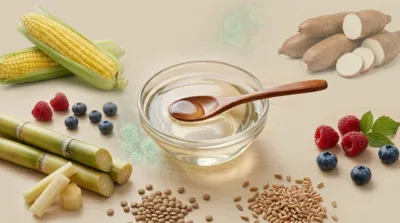
Dietary fiber
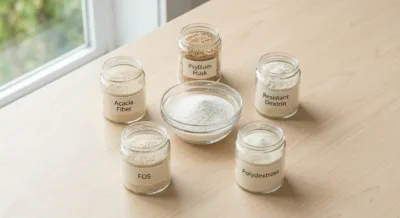
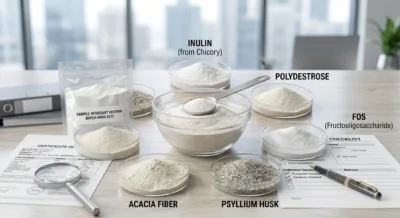
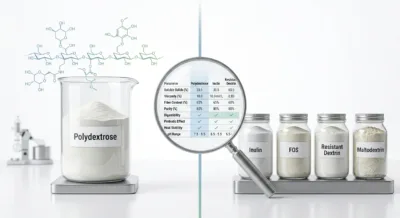
Dietary fiber is our nutrition-support category, built around soluble and insoluble fibers used for fiber fortification, sugar and fat replacement, and texture modification. The range includes resistant dextrin, inulin from chicory and agave, fructooligosaccharide, galactooligosaccharide, polydextrose, xylooligosaccharide, and arabinoxylan. Products are grouped by solubility, by degree of polymerization, and by whether the fiber is used for claim value, for texture, or for both.What this category coversResistant dextrin is a high-solubility, low-viscosity fiber produced by thermal and enzymatic processing of starch, typically specified by total dietary fiber content, moisture, and pH of solution; its neutral taste lets it be added at high inclusion levels in beverages. Inulin is offered in standard and long-chain grades, where average degree of polymerization drives both texture and prebiotic positioning, and inulin is also used as a fat replacer because it forms a creamy microstructure in water. Fructooligosaccharide is a syrup or powder with a short-chain profile and high sweetness relative to other fibers. Galactooligosaccharide is produced from lactose by enzymatic transgalactosylation and is specified by galactooligosaccharide content and residual lactose, which matters for infant and dairy formats. Polydextrose is a low-sweetness bulking fiber used where both texture and fiber content are needed. Xylooligosaccharide, from xylan-rich agricultural residues, is offered at defined xylobiose content, and arabinoxylan is extracted from wheat or corn and specified by molecular weight distribution and arabinose-to-xylose ratio.How these ingredients are usedIn beverages, resistant dextrin and FOS are added for clear, low-viscosity fiber fortification at levels that support a source-of-fiber claim, with attention to pH stability over shelf life. In bakery and cereal, inulin and polydextrose replace part of the sugar and fat while keeping crumb softness; long-chain inulin is preferred where a fat-like mouthfeel is needed, and short-chain grades dissolve without grittiness. In dairy, GOS and resistant dextrin are used in fermented drinks and yogurt for both fiber and prebiotic positioning. In confectionery and bars, polydextrose and resistant dextrin act as binders and humectants. Formulation teams should check tolerance thresholds, because high inclusion of fermentable fibers can affect digestive tolerance in sensitive consumers, and should verify claim eligibility in the destination market, since fiber content thresholds and approved fiber substances differ between jurisdictions. We can support with composition data, recommended inclusion ranges, and stability testing.Fibers in this category are produced under organic certification according to EU and USDA organic schemes where certified grades apply, with facilities operating to ISO 22000. Certificates of analysis, technical data sheets, and composition data are provided per lot, with standard packing in 20 to 25 kg bags or 500 kg big bags.
-
Sale!

-
Sale!
-
Sale!