
Dietary fiber has moved from a background nutrient to a front-of-pack claim. Consumers scan labels for fiber content, formulators push serving sizes higher, and the ingredient options have never been more diverse. Within this landscape, resistant dextrin has gained substantial ground by combining attributes that are difficult to find together: high digestive tolerance, complete sensory neutrality, broad prebiotic fermentation, and moderate cost.
This article positions resistant dextrin against the six fibers it most often competes with: inulin, polydextrose, FOS, psyllium, acacia fiber, and the higher-selectivity oligosaccharides GOS and XOS. Each comparison examines the structured differences that determine ingredient selection — tolerance ceilings, prebiotic mechanisms, sweetness contribution, fiber content, and cost.
Dietary Fiber Market Overview
The global dietary fiber market is valued at approximately $7–8 billion and grows at a compound annual rate of 7–9%. Soluble fibers account for an estimated 60% of the market by value, driven by three sustained forces: rising consumer awareness of prebiotic digestive health, sugar reduction mandates across more than 50 national markets, and fiber fortification becoming a standard product development strategy rather than a niche positioning.
Within the soluble fiber category, resistant dextrin has emerged as the fastest-growing segment. Its estimated CAGR of 8–10% exceeds that of inulin and polydextrose, the two fibers it most directly competes against. The category traces its origins to Japan, where Fibersol-2 — a resistant maltodextrin produced by controlled dextrinization — established the ingredient class with decades of safety research. Today resistant dextrin appears in protein bars, meal replacements, fiber-fortified beverages, baked goods, and functional snacks, with organic grades as the fastest sub-segment, fueled by clean-label demand.
Quick Comparison at a Glance
The following table provides a structured overview of major dietary fibers across the attributes that most often drive formulation decisions.
| Fiber | Source | Solubility | Fermentation | Prebiotic Selectivity | Digestive Tolerance | Relative Sweetness | Dietary Fiber % | Cost Level |
|---|---|---|---|---|---|---|---|---|
| Resistant Dextrin | Starch (dextrinization) | High, clear | Slow, sustained | Moderate (broad-spectrum) | 30–45 g/day | None (0%) | 85–90% | Moderate |
| Inulin | Chicory root | High, clear | Moderate | Strong (Bifidobacteria) | 10–15 g/day | 30–50% sucrose | 88–92% | Moderate |
| FOS | Chicory or sucrose synthesis | High, clear | Fast | Strong (Bifidobacteria) | 5–10 g/day | 30–50% sucrose | 90–95% | Moderate-high |
| Polydextrose | Glucose (synthetic) | High, clear | Moderate | Weak-moderate | 30–50 g/day | 0–5% sucrose | 80–85% | Low-moderate |
| Psyllium | Plantago ovata husk | Gel-forming | Low | Weak | 5–10 g/day | None | ~70% | Low |
| Acacia Fiber | Acacia tree gum | High, clear | Slow | Moderate (broad) | 30–50 g/day | None | 85–90% | Moderate-high |
| GOS | Lactose (enzymatic) | High, clear | Fast | Very strong (Bifidobacteria) | 5–15 g/day | 20–30% sucrose | 70–90% | High |
| XOS | Corn cob (enzymatic) | High, clear | Fast | Very strong (Bifidobacteria) | 1–4 g/day | 10–30% sucrose | 85–95% | Very high |
Several patterns stand out. Resistant dextrin occupies a distinct intersection: high tolerance, zero sweetness, clear solubility, and broad-spectrum prebiotic fermentation at moderate cost. This combination is not matched by any single competitor. Fibers that match its tolerance — polydextrose and acacia — lack its prebiotic breadth or carry sensory trade-offs. Fibers that share its sensory neutrality — acacia — come at meaningfully higher cost. This unique positioning is what drives resistant dextrin’s adoption across a wide range of food and beverage applications where multiple constraints must be satisfied simultaneously.
Resistant Dextrin vs Inulin
Inulin is the closest direct competitor to resistant dextrin. Both are soluble, clear-dissolving, prebiotic fibers. Their fiber content is nearly identical — 85–90% for resistant dextrin versus 88–92% for standard inulin, depending on grade. Both sit in the moderate cost bracket. Four structural differences separate them in practice.
Digestive tolerance is the single largest differentiator. Clinical studies consistently report that resistant dextrin is well-tolerated at daily intakes of 30–45 grams by most healthy adults. Inulin begins producing gastrointestinal symptoms — bloating, flatulence, abdominal discomfort — at 10–15 grams per day for many consumers. This three-to-one tolerance ratio has real-world consequences. A protein bar targeting 15 grams of fiber per serving pushes past inulin’s comfort ceiling, making resistant dextrin the safer selection. Products competing on “high fiber per serving” will almost always prefer resistant dextrin when tolerance is the deciding criterion.
Prebiotic selectivity represents the second difference. Inulin is a well-characterized selective substrate for Bifidobacterium species, with dozens of clinical studies documenting its bifidogenic effect at nutritionally relevant doses. Resistant dextrin produces a broader fermentation pattern, supporting a wider consortium of colonic bacteria with extended short-chain fatty acid production along the colon length. For brands that want the specific message “feeds Bifidobacteria,” inulin is the stronger tool. For brands that want to communicate “supports overall gut microbiome health with exceptional digestive comfort,” resistant dextrin fits more naturally.
Sweetness is the third variable. Inulin contributes 30–50% of the sweetness of sucrose. This can be an advantage in reduced-sugar bakery and confectionery, where it offsets sugar removal. In savory products, clear beverages, and medical nutrition, inulin’s sweetness becomes an unwanted variable that complicates flavor development. Resistant dextrin contributes zero sweetness, functioning as a sensorially blank ingredient — it supports the fiber claim without interfering with taste design.
Fiber content and cost are the fourth consideration, and here the two are close enough that neither creates a clear separation. Decision guide: choose resistant dextrin when tolerance at high fiber doses and sensory neutrality are the priorities. Choose inulin when targeted Bifidobacteria prebiotic messaging drives product positioning and the fiber dose stays comfortably below 10 grams per serving.
Resistant Dextrin vs Polydextrose
Resistant dextrin and polydextrose are frequently grouped together because both are starch-derived or synthetic glucose polymers with clear solubility, high tolerance, and low glycemic impact. The similarities conceal meaningful differences in fiber content, functional role, sensory profile, and cost.
Fiber content creates the first distinction. Resistant dextrin delivers 85–90% dietary fiber on a dry-weight basis, versus 80–85% for polydextrose. Achieving a target fiber claim requires higher polydextrose inclusion — more formula space consumed, cascading into calorie calculations and ingredient list positioning.
Functional role is equally significant. Polydextrose is primarily a bulking agent that supplies fiber as a secondary attribute. Formulators select it to replace the physical mass lost when sugar is removed, with fiber content as a beneficial consequence rather than the primary objective. Resistant dextrin is primarily a fiber source that offers some bulking and binding function secondarily. In a protein bar, resistant dextrin delivers the fiber claim while providing moderate binding; polydextrose fills out the bar body while contributing less fiber per gram.
Sensory neutrality also differs. Resistant dextrin is truly neutral at typical inclusion rates — no off-notes, no flavor interference. Polydextrose can introduce subtle taste notes at higher inclusion levels, sometimes described as slightly acidic or astringent. In sensitive applications such as clear flavored waters or delicate fruit-based products, resistant dextrin’s sensory transparency can reduce or eliminate the need for flavor masking.
Cost favors polydextrose. It typically trades at a lower price point, making it the preferred choice for cost-optimized formulations where fiber content is secondary to physical bulking. Many formulators use both ingredients within a single product, relying on resistant dextrin to carry the fiber claim and polydextrose to handle the bulking — a practical approach that balances function and economics. For background on how polydextrose functions as a companion fiber, our organic polydextrose overview covers sourcing options and application synergy.
Resistant Dextrin vs FOS
Fructooligosaccharides (FOS) represent a fundamentally different prebiotic strategy. FOS is short-chain, fast-fermenting, and highly selective for Bifidobacterium. Resistant dextrin is broad-spectrum, slow, and sustained along the colon. These structural differences produce wide performance gaps in tolerance, gas production, sweetness, and application scope.
Tolerance is the most extreme gap in the fiber landscape. FOS has a well-documented comfort ceiling of 5–10 grams per day. Resistant dextrin at 30–45 grams per day is tolerated at roughly six times that level. The mechanism: FOS ferments rapidly in the proximal colon, producing a concentrated gas burst that causes bloating and flatulence commonly associated with prebiotic intake. Resistant dextrin ferments slowly and progressively along the colon, distributing gas production across time and anatomy. The result is minimal perceptible gas at doses impractical with FOS.
Prebiotic potency per gram runs in the opposite direction. FOS at 5 grams per day produces measurable Bifidobacteria increases within days. Resistant dextrin requires higher doses and longer consumption to produce comparable shifts — but those shifts are broader, affecting a wider range of beneficial taxa, and yield a more sustained short-chain fatty acid profile with extended butyrate production into the distal colon.
Sweetness creates a clear application divide. FOS contributes 30–50% of sucrose sweetness, which can reduce the load on high-intensity sweeteners in reduced-sugar products. Resistant dextrin’s zero sweetness avoids interfering with flavor targets in products where sweetness is unwanted — savory foods, medical nutrition, and unflavored supplements.
Decision guide: FOS for low-dose, high-selectivity prebiotic supplements where fast fermentation and sweetness are assets. Resistant dextrin for high-fiber functional foods where tolerance is the limiting factor and complete sensory neutrality is required.
Resistant Dextrin vs Psyllium
Psyllium husk and resistant dextrin represent different functional mechanisms applied to different product categories. The comparison is less about superiority and more about matching mechanism to intended product promise.
Psyllium forms viscous, mucilaginous gels upon hydration — simultaneously its primary function (bulk laxation, stool softening, regularity support) and its primary formulation limitation. The gel matrix creates a slimy, thick mouthfeel that restricts psyllium to products where consumers expect a fibrous, substantial texture: fiber supplement capsules, powder mixes, coarse baked goods. Psyllium undergoes minimal colonic fermentation, providing negligible prebiotic effect.
Resistant dextrin dissolves to a clear, low-viscosity solution with no textural impact. It is functionally invisible across food and beverage matrices — beverages, dairy products, sauces, soups, confectionery, snacks, and supplements of any format. It reaches the colon and ferments broadly, supporting microbial populations and producing short-chain fatty acids.
Tolerance mechanisms differ. Psyllium’s limit comes from mechanical bulk rather than fermentation gas, with a comfort ceiling of 5–10 grams per day. Resistant dextrin’s limit comes from fermentation, with a ceiling of 30–45 grams per day due to its slow, distributed kinetics.
Decision guide: psyllium for mechanical regularity and laxation products where the mucilaginous character is a feature. Resistant dextrin for prebiotic fiber fortification across the full spectrum of food and beverage categories where sensory transparency is required.
Resistant Dextrin vs Acacia Fiber
Among all comparisons in the dietary fiber landscape, resistant dextrin versus acacia fiber (gum arabic) is the most evenly matched. Both dissolve to clear, low-viscosity solutions. Both are neutral in taste. Both ferment slowly and broadly. Both deliver approximately 85–90% dietary fiber. Both are exceptionally well-tolerated — acacia fiber at 30–50 grams per day edges slightly ahead of resistant dextrin at 30–45 grams. The choice between them often reduces to factors beyond technical specification sheets: cost, supply dynamics, and brand positioning.
Cost is the most predictable differentiator. Acacia fiber is harvested as natural tree exudate from Acacia senegal and Acacia seyal trees in the Sahel region of Africa. The process is labor-intensive, geographically concentrated, and subject to rainfall patterns and regional stability. Prices are structurally higher and more volatile than those of resistant dextrin, which is manufactured from starch — an abundant commodity — through a controlled industrial process with predictable input costs.
Source narrative is where acacia gains ground. Its centuries-old wild-harvested tradition from African trees carries a natural, plant-based story that resonates with clean-label consumers. Resistant dextrin’s story is built on food science, clinical research, and functional precision. Neither is superior; they serve different brand identities.
Supply security favors resistant dextrin. Starch-based production can scale with demand through capital investment in processing capacity. Acacia fiber supply is constrained by tree population, labor availability, and climate conditions in a concentrated geography. For large-volume product launches requiring multi-year supply commitments, resistant dextrin offers lower supply risk.
Decision guide: cost and supply reliability favor resistant dextrin. Source narrative and clean-label plant story may favor acacia for brands that can support the cost premium. Both are premium high-tolerance prebiotic options.
Market Trends and Growth Drivers
Resistant dextrin’s 8–10% compound annual growth rate outpaces the 7–9% CAGR of the broader dietary fiber market. Six structural trends support continued above-market growth.
Fiber tolerance has become a mainstream consumer concern. Social media amplifies reports of digestive discomfort, and food brands know that a product causing bloating generates negative reviews and returns. This dynamic benefits high-tolerance fibers — resistant dextrin, polydextrose, acacia — at the expense of faster-fermenting options. Inulin and FOS, despite strong prebiotic credentials, face a tolerance ceiling that resistant dextrin largely sidesteps.
Sugar reduction mandates are structural rather than cyclical. Over 50 countries have implemented sugar taxes or labeling requirements, making reformulation the permanent operating environment. Resistant dextrin’s zero sweetness makes it a practical fiber for sugar-reduced products where removing sugar must happen without adding new sensory variables.
The protein bar and functional snack category continues expanding, and these products are fiber-intensive — a single bar often targets 10–15 grams of fiber. Resistant dextrin has become the preferred fiber for this category: it tolerates high doses, provides modest binding that improves bar cohesion, and remains sensorially transparent in the finished product.
Clean-label premiumization is lifting organic sales. Organic resistant dextrin demand grows faster than conventional, supported by the same consumer trends driving organic growth across categories. Organic certification adds supply-chain complexity but supports premium pricing and brand differentiation.
Asia-Pacific leads geographic growth. Japan maintains sophisticated consumption through its FOSHU regulatory framework. China’s demand rises with consumer health awareness and expanding functional food categories. South Korea and Southeast Asian markets follow similar paths. Regional production capacity is expanding, reducing the import dependence that characterized earlier market phases.
Regulatory tailwinds provide stability. Resistant dextrin is recognized as dietary fiber under FDA guidance, EU novel food authorization, and Codex Alimentarius guidelines. This clarity reduces market-entry risk and supports multinational product formulations.
Choosing the Right Fiber for Your Application
Fiber selection is a multi-dimensional decision. The following framework organizes the criteria formulators typically weigh.
Tolerance requirement. How many grams of fiber per serving does the product target? Above 15 grams, the field narrows to high-tolerance candidates — resistant dextrin, polydextrose, or acacia fiber. Inulin at 10–15 grams and FOS at 5–10 grams will not reliably support high-dose claims without tolerance risk. Resistant dextrin at 30–45 grams provides margin for nearly any realistic single-serving fiber target.
Prebiotic claim strength. Does the product need a targeted “feeds Bifidobacteria” narrative or a broader gut health story? For targeted claims, inulin, FOS, GOS, or XOS with their well-characterized Bifidobacteria selectivity are the right tools. For broader prebiotic positioning, resistant dextrin or acacia fiber align well with the message.
Sensory constraints. Must the fiber be completely invisible in the finished product? Clear beverages, delicate waters, medical nutrition, and savory applications require zero sensory impact. Resistant dextrin and acacia fiber are the top performers. When slight sweetness is acceptable — reduced-sugar bakery, sweetened supplements — inulin or FOS can contribute functional sweetness alongside fiber.
Cost sensitivity. Budget-constrained products gravitate toward polydextrose and psyllium. Mid-range options include inulin and resistant dextrin. Premium products can support acacia fiber, GOS, or XOS. Evaluate cost-in-use — the total ingredient cost to achieve the fiber claim per serving — rather than per-kilogram prices, since fiber percentage and required dose differ across ingredients.
Clean-label narrative. What story does the brand tell about its fiber? Tree-derived fibers support natural, wild-harvested narratives. Root vegetables support plant-based, whole-food messaging. Starch-derived fibers support food science, clinical-data, and functional-reliability stories. Each resonates with different consumer segments.
Resistant dextrin’s competitive sweet spot sits at the intersection of these five criteria: products needing high fiber doses with zero sensory impact, maximum digestive comfort, and moderate cost. To understand how these attributes translate into specific formulation outcomes, see our guide to organic resistant dextrin in industrial formulation. For the clinical evidence behind the tolerance advantage, our article on health benefits and digestive tolerance of organic resistant dextrin covers the supporting research.
About Our Organic Resistant Dextrin
Our organic resistant dextrin is manufactured from certified organic starch through controlled dextrinization processes that comply with international organic standards. Every batch ships with full certification documentation, certificate of analysis, and technical data sheets. We maintain consistent supply from audited production partners, providing formulators with reliable access to a premium fiber ingredient supported by responsive technical service.
Recommended Products
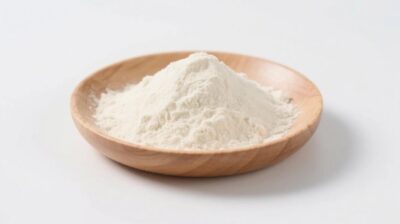
Organic Resistant Dextrin
Organic resistant dextrin is a certified-organic soluble dietary fiber (≥90% dry basis) from non-GMO…
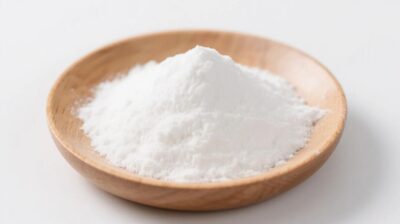
Fructooligosaccharides
Fructooligosaccharides (FOS) is a prebiotic fiber at 95% purity from non-GMO sugarcane or chicory.…
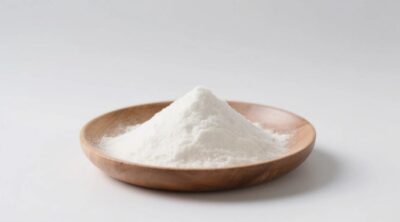
Organic Isomaltoligosaccharides
Organic isomaltoligosaccharides (IMO) powder is a certified-organic prebiotic fiber (90%+) from non-GMO corn or…


