
The plant-based food sector is booming, driven by consumer demand for healthier, sustainable, and natural alternatives. Achieving the right texture, mouthfeel, and stability in these products can be challenging. Organic konjac flour has become a go-to solution for food manufacturers aiming to optimize plant-based formulations.
Plant-based meat, dairy, and dessert formats rarely contain the fat or the protein network that gives conventional products their body, so formulators have to rebuild structure from the water phase up. Konjac does that work at very low addition levels.
Exceptional Gel-Forming Ability
Organic konjac flour contains glucomannan, a soluble fiber that forms a thermally stable gel when mixed with water. This gel structure improves the texture of plant-based dairy, meat alternatives, and desserts, giving products a consistent and appealing mouthfeel.
Glucomannan typically makes up 70–90% of the dry weight of a refined organic konjac flour. Once fully hydrated and heated, it forms a cohesive gel that does not melt again on reheating, so it keeps its set through retort and hot-fill steps where gelatin would soften. Blended with xanthan gum, certified organic glucomannan gives a more elastic gel than either gum alone.
Enhanced Stability During Processing
Maintaining product stability during processing and storage is crucial. Organic konjac flour helps prevent syneresis (water separation) in sauces, puddings, and plant-based yogurts, ensuring a smooth and uniform texture throughout the product’s shelf life.
The hydrated network holds free water in the continuous phase, so texture stays even through chilled storage and temperature cycling. Dispersions are stable across the pH range normally found in foods and resist the shear of pumping better than many starch pastes, and freeze–thaw stability is good enough for frozen ready meals. Use levels are low, commonly 0.1–0.5% in a finished plant-based yogurt or sauce, so pre-blend the powder with a dry carrier to avoid lumps.
Low-Calorie Thickening
As a high-fiber, low-calorie ingredient, organic konjac flour allows manufacturers to achieve desired thickness without adding sugar or fat. This makes it ideal for health-conscious consumers seeking plant-based alternatives with functional benefits.
Glucomannan is a soluble dietary fiber, so it adds bulk and viscosity rather than calories. In beverages and dairy alternatives the target is a light body that reads as creaminess, usually at 0.02–0.1% combined with a starch or protein. Swapping part of the oil phase for a hydrated dispersion lowers fat in dressings and plant-based creams, and in low-carb baking it replaces roux as a keto-friendly thickener.
Versatile Applications Across Plant-Based Products
From beverages to baked goods, meat analogs, and dairy substitutes, organic konjac flour adapts to multiple plant-based applications. Its neutral taste ensures it does not interfere with the flavor profile, while its water-holding capacity enhances juiciness and creaminess.
- Plant-based yogurts and desserts: typically 0.1–0.3% to control syneresis and improve spoonability
- Meat and seafood analogs: typically 0.2–0.5% to bind water and improve sliceability
- Sauces, gravies, and dressings: typically 0.1–0.4% for a glossy, pourable body
- Baked goods and beverages: typically up to 0.3% to hold moisture and add fiber
Treat those figures as starting points. Konjac viscosity climbs steeply once hydrated, so hydrate the water phase fully and then adjust solids until the product reads correctly on the spoon.
Clean Label and Consumer-Friendly
With the clean label trend on the rise, incorporating organic konjac flour allows brands to promote natural, fiber-rich ingredients, enhancing product transparency and consumer trust.
Certified organic konjac flour fits a short ingredient statement: it can be declared as organic konjac flour, konjac powder, or konjac glucomannan. It is plant-derived, non-GMO, free of the major allergens, and contains no modified starch, and it counts toward the organic percentage of a formula. Manufacturers can compare it directly with konjac flour as a clean label thickener, which has already replaced modified starch in many plant-based lines.
Formulating with Konjac Flour Alongside Other Starches
Compared with corn or tapioca starch, konjac thickens at far lower concentrations and gives a gel that survives reheating, though its slippery, elastic texture suits a meat analog better than a delicate dessert. Blending a little konjac with a starch keeps the neutral flavor and low cost of the starch while adding heat stability. Against xanthan it sets softer and more cohesive; against gelatin it offers a vegan, allergen-free alternative that sets without refrigeration.
A practical starting point is to replace roughly 10–20% of the starch in an existing formula with konjac, then measure viscosity after the full thermal process rather than in a bench-top slurry. Plant proteins compete with the gum for water, so pea or soy systems often need slightly more konjac to reach the same body.
Sourcing Organic Konjac Flour for Plant-Based Production
Konjac flour is milled from the tuber of Amorphophallus konjac, grown mainly in Asia. Buyers should request a specification sheet covering glucomannan content, mesh size, dispersion viscosity, moisture, and microbiological limits, plus a certificate of analysis per lot and a valid organic certificate. Batch-to-batch consistency in viscosity matters more than any single number, because a few percent shift in glucomannan content changes the texture of the finished product. BIOSTARCH supplies certified organic konjac flour in bulk with the documentation needed for organic certification and export.
For food manufacturers in the plant-based sector, organic konjac flour is more than just a thickener—it is a functional ingredient that enhances texture, stability, and nutritional value. By integrating it into your formulations, you can create high-quality, plant-based products that meet both consumer expectations and clean label standards.
About Our Organic Konjac Flour
Organic konjac flour from BIOSTARCH is milled from organically cultivated konjac tubers and supplied as a fine, off-white powder with a glucomannan content typically in the 70–90% range. Every lot is non-GMO, allergen-free, and covered by a valid organic certificate, and a certificate of analysis, specification sheet, and trial sample are available on request. Standard packing is 25 kg food-grade bags or kraft paper sacks, with bulk and private-label options for larger programs.
Recommended Products
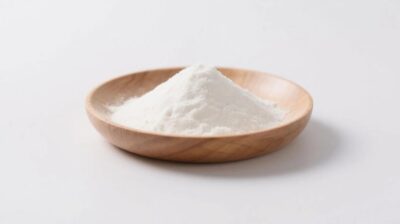
Glucomannan Powder
Glucomannan powder is a soluble fiber from konjac root with exceptional water-binding capacity. It…
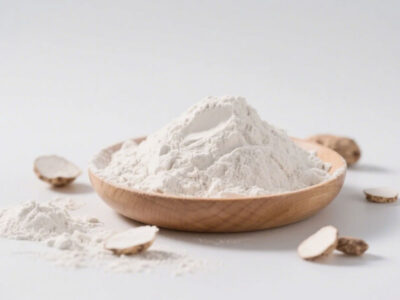
Konjac Flour
Konjac flour is a thickening and gelling agent milled from konjac tuber. Its high…
Related Posts


