
For anyone navigating the world of ketogenic, low-carb, or gluten-free diets, finding versatile ingredients that fit macros without compromising on texture can be a game-changer. If you’ve been searching for a truly keto-friendly thickener and flour alternative, look no further than organic konjac flour. This remarkable ingredient, derived from the konjac plant root, is not only incredibly low in net carbohydrates but also boasts unique functional properties that make it an indispensable tool for keto cooking and product development.
How the Carbohydrate Is Actually Structured
Konjac flour is unusual among flours because most of what is in it is not carbohydrate in the sense that a wheat or rice flour is. A grain flour is built mainly from starch, a storage polysaccharide that human enzymes digest and that contributes to the carbohydrate count on the panel. Konjac flour is built mainly from glucomannan, a soluble fibre polysaccharide with a different backbone structure, and it is that difference in structure rather than any processing trick that produces its behaviour in water and in the kitchen. The label consequences follow from the chemistry, and understanding them makes it easier to decide where the ingredient belongs in a low-carbohydrate kitchen and where it does not.
The practical point is that a flour which is mostly fibre behaves differently from a flour which is mostly starch in three separate ways, and each of them matters for formulation. It thickens far more efficiently, because the long chains form a network at low concentration. It adds very little digestible carbohydrate, because the polysaccharide is not broken down by human digestive enzymes. And it supplies no protein and essentially no fat, because the tuber it comes from was not a protein or oil source to begin with. None of those three statements is a health claim; they are descriptions of what the powder is made of, and the finished dish still has to be balanced on its own terms.
| Component of the powder | How it behaves chemically | What it means for a carbohydrate-conscious formulation | What it cannot do instead |
|---|---|---|---|
| Glucomannan, the dominant fraction | A soluble fibre polysaccharide that is not digested by human enzymes | Adds very little digestible carbohydrate, so it fits a formulation where starch would be the dominant carbohydrate | It does not replace the bulk, protein or fat that a wheat flour or a nut flour would have supplied |
| Minor plant fractions from the tuber | Present in trace proportions alongside the fibre | The contribution is small enough to be read from the product specification rather than estimated | They are not a basis for a protein or micronutrient claim |
| Water taken up during hydration | Forms the gel matrix that gives the powder its structure | The finished product can be water-dominant, which changes how the total portion reads | Water in the gel does not dilute the fibre out of the composition |
| Residual starch traces | Present in small amounts depending on processing | Relevant to a clean-label specification and to anyone who reacts to traces | They are too small to be treated as a nutritional source of anything |
Placing It Beside Nut Flours and Coconut Flour
In a low-carbohydrate kitchen, konjac flour is not usually a replacement for the other flours but a functional addition alongside them. Almond flour, coconut flour and the rest of the nut and seed flours do bulk work: they supply structure, some fat and some protein, and they carry flavour of their own. Konjac flour does none of those things. What it does is bind, gel and thicken at a fraction of the quantity. Used in the right proportions alongside a nut flour, it makes a loaf that holds together and a sauce with body; used on its own, it produces something closer to a firm gel than to a bake.
That distinction makes the comparison below a comparison of roles rather than of rankings, because the ingredients are not really competing. Each line reflects how these flours are normally used as structural ingredients in a formulation. The proportions are given as working ranges for a home kitchen rather than as a specification, and a finished product needs its own testing since the behaviour of a gel depends on hydration, temperature and time.
| Factor | Konjac flour | Almond flour | Coconut flour | What the difference means in the pan |
|---|---|---|---|---|
| Main structural contribution | A gel network, formed from a small quantity of powder | Bulk from milled nut, with fat and protein | Bulk from dried coconut, with a high fibre content | Only the nut and coconut flours can carry a loaf on their own |
| Flavour carried into the dish | Effectively neutral, so it lets the other ingredients decide | Distinctly nutty and slightly sweet | Mild and faintly coconut | A neutral gel is useful when the flavour has to come from the sauce or the filling |
| How much liquid the dough or batter takes | Very thirsty, because the gel holds a large multiple of its weight in water | Moderate, and forgiving | The thirstiest of the three, so it needs adjustment in almost every formula | Order of addition matters more than quantity when the gel is involved |
| Typical working share of a bake | A small proportion of the total dry weight | The major share of the dry weight | Usually a minor share alongside other flours | Going past a small share produces a dense, gummy crumb |
| Behaviour in a sauce | The primary option; thickens and suspends | Not suitable, since the particles do not disperse | Not suitable for the same reason | In a sauce the comparison is simple, there is no substitute |
| Effect on the finished texture | Smooth and slightly gelatinous | Moist and tender, with a visible crumb | Light and dry, with a fine crumb | Blending them is how a softer, more sliceable result is usually reached |
| Points to watch | Over-hydration gives a wet, dense result and the gel firms as it cools | Can spread in the tin and brown faster than a wheat bake | Absorbs liquid quickly and dries the crumb if under-hydrated | Test a small batch and record the hydration before scaling up |
Two cautions are worth stating plainly. The first is that a finished product is what a customer reads, not the ingredient list of the powder inside it, so the nutrition panel and the serving suggestion on the pack should be the reference point for how a low-carbohydrate product is described. The second is that the gel keeps firming as it cools, so a sauce or a bake judged at the end of cooking will be noticeably firmer once it reaches the table, and a product formulated for a hot service should not be assessed cold. Where a formulation needs a comparable gel from a different source, the range includes organic resistant dextrin, which dissolves without thickening, and organic konjac flour from BIOSTARCH for the gel-forming grade, with the wider composition background set out in the complete guide to organic starches.
Let’s explore why organic konjac flour is the perfect keto companion.
What is Konjac Flour? A Fiber Powerhouse
Konjac flour (also known as glucomannan powder or simply konjac powder) is made from the root of the konjac plant. Its primary component is glucomannan, a soluble dietary fiber renowned for its exceptional ability to absorb vast amounts of water. This property is precisely what makes it so valuable in keto and low-carb applications.
The Keto Advantage: Ultra Low-Carb & High Fiber
This is where organic konjac flour truly shines for keto diets:
- Virtually Zero Net Carbs: Konjac flour is almost entirely composed of dietary fiber. Since fiber is not digested or absorbed for energy in the same way as other carbohydrates, it contributes almost no net carbs. This means you can use it as a thickener, binder, or even as a flour substitute without kicking yourself out of ketosis.
- High Soluble Fiber Content: The glucomannan in organic konjac flour is a powerhouse of soluble fiber. Fiber is essential for digestive health, promoting satiety, and helping to maintain stable blood sugar levels – all crucial aspects for those on a ketogenic diet.
Why “Organic” Matters for Konjac Flour
Choosing organic konjac flour elevates its appeal and assures purity:
- Purity & Clean Sourcing: Organic certification guarantees that the konjac plant was grown without synthetic pesticides, herbicides, or chemical fertilizers. This commitment to cleaner agricultural practices resonates deeply with health-conscious consumers.
- Non-GMO Assurance: Organic products are inherently non-GMO, providing peace of mind for those avoiding genetically modified ingredients.
- Transparent Ingredient: “Organic Konjac Flour” is a clear, simple ingredient, fitting perfectly into clean label initiatives.
Functional Benefits: Beyond Just Low-Carb
Organic konjac flour offers a unique set of functional properties that make it incredibly versatile in keto cooking and product formulation:
- Exceptional Thickening Power: This is its most famous trait. A tiny amount of konjac powder can thicken liquids remarkably well, making it ideal for gravies, sauces, soups, stews, and even keto-friendly puddings without adding starches or carb-heavy flours.
- Gluten-Free Binding: For gluten-free baking, it acts as an excellent binder, providing structure and elasticity that might otherwise be missing. It can improve the texture of low-carb breads and baked goods, preventing crumbling.
- Enhances Texture: It can impart a smooth, often slightly gelatinous texture, which is desirable in many applications.
- Neutral Flavor Profile: Konjac flour is virtually flavorless, meaning it won’t interfere with the taste of your dishes. This allows the natural flavors to shine through, a common advantage sought in keto recipes.
Common Uses in Keto & Low-Carb Lifestyles
- Thickening Agent: A healthier, low-carb alternative to cornstarch or wheat flour in sauces and gravies.
- Keto Baking: Can be used in small amounts in keto bread, muffin, and pancake recipes to improve texture and binding.
- Noodle Substitute: Famous for being the base of shirataki noodles, a popular zero-carb noodle alternative.
- Smoothie Enhancer: Adds thickness and fiber to smoothies.
So, is konjac flour keto friendly? Absolutely. Organic konjac flour is an incredibly valuable, ultra low-carb, and high-fiber ingredient that perfectly supports ketogenic and low-carb dietary approaches. Its unique thickening and binding properties, combined with its clean label and neutral taste, make it an essential pantry staple for anyone committed to delicious and healthy low-carb living.
Are you ready to unlock the versatility of organic konjac flour in your keto kitchen or product development?
Q: Is konjac flour low in carbohydrate?
A: Yes, in the specific sense that the powder is made mostly from glucomannan, a soluble fibre polysaccharide that human digestive enzymes do not break down, so the amount of digestible carbohydrate it contributes is small. That is a statement about the ingredient. It does not make the finished dish low in carbohydrate, because the other ingredients in the recipe determine that, and the nutrition panel on the finished product is the reference a customer should read.
Q: Can konjac flour be used instead of almond or coconut flour in a bake?
A: Not as a like-for-like swap, because the three flours do different jobs. Nut and coconut flours supply the bulk, the fat, some protein and their own flavour. Konjac flour supplies a gel, at a much smaller quantity. It works well alongside a nut flour, where it binds and improves the crumb, but a bake made from konjac on its own will be dense and gummy rather than bread-like. Start with a small share and test the hydration.
Q: How much konjac flour should go into a low-carb sauce or bake?
A: For a sauce, begin with a small amount and add it in stages, because the gel thickens quickly and a second spoonful can undo the first. For a bake, keep the share of the powder small relative to the total dry weight, since it needs the nut or other flour to build the crumb around it. Because there is no single figure that suits every formulation, treat any ratio as a starting point and test a small batch, recording the hydration and the result before scaling up.
Q: Does konjac flour work in a ketogenic-style meal, and what should be watched?
A: As an ingredient it fits that style of eating, because it adds very little digestible carbohydrate and no sugar, and it thickens without a starchy thickener. Three things still need attention: the finished dish needs its own protein and fat, which the powder does not supply; the gel firms as the dish cools, so it should be assessed at the temperature it will be served; and a concentrated fibre addition is tolerated differently from person to person, so amounts that suit one person may suit another less well.
Recommended Products
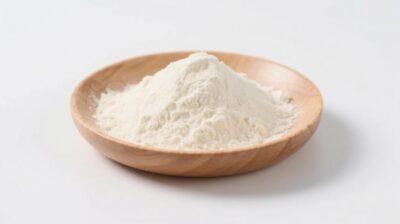
Organic Resistant Dextrin
Organic resistant dextrin is a certified-organic soluble dietary fiber (≥90% dry basis) from non-GMO…

Glucomannan Powder
Glucomannan powder is a soluble fiber from konjac root with exceptional water-binding capacity. It…

Konjac Flour
Konjac flour is a thickening and gelling agent milled from konjac tuber. Its high…
Related Posts


