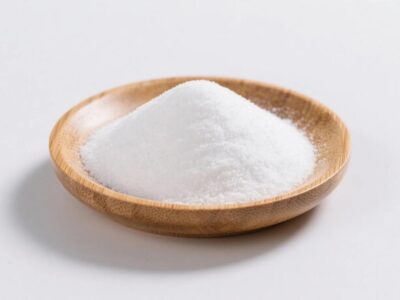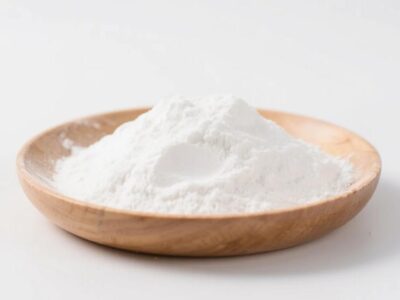
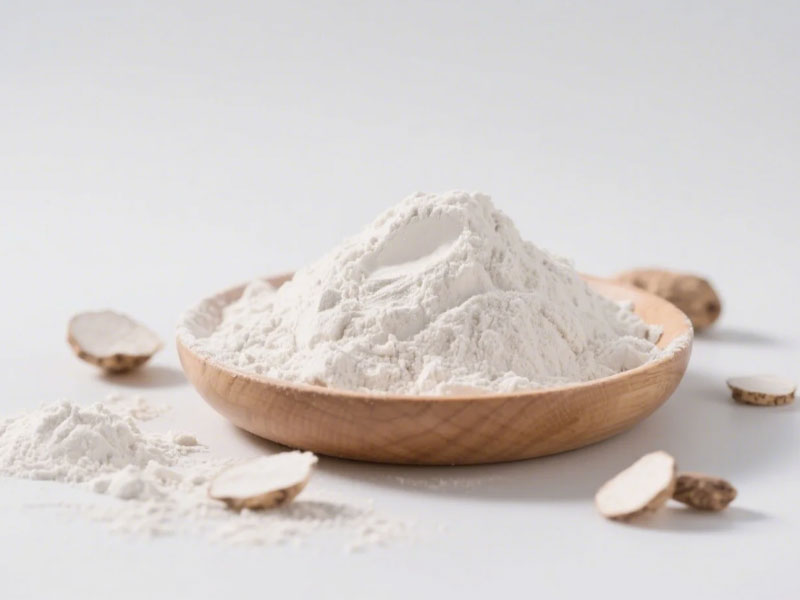
Our konjac flour is a fine, off-white powder milled from the dried corm of Amorphophallus konjac (konjac root or konnyaku imo), cultivated without synthetic pesticides, herbicides, or GMOs. With ≥90% glucomannan content, it is a rich natural source of water-soluble dietary fiber (≥90% glucomannan)—delivering exceptional thickening, gelling, and water-binding capacity at very low usage levels (0.1–1.0%).
Unlike starches or gums, konjac flour forms thermo-irreversible gels in the presence of alkali (e.g., calcium hydroxide or sodium carbonate), making it indispensable for traditional Asian noodles, plant-based seafood, and clean-label meat analogs.
What Is Konjac Flour?
Konjac flour consists primarily of glucomannan, a high-molecular-weight polysaccharide composed of β-(1→4)-linked D-mannose and D-glucose units in a ~1.6:1 ratio. Its unique structure enables:
- Extremely high viscosity (even at 0.5% concentration)
- Synergy with xanthan gum, carrageenan, and agar for elastic gels
- Neutral taste and odor when properly processed
- Very low calorie (~1-2 kcal/g, fermented in colon)
The flour is the whole milled corm rather than an extract. Glucomannan stays inside the plant cell structure together with the corm’s native fiber and residual starch, so konjac flour is traded as a band of glucomannan contents rather than as a single purity. The grade is fixed by three figures – glucomannan assay, viscosity and particle size – and the same corm can be processed further into konjac gum or a purified glucomannan when an application needs a higher polysaccharide concentration.
Our konjac flour is produced using mechanical cleaning, milling, and air-classification—without chemical bleaching, acid treatment, or sulfites.
Also Known As: Names and Synonyms in the Trade
Konjac flour reaches the market under a cluster of overlapping names drawn from the Japanese name of the plant, from botany, and from the milling step itself. The list below covers the terms that appear most often in enquiries, specification sheets and customs paperwork.
- Konjac powder – the most common trade name in supplier catalogues and market reports, used interchangeably with konjac flour
- Konjac root powder – the retail and supplement label wording, which identifies the material by plant part instead of by milling stage
- Konnyaku flour – from the Japanese name for the plant and for the traditional gel made from it; still used in Japanese-origin documentation and in older literature
- Elephant yam flour – taken from one of the English common names of the Amorphophallus genus, seen in raw-material supplier listings
- Devil’s tongue flour – another documented common name of the konjac plant, kept mainly in botanical and reference texts
- Amorphophallus konjac flour – the botanical form of the name, used on specification sheets and certificates of analysis
- Konjac fiber (Konjac fibre) – the dietary-fibre wording used when the flour is bought for its fibre content rather than for its texture
- Konjac starch – a loose term that appears in some export listings; the flour is a glucomannan hydrocolloid and not a starch, so treat this one as a search term rather than a specification
None of these names defines a grade in itself. Because milling can stop at whole flour or continue through extraction, “konjac” in a quotation may mean anything from a low-viscosity milling grade to a purified polysaccharide, and the price difference between them is large. When you compare offers, put the glucomannan assay, the viscosity figure and the particle size side by side – those three numbers, not the name, decide how the material will behave in your process.
Technical Specifications
| Parameter | Konjac Flour |
|---|---|
| Botanical Source | Amorphophallus konjac |
| Appearance | Off-white to light beige fine powder |
| Odor & Taste | Very mild; no fishy or earthy off-notes |
| Glucomannan Content (Dry Basis) | ≥90% (by enzymatic-gravimetric method) |
| Viscosity (1% solution, 25°C) | ≥25,000 mPa·s (Brookfield, spindle #3, 12 rpm) |
| Moisture Content | ≤10.0% |
| Ash Content | ≤4.0% |
| pH (1% slurry) | 5.0 – 7.0 |
| Particle Size (D[90]) | ≤150 µm |
| Bulk Density | 0.40 – 0.60 g/mL |
| Shelf Life | 24 months (stored sealed in cool, dry place) |
| Heavy Metals (Maximum Limits) | |
| – Lead (Pb) | ≤0.5 mg/kg |
| – Arsenic (As) | ≤0.5 mg/kg |
| – Cadmium (Cd) | ≤0.1 mg/kg |
| – Mercury (Hg) | ≤0.03 mg/kg |
| Microbiological Criteria | |
| – Total Plate Count | ≤10,000 CFU/g |
| – Yeast & Mold | ≤100 CFU/g |
| – Escherichia coli | Absent in 1 g |
| – Salmonella spp. | Absent in 25 g |
| – Listeria monocytogenes | Absent in 25 g |
| Allergen Status | Gluten-Free (<5 ppm), Soy-Free, Dairy-Free, Nut-Free, Corn-Free |
Analytical methods: AOAC 991.43 for dietary fiber; viscosity per ISO 12048. Complies with FDA GRAS (21 CFR 172.859), the EU food additive provisions for konjac (E 425), and JECFA specifications.
Sourcing, Certification and Regulatory Status
| Jurisdiction / Standard | Regulatory status | Legal name | Notes |
|---|---|---|---|
| United States | GRAS; permitted food ingredient | Konjac flour (21 CFR 172.859) | Purity and heavy-metal limits are published in the Food Chemicals Codex monograph, which lists gelling, thickening, film-forming, emulsifying and stabilising uses |
| European Union | Authorised food additive (E 425) | Konjac gum (E 425 i); Konjac glucomannan (E 425 ii) | Authorised under Annex II to Regulation (EC) No 1333/2008, in Group I with a maximum permitted level of 10 g/kg individually or in combination, with specifications set by Regulation (EU) No 231/2012; E 425 may not be used in jelly mini-cups |
| Japan | Long-established traditional food ingredient; additives used in konjac products fall under the Food Sanitation Act | Common Japanese name: konnyaku-ko (こんにゃく粉). Distinguish konjac flour (whole corm flour) from konjac mannan (purified glucomannan). | |
| Codex Alimentarius | Listed food additive, INS 425 | Konjac flour | The GSFA lists carrier, emulsifier, gelling agent, glazing agent, humectant, stabiliser and thickener functions, with uses at GMP in the listed food categories |
Because konjac flour sits between a food ingredient and a food additive, the compliance route depends on both the destination market and the grade. The same lot can be checked against the Food Chemicals Codex monograph, the EU additive specification for E 425 and the Codex provision for INS 425, which is why the table above is written to be read against all three.
Applications
Konjac Noodles, Gel Products and Sauces
- Shirataki / Konjac Noodles: Primary ingredient for low-calorie pasta alternatives
- Sauces, Dressings & Soups: Ultra-efficient thickener at low dosage
In noodle and gel production the flour is hydrated and then set with a mild alkali such as calcium hydroxide or sodium carbonate. That gel does not melt again when it is cooked, which is what allows shirataki-style noodles to be packed in liquid and reheated. In sauces and dressings the same hydration builds viscosity instead of a gel set, because no alkali is added.
Plant-Based Meat, Seafood and Bakery
- Plant-Based Meat & Seafood: Provides bite, juiciness, and moisture retention
- Bakery Fillings & Glazes: Prevents syneresis, improves gloss
In meat and seafood analogs the flour holds water through cooking and freezing, so the product keeps its bite instead of releasing liquid in the pack or in the pan. In fillings and glazes it does the same job with the added benefit of a smoother, glossier surface.
Pro Tip: Combine with 0.1% xanthan gum to create elastic, chewy textures ideal for vegan calamari or scallops.
Supplements and Pet Treats
- Dietary Supplements: Capsules or powders for weight management and digestive health
- Pet Treats: Natural fiber source for digestive wellness in dogs/cats
For supplement formats the flour is supplied as the same fine, off-white powder that goes into food production, so it blends into capsules and powder mixes without a separate grade being developed. As with any konjac-based fiber, the directions on the finished product should tell the user to take it with enough water.
Format and Grade Selection
| Application | Recommended format | Typical use level | Formulation note |
|---|---|---|---|
| Shirataki and konjac noodles | Standard konjac flour | 0.1–1.0% | Hydrated and set with a mild alkali into a gel that survives cooking |
| Sauces, dressings and soups | Standard or deodorized | 0.1–1.0% | Builds viscosity without a gel set because no alkali is used |
| Plant-based meat and seafood | Standard konjac flour | 0.1–1.0% | Binds water and holds it through cooking and freezing |
| Bakery fillings and glazes | Standard or deodorized | 0.1–1.0% | Controls syneresis and improves gloss |
| Clear beverages and other sensitive systems | Deodorized or ultra-fine | 0.1–1.0% | Requested where odor and mouthfeel have to stay neutral |
| Capsules and powder blends | Ultra-fine | Per the supplement formula | Chosen for dispersion in a dry blend |
The same narrow working range – 0.1–1.0% – covers every application in the table, which is the practical difference between konjac flour and a starch-based thickener: the addition is small enough that it does not dilute the rest of the recipe. Where a firm gel is the target rather than viscosity, trial the flour at the alkali level and the co-hydrocolloid ratio you intend to use in production, because the gel strength depends on both.
Why Choose Our Konjac Flour?
We source konjac corms from certified farms in mountainous regions of China and Southeast Asia, where traditional cultivation ensures high glucomannan content. Our milling facility uses dedicated lines to prevent cross-contamination, and every batch is tested for viscosity, purity, and heavy metals.
We also offer deodorized and ultra-fine grades upon request for sensitive applications like clear beverages.
Because the flour is milled and classified rather than chemically treated, the specification is verified by physical and enzymatic methods on each batch: glucomannan on a dry basis, viscosity under the stated conditions, moisture, ash and particle size, plus the heavy-metal and microbiological limits in the specification table. A buyer comparing offers can therefore rank them on the three figures that decide performance – glucomannan content, viscosity and particle size – rather than on the name of the material.
Packing
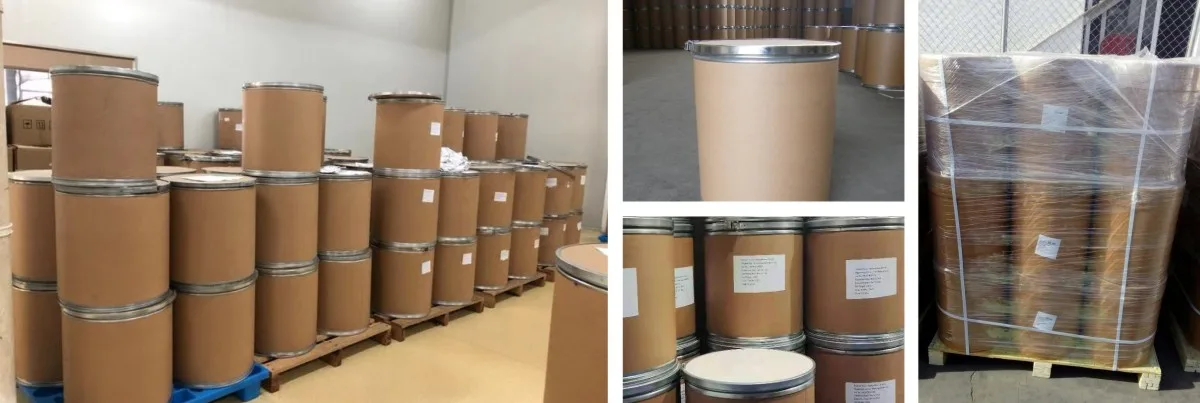
Available packaging:
- 10 kg or 25 kg multi-wall paper bags with food-grade PE liner
- 500 kg–1,000 kg FIBCs for industrial users
- Custom packaging and private labeling available
FAQs
Q: Is konjac flour keto-friendly?
A: Yes! With 0 net carbs and high fiber, it’s ideal for keto and low-carb diets.
Q: Is konjac flour safe for consumption?
A: Yes, konjac flour is generally recognized as safe (GRAS) for food use. Always consume with adequate water and follow recommended usage guidelines.
Q: Can glucomannan replace xanthan gum?
A: Yes—it provides superior thickening and is allergen-free.
Q: Does konjac flour have a taste or odor?
A: Properly processed konjac flour has a neutral taste and very mild odor, making it suitable for a wide range of food applications.