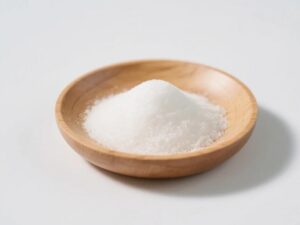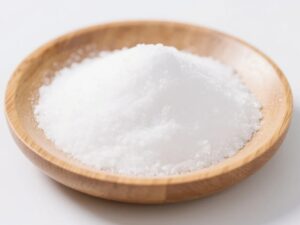
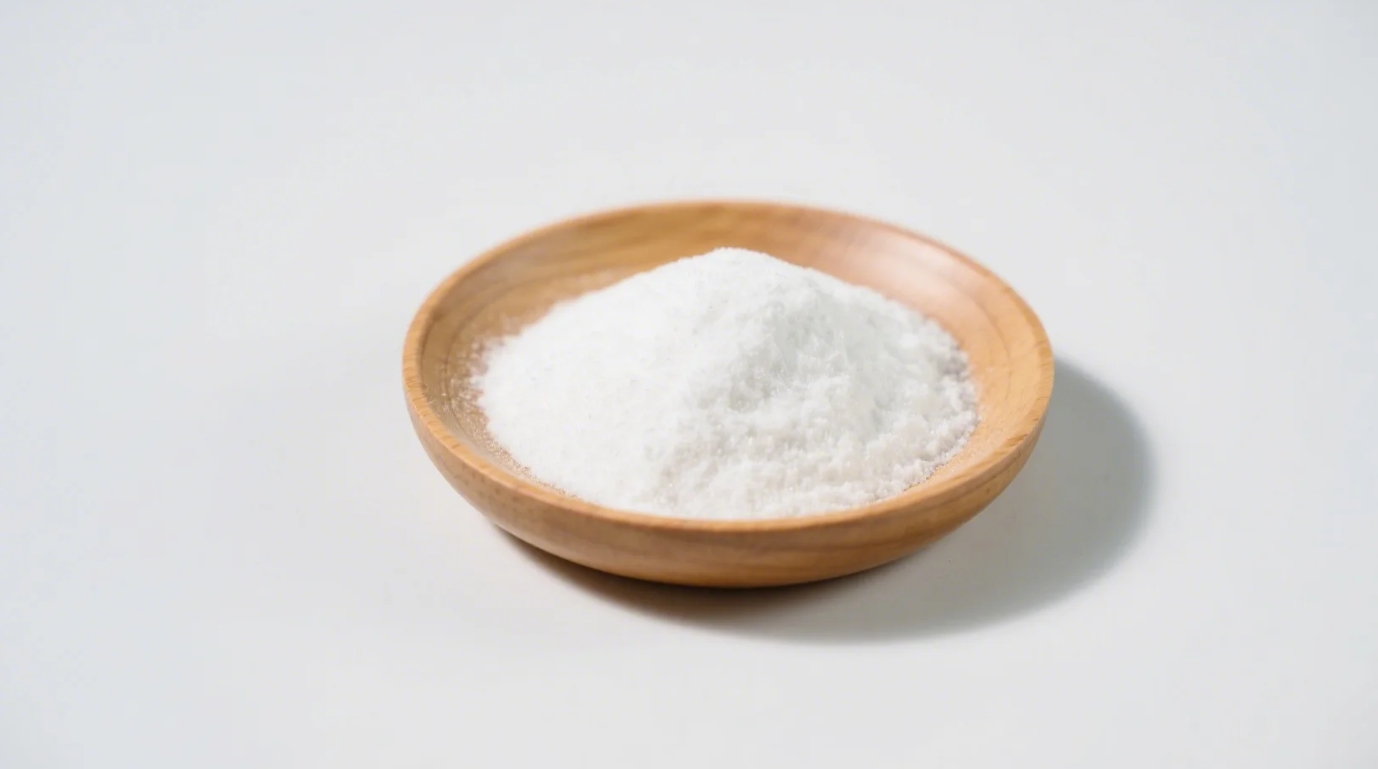
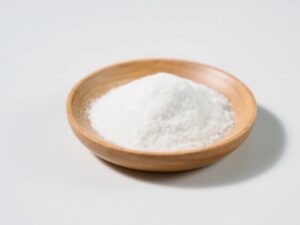
We offer certified organic dextrose powder in two high-purity crystalline forms:
- Dextrose Monohydrate (C₆H₁₂O₆·H₂O)
- Anhydrous Dextrose (C₆H₁₂O₆)
Both are produced from non-GMO, organically grown corn or tapioca starch via enzymatic hydrolysis and gentle crystallization—free from sulfites, acid processing, synthetic additives, or chemical modification. As the simplest form of glucose, organic dextrose provides immediate energy, enhances flavor, and improves functionality in a wide range of food and nutritional applications.
What Is Organic Dextrose?
Dextrose is the naturally occurring D-isomer of glucose, identical to blood sugar. Our organic dextrose powder is derived exclusively from certified organic starch sources using food-grade enzymes and physical purification methods. The result is a fine, white, free-flowing powder with high solubility, mild sweetness (~70–80% of sucrose), and excellent stability.
The key difference between the two forms lies in water content:
- Monohydrate: Contains one molecule of water per glucose molecule (~9% moisture) — more stable in humid environments
- Anhydrous: Fully dehydrated (<1% moisture) — higher dextrose purity by weight, faster dissolution, ideal for moisture-sensitive formulations
Key Functional Differences
| Property | Dextrose Monohydrate | Anhydrous Dextrose |
|---|---|---|
| Molecular Formula | C₆H₁₂O₆·H₂O | C₆H₁₂O₆ |
| Dextrose Content (Dry Basis) | ≥99.0% | ≥99.5% |
| Moisture Content | 7.0 – 9.0% | ≤1.0% |
| Bulk Density | 0.60 – 0.80 g/mL | 0.50 – 0.70 g/mL |
| Solubility | Highly soluble (≈91 g/100 mL at 25°C) | Very highly soluble (≈120 g/100 mL at 25°C) |
| Hygroscopicity | Moderate | Higher (requires dry storage) |
| Best Suited For | General food use, tablets, dry mixes | Instant beverages, effervescent formulas, low-moisture systems |
Technical Specifications
| Parameter | Organic Dextrose Monohydrate | Organic Anhydrous Dextrose |
|---|---|---|
| Source | Organic corn or tapioca (as specified) | Organic corn or tapioca |
| Appearance | White, crystalline, free-flowing powder | White, fine crystalline powder |
| Odor & Taste | Odorless, sweet | Odorless, slightly sweeter |
| Assay (Dextrose, dry basis) | ≥99.0% | ≥99.5% |
| Specific Rotation | +52.5° to +53.0° | +52.5° to +53.0° |
| pH (5% solution) | 4.0 – 6.0 | 4.0 – 6.0 |
| Residue on Ignition (Ash) | ≤0.1% | ≤0.1% |
| Heavy Metals (Maximum Limits) | ||
| – Lead (Pb) | ≤0.1 mg/kg | ≤0.1 mg/kg |
| – Arsenic (As) | ≤0.1 mg/kg | ≤0.1 mg/kg |
| – Cadmium (Cd) | ≤0.05 mg/kg | ≤0.05 mg/kg |
| – Mercury (Hg) | ≤0.01 mg/kg | ≤0.01 mg/kg |
| Microbiological Criteria | ||
| – Total Plate Count | ≤1,000 CFU/g | ≤1,000 CFU/g |
| – Yeast & Mold | ≤100 CFU/g | ≤100 CFU/g |
| – Escherichia coli | Absent in 10 g | Absent in 10 g |
| – Salmonella spp. | Absent in 25 g | Absent in 25 g |
| – Listeria monocytogenes | Absent in 25 g | Absent in 25 g |
| Allergen Status | Gluten-Free (<5 ppm), Soy-Free, Dairy-Free | Same |
| Certifications | USDA Organic, EU Organic, Non-GMO Project Verified, Kosher, Halal (available), Gluten-Free Certified |
All testing performed per USP/EP/FCC and ISO methods in accredited laboratories. Complies with FDA 21 CFR, EU Regulation (EC) No 1333/2008, and Codex standards.
Applications
Dextrose Monohydrate
- Nutritional supplements: Tablet and capsule filler/binder
- Bakery: Promotes browning and yeast fermentation
- Fermented foods: Carbon source for yogurt, kombucha, and probiotics
- Dry beverage mixes: Stable carrier for flavors and actives
Anhydrous Dextrose
- Sports nutrition: Rapid-energy component in gels and powders
- Effervescent tablets: Fast-dissolving sweetener and bulking agent
- Low-moisture confectionery: Prevents crystallization in hard candies
- Clinical nutrition: High-purity carbohydrate for medical foods
Why Choose Our Organic Dextrose?
Our dextrose is produced under strict organic protocols—from certified organic farms to GMP-compliant crystallization facilities. We avoid acid hydrolysis, sulfite bleaching, and synthetic anti-caking agents, ensuring a pure, natural product that meets global clean-label demands.
Every batch includes full documentation: Certificate of Analysis (CoA), Organic Certificate (specifying corn or tapioca origin), Gluten-Free Statement, and Safety Data Sheet (SDS).
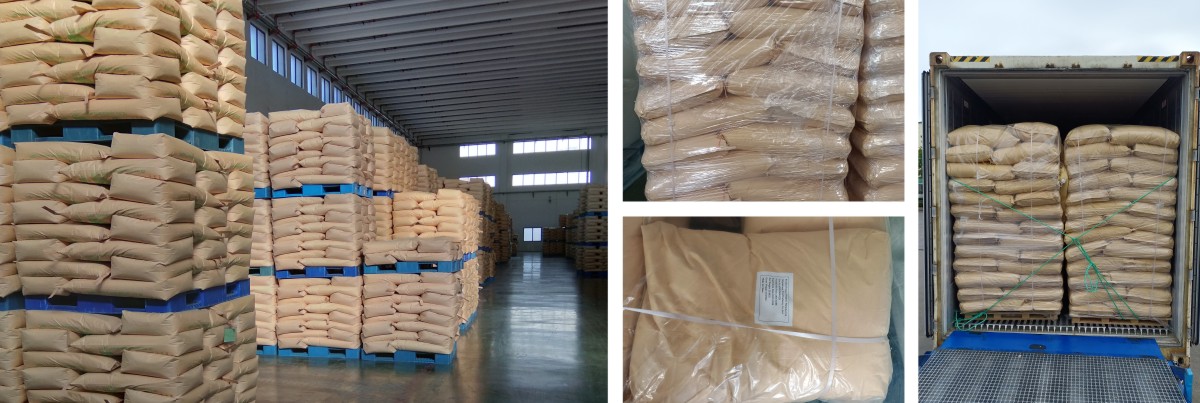
Available packaging:
- 25 kg multi-wall paper bags with food-grade PE liner
- 500 kg–1,000 kg bulk big bags (FIBCs) for industrial users
- Custom packaging available upon request
FAQs
Q: What is the primary difference between Organic Dextrose Monohydrate and Organic Dextrose Anhydrous?
A: Organic Dextrose Monohydrate contains about 8-9% water of crystallization, making it slightly less sweet by weight but more common for general use. Organic Dextrose Anhydrous contains less than 0.5% water, offering higher purity and making it ideal for moisture-sensitive applications where precise water activity control is crucial.
Q: How does the sweetness of Dextrose compare to sucrose (table sugar)?
A: Dextrose typically has about 70-75% of the sweetness of sucrose. Its sweetness is perceived rapidly in the mouth but also fades quickly.
Q: Is Organic Dextrose considered gluten-free?
A: Yes, Organic Dextrose, regardless of whether it’s derived from organic corn or organic tapioca, is purified to be gluten-free, making it suitable for gluten-free product formulations.
Q: What is the typical shelf life and recommended storage for bulk quantities?
A: Our Organic Dextrose Powder (both forms) typically has a shelf life of 24 months from the manufacturing date when stored in a cool, dry place, away from direct sunlight and moisture, in its original sealed packaging. Specific bulk storage recommendations will be provided with your order documentation.
Q: Can Organic Dextrose be used in “sugar-free” products?
A: No, Dextrose is a simple sugar (glucose). While it has a lower sweetness intensity than sucrose, it is still a caloric sugar and would not be suitable for “sugar-free” claims. It is often used in “reduced sugar” or “no added sugar” formulations depending on the overall sugar content.
Packing
Related Articles
Unveiling the Dual Power of Organic Anhydrous Dextrose and Organic Dextrose Monohydrate
The Rise of Clean-Label Energy In an era where consumers demand transparency and sustainability, organic…
Read More
Discover the Power of Organic Dextrose Monohydrate and Anhydrous for Clean-Label Innovation
The Rise of Clean Energy In a world where consumers demand transparency and sustainability, organic…
Read More
Organic Dextrose 101: How to Choose Between Monohydrate and Anhydrous for Your Needs
Organic dextrose, a naturally derived sugar sourced from non-GMO crops like corn or tapioca, is…
Read More