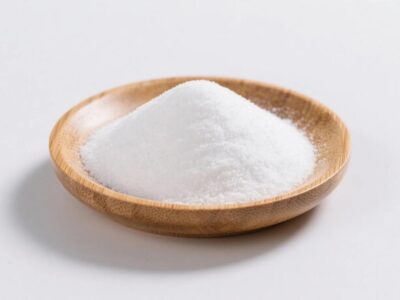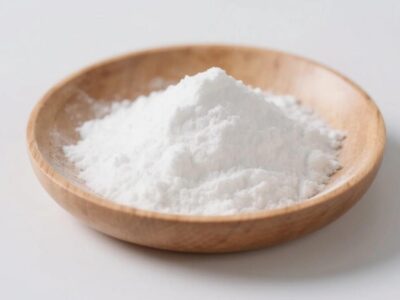
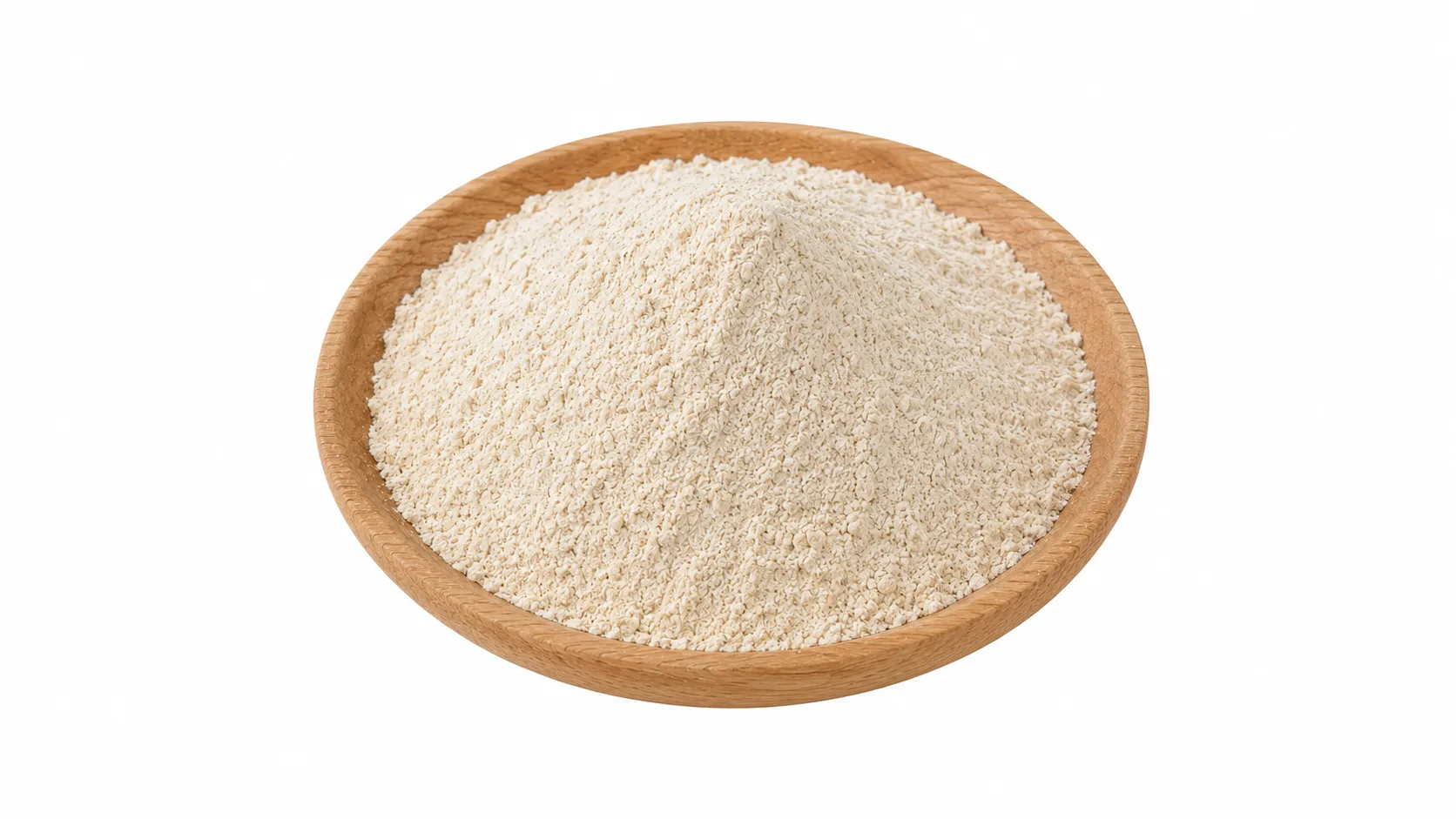
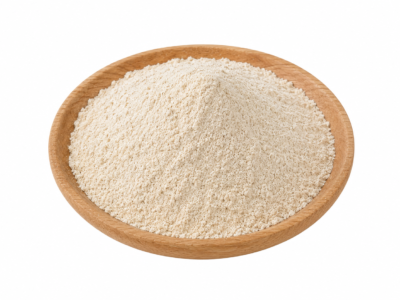
What is Quinoa Flour
Quinoa flour is processed from quinoa. Quinoa provides protein, dietary fiber, B vitamins, and dietary minerals, and is higher in protein and certain minerals than many common grains. It is gluten-free.
Quinoa originated in the Andean region of northwestern South America, and was domesticated 3,000 to 4,000 years ago for human consumption in the Lake Titicaca basin of Peru and Bolivia, the Quinoa was introduced into China at the end of the last century, China has cultivated 9000 hectares of quinoa by 2017, which mainly planted in Hebei, Qinghai, Shanxi, Yunnan, etc provinces.
Nutritional evaluations indicate that a 100 g serving of quinoa flour is a rich source (20% or higher of the Daily Value, DV) of protein, dietary fiber, several B vitamins, including 46% DV for folate, and dietary minerals. For reference, cooked whole quinoa (not quinoa flour) is approximately 72% water, 21% carbohydrates, 4% protein, and 2% fat, providing about 120 calories per 100 g serving.
Technical Specifications
| PRODUCT NAME | QUINOA FLOUR |
|---|---|
| Technical Specifications | |
| Appearance | Homogeneous powder, free from foreign particles |
| Color | Beige |
| Odor | Characteristics of the Product |
| Humidity | Maximum10% |
| Ash | Maximum 5.25% |
| Microbiological Analysis | |
| Aerobic Mesophilic Count | ≤10,000 CFU/g |
| Mould Count | ≤100 CFU/g |
| Bacillus cereus | ≤100 CFU/g |
| Salmonella sp. | Absent in 25g |
| Coliforms | ≤10 CFU/g |
| Composition | Quantity |
| Protein | 13.0g |
| Fat | 6.10g |
| Ash | 3.06g |
| Iron | 5.20mg |
| Carbohydrates | 71.0g |
| Calories | 370.0Kcal |
| Calcium | 47 mg |
| Phosphorus | 457 mg |
| Fiber | 7.0 g |
Sourcing, Certification and Regulatory Status
| Jurisdiction / Standard | Regulatory status | Legal name | Notes |
|---|---|---|---|
| European Union | Food ingredient; not a regulated allergen | Quinoa flour | Quinoa is not among the allergens listed in Annex II of Regulation (EU) No 1169/2011. A gluten-free statement may be used only on the conditions of Regulation (EU) No 828/2014, which sets the limit at 20 mg/kg. |
| United States | Food ingredient; not a major food allergen | Quinoa flour | Not one of the major food allergens of the FD&C Act as amended by the FASTER Act. A gluten-free claim is governed by 21 CFR 101.91, which requires the food to stay below 20 ppm gluten. |
| Japan | Food ingredient; allergen labelling not mandatory | Quinoa flour | Handled as an ordinary food ingredient under the Food Labeling Standards, and quinoa is not among the items for which allergen labelling is mandatory. |
| Codex Alimentarius | Standards exist for the grain only, not for the flour | Quinoa | CXS 333-2019 (adopted 2019, amended 2020) covers processed quinoa grain; by its own scope in Section 1.2 it does not apply to derivatives such as flour or flakes, so the flour falls back on the general Codex texts. |
Compliance turns on the moisture figure, the saponin status and the microbiological limits rather than on the naming convention, so those are the values to line up when comparing offers. Confirm the legal name, the residue limits and any gluten-free wording required by the destination market before the first shipment.
Applications
Quinoa flour can be either uncooked or roasted. It is commonly used in a 15 to 20 percent blend with wheat flour in desserts, bread, biscuits, and pancakes.
Several studies examined quinoa-wheat flour blends in bread, cakes, and cookies. It was concluded that bread made with 5 and 10 percent quinoa flour to be of good quality while baked goods in which greater amounts of quinoa flour were used resulted in bread with a decreased loaf volume, more open crumb grain, and a slightly harsher texture. At 30 percent, there was a bitter aftertaste.
Cake tests found the quality “acceptable” when quinoa flour was used up to 10 percent in the flour. In cookies, the flavor improved when blends of up to 20 percent were added. The spread and appearance improved with the addition of 2 percent lecithin.
Format and Grade Selection
Two questions decide a quinoa flour specification: whether the flour is whole or sifted, and whether the saponin-bearing outer layer was removed from the grain before milling. Both change the bitterness of the finished product far more than the protein figure does.
- Whole quinoa flour – the whole-grain cut, which carries the fibre and the fuller flavour into the blend
- Sifted quinoa flour – a finer, paler fraction for cakes and biscuits, where a sandy texture would show in the crumb
- Washed, saponin-reduced flour – milled from grain whose outer layer has been removed, the route to a clean, non-bitter profile
- Raw or roasted flour – the flour can be milled from raw or from pre-roasted grain, and the roasted type carries a deeper, nuttier note
- Blend share – quinoa flour is normally used as a part of a blend rather than on its own, because loaf volume falls and the crumb opens up as its share rises
- Grain colour – white, red and black quinoa mill to visibly different flours, so the colour target should be agreed before the lot is fixed
Sourcing Note: Saponin is what makes an unwashed quinoa flour taste soapy and bitter. Ask for the washed grade when the flour enters a cake, a biscuit or a beverage, and keep the saponin figure on the certificate rather than in the marketing copy.
Send us the application, the target blend share and whether the finished product carries a gluten-free claim, and we will quote the grade and the granulation that suit it.
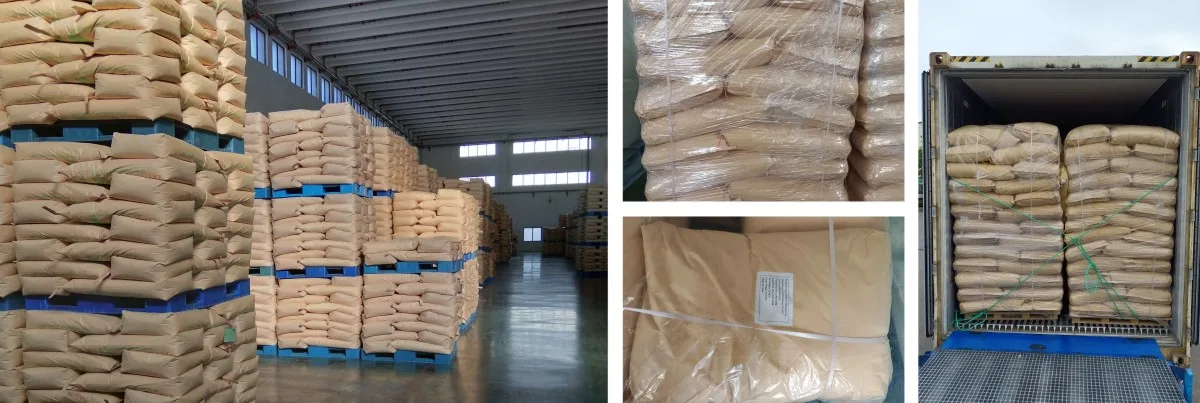
Packing
Also Known As: Names and Synonyms in the Trade
Quinoa flour is described under a small set of names in specifications, certificates of origin and retail literature, and most of them come from the Andean source trade rather than from the laboratory. The list below covers the forms that come up most often in enquiries and technical data sheets.
- Chenopodium quinoa – the accepted botanical name, quoted on specifications and on certificates of origin
- Quinua – the Spanish and Andean spelling used on source documents from Peru and Bolivia
- Inca wheat – a long-standing trade nickname that is worth reading with care, because quinoa is a pseudocereal in the Amaranthaceae rather than a cereal
- Goosefoot grain – the English name taken from the goosefoot genus to which quinoa belongs
- Whole quinoa flour – the product name that marks out a whole-grain mill from a sifted, whiter fraction
None of these names changes the material, and the nickname Inca wheat is the one most likely to mislead: quinoa contains no gluten and is unrelated to wheat. Whichever name a document uses, the specification should still state the botanical source, the saponin status and the gluten-free position.
FAQs
Q: Is quinoa flour gluten-free?
A: Yes. Quinoa is a pseudocereal rather than a wheat or a barley, so the flour is naturally free of gluten. Where the finished product carries a gluten-free claim, ask for the gluten result on the certificate of analysis, because the same mill may also run gluten-containing grains.
Q: What are the protein, fat and fibre values?
A: Per 100 g the specification gives 13.0 g protein, 6.10 g fat and 7.0 g fibre, alongside 71.0 g carbohydrate and 370.0 kcal.
Q: Which microbiological limits apply?
A: Aerobic mesophilic count no more than 10,000 CFU/g, mould count no more than 100 CFU/g, Bacillus cereus no more than 100 CFU/g, coliforms no more than 10 CFU/g, and Salmonella absent in 25 g.
Q: What share of a flour blend can quinoa flour take?
A: Quinoa flour is normally used as a part of a blend rather than as the whole of the flour. As its share rises, loaf volume falls and the crumb opens up, and at high levels a bitter aftertaste appears, so most formulas keep it well below half of the total flour.
Q: What is the moisture limit, and how should the flour be stored?
A: Humidity is capped at a maximum of 10% in the specification. Store the flour sealed in a cool, dry place, away from direct sunlight and away from strong odours.