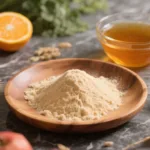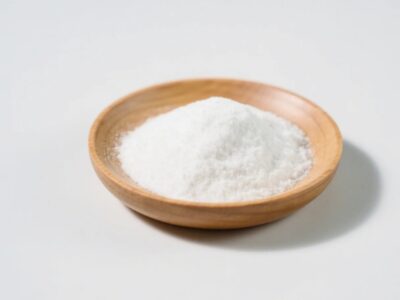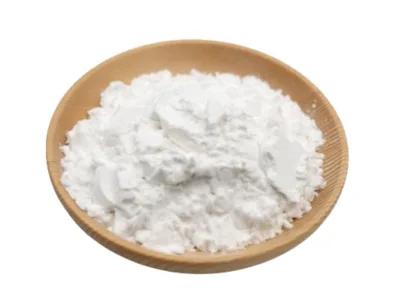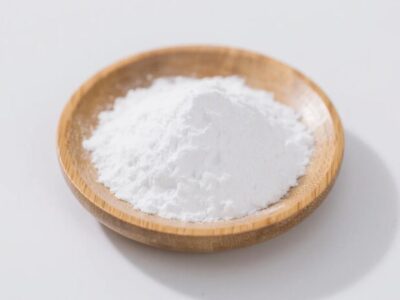
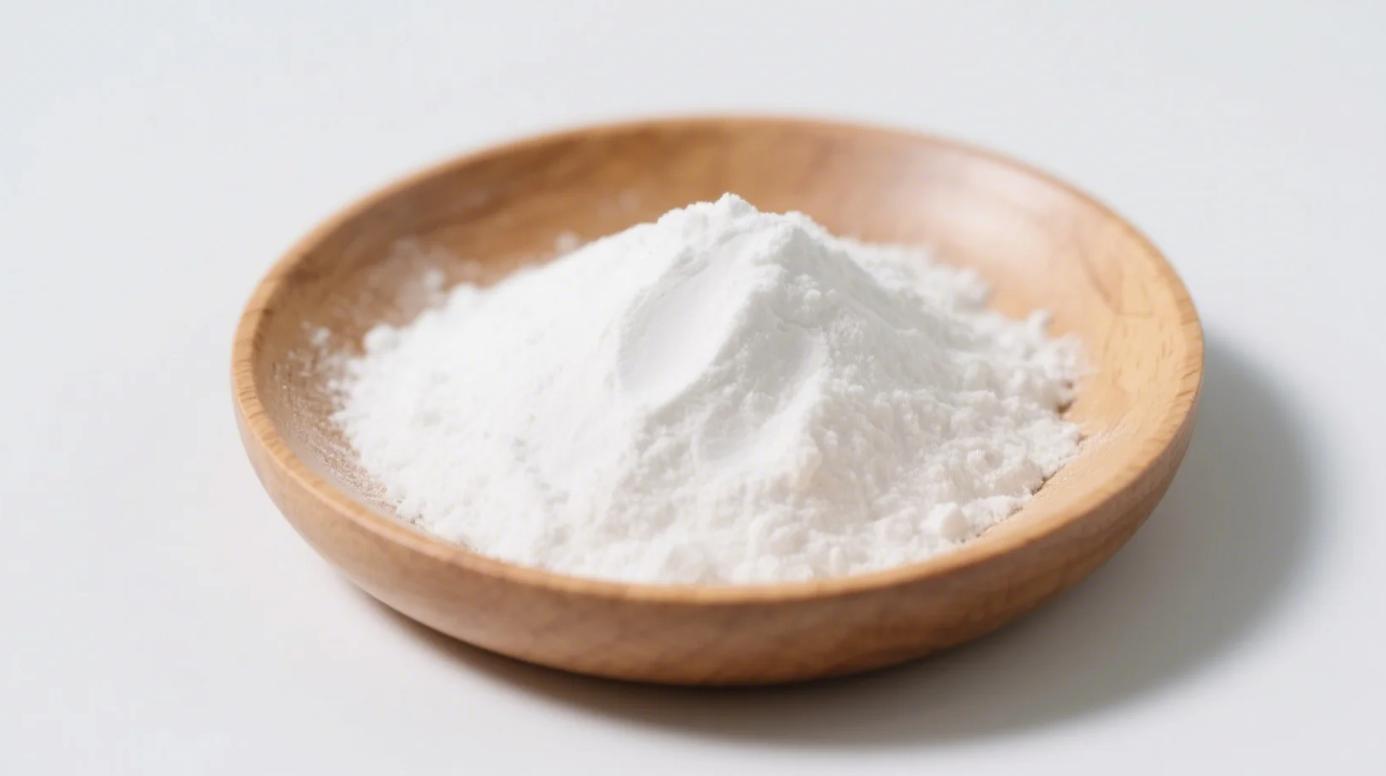
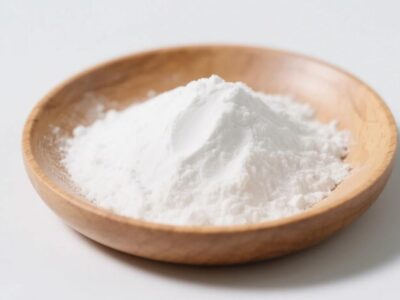
Our certified organic inulin powder is a natural, plant-based dietary fiber extracted from organically grown chicory root (Cichorium intybus). With its mild sweetness, excellent solubility, and proven prebiotic benefits, it serves as a multi-functional ingredient for sugar reduction, fiber enrichment, fat mimicking, and digestive wellness.
Ideal for clean-label, keto-friendly, low-glycemic, and gut-health-focused products, our organic inulin meets global standards for purity, sustainability, and performance.
What Is Organic Inulin?
Inulin is a fructan—a chain of fructose molecules—naturally found in plants like chicory, Jerusalem artichoke, and garlic. Our organic inulin powder is produced through a gentle hot-water extraction process from certified organic chicory roots, followed by filtration, concentration, and spray-drying. No chemical solvents or synthetic additives are used.
It contains 90%+ dietary fiber (as soluble fiber), provides only 1–2 kcal/g, and has a glycemic index near zero—making it suitable for low-sugar and low-calorie formulations.
Technical Specifications
| Parameter | Organic Inulin Powder |
|---|---|
| Source | Chicory root (Cichorium intybus) |
| Appearance | Fine, white to off-white free-flowing powder |
| Odor & Taste | Mild, slightly sweet |
| Inulin Content (Dry Basis) | ≥90% |
| Dietary Fiber (Total) | ≥90% (as soluble fiber) |
| Moisture Content | ≤5.0% |
| pH (10% aqueous solution) | 5.0 – 7.0 |
| Ash Content | ≤0.5% |
| Degree of Polymerization (DP) | Average DP 10–12 (short-chain to medium) |
| Solubility | Soluble in warm water (~10–15 g/100 mL cold; higher at elevated temperatures) |
| Shelf Life | 24 months (stored sealed in cool, dry conditions) |
| Heavy Metals (Maximum Limits) | |
| – Lead (Pb) | ≤0.1 mg/kg |
| – Arsenic (As) | ≤0.1 mg/kg |
| – Cadmium (Cd) | ≤0.05 mg/kg |
| – Mercury (Hg) | ≤0.01 mg/kg |
| Microbiological Criteria | |
| – Total Plate Count | ≤1,000 CFU/g |
| – Yeast & Mold | ≤100 CFU/g |
| – Escherichia coli | Absent in 10 g |
| – Salmonella spp. | Absent in 25 g |
| – Listeria monocytogenes | Absent in 25 g |
| Certifications | USDA Organic, EU Organic, Non-GMO Project Verified, Kosher, Halal (available), Gluten-Free Certified (<5 ppm), Allergen-Free |
All testing conducted in ISO 17025-accredited laboratories using validated methods (e.g., HPLC for inulin content, ICP-MS for heavy metals). Complies with FDA 21 CFR, EU Regulation (EC) No 1333/2008, and Codex guidelines for dietary fiber ingredients.
Sourcing, Certification and Regulatory Status
| Jurisdiction / Standard | Regulatory status | Legal name | Notes |
|---|---|---|---|
| United States | GRAS; affirmed food ingredient | Chicory root fiber, inulin | Dietary fiber declaration supported by AOAC 2001.03 and AOAC 2011.25 |
| European Union | Regulated as a food ingredient | Inulin, chicory inulin | Organic certification to (EU) 2018/848; fiber claim available at ≥3 g per 100 g |
| Codex Alimentarius | Codex Stan 192 compliant | Inulin | Used in dietary foods and supplements across export markets |
| Retail labeling | Allergen and organic statements | Organic inulin | Chicory-sourced material keeps the allergen statement short |
The two numbers that decide how inulin behaves in a recipe are the inulin content and the degree of polymerisation. A higher DP fraction dissolves more slowly and ferments further along the colon; a lower DP fraction is sweeter and more soluble. Both are reported per batch on the certificate of analysis.
Applications
Organic inulin powder enhances both nutrition and functionality across diverse categories:
- Beverages: Adds soluble fiber to juices, smoothies, and RTDs without cloudiness
- Dairy & Alternatives: Improves mouthfeel in yogurts, ice cream, and plant-based milks
- Bakery: Replaces sugar/fat, retains moisture, and extends shelf life in breads and muffins
- Nutraceuticals: Base for prebiotic supplements, powders, and chewables
- Confectionery: Used in soft candies and gummies for fiber enrichment
- Infant Formula & Clinical Nutrition: Used as a fiber ingredient in some regulated infant formula applications (subject to local regulatory approval)
Note: High doses (>15–20 g/day) may cause mild digestive discomfort in sensitive individuals; gradual introduction is recommended.
Format and Grade Selection
| Application | Recommended use | Typical use level | Formulation note |
|---|---|---|---|
| Plant-based yogurt and drinks | Direct dry blend | 1.5–4 g per 100 g | Adds body and supports the prebiotic claim |
| Bakery and biscuits | Dry blend | 3–8% of the flour weight | Improves crumb and replaces part of the sugar solids |
| Cereal and protein bars | Dry blend | 3–8 g per bar | Contributes bulk with mild sweetness |
| Capsules and sachets | Direct fill or blend | 1–4 g per dose | Free-flowing when kept dry |
| Powdered drink mixes | Dry blend | 2–5 g per serving | Dissolves clear in warm water |
| Fat reduction in dairy | Hydrated in the water phase | 0.5–2% of the recipe | Mimics the mouthfeel lost when fat is reduced |
Inulin works best when the dose is built up rather than added at once, and when the formulation has a water phase to carry it. Start with a 3 g per serving fiber claim, confirm the mouthfeel, then increase if the recipe allows.
Organic Inulin vs Inulin Powder: Forms, Strength and Use
Inulin is always sold as a powder, so the difference between the two names is a question of concentration and specification rather than of form. What buyers sometimes mean by plain inulin is a standard grade with a shorter chain profile and a lower degree of polymerisation, while inulin powder in the food industry usually refers to a more concentrated or specification-defined grade sold to formulators who need a consistent chain length and a declared analytical profile. In both cases the raw material is the dried root of the chicory plant, and the functional behaviour in a finished product is set by how much of the chain is hydrolysed during processing.
Two properties decide how the material behaves. The first is chain length, which controls solubility, mouthfeel and how sharply the fibre profile rises. A shorter chain dissolves more readily and gives a smoother texture but a less pronounced prebiotic effect. A longer chain is harder to dissolve, needs careful dispersion, and delivers the stronger fermentable fibre profile. The second is the residual sugar content, which affects the sweetness perception and the calculated carbohydrate load on the label.
| Parameter | Standard inulin | Specification-grade inulin powder |
|---|---|---|
| Typical source | Chicory root | Chicory root, hydrolysed and standardised |
| Chain profile | Mixed, shorter average | Defined range, batch to batch |
| Solubility | Good, disperses easily | Requires controlled dispersion |
| Mouthfeel | Smooth, short texture | More pronounced fibre texture |
| Best suited to | Yogurt, drinks, bakery | Nutrition bars, spreads, functional foods |
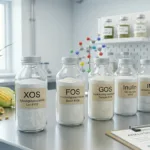
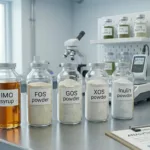
It is also worth separating inulin from the other fermentable fibres on the market. Inulin, fructooligosaccharides and galactooligosaccharides are all prebiotic fibres with different chain profiles and different degrees of sweetness, and they are not interchangeable at the same inclusion rate. Buyers who are comparing prebiotic fibres for a specific application should specify the fibre type, the chain profile and the analytical values they need before comparing price per kilo.
Why Choose Our Organic Inulin?
We partner with certified organic chicory growers and use eco-friendly extraction methods to preserve bioactivity and purity. Our production facility follows GMP and HACCP protocols, with dedicated lines to prevent cross-contact with major allergens.
Every shipment includes full documentation: Certificate of Analysis (CoA), Organic Certificate, Gluten-Free Statement, and Safety Data Sheet (SDS)—ensuring regulatory compliance and formulation confidence.
Packing
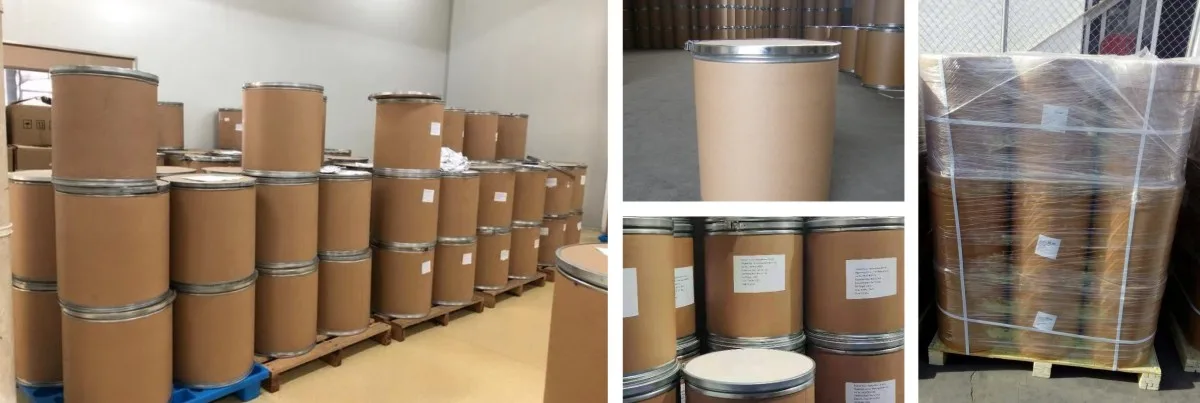
Available packaging: 10 kg or 25 kg food-grade multi-wall paper bags with PE liner; bulk options upon request.
Also Known As: Names and Synonyms in the Trade
Inulin is referred to by a number of names that reflect either the source plant or the analytical fraction. The list below covers the terms used in specifications, in regulatory dossiers and on retail labels.
- Chicory inulin – the source-qualified name for material from chicory root
- Chicory root fiber – the label-friendly US designation
- Chicory root extract – the ingredient-deck name used in some markets
- Jerusalem artichoke inulin – the equivalent material from Helianthus tuberosus
- Agave inulin – material from a different botanical source, with a shorter chain length
- Prebiotic fiber – the functional claim name
- Soluble fiber – the claim name used when the prebiotic claim is not made
- Fructan – the chemical family: β-2,1 linked fructose polymers
Inulin is a fructan: a chain of fructose units, usually terminated by a glucose unit, with a degree of polymerisation that depends on the source and the harvest. Chicory root gives the medium-chain material most often used in food, while Jerusalem artichoke gives a comparable fructan from a different crop. Our standard grade is chicory-root inulin at ≥90% inulin content and an average DP of 10–12; material from other botanical sources can be discussed for specific projects. Oligofructose is a separate, shorter-chain fraction and is not interchangeable with inulin in a formulation.
FAQs
Q: Can chicory inulin replace sugar?
A: It is mildly sweet (about 10% of sucrose) and reduces sugar by improving mouthfeel in low-calorie products.
Q: Is inulin suitable for keto diets?
A: Both variants are low-carb (~10g net carbs per 100g) and suitable for keto formulations.
Q: Does inulin cause bloating?
A: Start with small doses (5g/day) to allow gut adaptation.
Q: Do you offer private labeling?
A: Yes! Custom branding available for both inulin types.
Q: What is the difference between inulin and inulin powder?
A: Inulin is only sold as a powder, so the difference is concentration and specification rather than form. Plain inulin usually refers to a standard grade with a shorter chain profile, while specification-grade inulin powder has a defined chain length and a declared analytical profile. The source is chicory root in both cases.
Q: Is organic inulin the same as fructooligosaccharides?
A: No. Inulin, fructooligosaccharides and galactooligosaccharides are three different prebiotic fibres with different chain profiles, different sweetness and different behaviour in a formulation. They are not interchangeable at the same inclusion rate, so the fibre type should be stated on the order.
Q: How much organic inulin powder should I use in a recipe?
A: Typical bakery and dairy applications run between 2% and 5% of the finished weight, and higher levels in nutrition bars and spreads. Because inulin is a fermentable fibre, it is worth starting at the lower end and confirming the dosage with a sensory panel and the declared carbohydrate calculation for the target market.