Have you ever wondered what’s truly in the sweeteners you consume? Many promise a low-calorie experience but deliver little more than empty sweetness. We believe a sweetener can—and should—do more.
Most sweeteners are judged on a single number: how many calories they deliver. Isomaltooligosaccharides, or IMO, are unusual because the same molecule sweetens a product and counts as soluble fiber on the nutrition panel.
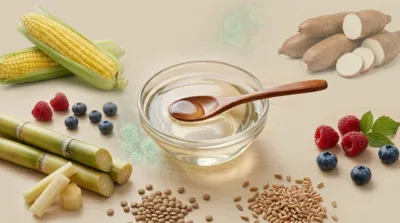
This is the story of Organic Isomaltooligosaccharides (IMO), a journey that begins not in a lab, but in a field of organic crops. We start with pure, non-GMO starch, a natural and wholesome base. Through a precise, all-natural enzymatic process, we transform this starch into a powerful, functional ingredient.
This isn’t about creating another synthetic sugar substitute. It is about using the functional structure of starch, built by enzymes rather than by chemistry, to do something ordinary sugar cannot.
From Starch to Sweetener
The process is a delicate one, carefully controlled to produce short-chain carbohydrates that your body’s digestive enzymes can’t break down. The result is a unique molecule that provides a mild sweetness, yet passes through the upper digestive tract largely unabsorbed. This is why it has a low glycemic index and fewer calories than sugar.
The process runs in two stages. A food-grade starch is first thinned into a syrup with alpha-amylase, then rebuilt by transglucosidase, an enzyme that joins glucose units through alpha-1,6 bonds. What leaves the reactor is a mixture rather than a single compound. Most of it is isomaltose and isomaltotriose, with longer oligomers up to a degree of polymerization of about eight, plus a smaller fraction of maltose and maltotriose left over from the thinning step. The ratio between those fractions is what a buyer is really specifying when they ask for IMO.
That structure explains the flavor. IMO is usually described as roughly half as sweet as sucrose, with no bitterness or aftertaste, and it is stable through the heat of pasteurization and baking. In a beverage it also contributes body, so it often replaces part of the sugar solids rather than all of them.
But the journey doesn’t end there.
The Prebiotic Difference
Once it reaches your colon, the magic truly happens. Unlike regular sugar, which can feed unhealthy bacteria, Organic IMO acts as a prebiotic fiber. It becomes a rich food source for the beneficial bacteria in your gut—the “good guys.”
By nourishing this healthy gut flora, Organic IMO helps create a balanced and thriving microbiome. A healthy gut is linked to better digestion, enhanced nutrient absorption, and a stronger immune system.
The selectivity is the point. Bifidobacteria and a few other genera carry the enzymes needed to break alpha-1,6 linkages, while many of the less helpful species in the colon do not. Fermentation of IMO produces short-chain fatty acids, mainly acetate, propionate and butyrate. Our guide to why oligosaccharides matter for gut health covers the wider family.
Dosing is where product developers tend to be cautious. Human studies that show a bifidogenic effect typically use several grams per day, and tolerance varies between individuals, so a new product usually starts at a lower inclusion level and builds up. It also protects the sensory profile, since a large dose of any oligosaccharide can soften a bar or add unplanned sweetness.
The Final Product: Powder and Syrup
The final result of this journey is a clean-label product available in two versatile forms:
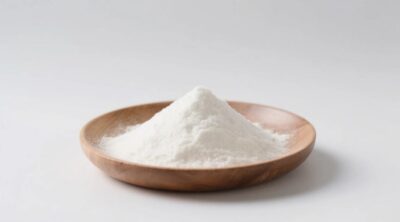
- Powder: A finely milled powder perfect for dry mixes, baking, and blending into smoothies.
- Syrup: A thick, sweet syrup ideal for drizzling, binding, and moistening recipes.
The two forms differ mainly in moisture and handling. The powder flows freely and suits dry blends, supplement sticks and tableting, while the syrup is easier to dose into beverages and baked goods where the water it carries is already part of the recipe. The syrup also resists crystallization, which helps in chewy confectionery and bars.
Both are a testament to our commitment to a different kind of sweetness—one that goes beyond flavor to provide real, tangible health benefits. Organic IMO is more than just a sweetener; it’s a foundation for better gut health, all grown and crafted from nature’s purest ingredients.
How Manufacturers Use IMO in Formulations
In beverages, IMO sweetens at low inclusion levels and supports a soluble fiber claim. In bars and confectionery it keeps the texture soft and slows staling. In dairy alternatives and spoonable desserts it adds body and mouthfeel. Because it is a humectant, it also holds moisture in baked goods and extends the window in which they still taste fresh.
On the label it is declared as isomaltooligosaccharide, and where local rules allow the fiber contribution is listed separately on the nutrition panel. That second line is often the commercial reason a brand chooses it at all. For a plain-language look at the ingredient in real recipes, see this guide to using organic IMO powder and syrup at home.
Sourcing Organic IMO
The documents a buyer should expect are the organic certificate for the manufacturing site, a non-GMO statement, a specification sheet and a certificate of analysis for each lot. On the specification, the numbers worth checking are oligosaccharide content on a dry basis, the degree of polymerization profile, syrup solids or moisture, pH and microbial limits.
Origin matters less than consistency here, because the process is enzymatic and the profile can be tuned. What separates suppliers is the ability to hold the same DP distribution, color and sweetness from lot to lot, and to state plainly which fraction of the product qualifies as fiber in the destination market. Whether IMO is a healthy sweetener is a question formulators get asked constantly, and the answer depends on that fiber fraction.
About Our Organic Isomaltooligosaccharide
BIOSTARCH supplies organic isomaltooligosaccharide in both powder and syrup form, produced from non-GMO starch through an enzymatic process and certified to organic standards. The powder is milled for dry blends and supplements, and the syrup is supplied for beverages, bars and baked goods.
Both forms ship with a certificate of analysis, a specification sheet and organic documentation, are available in bulk quantities, and can be supplied in sample volumes for formulation trials.
Recommended Products
Organic Isomaltooligosaccharides
Organic isomaltoligosaccharides (IMO) powder is a certified-organic prebiotic fiber (90%+) from non-GMO corn or…
Related Posts