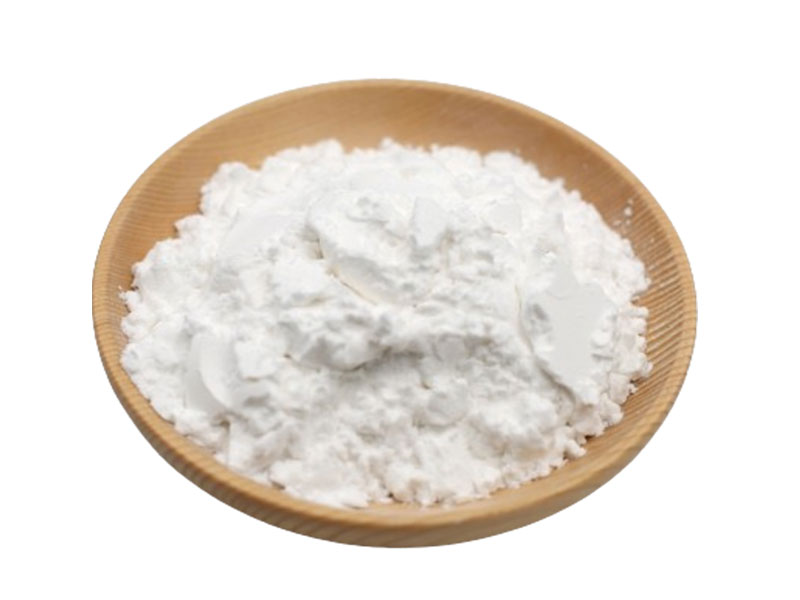
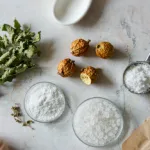
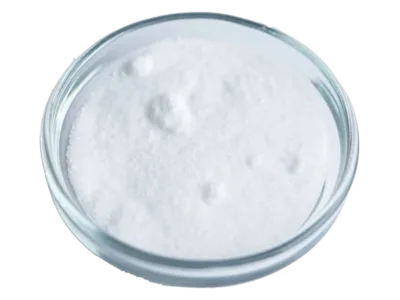
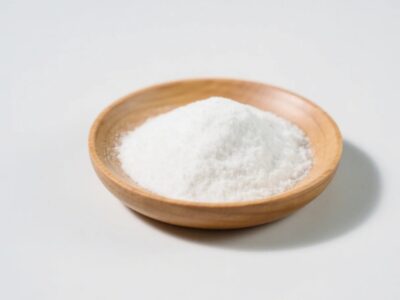
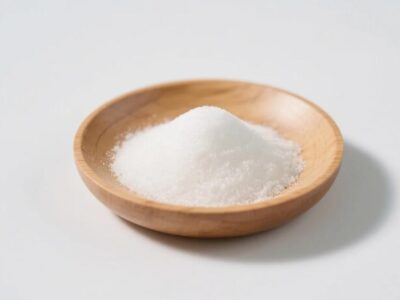
Organic rice starch is a certified-organic native starch with very fine granules and a neutral taste. Its smooth mouthfeel and hypoallergenic profile suit infant food, dairy desserts, and gluten-free bakery. BIOSTARCH supplies 25 kg bags.
Our rice starch is a refined carbohydrate extracted from non-GMO white or brown rice (Oryza sativa) through a gentle wet-milling process—free from harsh chemicals, sulfites, or synthetic additives. With its ultra-fine particle size (2–8 µm), neutral flavor, and high digestibility, rice starch is one of the most hypoallergenic and biocompatible starches available.
We offer two grades:
Conventional Food-Grade Rice Starch
Certified Organic Rice Starch (USDA & EU Organic compliant)
Both are naturally gluten-free, corn-free, soy-free, and dairy-free, making them ideal for sensitive populations, including infants and individuals with multiple food allergies.
Rice starch consists primarily of amylopectin (~80–85%) and amylose (~15–20%), resulting in a soft gel structure, low viscosity, and rapid digestibility. Unlike potato or tapioca starch, it does not impart stickiness or off-flavors, and its small granule size mimics the texture of talc—making it valuable in both food and cosmetic applications.
Our production uses only water and mechanical separation, preserving the native granular integrity for optimal functionality.
Also Known As: Names and Synonyms in the Trade
Rice starch is traded under a small number of names, and the form a document uses usually says which trade is writing it: the botanical name on a specification sheet, the pharmacopoeial Latin name on an excipient certificate, or the registry entry on a customs or safety file. The list below covers the ones that come up most often in enquiries, technical data sheets and shipping paperwork.
Oryza sativa starch – the botanical-source form used on cosmetic ingredient declarations (INCI) and on technical data sheets, where the species rather than the common name is wanted
Oryzae amylum – the Latin monograph title; the European Pharmacopoeia carries rice starch as its own monograph, so an excipient specification may be written against that name rather than the English one
Starch, rice (FDA UNII 4DGK8B7I3S; CAS 9005-25-8) – the registry entries quoted on certificates of analysis and safety data sheets; the CAS number is the shared entry for starch generally, so it does not by itself identify the botanical source
Native (unmodified) rice starch – how supplier literature marks material that has had no chemical treatment, as distinct from the modified starches that carry E numbers in the European Union
Waxy (glutinous) rice starch – the high-amylopectin cut milled from waxy rice, named separately in the trade because its paste behaviour differs from that of the regular cut
The name on the label has to match the name on the specification sheet, and the sheet has to state the botanical source, the starch content and the analytical method. Rice flour is a different ingredient – it is the ground kernel, so it carries the protein and the fibre that this specification holds at or below 0.5% protein – and the modified rice starches are different again, since they carry additive designations that the native material does not. Line up the dry-basis starch content and the protein figure before treating two offers as equivalent.
Analytical methods: ISO 6647 for starch content; RVA for pasting profile; AOAC for moisture/protein.
Sourcing, Certification and Regulatory Status
Jurisdiction / Standard
Regulatory status
Legal name
Notes
European Union
Food ingredient; not regulated as a food additive
Rice starch
Labelling follows Regulation (EU) No 1169/2011. Rice is not a cereal containing gluten, so no cereal-source qualifier is required and the ingredient can be declared as rice starch. A gluten-free claim is governed by Regulation (EU) No 828/2014 (below 20 mg/kg). Organic grades are covered by Regulation (EU) 2018/848. Native starch is a food ingredient rather than a food additive, so the additive regulation (EC) No 1333/2008 does not apply to it; the modified grades are the ones that carry E numbers.
United States
Conventional food ingredient; no substance-specific authorisation
Rice starch
FDA proposed to affirm unmodified food starches, rice starch among them, as GRAS under a new 21 CFR 184.1847 (50 FR 12821, 1 April 1985); the proposal was later withdrawn with other pending actions (69 FR 68831), and FDA stated that the withdrawal did not change the regulatory status of the ingredients listed. A gluten-free claim has to meet 21 CFR 101.91 (below 20 ppm).
Japan
Food ingredient; handled as an ingredient rather than as a designated additive
Rice starch
Native starch sits on the ingredient list under the starch class name; the chemically modified starches are the designated food additives and may be labelled with the simplified name 加工デンプン. Organic product for Japan is certified to the Japanese Agricultural Standards (JAS).
Codex Alimentarius
Food ingredient; no commodity standard covers rice starch as such
Rice starch
CXS 192-1995, the General Standard for Food Additives, carries the provisions for modified starches as thickeners and stabilisers (INS 14xx) rather than for the native material; contaminants fall under CXS 193-1995. There is no Codex commodity standard for starch as such – the nearest starch-family text is the Standard for Edible Cassava Flour (CXS 176-1989), which does not apply here.
Compliance for rice starch turns on the assay, the particle-size cut and the microbiological limits rather than on the naming convention, so those are the figures to line up when comparing offers. The infant-nutrition and cosmetic routes each carry their own documentation expectations on top of the food figures, so confirm the legal name, the permitted use and the required paperwork with the destination market before the first shipment.
Applications
Infant Formula & Baby Cereals: Easily digestible thickener for sensitive tummies
Gluten-Free Baking: Improves crumb softness in breads, cakes, and cookies
Plant-Based Meat & Seafood: Enhances juiciness without altering flavor
Pharmaceuticals: Binder/filler in tablets due to low reactivity
Cosmetics: Natural alternative to talc in face powders and dry shampoos
Organic Advantage: Our organic rice starch is ideal for premium clean-label brands targeting eco-conscious and health-focused consumers.
Format and Grade Selection
Two questions are settled before a specification is agreed: which grade the finished label needs, and how fine the powder has to be. Both follow from the application rather than from the label.
Conventional food grade – the default where the finished product carries no organic claim; Kosher, Halal and Non-GMO Project Verified documentation comes with the batch
Certified organic grade – USDA and EU organic, chosen when the label claim or the retailer’s sourcing policy requires it, and issued with its own certificate per shipment
Standard particle size – the 2–8 µm D[50] cut, already at the fine end of commercial starches, which is what produces the talc-like feel in pressed powders and dry blends
Micronized cut – a narrower sizing for dusting powders and for specifications that fix the top of the particle-size distribution rather than the median
Infant nutrition and clinical use – here the deciding figures are the microbiological limits (total plate count ≤10,000 CFU/g, E. coli absent in 1 g, Salmonella absent in 25 g) and the gluten-free declaration below 5 ppm, not the viscosity
Cosmetic use – the whiteness figure (L value ≥94) and the absence of odour matter more than the pasting profile, and a batch can meet every food figure and still fail a colour-matched powder
Handling Note: Rice starch pastes between 70 and 75°C and peaks at only 150–300 cP on a 10% slurry, so it is chosen for a soft gel, a clean flavour and a fine mouthfeel rather than for a heavy viscosity build. Where a sauce has to carry body, the starch is blended rather than dosed harder.
The grade and the particle-size cut are declared per batch, so the certificate can be checked against the specification line by line. Tell us the application, the process temperature and the particle-size window when requesting a sample, and we will quote the grade that fits.
Why Choose Our Rice Starch?
We source rice from trusted non-GMO farms and use dedicated allergen-controlled facilities. The wet-milling process avoids acid or enzyme modification, ensuring a native (unmodified) starch that meets global food safety standards.
Every batch includes full documentation: Certificate of Analysis (CoA), Allergen Statement, Non-GMO Affidavit, and Organic Certificate (if applicable).
Available packaging:
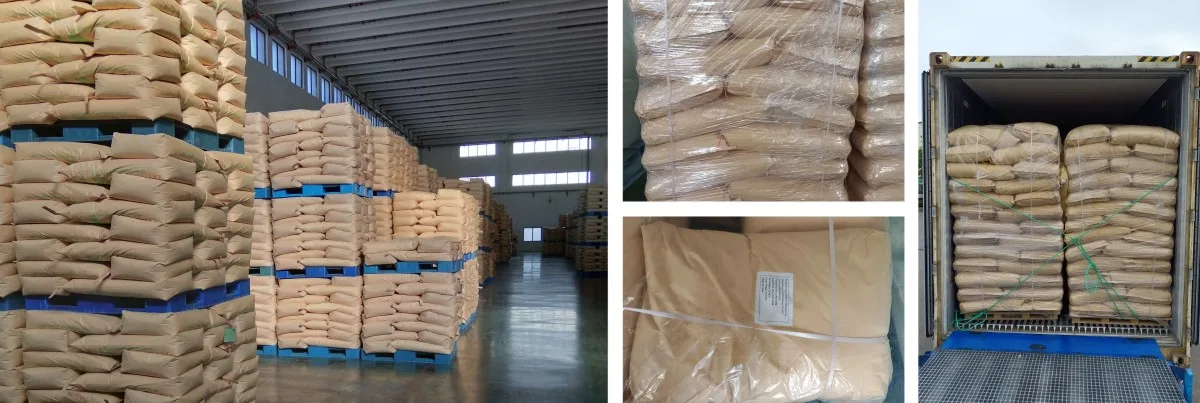
25 kg multi-wall paper bags with food-grade PE liner
500 kg–1,000 kg FIBCs for industrial users
Custom particle size (standard or micronized) upon request
Packing
FAQs
Q: Is rice starch the same as rice flour?
A: No. Rice starch is the purified starch fraction, specified at ≥95% starch on a dry basis with protein held to ≤0.5%, while rice flour is the whole ground kernel and carries its protein, fat and fibre with it. Read the starch content and the protein figure before treating the two as interchangeable.
Q: Which figures on the certificate of analysis should I check first?
A: Starch content (≥95% dry basis), moisture (≤14.0%), protein (≤0.5%) and particle size (D[50] 2–8 µm). The methods are stated alongside them – ISO 6647 for starch content, RVA for the pasting profile and AOAC for moisture and protein – so a tender can quote the same numbers the certificate will show.
Q: Can rice starch be used in a cold-prepared system?
A: It gelatinises on heating, with a pasting temperature of 70–75°C on the RVA, and it reaches 150–300 cP at 10% solids, so a cold system will not thicken on this grade alone. It is chosen for a soft gel and a neutral flavour rather than for a heavy viscosity build.
Q: How is rice starch labelled in the EU and the United States?
A: As a food ingredient rather than as an additive. Under Regulation (EU) No 1169/2011 it is declared as rice starch, and because rice is not a cereal containing gluten no cereal-source qualifier is required; in the United States a gluten-free claim has to meet 21 CFR 101.91. Confirm the wording for your destination market before printing.
Q: What documentation ships with a batch?
A: A certificate of analysis, an allergen statement and a non-GMO affidavit, with gluten-free status declared below 5 ppm. The conventional grade carries Kosher, Halal and Non-GMO Project Verified; organic batches add the USDA Organic and EU Organic certificates.
Q: Do you offer private labeling or a custom particle size?
A: Standard packing is 25 kg multi-wall paper bags with a food-grade PE liner, or 500–1,000 kg FIBCs for industrial users, and custom particle size (standard or micronized) is available on request. Shelf life is 24 months stored sealed in a cool, dry place.
Appearance
White fine powder
Starch content
98.0% min
Moisture
14.0% max
Granule size
3-8 microns
pH (10% suspension)
5.0-7.5
Solubility
Swells in hot water
Protein
0.5% max
Shelf life
24 months
Certifications
Organic; Non-GMO; ISO 22000; Kosher; Halal
Source
Organic rice
Send Inquiry
Are you searching for a bulk Rice Starch manufacturer and supplier? Look no further! Get in touch with us now and we will be your best partner in all aspects. Conveniently share your requirements via the form or send an email to info@bio-starch.com / sales@bio-starch.com.
How home cooks use organic potato, corn, rice, pea and mung bean starch: slurry ratios, crisp coatings, gluten-free baking, noodles and safe starch substitutions.
How organic specialty sweeteners are sourced and verified: growing regions, certification scope, COA parameters, residue limits, and supplier audit practice.
How organic specialty sweeteners perform across beverages, bakery, dairy, and pharma: blend systems, functional behavior, and market data driving reformulation.