
For product developers under pressure to cut sugar, organic isomaltitol solves a specific and stubborn problem: how to keep the body, texture, and shelf stability of sugar while removing most of the glycemic load. Its value is not a single trick but a cluster of properties that hold up under real manufacturing conditions. This article focuses on the main organic isomaltitol industrial applications across food and pharma production.
The Stability Advantage
Most sugar reductions fail in the factory, not on the label. Heat-sensitive sweeteners lose intensity during baking; hygroscopic polyols turn powdered mixes into clumps; some crystallize or weep in storage. Isomaltitol avoids these failure modes. It remains stable at temperatures up to about 180 degrees C, does not caramelize or brown, and resists moisture uptake even at high relative humidity.
That stability is why it is the default bulk sweetener for sugar-free hard candy. Boiled to the hard-crack stage, it sets into a clear, glassy mass that stays non-sticky and resists crystallization during shelf life. Products can be packed loosely without individual wrappers, which reduces packaging waste and cost. For a specification-level overview, our complete guide to organic isomaltitol lays out the numbers.
Confectionery Applications
Hard candies, lollipops, and sugar-free mints are the headline use. Isomaltitol delivers the bulk and slow dissolution that give candies their long-lasting flavor release, and its neutral taste carries fruit, coffee, and spice flavors cleanly. It also suppresses the bitter aftertaste that some high-potency sweeteners leave, which is why it is almost always used alongside stevia or monk fruit rather than alone.
Chewing gum and toffees benefit from the same properties. The low hygroscopicity keeps the gum center and coating stable, and the ingredient does not cool the mouth the way xylitol does, preserving the intended flavor profile. Throat lozenges and cough drops use it for the same reasons, plus its non-cariogenic status.
Chocolate and Coatings
In chocolate, isomaltitol reduces sugar while maintaining a smooth texture and a clean snap. It is moderately soluble, so formulators adjust conching and tempering parameters, but the payoff is a sugar-reduced bar or coating that eats like the conventional product. Combined with a high-intensity sweetener, the sweetness can be tuned to match a target recipe without reintroducing sugar.
For compound coatings and inclusions, isomaltitol’s stability means it survives enrobing and cooling without degradation. That makes it suitable for sugar-free biscuits, snack bars, and praline fillings where a sugar-free claim must coexist with a premium mouthfeel.
Bakery and Baked Goods
Bakery is where heat stability pays off. Isomaltitol holds structure through high-temperature baking and contributes moisture retention that keeps cakes and cookies soft. It works in cookies, cakes, frostings, and fillings. Because it does not brown like sucrose, products bake to a lighter color, which formulators can correct with natural color or process adjustments if a deeper crust is desired.
One consideration is solubility. In high-moisture batters the moderate solubility is rarely an issue, but in glazes or syrups with high solids, ensure full dissolution at temperature to avoid speckling. Used within sensible formulation windows, isomaltitol is a dependable sugar replacement for most baked systems.
Pharmaceutical and Nutraceutical Uses
Beyond food, isomaltitol is a long-established excipient in pharmaceuticals. Its low moisture uptake and neutral taste make it ideal for direct-compression tablets, where it acts as a filler and binder while keeping the tablet stable on the shelf. Sugar-free chewable vitamins, lozenges, and oral-care tablets commonly rely on it.
The non-cariogenic property is a direct benefit in formulations aimed at dental health, and the clean sensory profile avoids interfering with active ingredients or flavor masks. For buyers, the sourcing and quality guide explains the certifications and testing that matter for pharma-grade material.
Processing Parameters That Matter
| Parameter | What to Watch |
|---|---|
| Temperature | Stable to about 180 degrees C |
| Humidity | Low hygroscopicity; stable to high RH |
| Solubility | Moderate; dissolve fully at temperature |
| Sweetness | Pair with high-intensity sweetener |
| Cooling effect | Minimal, unlike xylitol or erythritol |
Formulators should plan for isomaltitol’s roughly half-sweetness by building blends with stevia, monk fruit, or another high-potency option. The blend ratio depends on the target product and the intensity of the companion sweetener. Particle size also matters: fine powder dissolves and disperses more readily, while granular grades suit direct compression and certain confectionery processes.
Cost and Supply Considerations
Isomaltitol costs more than sucrose, which is the main barrier to price-sensitive categories. Brands justify the premium through clean-label and health positioning, longer shelf life from low hygroscopicity, and the ability to make claims around reduced calories and low glycemic response. For an outlook on demand and pricing dynamics, our market and comparisons guide covers the competitive landscape.
Supply reliability is another factor. Because organic isomaltitol depends on organic beet sugar feedstock, buyers should secure documented organic certification and plan lead times with suppliers who can verify non-GMO status end to end. Working with a partner who holds Organic, Kosher, and Halal credentials simplifies formulation across regions.
Where Organic Isomaltitol Industrial Applications Fit Best
Isomaltitol is the right choice when a product needs sugar’s bulk and behavior but not its glycemic cost, and when manufacturing involves heat, humidity, or long shelf life. It is less suited to beverages requiring very high solubility or to applications where a strong cooling sensation is desired. Matching the ingredient to the process is what turns a sugar-reduction target into a product that actually ships.
About Our Organic Isomaltitol
BIOSTARCH supplies certified organic isomaltitol powder engineered for industrial performance, with customizable particle size and batch testing for purity, moisture, and contaminants. Our technical team supports formulators with blend ratios, solubility guidance, and documentation for Organic, Kosher, and Halal compliance, helping you move from pilot to production with fewer surprises.
Recommended Products
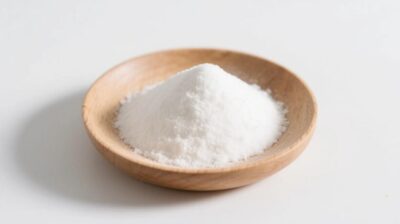
Isomaltitol Powder
Isomaltitol powder is a sugar alcohol from sucrose with a clean sugar-like taste and…


