
A buyer can hold two certificates that look identical and receive two very different materials. Organic certification proves a defined process was audited at a defined site during a defined window. It does not tell you which glycosides are in a stevia extract, how a monk fruit crop was dried, whether an allulose lot can legally enter your market, or whether the third shipment will match the tender sample. Sourcing these ingredients well means reading the certificate for what it covers, then closing the gaps with specifications, testing, and audits.
What Certified Organic Actually Covers
Organic certification is a scope document, not a blanket endorsement of a supplier. Under the USDA National Organic Program, the seal signals at least 95 percent organic content, and the certificate names specific products, specific handling facilities, and a validity window. A supplier certified for organic stevia extract is not automatically certified for organic allulose. China’s national standard GB/T 19630-2019 works the same way, requiring at least 95 percent certified organic ingredients for the organic label.
Certification also carries a land history requirement: ground must be free of prohibited synthetic inputs for a transition period, typically 36 months, before output qualifies. Operators keep records for at least five years and undergo an annual on-site audit.
Verification is the step buyers skip most often. USDA-certified operations appear in the Organic INTEGRITY Database, and Chinese certifications issued by accredited bodies can be checked against the national registry. Confirm three things in every certificate: that it is current, that the exact product falls inside the listed scope, and that the named facility will actually process your order.
Where These Ingredients Come From
Each sweetener in the range has its own agronomy, processing route, and failure modes.
| Sweetener | Source | Main origin | Production route | Key organic control point |
|---|---|---|---|---|
| Stevia extract | Stevia rebaudiana leaf | China, Paraguay, Brazil, Kenya | Water extraction, purification, crystallization | Leaf-level pesticide residue; extraction solvent |
| Monk fruit extract | Siraitia grosvenorii fruit | Guilin, Guangxi, China | Water extraction, membrane filtration | Drying method; single-region weather risk |
| Allulose | Fructose from corn or sugar beet | China, South Korea, United States | Enzymatic isomerization | Certified organic feedstock; processing aids |
| Erythritol | Glucose from starch crops | China | Yeast fermentation, crystallization | Organic glucose source; fermentation inputs |
| Xylitol, maltitol | Plant hemicellulose, maltose syrup | China, Europe | Hydrolysis and hydrogenation | Feedstock traceability; catalyst residues |
Botanical extracts carry field-level risk, so residue and origin control dominate. Fermentation and enzymatic products carry process-level risk, so feedstock certification does.
Stevia Leaf, Glycoside Profiles, and the Bioconversion Question
Stevia rebaudiana is native to Paraguay. Cultivation is now spread across South America, parts of Africa, Southeast Asia, and China, which supplies the large majority of world volume from growing regions including Yunnan, Anhui, and Jiangsu.
Purity grades follow the glycoside profile rather than a single number: food-grade material typically runs at 95 percent or higher total steviol glycosides on a dry basis, with premium grades at 98 or 99 percent for taste-sensitive formulas. The individual profile matters more than the total: rebaudioside A dominates conventional extracts, while rebaudioside D and rebaudioside M give a cleaner, more sucrose-like sweetness. Minor glycosides such as rebaudioside B, C, and E carry the licorice-like off-notes that formulators try to avoid, so a good specification states the ratio, not just the assay.
Here is where organic sourcing gets technical: rebaudioside M occurs at well under 0.1 percent of leaf dry weight and rebaudioside D under about 0.5 percent, making direct leaf extraction of these molecules commercially impractical at scale. Most commercial Reb M and Reb D therefore come from enzymatic bioconversion or fermentation rather than from the leaf alone. Ask every supplier to state in writing whether a given lot is leaf-extracted or bioconverted, and confirm the enzymes and substrates are compatible with the organic standard of your destination market. A certificate covering organic leaf does not automatically cover a bioconverted glycoside.
Extraction chemistry is the other checkpoint. Water and food-grade ethanol routes preserve the steviol backbone and leave residues that are easy to strip and measure, while harsher solvents create residue and compliance problems. The glycosides themselves are robust, holding sweetness through heat processing from pasteurization through UHT and retort sterilization near 121 degrees Celsius, and baking around 180 degrees Celsius.
Monk Fruit: One Region, One Harvest Window
Monk fruit is the most geographically concentrated ingredient in the range. Siraitia grosvenorii is cultivated commercially in the karst mountains around Guilin in Guangxi, with the core orchards in counties such as Yongfu and Longsheng. Each vine is hand pollinated, and the fruit matures around September and October. That combination of one region, one annual harvest, and manual labor means crop weather and labor availability translate directly into price and lead time.
Quality separates on drying method more than on anything else. Traditional wood-fire drying browns the fruit, produces bitter and burnt notes, and raises the risk of benzopyrene formation, a contaminant with strict European limits for dried products. Low-temperature vacuum dehydration below 50 degrees Celsius preserves color and aroma and avoids that pathway. Sulfur-free processing should show sulfur dioxide as not detected on the certificate of analysis.
Concentration is expressed as mogroside V content. Whole dried fruit typically carries 0.5 percent or more, while extracts are standardized at grades from 25 percent through 40, 50, 80, and 95 percent. Because a single fruit contributes so little, roughly 50 fruits are needed for a kilogram-equivalent of 25 percent material and around 80 for 40 percent grade, which explains the price gap between grades. Typical extract specifications also cap moisture and total ash at 5 percent, and the extract stays stable across a pH range of roughly 3 to 11.
Allulose and Erythritol: Feedstock, Capacity, and Market Access
Allulose is made by enzymatic conversion of fructose, most often derived from corn and sometimes from sugar beet. Organic status therefore depends on two questions: whether the fructose feedstock is certified organic, and whether the enzymatic conversion counts as permitted processing under the standard you are claiming. Certified organic allulose remains scarce, so buyers should expect a meaningful price premium and longer lead times.
Capacity concentration is the second risk. Production sits in a limited number of facilities, and the process, enzymatic conversion followed by chromatographic purification, is sensitive to upsets such as enzyme deactivation or resin fouling, so a single line outage can constrain global supply for weeks. Buyers building allulose into a core formula should ask about installed capacity, contingency plans, and second-source availability.
Market access is where allulose diverges sharply from the rest of the range: in the United States it holds GRAS status and is excluded from Total Sugars and Added Sugars declarations while still counting toward total carbohydrate at 0.4 calories per gram. Japan, China, South Korea, and Singapore permit it. The European Union has not authorized it as a novel food; the EFSA panel concluded in June 2025 that safety could not be established because the applicant did not supply requested data on identity, production process, use levels, and genotoxicity. Canada has likewise not permitted it as a sweetener. For a multi-market brand, destination approval is a harder constraint than certification and it needs settling before formulation work starts.
Erythritol follows a different path, produced by yeast fermentation of glucose and then crystallized. Organic erythritol depends on a certified organic glucose stream and organic-compatible fermentation inputs, so the audit trail runs back through the starch crop. European trade measures on erythritol imports have also shifted landed cost and sourcing patterns, so check current duty schedules, not last year’s quotation. The related polyols behave similarly on the compliance side; our organic xylitol complete guide and organic isomaltitol market and comparisons guide cover their specifics.
Reading a Certificate of Analysis Properly
A specification sheet describes what a product should be; a certificate of analysis describes what one specific batch actually was, and buyers who accept a spec sheet in place of a batch COA have no record of the material they received. Request the batch COA for every shipment, and for taste-critical work request the HPLC chromatogram behind it so your quality team sees the glycoside or mogroside distribution rather than a single summed figure.
| COA parameter | Method | What it protects |
|---|---|---|
| Assay and profile | HPLC | Sweetness intensity and taste consistency |
| Moisture | Karl Fischer or loss on drying | Caking, flow, shelf life |
| Ash | Gravimetric | Purification efficiency |
| Particle size | Sieve or laser diffraction | Blending and dosing accuracy |
| Heavy metals | ICP-MS | Lead, arsenic, cadmium, mercury exposure |
| Pesticide residues | LC-MS/MS and GC-MS | Organic integrity and market compliance |
| Residual solvents | GC | Extraction process control |
| Microbiology | Plate count, pathogen tests | Total count, yeast and mold, Salmonella, E. coli |
Ask which laboratory produced the data and whether it holds ISO/IEC 17025 accreditation. On high-volume contracts, independent parallel testing of the first lots is cheap against the risk of a rejected run.
Contaminant and Residue Limits Worth Specifying
Organic status limits what can be applied in the field but it does not eliminate environmental exposure. Common commercial limits keep total heavy metals at or below 10 parts per million, with ICP-MS able to resolve individual elements down to parts per billion. Pesticide screening for organic botanical material is run as a broad multi-residue panel at low detection thresholds, and suppliers operating to good agricultural practice standards screen leaf and fruit before processing.
For dried botanical inputs, aflatoxin B1 limits of around 2 parts per billion are typical for material heading into the European Union. Unintentional GMO presence is generally held to a 0.1 percent threshold. Buffer zones separating organic plots from conventional neighbours, commonly 50 metres or more, plus quarterly soil testing, are the field-level controls that make those numbers achievable.
Documentation That Travels With the Shipment
Paperwork failures cause more delays than quality failures. Build a document pack per destination and check it before the container leaves.
| Destination | Core documents | Notes |
|---|---|---|
| United States | USDA Organic certificate, batch COA, facility registration | Verify scope in the Organic INTEGRITY Database |
| European Union | EU organic certificate, certificate of inspection, COA | Import certificate is issued electronically through TRACES |
| Japan, Korea | Organic certificate recognized locally, COA, allergen statement | Confirm equivalence arrangements before shipping |
| All markets | Non-GMO declaration, kosher, halal, ISO 22000 or FSSC 22000 | Retailer and co-packer requirements often exceed law |
Retain records for at least five years to match certification requirements, and diary certificate expiry dates so a lapse is caught before a shipment is in transit.
Auditing a Supplier Beyond the Paperwork
The most useful audit question in organic sourcing is mass balance: how much certified organic raw material entered the site during the period, and how much certified organic finished product left it? Volumes that do not reconcile are the clearest signal of substitution.
The rest of the audit follows the physical flow: confirm whether organic runs use dedicated lines or a validated changeover with cleaning verification. Check that organic and conventional stock are physically segregated in the warehouse, not merely labeled differently. Ask whether the certified base is the supplier’s own farmland, contracted farms, or a mix, and how lots trace back to field and harvest. Suppliers with their own planting base answer these from records within minutes; brokers usually cannot.
Batch Consistency and the Sample-to-Bulk Gap
The gap between an approved sample and a bulk delivery is where most sourcing disappointment lives: when one gram of stevia extract replaces hundreds of grams of sugar, a one percent purity shift or a change in the minor glycoside ratio moves finished sweetness enough for consumers to notice.
Practical controls are straightforward: require COAs from at least three separate production lots before approving a supplier; agree written tolerance bands, not just target values, for assay, particle size, and moisture; keep retention samples of every accepted lot and run a short sensory check against the reference; and qualify a second source for anything in a core formula, particularly for allulose, where capacity concentration is real.
Packaging, Storage, and Handling
These powders are hygroscopic: stevia and monk fruit extracts, allulose, and erythritol all pick up ambient moisture, which causes caking, dosing error, and shortened shelf life. Standard protection is a food-grade barrier liner inside a fiber drum or carton, sealed with desiccant where required, stored cool, dry, and away from direct light. Keep organic stock physically separated through the whole chain, because organic integrity can be lost in a warehouse as easily as in a factory.
Building a Supplier Qualification Sequence
A workable sequence: verify the certificate and its scope in the issuing registry; obtain the specification and three historical batch COAs; run independent confirmatory testing; audit the site for mass balance, segregation, and traceability; confirm regulatory eligibility for every destination market; fix tolerances, packaging, and lead times in the contract; then monitor incoming lots against those bands.
That sequence pairs naturally with formulation work. Our organic specialty sweeteners complete guide explains how each molecule is produced, the industrial applications guide covers blend behavior at manufacturing scale, and the health and nutrition guide addresses tolerance and metabolic questions that specifications alone do not answer.
About Our Organic Specialty Sweeteners
BIOSTARCH supplies certified organic specialty sweeteners to food manufacturers, private-label brands, and retail packers, including organic stevia extract, organic monk fruit extract, organic allulose, organic erythritol, organic xylitol, and organic maltitol. Every lot traces to certified organic feedstock and is released against a batch certificate of analysis covering assay and glycoside or mogroside profile, moisture, ash, particle size, heavy metals, residual solvents, pesticide residues, and microbiological limits. Organic, Kosher, and Halal documentation is available on request, along with allergen, non-GMO, and destination-market import paperwork, and our technical team advises on specification tolerances, second-source planning, and grade selection by market.
Recommended Products
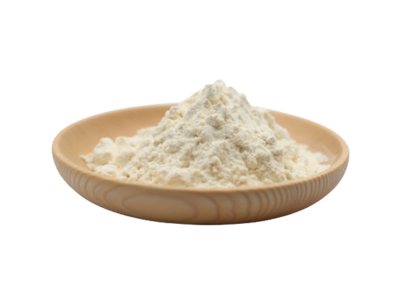
Monk Fruit Extract Powder
Monk fruit extract powder is a zero-calorie sweetener standardized to ≥50% total mogrosides (≥25%…
Related Posts


