
The Specialty Sweetener Market at a Glance
The global shift away from added sugar has turned specialty sweeteners from a niche input into a mainstream procurement category. Independent market research puts the worldwide specialty sweeteners market at roughly 5.8 billion US dollars in 2025, with a path to about 8.9 billion by 2033, a steady compound annual growth rate near 5.7 percent. A separate analysis of the broader sugar-reduction ingredient set, which includes stevia, monk fruit, allulose, polyols, and artificial high-intensity options, sizes that group at 4.8 billion dollars in 2025 and projects 7.9 billion by 2034 at 5.7 percent yearly growth. The zero-sugar natural sweetener slice alone was valued near 4.4 billion dollars in 2025 with projections approaching 6.5 billion by 2032.
Two forces keep that curve climbing. The first is regulation: more than fifty countries now apply some form of sugar tax or front-of-pack labeling rule that pushes manufacturers to reformulate. The second is consumer behavior: shoppers increasingly read labels for calorie, glycemic, and natural-origin signals, and they reward brands that cut sugar without sacrificing taste. Beverages remain the largest single application, but bakery, confectionery, dairy, and pharmaceutical syrup formats are all expanding. For a buyer, these numbers matter because they explain why lead times, minimum order quantities, and certification paperwork have tightened across the category. Our complete guide to organic specialty sweeteners lays out the ingredient fundamentals behind these figures.
How the Category Splits by Ingredient
Within the sugar-reduction ingredient market, 2025 share estimates break down as follows. Stevia still leads by volume and familiarity, but the growth story belongs to allulose and monk fruit, while polyols hold their ground because they supply bulk, texture, and humectancy that high-intensity sweeteners cannot.
| Ingredient class | 2025 share | Approx. value | Growth note |
|---|---|---|---|
| Stevia | 28.5% | 1.37 B USD | Steady, mid single digits |
| Polyols (xylitol, sorbitol, maltitol, isomalt) | 17.3% | 0.83 B USD | Around 5% yearly |
| Artificial high-intensity | 17.1% | 0.82 B USD | Under clean-label pressure |
| Monk fruit | 18.7% | 0.90 B USD | ~8.9% yearly, strong growth among plant extracts |
| Allulose | 12.4% | 0.60 B USD | ~10.7% yearly, fastest overall |
| Others (tagatose, isomaltulose, botanicals) | 6.0% | 0.29 B USD | Emerging, niche |
Stevia’s lead is built on the oldest regulatory footprint and the lowest cost per unit of sweetness among the naturals. Monk fruit commands a premium but grows faster because formulators value its clean finish. Allulose, though still the smallest of the named segments, posts the highest growth rate in the entire table, driven by a regulatory break in the United States and a sugar-like functional profile.
Stevia Versus Monk Fruit
Stevia and monk fruit are the two plant-derived, zero-calorie leaders, and they are frequently blended. Stevia comes from the leaves of Stevia rebaudiana; its active steviol glycosides deliver sweetness at 200 to 350 times that of sucrose with zero calories and a glycemic index of zero. Monk fruit, or luo han guo (Siraitia grosvenorii), yields mogrosides at 150 to 300 times sucrose sweetness, also zero calorie and zero glycemic.
The practical difference is taste and cost structure. Conventional stevia can carry a bitter or licorice-like aftertaste at high doses, which is why the industry has moved toward high-purity Reb M and Reb D fractions produced by fermentation. Monk fruit is prized for a cleaner finish but commands a higher price per unit of sweetness and depends almost entirely on cultivation and processing in southern China, with Guangxi supplying the bulk of raw material. China as a whole accounts for around 80 percent of global stevia leaf and extract supply, so both crops sit in overlapping Asian supply chains. For formulators, the usual answer is a blend: stevia or monk fruit supplies the high-intensity sweetness, while a bulk sweetener such as erythritol or allulose supplies body. The health and nutrition view of these sweeteners covers how each behaves in the body.
Allulose and the Rare Sugar Surge
Allulose is the standout growth ingredient of the group. Market figures for allulose used in food range from about 358 million dollars in 2025 to a projected 1.2 billion by 2032, a compound annual growth rate above 19 percent, the highest of any sweetener discussed here. Some narrower global allulose estimates place 2025 closer to 260 million dollars and 2032 near 450 million, but every source agrees the trajectory is steep and double-digit. Its appeal is functional: allulose delivers roughly 70 percent of sucrose sweetness, browns and caramelizes like sugar, and carries only about 0.4 calories per gram.
Regulation explains much of the momentum. In the United States, allulose holds GRAS status and, under FDA enforcement discretion, is excluded from total and added sugar counts on Nutrition Facts labels while being assigned 0.4 kcal per gram. It is approved in Japan, South Korea, and Mexico, but remains a novel-food review case in the European Union, which limits its global reach for now. The main constraint is cost: commercial allulose is made by enzymatic conversion of fructose, so unit economics still sit above conventional sugar. Our comparison of allulose against other sweeteners goes deeper on formulation trade-offs.
D-Tagatose as a Sugar-Like Bulk Option
D-tagatose is a rare monosaccharide that behaves more like sugar than most alternatives. It reaches about 90 to 92 percent of sucrose sweetness, supplies roughly 1.5 calories per gram, and shows a very low glycemic response. Crucially, it browns, caramelizes, and provides bulk, so it can replace part of sugar’s functional role rather than only its sweetness.
Tagatose also shows a prebiotic effect, feeding beneficial gut bacteria, which has made it attractive in functional foods. It is recognized as GRAS in the United States and evaluated by EFSA in the European Union, with approvals also in Canada, Australia, New Zealand, and Japan. Its limitation is price and the need for digestive-tolerance labeling at high intakes, which keeps it in premium and blended applications rather than as a standalone bulk sweetener. In side-by-side tests it shows a cleaner, more sugar-like mouthfeel than erythritol and far less cooling sensation, which is why product developers reach for it when texture is the priority.
Polyols Still Carry the Bulk
Sugar alcohols remain the workhorses of sugar-free and reduced-sugar products because they provide the mass, texture, and mouthfeel that high-intensity sweeteners lack. The main commercial polyols are xylitol, sorbitol, maltitol, and isomalt, with erythritol as the low-calorie outlier.
| Polyol | Sweetness (% of sugar) | Calories per gram | Glycemic index | Notes |
|---|---|---|---|---|
| Erythritol | 60 to 70 | 0.2 | ~1 | Best digestive tolerance; cooling sensation |
| Xylitol | 100 | 2.4 | ~7 to 13 | Dental benefit; toxic to dogs |
| Maltitol | 80 to 90 | 2.1 | ~35 | Common in sugar-free chocolate |
| Isomalt | 45 to 65 | 2.0 | ~9 | Heat-stable; hard candy favorite |
Xylitol and isomalt are covered in depth in our organic xylitol complete guide and organic isomaltitol market comparisons. The key buyer point is that polyols differ sharply on blood glucose and tolerance: erythritol and isomalt sit at the gentle end, while maltitol raises glucose more and can cause digestive discomfort at modest servings, so recipes must be balanced against label-warning thresholds.
Sweetness, Calories, and Glycemic Impact Compared
The table below places the main organic specialty sweeteners side by side against sucrose as the reference. Figures are typical industry ranges; exact values vary by supplier and grade.
| Sweetener | Sweetness vs sucrose | Calories per gram | Glycemic index | Bulk provided |
|---|---|---|---|---|
| Sucrose (reference) | 100% | 4.0 | 65 | Yes |
| Stevia | 200 to 350x | 0 | 0 | No |
| Monk fruit | 150 to 300x | 0 | 0 | No |
| Allulose | 70% | 0.4 | ~0 | Partial |
| D-tagatose | 90 to 92% | 1.5 | Very low | Yes |
| Erythritol | 60 to 70% | 0.2 | ~1 | Yes |
| Xylitol | 100% | 2.4 | ~7 to 13 | Yes |
| Maltitol | 80 to 90% | 2.1 | ~35 | Yes |
| Isomalt | 45 to 65% | 2.0 | ~9 | Yes |
Reading this table, the central trade-off becomes clear: high-intensity sweeteners (stevia, monk fruit) give zero calories but no bulk, so they need a bulking partner; rare sugars and polyols give bulk and a sugar-like profile but carry some calories or glycemic load. The right pick depends on the product’s calorie target, texture needs, and label claims. There is no single winner, only the best fit for a given formula.
Regulatory Status Across Regions
Regulatory posture shapes where each sweetener can be sold and how it must be labeled.
| Sweetener | United States | European Union | Asia-Pacific |
|---|---|---|---|
| Stevia | GRAS; E960 permitted | Approved (E960) | Widely approved; China is top supplier |
| Monk fruit | GRAS since 2010 | Approved as additive since 2011 | Native to China; growing approvals |
| Allulose | GRAS; excluded from sugar counts | Novel food under review | Approved in Japan, South Korea, Mexico |
| D-tagatose | GRAS | EFSA-evaluated; permitted categories | Approved in Japan, Australia, NZ |
| Erythritol | GRAS | Approved (E968) | Approved in Japan, Australia |
Organic claims add a layer on top of these approvals. An organic sweetener must trace to certified organic feedstock and comply with organic processing rules at every step, which is why organic stevia, monk fruit, and erythritol command documentation requirements beyond the basic food-safety clearances. A brand selling into the EU must also respect the stricter purity and dosage standards that EFSA sets for steviol glycosides, which raises compliance cost for lower-margin products.
Formulation Strategies That Buyers Use
Most successful reduced-sugar products are not built around a single sweetener but a system. A common pattern pairs a bulk sweetener with a high-intensity one: erythritol plus stevia or monk fruit is the staple in consumer packaged goods because it balances cost, taste, and texture. Allulose is increasingly added to that mix for baking because it browns like sugar. Tagatose appears in premium blends where a sugar-like mouthfeel is the priority, and polyols such as maltitol and isomalt remain the default in chocolate and hard candy where structure depends on bulk.
Buyers also weigh digestive tolerance, especially for polyol-heavy recipes, and label constraints such as the EU requirement to declare polyol content and warn about laxative effects above thresholds. Blending spreads the load: by combining a gentle polyol with a high-intensity sweetener, a formulator can hit the sweetness target while keeping any single ingredient below its tolerance limit. Our organic specialty sweeteners industrial applications guide shows how these systems perform across beverage, bakery, and confectionery lines.
Sourcing and What Buyers Should Verify
When specifying organic specialty sweeteners, documentation carries as much weight as the spec sheet. Buyers should confirm the organic certificate of the feedstock supplier, non-GMO status where relevant, and the food-safety credentials of the processor, such as FSSC 22000 or an equivalent standard. For stevia, verifying the glycoside profile (Reb A versus Reb M/D) tells you about taste and price. For monk fruit, mogroside content defines potency. For allulose and tagatose, enzymatic conversion details affect purity and cost, and for polyols the fermentation or hydrogenation route determines residual metals and microbial load.
Particle size, solubility, and moisture matter for downstream processing, so requesting a sample for a bench trial before committing to a full lot is sound practice. A supplier that cannot provide a consistent Certificate of Analysis across batches creates more risk than a slightly higher price. Our sourcing and quality guide details the testing and certification checklist we recommend before a purchase order is signed.
About Our Organic Specialty Sweeteners
BIOSTARCH supplies certified organic specialty sweeteners for food manufacturers, private-label brands, and retail packers, including organic stevia extract, organic monk fruit extract, organic allulose, organic erythritol, organic xylitol, and organic maltitol. Every lot traces to certified organic feedstock and is tested for purity, moisture, particle size, heavy metals, and microbiological limits, with Organic, Kosher, and Halal documentation available on request. Granulated, powdered, and liquid formats are offered so that retail packs, blends, and bakery applications can be matched without secondary processing. Our technical team can advise on blend ratios, sweetness equivalence, browning behavior, and tolerance thresholds for the specific format and market you are packing for.
Recommended Products
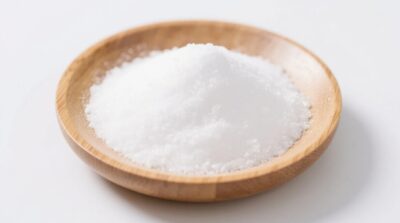
Organic Xylitol
Organic xylitol is a certified-organic sugar alcohol from non-GMO plant fiber. With about 40%…
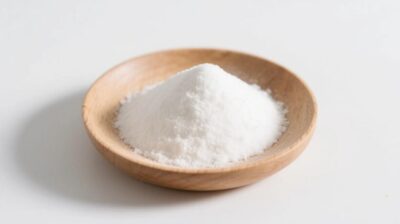
Isomaltitol Powder
Isomaltitol powder is a sugar alcohol from sucrose with a clean sugar-like taste and…
Related Posts


