
Xylitol has become one of the most widely adopted sugar alternatives in the food and beverage industry. For product developers and manufacturers seeking a natural sweetener that matches sucrose in taste while offering measurable functional and health advantages, organic xylitol stands out as a compelling ingredient. This organic xylitol complete guide walks through everything food makers need to know, from how it is produced and certified to how it performs in real-world formulations.
What Is Organic Xylitol
Xylitol is a naturally occurring sugar alcohol with the molecular formula C5H12O5. In nature, it appears in small quantities in fruits and vegetables, including plums, strawberries, raspberries, and cauliflower. The human body also produces xylitol endogenously during normal carbohydrate metabolism.
The compound belongs to the polyol family, a group of carbohydrate derivatives characterized by the presence of multiple hydroxyl groups. Structurally, xylitol is a five-carbon polyol, which distinguishes it from six-carbon sugar alcohols such as sorbitol and mannitol. This structural difference is responsible for several of its unique properties, including its sweetness profile and metabolic behavior.
Organic xylitol refers to xylitol produced from certified organic feedstock, most commonly birch wood or non-GMO corn cobs, using processes that comply with organic production standards throughout the supply chain. The organic designation ensures that the raw biomass is grown without synthetic pesticides or fertilizers, and that processing aids and catalysts used during manufacturing meet organic regulatory requirements. For food manufacturers, this distinction matters because it supports clean-label positioning and compliance with regional organic certification schemes.
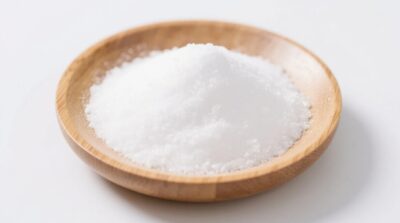
The crystalline form of xylitol appears as a white, free-flowing powder that closely resembles table sugar in appearance and texture. It dissolves readily in water and produces a mild cooling sensation on the tongue, a characteristic shared by most polyols due to the endothermic nature of their dissolution.
How Organic Xylitol Is Made
The production of organic xylitol follows a multi-step pathway from xylan-rich biomass to purified crystalline product. The process has three principal stages: feedstock preparation, xylose extraction and hydrogenation, and final purification with crystallization.
The raw material is typically birch hardwood or corn cob fiber from certified organic agriculture. These materials contain hemicellulose polymers rich in xylan. The first step hydrolyzes the hemicellulose fraction to release free xylose monomers. For organic-grade production, hydrolysis uses water and heat rather than synthetic acid catalysts.
The xylose-rich hydrolysate undergoes filtration and ion-exchange to remove impurities. Once clean, the xylose solution proceeds to catalytic hydrogenation under pressure, converting the aldehyde group to a primary alcohol group. The catalyst must comply with organic processing standards.
After hydrogenation, the crude xylitol passes through activated carbon treatment, ion-exchange polishing, and vacuum concentration. The concentrated syrup is seeded with pure crystals to initiate crystallization. The resulting mass is centrifuged, washed, dried, and sieved into the final powder.
Quality control is rigorous. Each batch is tested for purity, moisture, pH, specific rotation, and microbial parameters before release. For a detailed look at how organic sourcing contributes to final product quality, see our sourcing and quality guide.
Key Functional Properties
The functional properties of xylitol are what make it so valuable to food formulators. Understanding each of these properties in detail helps manufacturers make informed decisions about where and how to deploy this ingredient.
Sweetness parity with sucrose is the most immediately useful characteristic. Xylitol delivers sweetness approximately equal to table sugar on a weight-for-weight basis. Unlike high-intensity sweeteners such as steviol glycosides or sucralose, which require bulking agents and taste modulation, xylitol replaces sugar directly without additional adjustments.
The cooling effect is another distinctive feature. When xylitol crystals dissolve in saliva, they absorb heat from the surroundings. This negative heat of solution, roughly minus 153 J/g, creates a perceptible cooling sensation in the mouth. Product developers in the confectionery and oral care sectors make active use of this property, often pairing it with mint flavors to amplify freshness.
Xylitol is non-cariogenic: it does not contribute to tooth decay. Unlike sucrose and other fermentable carbohydrates, xylitol cannot be metabolized by cariogenic bacteria such as Streptococcus mutans. Research has demonstrated that xylitol can actively reduce levels of these bacteria with regular consumption. It is widely used in sugar-free chewing gums, mints, and oral care products for this reason. Our article on the oral health benefits of organic xylitol covers this topic in depth.
The glycemic index of xylitol ranges from 7 to 12, an extremely low value compared with sucrose at 65 and glucose at 100. This low glycemic response makes xylitol a suitable sweetener for products targeting diabetic consumers and those following low-carbohydrate or ketogenic dietary patterns. The limited rise in blood glucose after xylitol consumption results from its partial absorption and slow hepatic metabolism, which does not require insulin for initial uptake.
The caloric value of xylitol is 2.4 kilocalories per gram, approximately 40 percent lower than the 4 kilocalories per gram provided by sucrose. This calorie reduction comes without the bitterness or aftertaste associated with artificial sweeteners, giving product developers a straightforward way to reduce the energy density of formulations while maintaining palatability.
Organic Certification and Purity Standards
Organic certification for xylitol is not a single uniform standard but rather a framework of regional regulations that share common principles. For food manufacturers sourcing organic xylitol, understanding the relevant certification schemes is essential for label claims and market access.
In the United States, the USDA National Organic Program (NOP) governs organic certification under 7 CFR Part 205. For xylitol to bear the USDA Organic seal, the raw feedstock must be produced without excluded methods, including genetic engineering, and without synthetic substances not on the National List. Processing aids must also comply, and the facility must be certified by a USDA-accredited certifying agent.
Within the European Union, organic production is regulated under Regulation (EU) 2018/848, effective January 2022. Imported organic products entering the EU must meet equivalent standards and carry a Certificate of Inspection from a recognized control body.
Additional certification marks commonly seen on organic xylitol include the Non-GMO Project Verified seal, kosher certification, and halal certification. The Non-GMO Project standard requires ongoing testing and rigorous traceability. Kosher certification, typically under Orthodox Union supervision, confirms compliance with Jewish dietary law. Halal certification serves a similar role for markets in the Middle East, Southeast Asia, and other predominantly Muslim regions.
GRAS status, or Generally Recognized As Safe, is a designation conferred by the U.S. Food and Drug Administration. Xylitol has held GRAS status since 1963 and is approved for use in a wide range of food categories at levels consistent with good manufacturing practice.
Purity testing is integral to quality assurance. A reputable organic xylitol product should be accompanied by a certificate of analysis documenting the assay results. Typical testing panels cover xylitol content, other polyols, reducing sugars, heavy metals, arsenic, and residual solvents. The standard purity specification for food-grade organic xylitol is a minimum assay of 99.5 percent on a dry basis, which ensures that the material meets the requirements of both the FCC (Food Chemicals Codex) and relevant pharmacopoeial monographs. To understand how purity testing ties into supplier qualification, our sourcing and quality article provides a deeper look at what to evaluate.
Primary Applications in Food and Beverage
The versatility of organic xylitol has driven its adoption across a broad range of food and beverage categories. While some applications are well established, others represent active areas of product development where xylitol is replacing less consumer-friendly sweeteners.
Oral care products represent the longest-standing application. Sugar-free chewing gum, breath mints, oral sprays, and toothpaste formulations rely on xylitol for sweetness without tooth decay. The cooling effect aligns with the sensory expectations of mint-flavored products. Brands positioning in the natural oral care segment benefit from pairing organic xylitol with botanical extracts and essential oils.
Bakery applications are growing as manufacturers reduce sugar in cookies, cakes, and bread products. Xylitol substitutes for sugar at a one-to-one ratio, which simplifies reformulation. However, xylitol does not caramelize or participate in Maillard browning to the same degree as reducing sugars, which is relevant for crust color and flavor. Our article on baking with organic xylitol covers formulation strategies in detail.
Beverages are another important category. Xylitol dissolves easily in water and does not require special dispersion techniques. It is used in ready-to-drink teas, flavored waters, sports hydration drinks, and powdered drink mixes. The low glycemic index and moderate calorie content make it especially attractive for functional beverages marketed to health-conscious consumers.
Nutraceutical applications include chewable tablets, gummies, protein bars, and powdered supplements. Xylitol contributes sweetness, bulk, and mouthfeel while supporting label claims related to dental health and low glycemic response. Its cooling sensation helps mask bitter notes from active ingredients.
Dairy alternatives are emerging applications. Xylitol finds use in plant-based yogurts, frozen desserts, and flavored milk alternatives. These products often target consumers seeking both dairy-free and reduced-sugar options. A broader perspective is available in our industrial applications overview.
Formulation Considerations
Successful formulation with organic xylitol requires attention to several practical considerations that distinguish it from sucrose and from other sugar alcohols.
Direct sugar replacement at a one-to-one ratio is the simplest approach and works in most applications. Because xylitol matches sucrose in sweetness, formulators can replace the full quantity of sugar without adding high-intensity sweeteners. This is an advantage over erythritol, which is only about 70 percent as sweet as sugar, and over sorbitol and maltitol, which are even less sweet.
The lack of caramelization and limited Maillard reactivity must be addressed in baked goods. In products where a golden-brown crust is desired, formulators can add a small amount of reducing sugar such as fructose, use an egg wash, or adjust oven conditions. Where browning is not critical, such as muffins with cocoa or spice inclusions, the effect is minimal.
Heat of solution and the cooling effect are features in some categories and challenges in others. In mint gum and breath fresheners, the cooling adds value. In a chocolate chip cookie or savory sauce, it may seem out of place. Formulators can moderate the effect by blending xylitol with erythritol balanced by inulin or polydextrose.
The pet safety warning is critical for any manufacturer using xylitol in consumer products. Xylitol is highly toxic to dogs, causing rapid insulin release that can lead to severe hypoglycemia and liver failure within hours. Even small amounts are dangerous. Products containing xylitol must carry clear labeling warning pet owners and advising them to keep the product out of reach. This applies to all consumer-facing goods, including baked goods, nut butters, chewing gum, and supplement powders.
Solubility characteristics favor aqueous applications. At 25 degrees Celsius, xylitol dissolves at approximately 64 grams per 100 milliliters of water, comparable to sucrose. This supports beverage, syrup, and sauce formulations. In low-moisture systems such as chocolate, finely milled xylitol avoids grittiness.
Digestive tolerance varies and is dose-dependent. Like all polyols, xylitol can cause gastrointestinal discomfort when consumed in large amounts by individuals unaccustomed to sugar alcohols. Gradual introduction and transparent polyol labeling help consumers manage their tolerance. Most finished products contain amounts well below the laxation threshold in typical serving sizes.
Shelf life is another strength. The ingredient is chemically stable under normal storage conditions and does not support microbial growth. A shelf life of 24 months from date of manufacture is standard for properly packaged organic xylitol stored in a cool, dry environment.
Product Specifications
The following table summarizes the key specifications for BIOSTARCH organic xylitol. These values are representative of food-grade, organic-certified xylitol intended for use in commercial food and beverage manufacturing.
| Parameter | Specification |
|---|---|
| Appearance | White, crystalline, free-flowing powder |
| Odor | Odorless |
| Taste | Sweet, clean, approximately 100% of sucrose |
| Xylitol Purity (Assay) | ≥99.5% (dry basis) |
| Moisture Content | ≤0.5% |
| Other Polyols | ≤1.0% |
| Reducing Sugars | ≤0.2% |
| Residue on Ignition | ≤0.1% |
| Lead (Pb) | ≤0.1 mg/kg |
| Arsenic (As) | ≤0.1 mg/kg |
| Nickel (Ni) | ≤1 mg/kg |
| pH (10% solution) | 5.0–7.0 |
| Specific Rotation | 0° (optically inactive) |
| Melting Point | 92–96°C |
| Caloric Value | 2.4 kcal/g |
| Sweetness | ~100% of sucrose |
| Glycemic Index | 7–12 |
| Solubility in Water | ~64 g/100 mL at 25°C |
| Shelf Life | 24 months from date of manufacture |
| Packaging | 25 kg multi-wall kraft paper bags with PE inner liner |
| Storage | Cool, dry, away from direct sunlight |
| USDA Organic | Certified |
| EU Organic | Certified per (EU) 2018/848 |
| Non-GMO Project Verified | Verified |
| Kosher | Certified (OU) |
| Halal | Certified |
| GRAS Status | Recognized by U.S. FDA |
These specifications are verified on every production lot and documented in the accompanying certificate of analysis. For manufacturers comparing ingredient sources, our market comparison piece provides additional context on how to evaluate supplier claims and documentation.
For ordering information, minimum order quantities, and technical documentation, visit the BIOSTARCH organic xylitol product page.
About Our Organic Xylitol
BIOSTARCH supplies food-grade organic xylitol to manufacturers across North America, Europe, and the Asia-Pacific region. We work exclusively with certified organic feedstock and processing facilities that maintain full traceability from raw material to finished powder.
Our organic xylitol carries dual organic certification under both the USDA NOP and EU organic standards, supported by Non-GMO Project, kosher, and halal certifications. Each production lot undergoes a full panel of analytical testing, including assay, moisture, pH, specific rotation, heavy metals, and microbial limits. The certificate of analysis is made available to every customer with each shipment.
We serve manufacturers in the oral care, bakery, confectionery, beverage, nutraceutical, and dairy alternative sectors. Our technical team is available to support formulation projects, answer regulatory questions, and coordinate product samples for evaluation. Whether you are launching a new product line or reformulating an existing one, we provide the ingredient quality and documentation that your supply chain requires.
To request a sample, discuss specifications, or receive a quote, contact us through our website or reach out to our sales team directly. We support your product development from concept to commercialization with consistent, certified organic xylitol.
Recommended Products
Organic Xylitol Powder
Organic xylitol is a certified-organic sugar alcohol from non-GMO plant fiber. With about 40%…
Related Posts


