
Dextrose powder is not just an industrial ingredient. It is a remarkably useful addition to a home kitchen, particularly if you bake, make your own sports nutrition, or want better control over the sweeteners in your food. This guide covers the practical side of dextrose: how to measure it, substitute it, and put it to work in real recipes.
Understanding Dextrose in the Kitchen
Before you start substituting dextrose into recipes, it helps to understand a few basic properties. Dextrose is about 70-80% as sweet as table sugar by weight. This means if a recipe calls for 100 grams of sugar and you want the same level of sweetness, you will need roughly 125-140 grams of dextrose. In practice, many people are happy with a less-sweet result and use a one-to-one substitution. For a broader comparison of how dextrose differs from sucrose and maltodextrin in sweetness, solubility, and glycemic response, see our carbohydrate comparison guide.
Dextrose dissolves readily in water — roughly 91 grams per 100 mL at room temperature for the monohydrate form, and even more for the anhydrous form. It does not recrystallize easily once dissolved, which is useful for syrups, glazes, and beverages. It browns readily under heat (the Maillard reaction), contributing to crust color in baked goods.
One practical note: dextrose is more hygroscopic than sucrose, meaning it attracts and holds moisture from the air. In baking, this can be an advantage — it helps keep cakes, muffins, and breads moist for longer. But it also means you should store your dextrose in a tightly sealed container, away from humidity.
Baking with Dextrose
Dextrose can replace all or part of the sugar in most baking recipes. Here is what to expect across common categories:
Bread and rolls. Dextrose feeds yeast just as effectively as sucrose, and in some cases more reliably, because it is already in the simple sugar form that yeast can metabolize directly. Replace sugar one-to-one by weight; expect slightly less sweetness and a comparable rise. The crust may brown a bit faster, so watch your bake time and consider dropping the oven temperature by 5–10 °C if the color develops too quickly.
Cakes and muffins. The moisture-retaining property of dextrose is a real benefit here. Cakes made with partial dextrose substitution tend to stay softer for an extra day or two. A good starting point is replacing 50% of the sugar with dextrose by weight. Because dextrose is less sweet than sucrose, this partial substitution produces a cake with a more balanced sweetness — often preferred by those who find standard American-style cakes overly sweet.
Cookies and biscuits. Dextrose behaves differently from sucrose in cookies. Sucrose contributes to spread and crispness; dextrose produces a softer, more cake-like texture. For chewy cookies, try a 30% substitution. For crisp cookies, stick with sucrose or use dextrose only in very small proportions.
Glazes and icings. Dextrose dissolves more completely than powdered sugar in many cases, producing a smoother glaze with less grittiness. Combine dextrose with a small amount of liquid — water, milk, or citrus juice — and adjust consistency by varying the liquid ratio.
Substitution cheat sheet:
| Recipe type | Recommended substitution | Effect |
|---|---|---|
| Yeast breads | 100% replacement | Faster fermentation, good rise, lighter crust color preferred |
| Cakes and muffins | 50% replacement | Improved moisture retention, balanced sweetness |
| Chewy cookies | 30% replacement | Softer texture, less spread |
| Crisp cookies | 0–10% replacement | Minimal effect on texture |
| Glazes and icings | 100% replacement | Smoother consistency, faster dissolving |
Homemade Sports Drinks
One of the most practical home uses for dextrose is making your own sports drinks. Commercial products are convenient but expensive, and many contain artificial colors, flavors, and preservatives that you may prefer to avoid.
A basic homemade electrolyte drink combines dextrose, salt, and water — the same principle behind the World Health Organization’s Oral Rehydration Solution. The mechanism relies on the sodium-glucose co-transport system in the small intestine, which accelerates water absorption — one of the reasons dextrose is a staple in both clinical and athletic settings, as explored in our guide to dextrose and the body. Here is a simple starting formula:
Basic electrolyte drink
- 500 mL cold water
- 10–15 g organic dextrose powder (2–3 teaspoons)
- 1/8 teaspoon sea salt or pink Himalayan salt
- Juice of half a lemon or lime (optional, for flavor and additional electrolytes)
Shake or stir until the dextrose and salt fully dissolve. This provides approximately 40–60 calories of rapidly available carbohydrate, plus sodium for fluid absorption and electrolyte balance. For longer endurance sessions, increase the dextrose to 20–30 g per 500 mL and consider adding a pinch of potassium chloride (available as “salt substitute” in most grocery stores) for a more complete electrolyte profile.
DIY energy gel
- 30 g organic dextrose powder (anhydrous preferred for smoother texture)
- 15 mL water
- Pinch of salt
- Optional: 1 teaspoon honey or maple syrup for flavor complexity
- Optional: a few drops of lemon or berry extract
Mix into a smooth paste and pack in a small reusable squeeze pouch. This delivers roughly 120 calories of fast-absorbing carbohydrate — comparable to commercial energy gels at a fraction of the cost.
Dextrose in Everyday Cooking
Beyond baking and sports nutrition, dextrose has several niche but genuinely useful applications in everyday cooking:
Balancing acidity. A small amount of dextrose — half a teaspoon at a time — can round out the acidity in tomato sauces, vinaigrettes, and pickling brines without making them taste overtly sweet. Because dextrose is less sweet than sugar, it is less likely to throw off the flavor balance.
Fermentation booster. If you brew kombucha, water kefir, or homemade ginger beer at home, dextrose is an excellent fermentation substrate. Its simple molecular structure means yeast and bacteria can metabolize it immediately, often resulting in a faster, more vigorous fermentation compared to sucrose. Start by replacing 25–50% of your usual sugar with dextrose and adjust based on results.
Ice cream and frozen desserts. Dextrose lowers the freezing point of water more effectively than sucrose on a per-gram basis. Adding a small proportion of dextrose — roughly 10–15% of the total sugar weight — to homemade ice cream base produces a softer, more scoopable texture straight from the freezer. This is the same principle commercial ice cream makers use.
Meat curing and sausage making. In charcuterie, dextrose serves as a fermentation substrate for the beneficial bacteria that produce the characteristic tang of cured sausages. It is preferred over sucrose in many recipes because it ferments more predictably and does not leave residual sweetness.
Storage and Handling at Home
Keep your dextrose in an airtight container in a cool, dry cupboard. The anhydrous form is particularly sensitive to humidity — if exposed to moist air for extended periods, it will absorb water and may form hard clumps. If clumping occurs, the dextrose is still safe to use; simply break up the clumps or pulse briefly in a food processor. Both monohydrate and anhydrous organic dextrose powder are available with full organic certification, and most home users find the monohydrate form — with its better humidity tolerance — the more practical choice for a kitchen pantry.
A well-sealed container of dextrose stored under normal kitchen conditions will remain free-flowing and usable well beyond a year. There is no need for refrigeration, and freezing is unnecessary.
Recommended Products
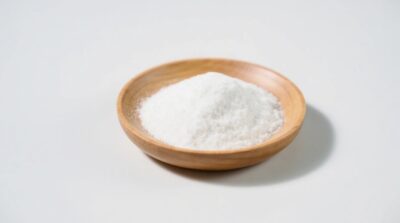
Organic Dextrose Powder
Organic dextrose powder is a certified-organic monosaccharide from non-GMO corn starch, supplied as monohydrate…


