
Why Use Resistant Dextrin at Home
Most fiber supplements come with compromises. Psyllium husk thickens liquids and carries an earthy taste. Inulin adds sweetness and can cause digestive discomfort at modest doses. Powdered cellulose feels gritty. For many people, adding fiber means accepting some trade-off in how food or drink looks, tastes, or feels.
Organic resistant dextrin removes these trade-offs. It is a soluble prebiotic fiber derived from non-GMO starch through a controlled enzymatic process that rearranges the starch’s chemical bonds, making them resistant to human digestion while remaining available to gut bacteria. For a deeper look at the science behind this process, see our guide to what organic resistant dextrin is and how it works — the practical result is a fine white powder with three standout characteristics: complete flavor neutrality, clear solubility in any liquid, and digestive tolerance far above what other fibers allow.
Stir it into coffee and the coffee still tastes like coffee. Mix it into a smoothie and the texture stays smooth. Add it to soup and no one notices. Resistant dextrin is an invisible ingredient — the fiber count rises, and nothing else changes.
This invisibility separates it from other prebiotics. Inulin carries 30-50% of the sweetness of sucrose, introducing an unwanted sweet note to savory dishes. Fructooligosaccharides do the same. Polydextrose has a detectable aftertaste. Resistant dextrin has none of these issues.
The tolerance advantage is substantial. Inulin and FOS often cause bloating and gas at 5-10 grams. Resistant dextrin is well tolerated at 30-45 grams per day, meaning you can use a tablespoon in morning coffee, two in an afternoon smoothie, and another in dinner sauce without gastrointestinal concerns. It is also heat-stable to approximately 140 degrees Celsius and pH-stable across a range of 3 to 8, surviving cooking, baking, and acidic conditions. It is hygroscopic, so the container needs a tight seal — but that same property helps it dissolve instantly in both hot and cold liquids.
Adding Resistant Dextrin to Coffee and Tea
Coffee and tea represent the easiest starting point. Most people drink these beverages daily, creating a natural habit anchor for fiber intake with no extra time or preparation.
Start with one teaspoon of powder per cup, delivering approximately 3 grams of dietary fiber. The powder dissolves instantly in hot coffee or tea — stir once or twice and it disappears. There is no clouding, no sediment, no surface film. The coffee remains black, clear, and tastes exactly as it did before.
This works across every common hot beverage: espresso, Americano, drip, French press, pour-over, latte, cappuccino, matcha, green tea, black tea, oolong, herbal infusions. The fiber has no reactivity with milk, plant milks, or any common additive. You can still add cream, sugar, or sweetener — resistant dextrin does not interact with them.
For iced coffee and cold brew, dissolve one to two teaspoons in two tablespoons of warm water first, then pour into your iced drink. This ten-second extra step produces a perfectly clear result.
Once comfortable with one teaspoon per cup, build up to one tablespoon per drink, delivering 9-10 grams of fiber. Someone drinking two to three cups daily can add 20-30 grams of fiber without altering a single recipe or habit.
Resistant Dextrin in Smoothies and Protein Shakes
Smoothies and protein shakes are different from coffee. The drink already has body, flavor, and sweetness. Adding fiber must be seamless — no change in thickness, no off-flavor.
Add one to two tablespoons and the result is indistinguishable from the same drink without fiber. The powder incorporates fully during blending, leaving no grit and no separation. Resistant dextrin has zero sweetness of its own and does not compete with fruit flavor, protein powder taste, or any other ingredient.
This contrasts with inulin, which brings two complications. First, its 30-50% relative sweetness adds a sugary note that is not always welcome. Second, inulin can form a gel at higher concentrations, changing mouthfeel. Resistant dextrin does neither — it stays fully soluble and contributes nothing to sweetness, thickness, or texture. The fiber works in any smoothie format: fruit-based, green, protein-forward, or meal replacement blends.
An additional benefit is the effect on glycemic response. Fruit smoothies deliver concentrated natural sugars with rapid absorption, especially since blending breaks down much of the fiber naturally present in whole fruit. As discussed in our article on resistant dextrin health benefits, the soluble fiber slows gastric emptying and moderates the rate at which sugars enter the bloodstream, producing a more gradual glycemic curve. The same smoothie with resistant dextrin produces a lower and more sustained blood sugar response.
Baking with Resistant Dextrin
Baking is where most fibers fail. Heat degrades many soluble fibers, breaking them into sugars. Others alter crumb structure, affect browning, or produce off-flavors. Resistant dextrin is stable to approximately 140 degrees Celsius, covering most common home baking: muffins, quick breads, cookies, brownies, sheet cakes, pancakes, and scones.
Replace 5-10% of the total flour weight with resistant dextrin powder. For a recipe calling for 2 cups of flour (approximately 240 grams), that means 12 to 24 grams. At the 5% level, the effect is usually undetectable. At 10%, add 1-2 extra tablespoons of liquid for every 2 tablespoons of resistant dextrin added, as the fiber is hygroscopic and competes with flour for moisture. Mix the resistant dextrin with dry ingredients before combining with wet ingredients.
One important note: resistant dextrin has no sweetness. Unlike inulin, which contributes 30-50% of sucrose sweetness and can partially replace sugar, resistant dextrin is completely neutral. Keep the sugar quantity unchanged in recipes that depend on sugar for structure and browning. Resistant dextrin is a fiber ingredient, not a sweetener.
For muffins and quick breads, the crumb stays tender, the rise remains normal, and the flavor is unchanged. Because it does not participate in Maillard reactions the way inulin does, baked goods may look slightly lighter — a cosmetic difference only. For cookies, a 5% substitution rate is recommended; higher levels can affect spread and crispness due to the fiber’s hygroscopic nature.
Using Resistant Dextrin in Soups, Sauces, and Savory Meals
Savory cooking is where resistant dextrin’s neutrality becomes its strongest advantage. Most prebiotic fibers carry some degree of sweetness — inulin, FOS, and polydextrose all register as mildly sweet. Adding them to tomato sauce, chicken soup, or beef stew introduces a note that is frequently unwelcome.
Resistant dextrin is the prebiotic fiber that truly disappears into savory food. Stir one teaspoon into a cup of soup and it tastes exactly the same. Add one tablespoon to a pot of pasta sauce and it tastes exactly the same. Incorporate it into casseroles, gravies, curries, or stir-fry sauces, and no one detects its presence. You are not adapting recipes to accommodate a fiber — you are increasing the fiber content of food you already make.
For soups and broths, stir in one teaspoon per cup at any point during cooking. For sauces, gravies, and stews, add one tablespoon per pot during simmering. For casseroles, mix the powder with a small amount of the liquid component before combining.
This application is especially useful for comfort foods that are traditionally fiber-poor — chicken noodle soup, macaroni and cheese, beef stroganoff, mashed potatoes with gravy. A teaspoon of resistant dextrin stirred in improves their nutritional balance without changing flavor. For meal preppers, resistant dextrin can be added at the portioning stage; it remains stable through refrigeration and reheating.
Resistant Dextrin Syrup for Home Use
In addition to powder, organic resistant dextrin is available as a syrup — a viscous, amber-colored liquid with a subtle caramel-like note from the gentle heating involved in dextrinization. One tablespoon delivers approximately 5 grams of dietary fiber.
The syrup’s viscosity makes it ideal for drizzling over yogurt, oatmeal, pancakes, or fresh fruit. It also works stirred into warm milk or a latte, where the amber color blends with the milk base. The caramel note is pleasant in the right context but means the syrup is not suitable for every application.
Use the powder instead for clear beverages like iced tea, lemonade, or sparkling water, where the amber color would be visible and the caramel note out of place. The same applies to savory soups and sauces that should stay transparent and neutral. A practical approach is to keep both forms on hand: powder for everyday beverages and savory cooking, syrup for mornings when you want a fiber-rich drizzle.
Building a Daily Fiber Routine with Resistant Dextrin
Many people struggle to hit the recommended daily fiber intake of 25-38 grams because fiber feels inconvenient. Resistant dextrin changes this by fitting into meals and beverages you already consume. There is no new food to buy, no recipe to learn, no taste to acquire.
The table below shows how resistant dextrin can distribute fiber across a typical day.
| Time of Day | Application | Form | Amount | Fiber Delivered | Notes |
|---|---|---|---|---|---|
| Morning | Coffee or tea | Powder | 1 tsp | ~3g | Invisible, zero taste or color impact |
| Breakfast | Oatmeal or yogurt | Syrup | 1 tbsp | ~5g | Adds subtle caramel note |
| Mid-morning | Water or second coffee | Powder | 1 tsp | ~3g | Completely invisible |
| Lunch | Soup or lunch beverage | Powder | 1 tsp | ~3g | No one will notice |
| Afternoon | Smoothie or protein shake | Powder | 1-2 tbsp | ~10g | Blends clean, no grittiness |
| Dinner | Sauce, stew, or gravy | Powder | 1 tbsp | ~5g | Zero flavor impact on savory food |
| Dessert | Baked goods (5-10% flour replacement) | Powder | per recipe | varies | No sweetness, add liquid adjustment |
The daily total: 15-26 grams of additional fiber, distributed across regular meals and beverages with no sense of effort.
If you are new to fiber supplementation, start with 5 grams per day for the first three to four days, then increase by 5 grams every three to four days. Most people reach 15-20 grams per day within two weeks without gastrointestinal discomfort. This ramp-up rate is faster than what is possible with other prebiotic fibers — for a direct comparison, see our guide to resistant dextrin versus inulin and FOS. Inulin and FOS require starting at 2-3 grams and advancing slowly, with many people hitting a tolerance ceiling at 10-15 grams. Resistant dextrin’s slower, more even colonic fermentation profile means you reach an effective daily dose in less time.
Stay hydrated. An extra glass or two across the day, especially when first increasing fiber intake, is sufficient.
Common Mistakes When Using Resistant Dextrin
Even a straightforward ingredient has pitfalls. These are the most frequent missteps.
Adding powder to gel-forming recipes without a liquid adjustment. Resistant dextrin is hygroscopic. In recipes with a controlled liquid ratio — oatmeal, chia pudding, pancake batter — add 1-2 extra tablespoons of liquid per 2 tablespoons of resistant dextrin to avoid a dry result.
Expecting sweetness. Resistant dextrin has none. If a recipe calls for sugar and you replace dry ingredients with resistant dextrin, the total sweetness drops. Pair it with your sweetener of choice — sugar, honey, maple syrup, monk fruit, stevia — if sweetness is needed.
Using syrup in clear beverages. The amber color and caramel note are permanent characteristics. In coffee with milk or oatmeal, the color blends in. In clear iced tea, sparkling water, or lemonade, it will be visible and taste out of place. Use the powder for these applications.
Not sealing the container after use. The hygroscopic nature that helps resistant dextrin dissolve easily also means it absorbs moisture from the air. An open container in a humid kitchen will clump and harden. Close the lid tightly after each use and store in a cool, dry place.
Dumping a large amount into cold liquid without pre-dissolving. While resistant dextrin dissolves in cold water, the process is faster with warm water. For iced beverages, dissolve the powder in two tablespoons of warm water per tablespoon of powder first, then add to the cold drink. This avoids residual clumping and takes only seconds.
About Our Organic Resistant Dextrin
Our organic resistant dextrin is manufactured from non-GMO starch through a clean enzymatic process, producing a fine white powder that is completely neutral in taste and dissolves clearly in any beverage. It is certified organic, heat-stable to 140 degrees Celsius, and well tolerated at daily doses up to 45 grams. Whether you use the powder for everyday versatility or the syrup for its subtle caramel character, the product adds fiber to your diet without changing the way your food and drinks taste.
Recommended Products
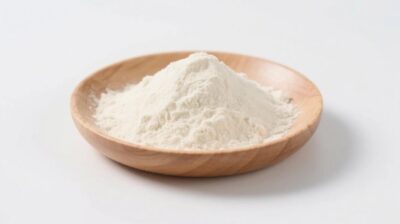
Organic Resistant Dextrin
Organic resistant dextrin is a certified-organic soluble dietary fiber (≥90% dry basis) from non-GMO…
Fructooligosaccharides
Fructooligosaccharides (FOS) is a prebiotic fiber at 95% purity from non-GMO sugarcane or chicory.…


