
When it comes to functional food ingredients, organic potato starch powder—also known as organic Solanum tuberosum starch or simply organic potato starch—has become increasingly popular. Beyond its role in baking and cooking, it offers remarkable health benefits that appeal to both consumers and food manufacturers.
What This Ingredient Delivers and What It Does Not
Most of the confusion around potato starch and nutrition comes from treating a single-molecule ingredient as if it were a whole food. An isolated starch is close to one thing: carbohydrate, mostly in the form of starch, with the fibre, protein and micronutrients of the potato largely left behind in the fraction that was removed during processing. That makes it easy to say what the ingredient contributes and equally important to say what it does not.
The part of the carbohydrate that resists digestion is real and is the reason the ingredient attracts attention, but its presence is a property of the starch rather than a property of the finished dish. How much of it survives depends on how the powder was processed, how the food is cooked, and what happens to it afterwards. A sauce thickened and served hot, a casserole baked for an hour, and a portion that has been cooked and then cooled and reheated are three different outcomes from the same starting powder, and the finished product tells the story rather than the raw material.
| Nutrient or property | What the ingredient contributes | What the ingredient does not contribute | How this shows up in practice |
|---|---|---|---|
| Carbohydrate | A substantial share of the ingredient, in the form of starch | It is not a low-carbohydrate ingredient in the sense that the total carbohydrate per serving is negligible | A thickener used freely in a meal still adds to the day’s carbohydrate load |
| Resistant starch | A portion of the starch resists digestion, depending on processing and cooking | It is not a set amount, and cooling or reheating a dish changes the figure | A cooled and reheated portion generally differs from the same portion served straight from the pan |
| Dietary fibre | Very little, since the fibre of the potato stays with the other fraction | It is not a fibre source and should not be counted as one on a nutrition panel | A product relying on this ingredient for a fibre claim needs a separate fibre ingredient |
| Protein | Only trace amounts | It does not contribute meaningful protein to the diet | A plant-based meal built around it still needs a clear protein source |
| Fat and saturates | None to speak of | It does not replace fat in a recipe for texture or satiety | Its value in a savoury application is body and binding, not richness |
| Micronutrients | Present only in trace amounts, well below the level that earns a claim | It is not a meaningful source of vitamins or minerals | Any mineral contribution should be read from the finished product, not from the starch |
| Allergen status | Free from gluten and from the major declarable allergens | It does not make an otherwise unsuitable product safe for every consumer | Cross-contamination control on the line still has to be part of the allergen policy |
One point deserves plain language, because it is the one most often overstated. Starch is a carbohydrate, and carbohydrate raises blood glucose. The rate and size of that rise vary with the form of the starch and with what the rest of the plate contains, and a dish that pairs it with protein, fat and fibre will behave very differently from starch eaten on its own. What can be said accurately is that it carries no added sugar, that it does not behave like an added sweetener, and that it is not a free pass for blood sugar management. Anyone monitoring their response to carbohydrate should treat it as carbohydrate and adjust the portion, rather than relying on the ingredient name.
Portion, Pairing and How to Talk About It
Because the ingredient has no strong flavour of its own, the quantity in a finished dish is usually set by function rather than by taste, which means it can creep upward without anyone noticing. A sauce thickened generously at the stove is a larger carbohydrate contribution than the same sauce dosed to the consistency the dish actually needs, and the difference shows up on the plate even when nobody is counting. Stating the portion on the recipe, and treating a recipe written for someone else as a starting point rather than a target, is the simplest control available.
| Situation | What a careful description looks like | What to watch for | Useful companion ingredients |
|---|---|---|---|
| Used as a thickener in a savoury dish | A source of starch that adds body without adding fat or sugar | Generous dosing that quietly raises the carbohydrate per serving | Roasted root vegetables, legumes, a lean protein |
| Used in a baked good eaten as a snack | A binder and texture contributor in a mostly refined-flour product | The impression that a gluten-free bake is automatically a better choice for glucose control | Wholegrain flour, oats, nuts or seeds for structure and fibre |
| Added to a breakfast or meal-replacement format | A functional ingredient that creates body and slow release texture | Framing a small amount of starch as a meal in itself | A defined protein source and a fibre or fat source alongside |
| Used in a product aimed at digestive comfort | A starch with a portion that resists digestion, an amount that depends on the process | Claiming a fixed prebiotic effect that a heated or cooled product may not deliver | organic resistant dextrin or a dedicated inulin, where the fibre itself is the point |
| Used in a low-carbohydrate or keto-style format | A texture and binding tool in a recipe where the carbohydrate budget is already allocated | Using it as a general thickener inside a low-carbohydrate formulation | Almond, coconut and seed flours for bulk, with the starch used only where the function demands it |
For a manufacturer, the practical reading of the same picture is that the ingredient is a functional system component rather than a nutritional talking point, and that the two should be kept separate in the specification and in the label review. The broader health and nutrition facts page covers how the starches compare on a nutrition panel, and BIOSTARCH supplies organic potato starch in bulk with the documentation a formulator needs to state what the finished product actually contains, rather than what the raw material is sometimes assumed to contain.
1. Supports Digestive Health
Organic potato starch powder contains resistant starch, which functions as a prebiotic. It feeds beneficial gut bacteria, helping to improve digestion and maintain a healthy gut microbiome.
2. Helps Manage Weight
Because resistant starch is not fully digested, it contributes fewer calories than regular starches. This can help in calorie control and weight management, making it suitable for health-conscious consumers.
3. Enhances Blood Sugar Control
Unlike refined carbohydrates, organic potato starch powder has a lower impact on blood glucose levels. This makes it a suitable ingredient for people looking to stabilize energy and reduce sugar spikes.
4. Boosts Satiety
Foods enriched with organic potato starch powder can increase the feeling of fullness, reducing unnecessary snacking and supporting balanced diets.
5. Clean Label & Allergen-Free
Being 100% natural, non-GMO, gluten-free, and allergen-free, organic potato starch powder aligns with modern consumer demands for clean label and transparent nutrition.
Applications in Food & Nutrition
- Gluten-free bakery products
- Functional beverages and meal replacements
- Low-carb and keto-friendly recipes
- Dietary supplements as a natural thickener or binder
B2B Insight
For manufacturers, incorporating organic potato starch powder into product formulations is more than a functional choice—it’s a strategic move. With rising consumer demand for gut-friendly, low-calorie, and allergen-free ingredients, potato starch provides both health benefits and versatile processing properties. BIOSTARCH supplies certified organic potato starch powder in bulk, ensuring consistent quality and compliance with international organic standards.
Conclusion
Everyday Mistakes to Avoid with Organic Potato Starch Powder
One common mistake is assuming every bag of white powder behaves the same. Potato starch and wheat flour, for instance, have different properties, so swapping them one to one rarely gives the result you expect. Reading the label and following recipes written for the ingredient you actually have prevents most disappointments.
Another slip is going too fast. If you are adding potato starch to your diet for the first time, begin with small amounts and notice how your body responds, while keeping your overall meals balanced. There is no need to rush; steady habits work better. For larger volumes of organic potato starch powder, BIOSTARCH is ready to assist.
Adding organic potato starch powder to your diet or product formulation brings more than just functional value—it delivers meaningful health benefits. From digestive wellness to better blood sugar management, it’s a natural solution for modern nutrition.
Q: Is organic potato starch powder a good source of fibre?
A: No, and this is the point most often got wrong. The fibre of the potato stays behind when the starch is separated out, so the finished ingredient carries only trace fibre. A product that needs a fibre claim has to earn it with a dedicated fibre ingredient rather than with the starch, and a nutrition panel should be read from the finished product in any case.
Q: Does potato starch raise blood sugar?
A: It is a carbohydrate, and carbohydrate raises blood glucose, so it should be counted and portioned as one. What varies is the rate and size of the response, which depends on the form of the starch and on the rest of the meal. It contains no added sugar and it is not a sweetener, but it is not a free pass for glucose management either.
Q: How much resistant starch does potato starch contain?
A: There is no single figure to quote, because the amount that resists digestion depends on how the powder was processed, how the food is cooked, and whether the finished dish is cooled and reheated. Claims of a fixed percentage generally describe a raw or freshly cooked sample rather than the product a shopper eats. Where the resistant starch itself is the objective, a dedicated ingredient makes the position clearer.
Q: Is potato starch a complete food on its own?
A: It is a functional ingredient rather than a food in its own right. It supplies starch and traces of nothing else, with no meaningful fibre, no meaningful protein and no meaningful micronutrients. Used as a thickener it works well, but a meal built around it still needs a protein source, a fat source and something that contributes fibre.
Recommended Products
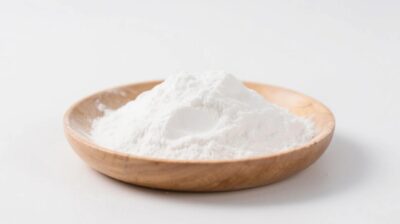
Organic Potato Starch Powder
Organic potato starch powder is a certified-organic native starch from non-GMO potatoes. With high…
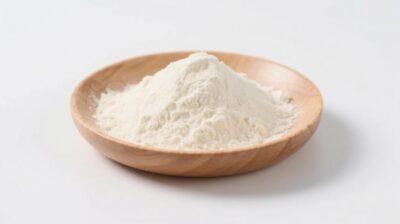
Organic Resistant Dextrin
Organic resistant dextrin is a certified-organic soluble dietary fiber (≥90% dry basis) from non-GMO…
Related Posts


