
Organic fructooligosaccharides (FOS) have become a staple ingredient in modern food manufacturing, offering formulators a unique combination of prebiotic fiber functionality and practical processing properties. As consumer demand for reduced-sugar products continues to grow, FOS provides manufacturers with a versatile solution that delivers sweetness, texture modification, and nutritional benefits in a single ingredient. This article examines the technical properties of organic FOS and its applications across major food manufacturing categories.
FOS Functional Properties at a Glance
Understanding the physicochemical properties of FOS is essential for successful industrial formulation. Organic FOS exhibits a relative sweetness of approximately 30-50% compared to sucrose, depending on the degree of polymerization and the ratio of oligomers present. This moderate sweetness allows formulators to reduce added sugars while maintaining palatable taste profiles.
The caloric value of FOS is approximately 2 kcal/g, significantly lower than the 4 kcal/g provided by sucrose and other digestible carbohydrates. This reduced caloric contribution stems from the incomplete digestion of FOS in the small intestine—the human body lacks the enzyme fructanase needed to break the β(2-1) glycosidic bonds linking the fructose units.
Solubility characteristics make both powder and syrup forms of FOS suitable for diverse applications. FOS powder dissolves readily in water at room temperature, with solubility increasing to over 75% w/w at 20°C. The syrup form offers advantages in liquid applications where rapid dissolution is critical.
Heat stability represents one of the most valuable processing attributes of FOS. Unlike some alternative sweeteners that degrade under thermal processing, FOS maintains stability through typical food manufacturing temperatures. The Maillard reaction proceeds more slowly with FOS than with reducing sugars like glucose or fructose, allowing manufacturers to control browning without sacrificing prebiotic fiber enrichment.
The molecular weight distribution of commercial FOS influences functional properties including sweetness intensity, solubility, and prebiotic efficacy.
Bakery Applications
The bakery sector has adopted FOS as a multifunctional ingredient that addresses multiple formulation challenges simultaneously. Sugar reduction stands as the primary driver for FOS adoption in bakery applications, but the ingredient contributes much more than simple sweetness replacement.
In yeast-leavened products, FOS serves as a fermentable substrate for Saccharomyces cerevisiae, though with different kinetics than sucrose. The oligosaccharides are hydrolyzed by yeast invertase into fermentable monosaccharides, supporting leavening while contributing to crust color development through the Maillard reaction. Formulators typically replace 10-30% of total sugars with FOS in bread, rolls, and similar products without compromising volume or crumb structure.
Moisture retention represents another critical function of FOS in baked goods. The hygroscopic nature of FOS helps retain water throughout shelf life, delaying staling and maintaining texture. In cakes and muffins, this property translates to extended softness. The mechanism involves hydrogen bonding between FOS molecules and water, reducing water mobility and starch recrystallization.
Browning control allows bakers to achieve consistent crust color when reformulating reduced-sugar products. Because FOS participates in the Maillard reaction at a different rate than sucrose, adjusting the FOS-to-other-sugars ratio provides control over crust appearance. This is particularly valuable in clean label formulations where traditional browning agents are not permitted.
Crumb texture modification occurs as FOS influences starch gelatinization and protein network formation. At replacement levels up to 15% of total formulas, FOS contributes to tender crumb structure without excessive softening. The optimal inclusion level varies by product type: sandwich breads tolerate higher FOS levels (up to 8% of flour weight) compared to cake varieties (3-5% of formula weight).
Dairy Products
Dairy applications showcase the versatility of FOS across product categories with vastly different processing requirements and texture targets. From cultured products to frozen desserts, FOS contributes functional and nutritional properties that align with current market trends.
In yogurt manufacturing, FOS serves multiple roles. During fermentation, certain starter culture strains can partially metabolize FOS, though the extent varies by bacterial species. Streptococcus thermophilus and Lactobacillus delbrueckii subsp. bulgaricus exhibit limited ability to utilize FOS directly, while probiotic strains such as Bifidobacterium species preferentially ferment these oligosaccharides.
Syneresis control benefits from the water-binding capacity of FOS. By incorporating 2-6% FOS in the yogurt base, manufacturers can reduce syneresis by 15-30% compared to control formulations. The mechanism involves FOS increasing the viscosity of the aqueous phase and interacting with the protein matrix to improve water retention.
Ice cream and frozen dairy desserts utilize FOS for sugar reduction and texture modification. The freezing point depression effect of FOS is less pronounced than that of mono- and disaccharides, allowing formulators to adjust total solids while maintaining scoopability. At inclusion levels of 3-8% of mix weight, FOS slows ice crystal growth during storage, improving texture stability.
Fat replacement represents a growing application area for FOS in dairy formulations. The viscosity-building properties of FOS syrup, combined with its mouthfeel contributions, allow partial replacement of dairy fat in products such as cultured cream, dairy-based dips, and reduced-fat ice cream. Typical fat replacement ratios range from 0.5:1 to 1:1 (FOS solids to fat solids), with the exact ratio determined by the target product characteristics and regulatory constraints.
Beverages
Beverage applications demand ingredients with excellent solubility, clarity, and stability across a range of pH and temperature conditions. FOS meets these requirements in multiple beverage categories, from functional waters to nutritional shakes.
Clear dissolution characteristics make FOS suitable for still and carbonated beverages where cloudiness or precipitation would be unacceptable. FOS powder dissolves completely at recommended use levels (typically 0.5-3% w/v), producing clear solutions with minimal viscosity increase. This property allows formulators to add prebiotic fiber claims to beverages without affecting appearance or mouthfeel significantly.
Low-calorie sweetening in beverages benefits from the approximately 2 kcal/g caloric value of FOS. When combined with high-intensity sweeteners such as stevia extracts or monk fruit concentrates, FOS provides bulk and mouthfeel that pure high-potency sweeteners cannot deliver alone. The synergistic effect allows manufacturers to achieve sugar-like sensory profiles with 50-90% caloric reduction, depending on the target product specifications.
pH stability across the range encountered in beverage manufacturing (pH 2.5-7.0) ensures that FOS maintains functionality throughout shelf life. Unlike some fibers that may degrade under acidic conditions, FOS remains stable in fruit juices, fortified waters, and cultured beverage products. This stability extends to typical processing conditions including pasteurization, hot filling, and UHT treatment.
Dry beverage mixes represent a specialized application where FOS powder serves as both a functional ingredient and a carrier or bulking agent. The free-flowing characteristics of spray-dried FOS powder make it compatible with dry blending operations, and its hygroscopicity helps maintain mix homogeneity during storage. In instant beverage powders, FOS inclusion levels typically range from 5-25% depending on the desired fiber content per serving and the overall formulation architecture.
Nutrition Bars and Supplements
Nutrition bars and dietary supplements present unique formulation challenges that align well with the properties of FOS. These products demand ingredients that contribute nutritional value while surviving harsh processing conditions and providing acceptable texture and shelf stability.
Fiber enrichment in nutrition bars traditionally relied on insoluble fibers that contributed gritty texture and required substantial compensation in formulation. FOS offers a soluble fiber option that integrates more readily into bar matrices. At inclusion levels of 5-15% of total bar weight, FOS contributes significant fiber content (typically 3-5g per serving) while maintaining acceptable sensory properties. The soluble nature of FOS also supports the texture goals of different bar types: chewy bars benefit from the plasticizing effect of FOS syrup, while crunchy bars utilize FOS powder for structural support.
Binding properties become particularly important in extruded or compressed nutrition products. FOS syrup functions as a binder in granola bars, protein bars, and similar products, helping maintain structural integrity through distribution and consumption. The binding mechanism involves the thermoplastic behavior of FOS—when heated, it softens and coats other ingredients, then sets upon cooling to create a cohesive matrix. This property allows manufacturers to reduce or eliminate traditional binding agents that may not align with clean label objectives.
Low water activity maintenance is critical for shelf stability. FOS exhibits humectant properties that help control water activity (aw), inhibiting microbial growth while preventing texture degradation. Typical target values for FOS-containing bars range from 0.60-0.75.
Supplement applications extend beyond bars to include powder blends, tablets, and functional foods fortified with vitamins, minerals, or botanicals. In powder-based supplements, FOS serves as a carrier for flavors and active ingredients, improving dispersibility and masking off-notes from mineral salts or botanical extracts. Tablet formulations occasionally incorporate FOS as a binder or disintegrant, though the optimal inclusion level must be determined through compatibility testing with the specific tablet formulation.
Infant Formula
The inclusion of FOS in infant formula represents one of the most scientifically studied applications of prebiotic oligosaccharides in food manufacturing. Extensive research has established the safety and efficacy of FOS as a prebiotic ingredient in infant nutrition, leading to widespread adoption by formula manufacturers worldwide.
Prebiotic standards in infant formula have evolved to incorporate specific oligosaccharide blends that partially mimic the prebiotic complexity of human milk oligosaccharides (HMOs). While FOS alone does not replicate HMOs, it contributes to formulas designed to support beneficial gut microbiota development in infants. The typical approach involves combining FOS with galactooligosaccharides (GOS) to create a synergistic prebiotic system.
GOS:FOS ratios in infant formula commonly fall within 9:1 to 6:4, selected based on clinical research. The 9:1 ratio closely approximates the oligosaccharide profile found in human milk. European and international regulatory frameworks provide specific guidance on acceptable inclusion levels, with typical total GOS+FOS content ranging from 0.4-0.8g per 100mL of reconstituted formula.
Processing considerations for infant formula manufacturing with FOS include homogenization, heat treatment, and spray drying operations. FOS demonstrates good stability through these processes, though optimization of drying parameters may be necessary to prevent excessive browning or nutrient degradation. The powder form of FOS integrates readily into dry blending operations typical of infant formula production, and the ingredient’s particle size distribution can be selected to match the formula base powder characteristics.
Regulatory compliance represents a fundamental requirement for FOS in infant nutrition applications. Manufacturers must verify that their FOS ingredient meets the specifications for infant formula use in each target market, including purity criteria, microbiological standards, and documentation requirements. Organic certification adds an additional layer of compliance, requiring traceability from raw material through finished ingredient.
Pet Food Manufacturing
The pet food industry has increasingly adopted FOS as a functional ingredient that supports digestive health claims while surviving the rigors of pet food processing. Both dry kibble and wet pet food formulations incorporate FOS, though the processing considerations differ substantially between these product types.
Gut health claims in pet food leverage the prebiotic mechanism of FOS to support beneficial bacterial populations in the canine and feline gastrointestinal tract. Research indicates that FOS fermentation in the colon produces short-chain fatty acids (primarily acetate, propionate, and butyrate) that serve as energy sources for colonocytes and may influence systemic health parameters. Pet food manufacturers incorporate these findings into marketing communications, though claims must comply with regulatory frameworks in each target market.
Extrusion stability is critical for FOS in dry pet food. The extrusion process subjects ingredients to high temperature, pressure, and shear. FOS demonstrates good stability through typical extrusion conditions (barrel temperatures of 100-150°C), retaining functionality in the finished kibble. Inclusion levels typically range from 0.5-3% of total formula weight.
Wet pet food applications utilize FOS in loaf and gravy-style products, contributing to texture and moisture retention. Processing stability through retorting (115-121°C for 20-90 minutes) is essential, and FOS maintains functionality through these conditions.
Palatability should be verified when introducing FOS to established formulations, particularly for premium products where palatability is a key differentiator.
Formulation Tips and Best Practices
Successful incorporation of FOS into industrial food formulations requires attention to several technical factors that influence both processing performance and finished product quality. The following recommendations synthesize practical experience from food manufacturing applications.
Powder versus syrup selection should be guided by the specific application requirements. FOS powder offers advantages in dry blends, applications requiring minimal moisture addition, and products where free-flowing characteristics are important. The powder form typically contains 95-99% total solids and is available in various particle size distributions to match specific manufacturing needs. FOS syrup, typically containing 75-80% total solids, provides processing advantages in liquid applications, as a binder in bar formulations, and in any application where the liquid form simplifies incorporation. Syrup viscosity at room temperature ranges from 3,000-8,000 cP depending on the solids content and degree of polymerization.
Dosage ranges vary substantially by application and formulation objectives. The following ranges represent typical industry practice, though optimal levels must be confirmed through pilot testing:
- Bakery products: 3-8% of formula weight for sugar reduction; up to 15% for fiber enrichment claims
- Dairy products: 2-6% for yogurt; 3-8% for ice cream and frozen desserts
- Beverages: 0.5-3% for functional waters and juices; 5-25% for dry beverage mixes
- Nutrition bars: 5-15% of total bar weight
- Infant formula: 0.4-0.8g GOS+FOS per 100mL reconstituted formula
- Pet food: 0.5-3% of total formula weight
Processing parameter adjustments may be necessary when incorporating FOS, particularly when replacing substantial sucrose. In bakery applications, adjustments to mixing time, proofing, or baking temperature may optimize results. In dairy, FOS may influence fermentation kinetics. Pilot-scale testing remains the most reliable method for identifying necessary process adjustments.
Regulatory and labeling considerations vary by market. In the US, FOS is GRAS for intended uses, and the FDA includes FOS as a qualifying fiber ingredient. The European Union has established purity criteria for FOS as a novel food ingredient. Organic certification adds additional requirements depending on production method and source materials.
Quality specifications for procurement should address purity, microbiological criteria, physical properties, and documentation requirements. Typical specifications include: total FOS content (≥95% on dry basis for powder; ≥75% for syrup), moisture content (≤5% for powder), ash content (≤0.5%), heavy metals (Pb ≤0.5 mg/kg), and total plate count (≤1,000 CFU/g). Additional specifications may be warranted based on the specific application and regulatory environment.
About Our Organic FOS
Our organic fructooligosaccharides are produced through enzymatic conversion of organic sucrose using stringent quality controls that ensure consistent functionality for industrial applications. Available in both powder and syrup forms with varying degree of polymerization profiles, our FOS ingredients meet international organic standards and provide manufacturers with reliable prebiotic fiber solutions for diverse formulation challenges.
Recommended Products
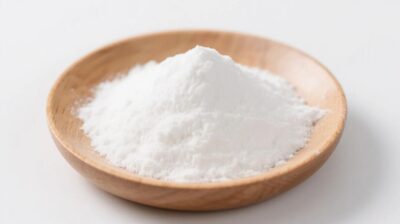
Fructooligosaccharides
Fructooligosaccharides (FOS) is a prebiotic fiber at 95% purity from non-GMO sugarcane or chicory.…

Galactooligosaccharides Powder
Galactooligosaccharides (GOS) is a prebiotic from lactose that selectively feeds bifidobacteria. Heat and acid…
Organic Isomaltoligosaccharides
Organic isomaltoligosaccharides (IMO) powder is a certified-organic prebiotic fiber (90%+) from non-GMO corn or…


