
Global sugar-reduction mandates, clean-label demands, and tightening import regulations have pushed organic erythritol from a niche ingredient to a mainstream procurement priority. For sourcing managers at food and beverage companies, understanding how to evaluate, qualify, and secure reliable supply of this sweetener is no longer optional — it is a competitive necessity.
This guide covers the technical and commercial factors that procurement teams need to assess when sourcing organic erythritol powder at scale.
Why 2025 Is a Turning Point for Erythritol Procurement
Several converging forces are reshaping how food manufacturers buy sweeteners. Regulatory bodies across the EU, North America, and Asia-Pacific have introduced stricter labeling requirements around sugar content, driving formulation teams to seek zero-calorie alternatives that perform well in processing. At the same time, consumer surveys show a sustained preference for “organic” on ingredient panels, even in categories like confectionery and baked goods where conventional erythritol has been used for years.
The result is a measurable shift in procurement volumes. Import data indicates that organic erythritol shipments into the United States grew by double digits in 2024, and that trajectory has continued into 2025. Manufacturers who previously sourced conventional erythritol are now requesting organic variants to future-proof their product lines. For buyers evaluating whether to make the switch, the Organic Erythritol Powder product category provides a practical starting point for comparing grades and pricing.
Beyond regulatory pressure, there is a supply-side maturation worth noting. More fermentation facilities have achieved organic certification over the past two years, which has improved availability and moderated price premiums relative to 2022–2023 levels. For procurement teams that held back due to cost or lead-time concerns, the market conditions in 2025 warrant a fresh evaluation.
For readers who want a foundational overview of this ingredient before diving into sourcing specifics, the Complete Guide covers production methods, basic applications, and how erythritol differs from other sugar alcohols.
Organic Certification Standards
When sourcing organic erythritol powder, the first checkpoint is certification. The three designations most relevant to B2B buyers are USDA Organic (National Organic Program), EU Organic Regulation (EC 834/2007 and EC 889/2008), and non-GMO verification.
USDA Organic requires that the entire production chain — from the carbohydrate feedstock through fermentation, crystallization, and packaging — operates under an approved organic system plan. This means the glucose or starch substrate used in fermentation must itself be organically sourced, typically from certified organic corn or tapioca. Suppliers should provide a current USDA Organic Certificate issued by an accredited certifying agent, along with transaction certificates for each shipment.
EU Organic follows a comparable framework but includes additional record-keeping requirements around mass balance and traceability. Buyers exporting to European markets need to confirm that the supplier holds a valid EU Organic Certificate and can produce the documentation needed for customs clearance under the EU TRACES system.
Non-GMO verification, while not identical to organic certification, is often required in parallel. Many manufacturers specify both organic and non-GMO on their labels, and sourcing erythritol that carries a third-party non-GMO verification (such as from the Non-GMO Project or an equivalent body) eliminates the need for additional testing. Request the verification certificate alongside the organic documentation.
It is worth flagging that some suppliers claim “organic-compliant” without holding an actual certificate. Procurement teams should verify the certifying body’s accreditation status directly and confirm that the specific facility and product SKU are listed on the certificate. Ambiguous claims are a red flag in supplier qualification.
Raw Material Traceability and Country of Origin
Traceability is a non-negotiable requirement in organic procurement. Unlike conventional supply chains where intermediaries may obscure the origin of feedstocks, organic regulations demand documented chain-of-custody from farm to finished product.
For erythritol, the critical upstream input is the carbohydrate substrate — typically organic corn starch or tapioca starch. Buyers should ask suppliers for the country of origin of this feedstock, the name of the farm or cooperative that produced it, and the certifier that verified its organic status. Reputable suppliers will provide this information without hesitation.
China remains the dominant production region for erythritol globally, including organic grades. However, production is also expanding in Southeast Asia and parts of Eastern Europe. Each origin carries distinct considerations around agricultural practices, logistics infrastructure, and geopolitical risk. Procurement teams should diversify origin exposure where possible and evaluate whether a single-source strategy or a dual-source model better suits their risk tolerance.
For buyers new to this ingredient, understanding how erythritol fits into consumer-facing products helps inform sourcing decisions. The Consumer Uses article outlines the product categories driving demand and why consumer preference for organic labeling matters.
Quality Specifications That Matter
Technical procurement teams evaluate erythritol against a standard set of quality parameters. While specifications vary slightly by supplier and grade, the following are the benchmarks most manufacturers use:
Purity and assay. High-quality organic erythritol powder should assay at 99.0% minimum purity by HPLC. Lower grades may introduce off-notes or affect crystallization behavior in confectionery applications.
Particle size distribution. Erythritol is available in multiple granulations — fine powder, standard crystal, and coarse grain. The particle size directly affects mouthfeel, dissolution rate, and blending behavior in dry mixes. Buyers should specify the mesh size or D-values (D10, D50, D90) that match their processing requirements.
Heavy metals. Lead, arsenic, cadmium, and mercury limits should comply with the destination market’s regulations. In the United States, California Proposition 65 thresholds are often the most restrictive. Suppliers should provide a Certificate of Analysis (COA) with heavy metals testing for each batch.
Microbiology. Standard testing covers total plate count, yeast and mold, coliforms, E. coli, and Salmonella. Acceptable limits depend on the end application — products consumed without a kill step require tighter microbiological specifications.
Moisture content. Erythritol is hygroscopic at elevated humidity. Moisture content should typically be below 0.5% to prevent caking during storage and transport. Packaging specifications play an important role here.
Residual solvents and process aids. Because erythritol is produced through fermentation and crystallization, solvent residues are generally not a concern, but buyers should confirm that no prohibited processing aids were used — particularly important under organic standards.
For a deeper look at how these quality parameters translate into safe end products, the Health & Safety resource covers the toxicological profile and regulatory safety assessments of erythritol.
Supplier Evaluation Framework
Qualifying a new supplier for organic erythritol involves more than checking certificates and reviewing a sample. Procurement teams should structure their evaluation around several key dimensions:
Production capacity and scalability. Confirm the supplier’s annual output volume, current utilization rate, and ability to scale for seasonal demand spikes. A supplier running at near-full capacity may struggle to accommodate growth or supply disruptions.
Lead time and inventory management. Standard lead times from Asian suppliers typically range from 30 to 60 days by sea freight, plus customs clearance. Ask whether the supplier maintains safety stock of organic-grade material or produces to order. Longer lead times require more sophisticated demand planning.
Documentation completeness. A qualified organic supplier should provide, for every shipment: USDA Organic Certificate, EU Organic Certificate (if applicable), non-GMO verification, COA with full specifications, heavy metals and microbiology testing reports, halal and kosher certificates (if relevant), and a signed declaration of conformity.
Audit history. Request copies of third-party audit reports (GFSI-recognized schemes such as FSSC 22000, BRC, or SQF). If the buyer plans to conduct an on-site audit, confirm the supplier’s willingness to accommodate and whether English-language documentation is available.
Financial stability. Especially important for sole-source arrangements. Request basic financial references or Dun & Bradstreet reports to assess the supplier’s viability over a multi-year contract term.
Procurement managers should also consider the product’s fit within their broader sweetener portfolio. The Comparisons analysis explains how erythritol stacks up against allulose and other alternatives, which directly informs sourcing volume decisions.
Packaging, Shelf Life, and Logistics
Organic erythritol powder is typically shipped in 25 kg multi-wall paper bags or 1,000 kg bulk bags (FIBCs). The packaging must be food-grade and compatible with organic handling requirements — no recycled materials, no prohibited inks or adhesives.
Moisture protection is the primary concern during transit and storage. Bags should include an inner polyethylene liner, and shipments moving through high-humidity climates may benefit from desiccant packs or shrink-wrapped pallets. Buyers receiving material in regions with elevated humidity should specify moisture-barrier packaging at the time of order.
Under proper conditions (cool, dry storage, sealed packaging), organic erythritol powder has a shelf life of 24 to 36 months. However, once a bag is opened, the material should be used within a reasonable timeframe to prevent moisture uptake and caking.
For logistics, procurement teams should confirm Incoterms, freight class, and insurance coverage. Container loading optimization matters — erythritol’s bulk density allows for efficient container utilization, but weight limits may apply depending on the shipping lane.
Cost-in-Use vs. Traditional Sweeteners
A meaningful cost comparison between organic erythritol and traditional sweeteners must go beyond price-per-kilogram. The relevant metric is cost-in-use, which accounts for the relative sweetness of each ingredient.
Erythritol has approximately 70% of the sweetness of sucrose. To match the sweetness of one kilogram of sugar, a formulator needs roughly 1.4 kilograms of erythritol. When calculating total cost of ownership, procurement teams should factor in:
- Raw material cost per unit of equivalent sweetness
- Freight and warehousing costs (erythritol is lighter than sugar per unit of sweetness, which can reduce shipping costs on a sweetness-equivalent basis)
- Reformulation costs (labor, testing, shelf-life validation)
- Label and marketing implications of an organic, zero-calorie claim
For many product categories, the total cost-in-use of organic erythritol is competitive with conventional sucrose when the full value chain is considered. The Industrial Applications article details specific product categories where this economic equation works particularly well.
Buyers should also evaluate blended sweetener systems. Erythritol is frequently combined with monk fruit extract, stevia, or other high-intensity sweeteners to achieve a sugar-like sweetness profile while keeping costs manageable. Sourcing pre-blended organic sweetener mixes can simplify procurement and reduce internal blending complexity.
Regulatory Compliance Across Export Markets
Manufacturers selling into multiple markets must ensure that their organic erythritol supply complies with the regulatory framework of each destination. Key considerations include:
United States. USDA Organic certification is required for organic labeling claims. The FDA classifies erythritol as GRAS (Generally Recognized as Safe), and it appears on the agency’s GRAS Notice inventory.
European Union. EU Organic certification is required, and erythritol is listed as an authorized food additive (E968) under EU Regulation 1333/2008. Maximum usage levels may apply in certain product categories.
United Kingdom. Post-Brexit, the UK maintains its own organic certification system (UK Organic). Suppliers exporting to the UK should confirm whether their EU Organic certificate is recognized or whether additional documentation is needed.
Japan. The Japanese Agricultural Standards (JAS) for organic foods apply. Erythritol is recognized as an existing food additive under Japanese regulations.
Canada. The Canada Organic Regime (COR) governs organic claims. Erythritol is listed on Canada’s permitted sweetener lists.
Procurement teams should maintain a compliance matrix that maps each destination market’s requirements against their supplier’s documentation. Gaps in certification — for example, a supplier that holds USDA Organic but not EU Organic — can restrict the markets where the finished product can be sold.
Documentation Requirements for B2B Buyers
Efficient procurement of organic erythritol depends on having the right documentation flow in place. At a minimum, each shipment should be accompanied by:
- Certificate of Analysis (COA) with full specification results
- USDA Organic Transaction Certificate
- EU Organic Certificate (if applicable)
- Non-GMO Verification Certificate
- Heavy metals testing report
- Microbiology testing report
- Certificate of Origin
- Packing list and bill of lading
- Halal and Kosher certificates (if required by the buyer)
Forward-thinking procurement teams also request a Specification Sheet and a Safety Data Sheet (SDS) during the qualification phase, even though erythritol is classified as non-hazardous. These documents support internal QA systems and may be required by downstream customers.
For buyers establishing a new supplier relationship, a sample evaluation protocol is essential. Request laboratory samples (minimum 500 g to 1 kg) along with full documentation before committing to a trial order. Run the material through internal QC testing and, where possible, a pilot production run to confirm compatibility with existing processes.
Once a supplier is qualified, setting up a quarterly review cadence helps maintain quality and catch drift early. Key metrics to track include specification consistency across batches, on-time delivery rate, documentation accuracy, and responsiveness to non-conformance reports.
Sourcing organic erythritol powder at the scale required by commercial food production is a structured process — one that rewards preparation and thorough supplier evaluation. Buyers who invest time in building robust supplier relationships and documentation practices gain a supply chain advantage that extends beyond a single ingredient.
For procurement teams ready to evaluate organic erythritol powder for their next product cycle, reaching out to a qualified supplier for sample evaluation and specification review is a practical next step. Inquiries can be directed to info@bio-starch.com to initiate the qualification process and request current COAs and organic certification documentation.
Recommended Products
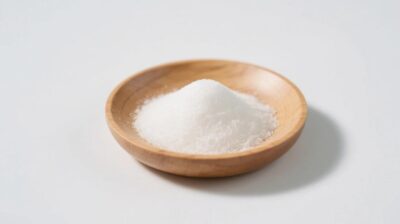
Organic Erythritol Powder
Organic erythritol powder is a certified-organic sugar alcohol produced by fermenting organic glucose, delivering…
Related Posts


