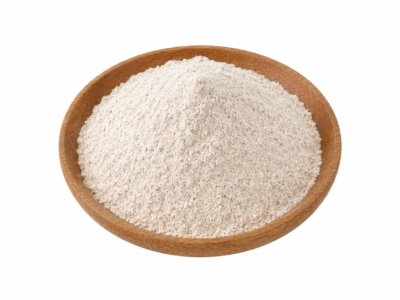
What is Buckwheat Flour?
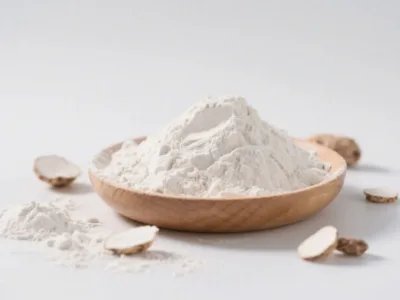
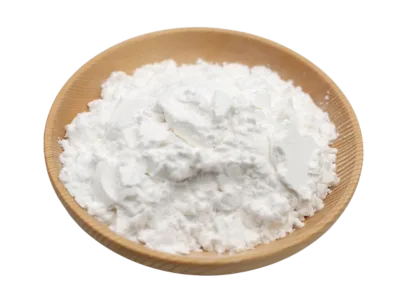
Buckwheat flour is made from 100% buckwheat kernel. Most importantly, it is gluten-free, so it is a great replacement for recipes that use other flours that contain gluten. Buckwheat flour is a good source of lysine, iron, manganese, zinc, and dietary fiber, making it a nutritious option for gluten-free baking.
Our buckwheat grows in Inner Mongolia, where temperature varies widely from day to night and the sunshine is sufficient, it keeps the nectar flowing into the afternoon when buckwheat blooms. Meanwhile, the soil acidity of Inner Mongolia is pH6 ~ 7 and the soil layer is loose, which is conducive to seedling excavation and root development.
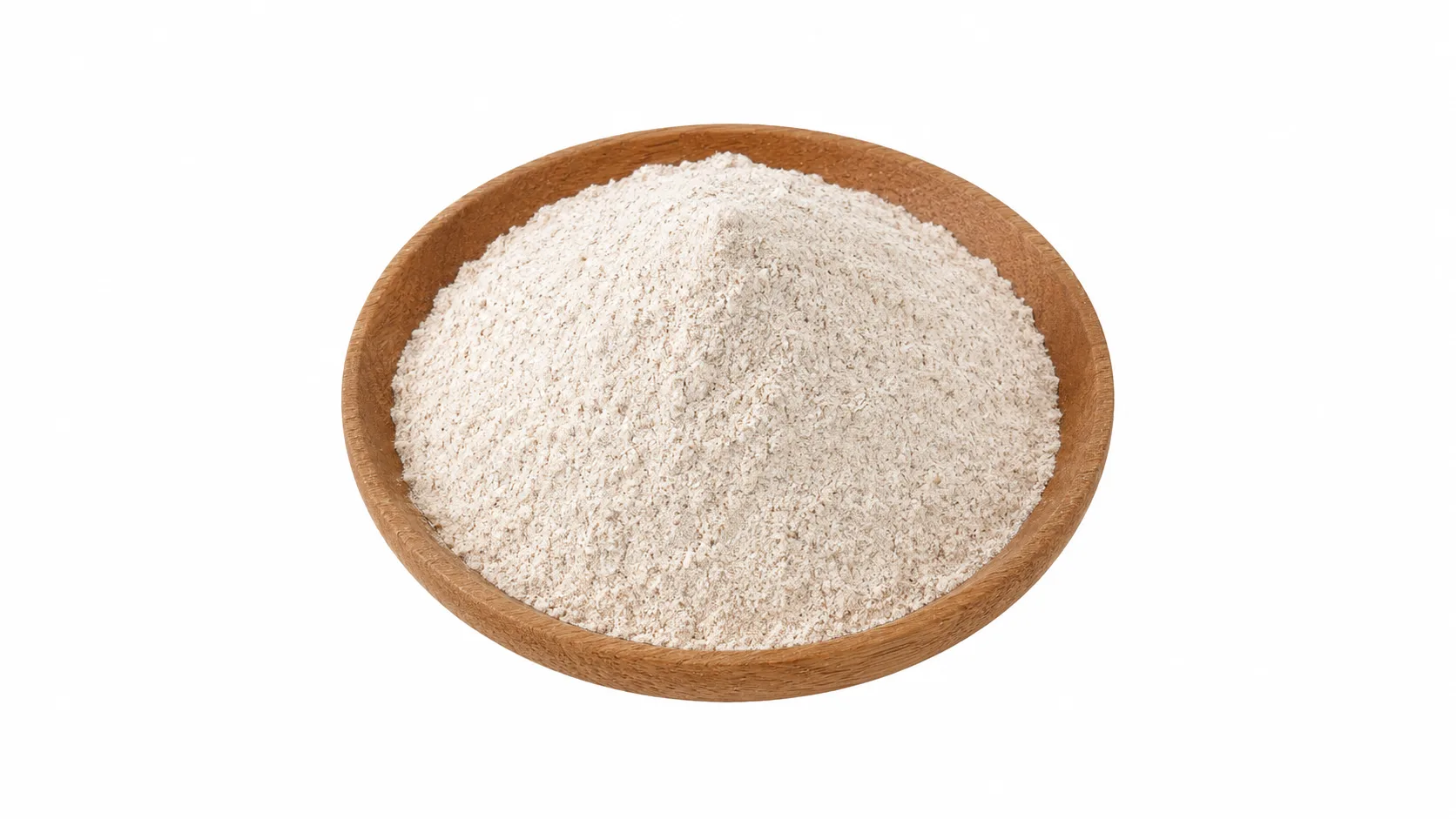
The pyramid-shaped kernels are harvested and ground into surprisingly rich flour with little black specks that come from the ground seed hull. This is how traditional Buckwheat Flour has been made for hundreds of years. Buckwheat flour contains a significant amount of fiber, and studies have shown that it helps slow down the rate of glucose absorption after a meal. Buckwheat is also a good source of protein and calcium. Buckwheat has a unique, assertive flavor that is especially great in both quick and yeast bread.
Also Known As: Names and Synonyms in the Trade
Buckwheat flour appears under a number of names in specifications, seed lists and retail literature, and several of them are historical rather than botanical. The list below covers the forms that come up most often in enquiries and certificates.
- Fagopyrum esculentum – the accepted botanical name of common buckwheat, the species most specifications quote
- Polygonum fagopyrum – an older scientific name still carried in botanical and pharmacopoeial indexes
- Common buckwheat flour – the name that separates this type from the bitter, higher-rutin Tartary buckwheat (Fagopyrum tataricum)
- Beech wheat flour – the historical English name, taken from the triangular seed that resembles a beechnut
- Saracen corn flour – the second old English name, still met in regional trade literature
- Blé noir – the French trade name, literally black wheat, used on labels in France and Belgium
- Soba-ko – the Japanese name for buckwheat flour, the ingredient behind soba noodles
None of these names changes what the flour is, and one point is worth stating plainly: buckwheat is not a wheat and not even a cereal. The plant sits in the Polygonaceae, the knotweed family that also holds rhubarb and sorrel, which is why the flour is naturally free of gluten. Whichever name a document uses, the specification should still state the species, the hull content and the gluten-free status.
Specification
| Product Name | Buckwheat Flour |
|---|---|
| Ingredients | Buckwheat |
| Origin | China |
| PHYSICAL | |
| Appearance | A pale grey flour. Natural buckwheat flavor, free from rancid, musty & sour flavor. |
| Moisture(%) | 15% max |
| Purity(%) | 99.9% min |
| STORAGE | Stored in cool and dry conditions, under room temperature, without direct exposure to sunlight. Temperature controlled warehouse recommended. |
| SHELF LIFE | 12 months. |
| NON-GMO | All the products we supply are non-GMO. |
| HEAVY METALS | |
| Lead (mg/kg) | <0.2 ppm |
| Chromium (mg/kg) | <0.1ppm |
| MICROBIOLOGY | |
| Total Plate Count (cfu/g) | <10,000 |
| Yeasts & Mould (cfu/g) | <3,000 |
| Coliforms (cfu/g) | <1,000 |
| E. Coli (cfu/g) | <10 |
| Bacillus cereus (cfu/g) | <10 |
| Salmonella (/25g) | Negative |
| MYCOTOXINS | |
| Aflatoxin B1 (ug/kg) | <2ppb |
| Aflatoxin B1+B2 +G1+G2 (ug/kg) | <4ppb |
| Ochratoxin (ug/kg) | <5ppb |
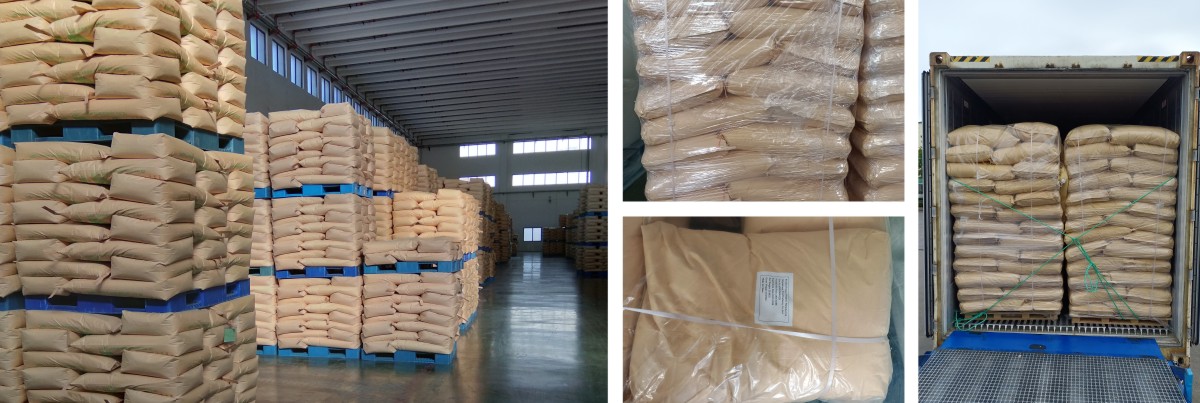
| PACKAGING | 25kg multi-layered paper bag or 1000kg tote bag |
| PROCESSING | Color sorted, metal detected, free from stones, metal, glass, and other harmful matters, sound merchantable quality, fit for human consumption as per CIQ’S regulations. |
Sourcing, Certification and Regulatory Status
| Jurisdiction / Standard | Regulatory status | Legal name | Notes |
|---|---|---|---|
| European Union | Food ingredient; not a regulated allergen | Buckwheat flour | Buckwheat is not among the allergens listed in Annex II of Regulation (EU) No 1169/2011. A gluten-free statement may be used only on the conditions of Regulation (EU) No 828/2014, which sets the limit at 20 mg/kg. |
| United States | Food ingredient; not a major food allergen | Buckwheat flour | Not one of the major food allergens of the FD&C Act as amended by the FASTER Act, so no source-specific allergen declaration is triggered. A gluten-free claim is governed by 21 CFR 101.91, which requires the food to stay below 20 ppm gluten. |
| Japan | Allergen labelling is mandatory | Buckwheat flour (soba) | Buckwheat is one of the items for which allergen labelling is mandatory in Japan, so the finished product label has to declare it. Wheat and buckwheat are separate items on that list, which is why the two must not be treated as one entry. |
| Codex Alimentarius | Food ingredient; no product-specific standard | Buckwheat flour | CXS 1-1985 (Section 4.2.1.4) lists cereals containing gluten as wheat, rye, barley, oats, spelt and their hybrids; buckwheat is not among them. No product-specific Codex standard applies to the flour. |
Compliance turns on the gluten result, the mycotoxin figures and the microbiological limits rather than on the naming convention, so those are the values to line up when comparing offers. Confirm the legal name and the allergen wording required by the destination market before the first shipment, since the buckwheat declaration that is optional in one market is compulsory in another.
Characteristics
- Certified Non-GMO
- Unbleached, unbromated, unenriched
- Very Low in Cholesterol & Sodium
- Low in Saturated Fat
- Good Source of Dietary Fiber and Magnesium
- Very Good Source of Manganese
- Contains Calcium
- Rich in Iron
- Country of Origin: CHINA
Health Benefits
- May be part of a heart-healthy diet.
- May help support healthy blood sugar levels already within normal range.
- Rich in dietary fiber, protein, and minerals including manganese, magnesium, and iron.
- Contains flavonoids such as rutin, which have been studied for their antioxidant properties.
Format and Grade Selection
Two questions come up before a buckwheat flour specification is fixed: how much hull the flour retains, and which species it was milled from. Both change the colour, the flavour and the fibre figure far more than the particle size does.
- Light buckwheat flour – milled from dehulled groats, paler and milder, the usual choice for pancakes, blinis and biscuits
- Dark buckwheat flour – milled with more of the black hull left in, which deepens the colour and the earthier note
- Whole-grain or sifted – the whole-grain cut keeps the bran and carries the higher fibre figure, while a sifted flour trades that fibre for a finer crumb
- Raw-groat or roasted (kasha) flour – flour from roasted groats is darker and more assertive; it is a different flavour rather than a finer grind
- Species – common buckwheat (Fagopyrum esculentum) is the milder type, while Tartary buckwheat (Fagopyrum tataricum) is a separate species with a markedly more bitter profile
- Gluten-free line – the condition to confirm where the flour enters a certified gluten-free product, because the flour itself is naturally gluten-free but the mill may also handle wheat
Handling Note: Buckwheat is naturally gluten-free, but the claim holds only if the flour is milled, stored and packed away from wheat, rye and barley. A certified gluten-free lot should arrive with a gluten result on the certificate of analysis, not only a statement on the specification.
Give us the colour target, the species and the certification the finished product needs, and we will quote the grade and the granulation that match it.
Packing
FAQs
Q: Is buckwheat flour gluten-free?
A: Yes. Buckwheat is not a wheat and is not even a cereal, since the plant belongs to the Polygonaceae family, so the flour is naturally free of gluten. Because the same mill may also handle wheat, we confirm the gluten-free status from the certificate of analysis for each lot rather than relying on the ingredient name alone.
Q: How long does the flour keep, and how should it be stored?
A: The specification gives a shelf life of 12 months. Store it sealed in cool, dry conditions at room temperature and out of direct sunlight, and a temperature-controlled warehouse is recommended for bulk stock.
Q: What are the purity and moisture limits?
A: Purity is 99.9% minimum and moisture is 15% maximum.
Q: What bulk packaging do you offer?
A: 25 kg multi-layered paper bags or 1000 kg tote bags.
Q: Which contaminant and metal limits are stated on the specification?
A: Aflatoxin B1 below 2 ppb, total aflatoxins below 4 ppb and ochratoxin below 5 ppb, with lead below 0.2 ppm and chromium below 0.1 ppm. All material we supply is non-GMO.