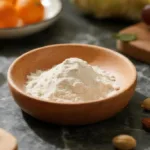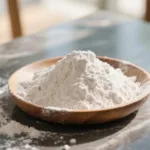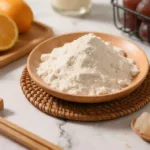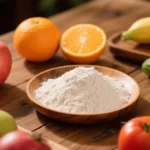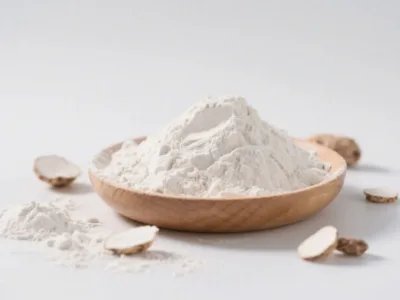
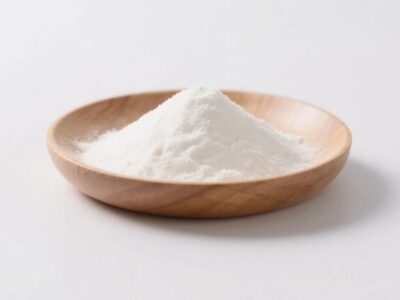
Our glucomannan powder is a highly purified, water-soluble dietary fiber extracted from the corm of Amorphophallus konjac (konjac root). With ≥95% glucomannan content, it delivers exceptional thickening, gelling, and water-binding capacity at extremely low use levels.
Unlike modified starches or synthetic gums, glucomannan is non-GMO, vegan, gluten-free, very low calorie, and backed by research for digestive health, weight management, and metabolic support.
What Is Glucomannan?
Glucomannan is a high-molecular-weight polysaccharide composed of β-(1→4)-linked D-mannose and D-glucose units in a ~1.6:1 ratio. Its unique linear structure enables:
- High water absorption (up to 50-100x its weight in water)
- Formation of viscous, non-gelling solutions in cold water
- Synergy with xanthan gum or carrageenan for elastic gels (with heat/alkali)
- Resistance to human digestive enzymes → ~1-2 kcal/g (fermented in colon)
Hydrated in the stomach, that same viscosity slows gastric emptying and supports the feeling of fullness behind most weight-management formulas.
Our glucomannan powder is produced using food-grade water extraction and membrane filtration, without chemical solvents, bleaching agents, or sulfites.
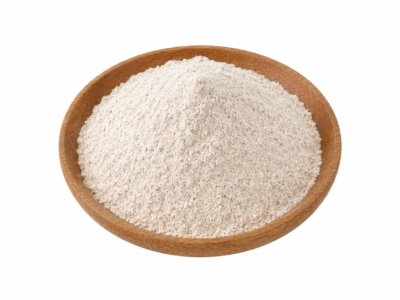
The purified grade is often confused with whole konjac flour. Both come from the same corm, but they are different materials with different specifications:
| Parameter | Glucomannan Powder (This Product) | Whole Konjac Flour (Reference) |
|---|---|---|
| Glucomannan content (dry basis) | ≥95% | commodity milling grades commonly 70–85%; premium grades are specified higher |
| Odor & taste | Odorless; neutral, no earthy or fishy notes | under-specified milling grades can carry earthy or fishy notes |
| Residual protein and ash | removed during purification | retained |
| Typical use | clear beverages and supplements with tight sensory targets | traditional konnyaku and noodle products |
Konjac flour is traded as a range of glucomannan contents rather than a single figure, so it is supplied under its own specification and is not interchangeable with this grade; the two materials are best specified separately in a tender.
Also Known As: Names and Synonyms in the Trade
Glucomannan appears under several names across specifications, regulations and supplier literature. The list below covers the ones that turn up most often in enquiries, technical data sheets and customs paperwork.
- Konjac glucomannan – the legal name used in EU additive specifications for the purified fraction
- Konjac gum – the aqueous-extract grade; the trade name for a purified rather than milled konjac powder
- Konjac mannan – the short form used in nutrition and health-claim texts
- KGM – the abbreviation used throughout technical literature and specification sheets
- E 425 (ii) – the EU designation that identifies the purified glucomannan fraction specifically (E 425 (i) is konjac gum)
- Konnyaku (konnyaku potato) – the Japanese food name for the gelled konjac preparation and for the plant
- Devil’s tongue – a common plant name recorded for Amorphophallus konjac in JECFA and USDA references
- Voodoo lily – another recorded common name for the same plant
- Elephant yam – also recorded for this species, though the name is loosely applied to other Amorphophallus species
- Konjac root extract – the supplement-trade name when the ingredient is sold as an extract rather than a food additive
The names matter mainly for labelling and for the specification sheet: a specification written for konjac flour will not match this grade. Compare the glucomannan content on a dry basis and the viscosity method before treating two offers as equivalent.
Technical Specifications
| Parameter | Glucomannan Powder |
|---|---|
| Botanical Source | Amorphophallus konjac |
| Appearance | White to off-white fine powder |
| Odor & Taste | Odorless; neutral, no earthy or fishy notes |
| Glucomannan Content (Dry Basis) | ≥95% (enzymatic-gravimetric method, AOAC) |
| Viscosity (0.5% solution, 25°C) | ≥30,000 mPa·s (Brookfield, spindle #3, 12 rpm) |
| Moisture Content | ≤10.0% |
| Ash Content | ≤1.5% |
| Protein | ≤1.0% |
| pH (1% solution) | 5.5 – 7.0 |
| Particle Size (D[90]) | ≤150 µm |
| Bulk Density | 0.40 – 0.55 g/mL |
| Shelf Life | 24 months (sealed, cool & dry storage) |
| Heavy Metals (Maximum Limits) | |
| – Lead (Pb) | ≤0.5 mg/kg |
| – Arsenic (As) | ≤0.5 mg/kg |
| – Cadmium (Cd) | ≤0.1 mg/kg |
| – Mercury (Hg) | ≤0.03 mg/kg |
| Microbiological Criteria | |
| – Total Plate Count | ≤10,000 CFU/g |
| – Yeast & Mold | ≤100 CFU/g |
| – Escherichia coli | Absent in 1 g |
| – Salmonella spp. | Absent in 25 g |
| – Listeria monocytogenes | Absent in 25 g |
| Allergen Status | Gluten-Free (<5 ppm), Soy-Free, Dairy-Free, Nut-Free |
Analytical methods: AOAC 991.43 for total dietary fiber; viscosity per ISO 12048. Konjac flour, the source material, is regulated in the United States as a food additive under 21 CFR 172.859, with use not exceeding 1% of the finished food, while the purified glucomannan covered by this page is covered by the FDA dietary fiber listing. In the European Union the material is authorised as the food additive E 425 (ii), and the grade also meets JECFA specifications.
Sourcing, Certification and Regulatory Status
| Jurisdiction / Standard | Regulatory status | Legal name | Notes |
|---|---|---|---|
| European Union | Authorised food additive | E 425 (ii) konjac glucomannan | E 425 (i) is konjac gum; not permitted in jelly mini-cups or jelly confectionery, where a choking hazard was identified (Regulation (EC) No 1333/2008; EFSA re-evaluation, 2017) |
| United States | GRAS; permitted as a food additive | Konjac glucomannan | The additive listing at 21 CFR 172.859 covers konjac flour, with use not exceeding 1% of the finished food; a separate FDA action recognised konjac as a dietary fiber in 2020 |
| Japan | Long-established traditional food ingredient; additives used in konjac products fall under the Food Sanitation Act | Konnyaku (konjac) | Konnyaku and shirataki are the reference applications in this market |
| Codex Alimentarius | Listed in the GSFA; JECFA specifications apply | Konjac flour (INS 425) | The JECFA specification covers konjac flour, konjac gum and konjac glucomannan under a single INS number, with an ADI not specified |
Compliance turns on the assay, the viscosity method and the microbiological limits rather than on the naming convention, so those are the figures to line up when comparing offers. Confirm the permitted use and the label name for the destination market before the first shipment.
Applications
Food and Beverage Applications
- Shirataki Noodles & Low-Calorie Pasta: Primary gelling agent
- Sauces, Dressings & Soups: Ultra-efficient thickener without cloudiness
- Plant-Based Meats: Improves moisture retention and bite texture
- Bakery Fillings: Prevents syneresis in fruit fillings and glazes
- Functional Beverages: Adds fiber without grittiness (when properly dispersed)
Supplement Applications
In supplements the purified grade carries a high fiber load in a small dose, and the neutral sensory profile keeps it from disturbing the flavor system.
- Dietary Supplements: Capsules, tablets, or drink mixes for weight control
Format and Grade Selection
The powder is supplied in two cuts, and the choice usually follows the point at which the powder meets water:
- Standard cut – the default food grade for dry blends, noodle and gelling systems, where the powder is dispersed with a dry carrier or under agitation
- Micronized cut – the finer grind for rapid cold hydration and reduced lump formation, used where dispersion without grittiness matters, such as functional beverages
Pro Tip: For instant dispersion, blend glucomannan with sugar or maltodextrin before adding to liquids.
Where the process pre-blends the powder with a dry carrier or hydrates it under shear, the standard cut is the economical choice; reserve the micronized cut for cold, unagitated liquid systems.
Why Choose Our Glucomannan Powder?
We source konjac from certified farms and use advanced purification to reach a purity level well above that of standard konjac flour. This ensures consistent viscosity, minimal odor, and compliance with strict supplement and infant nutrition standards.
The powder is non-GMO and free of allergens that would restrict a clean-label claim: gluten-free, soy-free, dairy-free and nut-free. Because it is a purified fiber rather than a milled flour, it stays neutral in taste and odor while keeping viscosity consistent from batch to batch.
Packing
Available packaging:
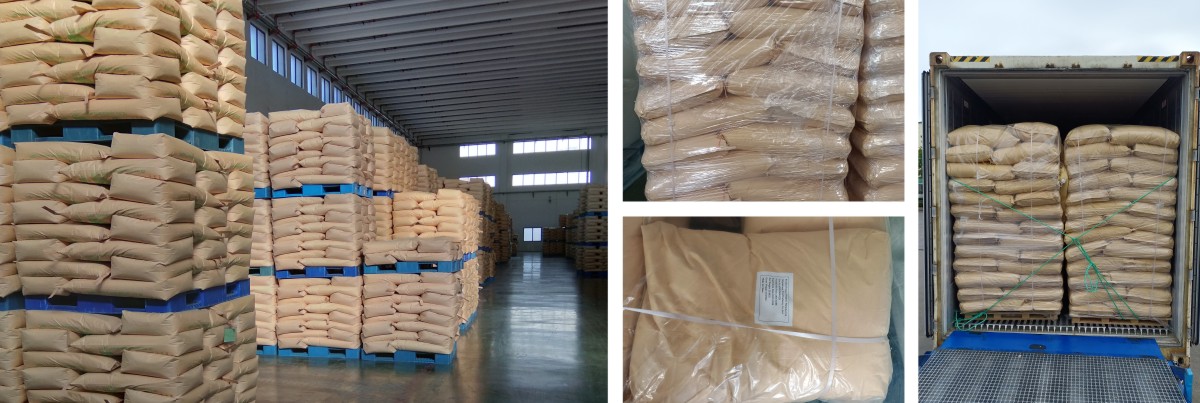
- 10 kg or 25 kg multi-wall paper bags with PE liner
- 500 kg–1,000 kg FIBCs for industrial users
- Custom particle size (standard or micronized) available
FAQs
Q: Is Glucomannan suitable for gluten-free and keto products?
A: Yes, Glucomannan is naturally gluten-free as it’s derived from the Konjac plant, not grains. It’s also keto-friendly due to its virtually zero net carb content and high fiber contribution, making it ideal for low-carb formulations.
Q: What’s the typical shelf life and recommended storage for bulk quantities?
A: Our Glucomannan typically has a shelf life of 24 months from the manufacturing date when stored in a cool, dry place (below 75°F / 24°C), away from direct sunlight and moisture, in its original sealed, airtight packaging. Proper sealing is critical to prevent moisture absorption.
Q: What is the recommended dosage for weight management benefits?
A: For weight management, generally accepted effective dosages are around 1 gram of glucomannan three times a day before meals, with plenty of water. However, the exact dosage will depend on your product formulation and the specific health claims you aim to make, and it’s advisable to consult regulatory guidelines.
Q: Does Glucomannan have any taste or odor?
A: Glucomannan is known for its neutral taste and odor, making it highly versatile for incorporation into various food and beverage products without introducing undesirable flavors.