
In the pursuit of healthier eating, many of us are on the lookout for ingredients that can do more. What if there was a single, versatile powder that could help you thicken sauces, create satisfying low-carb meals, and support your digestive health all at once? Meet organic konjac flour, an incredible plant-based ingredient that’s quickly becoming a staple for conscious cooks and health enthusiasts alike.
What Glucomannan Is, and How It Behaves in Water
Organic konjac flour is the milled tuber of the konjac plant, and almost everything that distinguishes it in a recipe traces back to a single component: glucomannan, a soluble dietary fibre built from glucose and mannose units joined in a pattern that the enzymes which digest starch do not act on. The remainder of the powder is a small proportion of other tuber material — protein, ash, residual carbohydrate — and that balance shifts with grade and milling. Knowing the split is what makes the ingredient predictable, because it separates what the powder does structurally from what it contributes nutritionally, and the second of those is a much shorter list than the first.
The practical signature of glucomannan is viscosity. A small quantity of the powder takes up a large multiple of its own weight in liquid, a ratio commonly quoted at up to about fifty times its weight, and the hydrated chains build a loose gel network that gives body to a liquid without the flavour or the opacity that a starchy thickener brings with it. The gel thickens quickly, holds its body when it is heated, and thins under shear, which is why a sauce that has been stirred smooth in the pan can look thinner there than it does on the plate once it has settled and the chains have relaxed back together.
| Fibre type | How it dissolves | Viscosity | Behaviour when heated | Where it earns its place in a formulation |
|---|---|---|---|---|
| Glucomannan (konjac) | Dissolves and swells, forming a gel network | High; a small amount moves a large volume of liquid | Stable across ordinary cooking temperatures, so the body survives the pan | Thickening, binding, gels, and the structure in low-carbohydrate noodle and wrap formats |
| Inulin | Dissolves readily without forming a network | Low; it adds body and bulk rather than thickness | Remains dissolved, and can add a mild sweetness in the finished dish | Cost and texture in drinks, dairy-style formats and bakery blends |
| Resistant dextrin | Dissolves into the liquid without thickening it | Very low; the effect is not a gel | Generally stable, so it carries through baking and cooking | A fibre source and a carrier where bulk matters but no gel is wanted |
| Cellulose fibre | Does not dissolve; it disperses as fine particles | None; it contributes no gel | Unaffected by heat, though it can hold and release water in the dough | Structure and fibre content in wholegrain and high-fibre bakery work |
Working With the Gel: Dispersion, Pairing and Individual Response
Because glucomannan thickens on contact rather than on cooking, the order of operations decides whether a sauce ends up smooth. The powder is dispersed into a small quantity of cold liquid first, brought to a slurry, and only then carried into the hot part of the dish; dry powder dropped straight into a hot pan forms lumps that do not disperse afterwards. The quantity is then set by the consistency the dish actually needs, and it is worth remembering that the gel continues to build for a short while after it is mixed, so a portion that looks thin at the stove can still be over-thickened by the time it reaches the table. Where a product is being developed rather than cooked, the same two points — cold dispersion and a controlled addition rate — are the difference between a smooth result and a lumpy one.
Individual response varies. Glucomannan is a concentrated fibre addition, and people differ in how much of it they tolerate in one sitting, how quickly they should move up to a larger amount, and how much fluid they need alongside it. Building up gradually, starting with a modest quantity in a dish that is already familiar, and keeping fluids with it are ordinary sensible habits rather than any special protocol. What follows here is a description of how a food ingredient behaves in a kitchen and on a label; it is not medical advice, and anyone managing a diagnosed digestive condition or a medication regime is better placed to take guidance from their own clinician than from a general article.
| Situation | What the powder does there | How to work with it | What tends to go wrong |
|---|---|---|---|
| Thickening a sauce, gravy or soup | Builds body and cling without the gloss of fat or the opacity of starch | Make a cold slurry, stir it into the hot liquid in stages, and judge the consistency after it settles | Adding powder straight to hot liquid, which leaves lumps; or dosing for the pan rather than the plate |
| A chilled set, pudding or glaze | Sets a soft gel that holds shape in the fridge | Bring it to a warm gel rather than a stiff one, and cool it undisturbed | Aiming for a firm set and then being unable to cut or spoon it |
| A loaf, cake or biscuit | Binds and reduces crumbling in a gluten-free bake | Use it as one ingredient among several flours, and balance the liquid in the formula | Expecting it to supply gluten structure; it binds but does not form a crumb |
| A drink, shake or smoothie | Adds body and a rounded mouthfeel | Disperse into the liquid before the base goes in, and keep the blender moving | Thickening that swallows the fruit and reads as a paste |
| Noodles, wraps and dumpling skins | Gives a strand or a sheet that holds together and stays translucent | Work the dough, rest it, then shape and blanch as the format requires | A dense, rubbery sheet from a dough that was under-worked or over-rolled |
| Chilled or frozen products | Holds its gel through freezing and thawing | Account for the texture change on thawing in the serving suggestion | A frozen product described as though it has the texture of a fresh one |
For procurement and formulation, the useful documents are the specification and the certificate rather than the general description on the front of a bag. BIOSTARCH supplies organic konjac flour and organic glucomannan for food use, and the neighbouring organic inulin covers the fibre with the opposite behaviour in liquid, which is often the ingredient that is actually wanted once the texture of a product has been settled.
Organic Konjac Flour: The Power of Pure Glucomannan
Organic konjac flour is derived from the root of the konjac plant, a traditional food source in Asian cultures. Its magic lies in its primary component: glucomannan, a highly viscous, soluble dietary fiber. What makes glucomannan so remarkable?
- Exceptional Thickening Power: Konjac flour can absorb an astonishing amount of water – up to 50 times its weight! This makes it an incredibly efficient thickening agent, far more potent than cornstarch or traditional flours. A tiny amount can transform liquids into thick sauces, gravies, or even jellies.
- Zero Net Carbs & Low Calorie: For those managing carbohydrate intake or looking to reduce calories, organic konjac flour is a game-changer. It contains virtually no digestible carbohydrates and is incredibly low in calories, making it ideal for keto-friendly recipes, weight management, and diabetic-friendly diets.
- Powerful Prebiotic Fiber: As a soluble fiber, glucomannan acts as a prebiotic, feeding the beneficial bacteria in your gut. This can contribute to a healthy gut microbiome, which is increasingly linked to improved digestion, enhanced immunity, and overall well-being.
- Promotes Satiety: When consumed, glucomannan expands in the stomach, creating a feeling of fullness. This can help reduce overall food intake, making it a valuable aid for appetite control and weight management.
Choosing the organic variety ensures that the konjac plant was grown and processed without synthetic pesticides, fertilizers, or harmful chemicals, aligning with a cleaner, more natural approach to your diet.
Elevate Your Kitchen: Versatile Uses for Organic Konjac Flour
Organic konjac flour’s neutral flavor and impressive functional properties make it incredibly versatile in the kitchen. It’s not just for exotic dishes; it can enhance your everyday cooking:
- Healthy Thickener: Replace cornstarch or flour to thicken soups, stews, gravies, and sauces without adding carbs or calories. Use sparingly, as a little goes a long way!
- Low-Carb Baking: Improve the texture and binding of gluten-free and keto baked goods. It can add chewiness and prevent crumbling in breads, muffins, and pastries.
- Homemade Noodles & Wraps: It’s the key ingredient in shirataki noodles and rice, allowing you to create incredibly low-carb pasta alternatives right at home.
- Vegan & Vegetarian Gels: Create firm, yet tender, gels and desserts without gelatin, perfect for plant-based recipes.
- Smoothie & Shake Booster: Add a tiny pinch to your smoothies or protein shakes for extra fiber and to increase satiety, helping you feel fuller for longer.
When working with organic konjac flour, remember its potency: always mix it into a small amount of liquid first to create a slurry before adding to larger batches, and add gradually to avoid over-thickening.
Ready to unlock the digestive and culinary potential of this remarkable ingredient? Organic konjac flour is a simple addition that can make a big difference in your healthy lifestyle.
How might organic konjac flour transform your favorite recipes?
Q: What is glucomannan, and how is it different from starch?
A: Glucomannan is a soluble dietary fibre made of glucose and mannose units joined in a way that the enzymes which digest starch do not act on. Starch is a storage carbohydrate that thickens when its granules swell in hot water, while glucomannan forms a gel network as it hydrates. That difference is why konjac flour is used for body, binding and gel rather than for the flavour, the colour or the browning that a starchy thickener brings to a dish.
Q: How much liquid does konjac flour need to thicken a sauce?
A: A small amount of the powder takes up a large multiple of its own weight in liquid, commonly quoted at up to about fifty times its weight, which is why it is dosed by the spoonful and adjusted to the consistency required rather than taken from a fixed recipe quantity. Always disperse it in a little cold liquid first, add it in stages, and allow it to settle before deciding whether more is needed.
Q: Does konjac flour provide protein, vitamins or minerals?
A: Very little of any of them. Konjac flour is overwhelmingly fibre, and the protein, ash and trace micronutrients present in the tuber are there in small proportions and are not a reason to use it. It works as a thickener, a binder and a texture tool. If a finished product needs to state meaningful protein or micronutrient content, that has to come from other ingredients in the formulation.
Q: Does everyone react to konjac flour in the same way?
A: No, and the difference is worth respecting. Tolerance of a concentrated fibre addition varies from person to person, and an amount that sits easily with one person may be uncomfortable with another, particularly when it is introduced suddenly or taken with little fluid. Building up gradually, starting with a familiar dish, and keeping fluids alongside are the sensible habits. Anyone with a diagnosed digestive condition, or who is changing several things in their diet at once, should take advice from their own clinician rather than from a general article.
Recommended Products
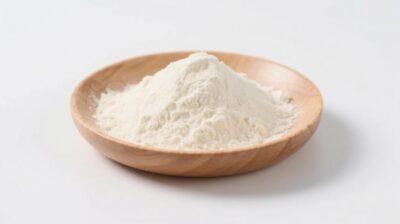
Organic Resistant Dextrin
Organic resistant dextrin is a certified-organic soluble dietary fiber (≥90% dry basis) from non-GMO…
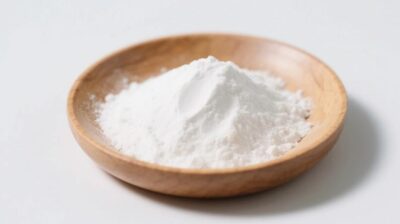
Organic Inulin Powder
Organic inulin is a certified-organic prebiotic soluble fiber (90%+) from non-GMO chicory. It adds…
Related Posts


