
A rich, smooth, and glossy gravy can elevate any meal. However, achieving the perfect consistency without clumps or floury taste can be tricky. This is where organic potato starch powder—also called organic Solanum tuberosum starch or organic potato starch—becomes an essential ingredient.
The Cold Slurry Method, Step by Step
Most lumpy gravy is decided in the twenty seconds before the pan gets hot. Potato starch granules that land dry on a hot liquid hydrate unevenly: the outside of each granule sets into a shell while the centre stays dry and powdery, and those dry pockets are what show up later as small lumps in an otherwise smooth sauce. A cold slurry removes the timing problem entirely, because the powder is suspended in water before any heat touches it and every granule starts hydrating at the same moment.
The order of operations matters just as much as the ratio. Liquid goes in first, slurry second, heat third, and stirring runs through all three without a break. Adding slurry to liquid that is already at a rolling boil means the water in the slurry flashes to steam and throws the suspended powder across the pan, so the particles that land later hydrate in a different order than the ones that landed first.
| Step | What to do | Why it works | Where it goes wrong |
|---|---|---|---|
| Measure the starch | Level the powder rather than scooping it | A heaped spoon carries noticeably more solids than a level one, and the same error repeats in every batch | An unleveled measure is the most common reason two batches of the same recipe do not match |
| Make the slurry | Stir the powder into a small quantity of cold water until no dry pockets remain | Cold water lets the granules hydrate and suspend without triggering the set that heat causes | Hot or warm water starts thickening before the slurry even reaches the pan, which produces a thin, grainy result |
| Let it stand briefly | Give the slurry a moment before it goes into the liquid | The pause allows the wetted granules to even out, so the suspension is more uniform than a dump would give | Pouring immediately after stirring leaves clumps where the powder landed dry on the surface |
| Bring the liquid to heat first | Heat the broth or drippings, then add the slurry | Hot liquid with a cold slurry reaches the thickening temperature evenly across the whole pan | Cold liquid plus cold slurry needs a long, aggressive cook to thicken, and that long cook is where the damage is done |
| Stir continuously | Keep the liquid moving from the moment the slurry goes in | Movement keeps granules from settling into hot spots on the base of the pan | Letting the sauce sit still while it thickens creates a layer on the bottom that scorches and tastes bitter |
| Hold at a gentle simmer | Cook briefly at a simmer rather than a rolling boil | A steady simmer completes the thickening while keeping the starch structure intact | A hard boil breaks the swollen granules down and the sauce thins again after looking correct |
The last point is the one that catches experienced cooks. A sauce that reached the right consistency and then went loose again was usually taken to a boil at some point after it thickened, because the agitated granules shear apart and release the water they were holding. The correction is not to add more starch. It is to bring the sauce back to a simmer, hold it there for a short while without breaking the surface, and let it thicken a second time.
Why a Thickened Sauce Fails and How to Correct It
Every failure in a thickened sauce shows up first as a texture, and each texture traces back to a specific step. The table below is organised around what the cook can see in the pan, since that is the information available at the moment a decision has to be made. The viscosity targets differ by broth as well, because a thin pan gravy and a rich cream sauce that look identical on a spoon are held together by different amounts of starch.
| What the sauce looks like | Likely cause | Target consistency for the broth type | Correction at the stove |
|---|---|---|---|
| Thin, never reached body | The slurry was added to cold liquid and heated too gently to thicken | Pan gravy from meat drippings: enough to coat the spoon and lightly veil the back of it | Bring it to a full simmer and hold there briefly, stirring throughout |
| Thickened, then went loose again | The sauce was taken to a rolling boil after it had set | Reduction-style gravy: a body that holds a channel when the spoon is drawn through it | Reheat to a simmer, hold, and stir without breaking the surface |
| Small lumps or a grainy finish | Dry starch touched hot liquid directly, or the slurry sat too long after mixing | Glossy sauce for a plated dish: a smooth, transparent sheen with no visible grain | Pass it through a fine strainer, or blend it briefly and return it to the pan |
| Gummy, gluey mouthfeel | Too much starch for the liquid, or the sauce was sheared while thickening | Rich creamy sauce: a soft coating that clings to the spoon without stringing | Loosen with hot liquid a little at a time, then reheat briefly and re-thicken |
| Floury or raw taste | Insufficient cooking after the set point | Herb or cream sauce served with poultry: smooth, with the seasoning reading clearly | Hold at a gentle simmer for longer, tasting as it goes |
| Sauce separates on standing | Emulsified fat and water parted, which is a fat-and-heat problem rather than a starch problem | Product packed for shelf life: a consistency that holds after cooling and reheating | Stir the base before the starch goes in, and add the slurry off the boil |
Starch solves the body of a sauce and nothing else, which is worth keeping in mind when a dairy sauce splits or a cream sauce turns grainy. Those problems belong to fat, heat and agitation, and no quantity of potato starch addresses them. Where the recipe needs a different thickening curve altogether, organic cornstarch behaves differently under prolonged heat, and the wider everyday uses of organic starches guide covers the other applications where starch does the work instead of a roux or a reduction.
For a production kitchen the same sequence applies at batch scale, with the addition rate fixed against the volume of liquid rather than judged by eye, and the shear rate of the mixing equipment taken into account because a high-shear blender can thin a sauce that measured correctly at the end of the cook. BIOSTARCH supplies organic potato starch in bulk with the granulation stated per order, so the dispersion behaviour of the powder stays predictable from one delivery to the next.
Why Organic Potato Starch Powder Works So Well
Organic potato starch powder is a natural thickener extracted from organically grown potatoes. It gelatinizes quickly when heated, providing a smooth texture and excellent water-binding properties. Unlike traditional flour, it does not alter the flavor or color of your gravy, giving you a clean, professional finish.
Tips for Perfect Gravies
- Proper Ratio: Use about 1 tablespoon of organic potato starch powder per cup of liquid for medium-thick gravies. Adjust according to desired consistency.
- Mix Before Adding: Dissolve the starch in a small amount of cold water to create a slurry. This prevents lumps when adding to hot liquid.
- Add Slowly: Pour the slurry gradually into simmering liquid while stirring constantly.
- Heat Gently: Allow the gravy to simmer for a few minutes until it thickens. Avoid boiling vigorously, which can break down the starch.
- Enhance Flavor: Potato starch is neutral, so it perfectly carries seasonings, herbs, and umami-rich sauces.
Advantages Over Other Thickeners
- Gluten-Free: Ideal for clean-label and allergen-free recipes
- Neutral Taste: Preserves natural flavors
- Freeze-Thaw Stable: Perfect for ready-to-eat meals and frozen products
- Versatile: Can be used in soups, sauces, gravies, and stews
B2B Insight
For food manufacturers and commercial kitchens, organic potato starch powder is a reliable solution for producing consistent, high-quality gravies. BIOSTARCH supplies certified organic potato starch powder in bulk, ensuring consistent viscosity, purity, and compliance with international organic standards—perfect for both artisanal and industrial production.
Using organic potato starch powder guarantees smooth, glossy, and perfectly thickened gravies every time. Its functional performance, clean-label appeal, and versatility make it a must-have ingredient in modern kitchens and food production.
Keeping Potato Starch Powder Fresh for Longer
Organic potato starch powder keeps well when it is stored correctly, which means a sealed container in a cool, dry cupboard away from sunlight and cooking steam. Humidity is the main enemy, because absorbed moisture turns fine powder into small clumps that no longer blend smoothly into gravy.
Always use a dry spoon, close the bag firmly after each use, and note the best-before date on the package so older stock gets used first. These small habits keep the thickening power dependable. For bulk purchasing with reliable packaging, BIOSTARCH is glad to help with supply and advice.
Partner with BIOSTARCH to source premium organic potato starch powder and elevate your gravies, sauces, and soups to the next level.
Q: Why does my gravy get lumpy even though I used a slurry?
A: The usual cause is that the slurry sat too long after mixing, or the powder was not fully dispersed before the liquid met the heat. A slurry that has been standing has partly set in the cup, and the set portion arrives as lumps rather than as suspended granules. Mix it again just before it goes in, and add it to hot liquid in a thin stream while stirring.
Q: What temperature should I thicken gravy at?
A: Bring the liquid up to heat first, then add the cold slurry and hold the pan at a gentle simmer while it thickens. Thickening that happens in cold liquid that is then brought to a boil takes longer and needs more agitation, which is where most of the graininess comes from. Avoid a rolling boil once the sauce has thickened, because the agitated granules break down and the sauce loses body.
Q: How do I know when the gravy has thickened enough?
A: Draw a line through the sauce with the back of a spoon. A body that holds a clear channel is a thick reduction-style gravy, a thin film that veils the spoon without running is a medium pan gravy, and a sauce that runs straight off is still under-thickened. Match the target to the broth, since a rich cream sauce and a thin pan gravy need different amounts to look the same.
Q: Why did my sauce thicken and then turn thin again?
A: A rolling boil after the sauce had already set is the usual explanation. The swollen granules are broken apart by the agitation and release the water they were holding, so the sauce loosens without any change in the amount of starch in it. Do not add more starch to fix it. Reheat to a simmer, hold there briefly without breaking the surface, and the body will return.
Recommended Products
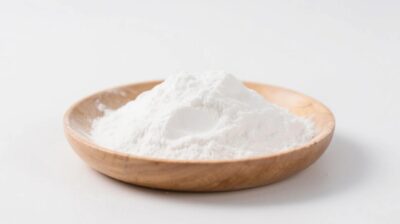
Organic Potato Starch Powder
Organic potato starch powder is a certified-organic native starch from non-GMO potatoes. With high…
Related Posts


