
Most kitchens keep a box of starch somewhere near the back of a cupboard, and most of the time it comes out for one job: rescuing a thin gravy. That is a narrow use for an ingredient that can also produce exceptionally crisp fried chicken, hold a gluten-free loaf together, set a chilled jelly firm enough to slice, and keep a sauce from splitting after a week in the freezer.
The reason starch gets underused at home is that the packaging rarely says which plant it came from, and the plant is what decides the behaviour. Potato, corn, rice, pea and mung bean starch look nearly identical in the bowl and perform very differently in the pan. This guide covers the consumer uses of organic starches in practical terms: what each one does, the ratios that work, why sauces fail, and how to swap one for another without ruining the dish.
The Five Starches Home Cooks Actually Meet
Every starch is a package of glucose chains stored inside a granule. Two chain types decide almost everything. Amylose is straight and packs tightly, so high-amylose starches form firm, sliceable gels when they cool. Amylopectin is branched and cannot pack neatly, so high-amylopectin starches stay soft, glossy and clingy.
The granules also differ in size and in the temperature at which they swell and rupture, which is the moment thickening actually happens. Below that temperature, nothing useful occurs. Above it, viscosity climbs quickly.
| Starch | Approx. amylose | Gelatinises around | Cooked appearance | Texture when cool | Where it shines at home |
|---|---|---|---|---|---|
| Potato | 20–25% | 58–66°C | Clear, very glossy | Soft, long-flowing | Clear sauces, crisp frying, moist bakes |
| Corn | 23–28% | 62–72°C | Opaque, matte | Firm, short, sliceable | Gravies, pie fillings, custards |
| Rice | 15–25% | 68–78°C | Clear / translucent / glossy | Smooth, delicate | Puddings, dusting, tender cakes |
| Pea | 30–40% | 65–75°C | Fairly clear | Firm, springy | Noodles, chilled sets, binding |
| Mung bean | 40–45% | 66–75°C | Very clear | Firmest, bouncy | Glass noodles, sliceable jellies |
Potato starch has the largest granules of the group and reaches the highest peak viscosity, which is why a small amount thickens so dramatically. Mung bean sits at the other end: it thickens less violently but sets into the firmest gel once cold. Our organic starches complete guide covers how these differences arise during extraction and drying.
Thickening: Slurries and Ratios That Work
Starch will not disperse in hot liquid. Dropped straight into a simmering pan, the outer layer of each clump gelatinises instantly and seals the dry powder inside, which is exactly how lumps form. The fix is a slurry: whisk the starch into cold water first, then stir the smooth liquid into the hot pan.
For a home cook, a workable starting point is one level tablespoon of starch per cup of liquid for a pourable sauce, two tablespoons for a gravy that coats a spoon, and three for a pie filling that holds a cut edge. Potato starch is stronger than the others, so reduce it by roughly a quarter against a corn starch recipe or the sauce will turn gluey.
Timing matters as much as quantity. Corn starch needs to reach a proper boil to develop full thickness and to cook out its raw taste, and it tolerates a few minutes of simmering afterwards. Potato starch does the opposite: it thickens fast at a lower temperature and then thins again if held at a hard boil, so it should go in during the final minute of cooking, off the strongest heat.
Why Sauces Fail
Four things break a starch-thickened sauce, and all four are avoidable.
Acid is the most common. Vinegar, lemon juice, wine and tomato all break the starch chains into fragments too short to hold a network, so a sauce that looked perfect thins out over the next ten minutes. Add acidic ingredients after the sauce has thickened, not before, and choose potato starch over corn starch when the recipe is unavoidably sharp.
Sugar is the quiet one. Sugar competes with starch for water, so a heavily sweetened custard gelatinises later and at a higher temperature than a plain one. In concentrated syrups the gelatinisation point can rise by well over 20°C, which is why a sugar-heavy filling seems to refuse to set until it is suddenly, briefly, very hot. Sweetened bakery systems built around bulk polyols behave the same way, something covered in our organic maltitol complete guide.
Over-stirring is the third. Once the granules have swollen, continued whisking shears them apart and releases the water they were holding, so the sauce thins. Stir to combine, then stop. Potato starch gels resist shear better than corn starch, which is a useful property in a busy pan.
Overcooking is the last. Every extra minute at a rolling boil costs viscosity. If a sauce needs to hold for an hour on the stove, corn starch is the more forgiving choice.
Crisp Coatings, Frying and Velveting
Starch outperforms flour for fried coatings because it contains no protein to go soft and no gluten to turn leathery. Dusted on a wet surface, it forms a thin dry film that dehydrates rapidly in hot oil and sets into a brittle, glassy shell.
Potato starch is the strongest performer here. It handles brief exposure to very high oil temperatures without browning too fast, and the crust it leaves is pale, light and audibly crisp. Corn starch browns sooner and suits moderate stovetop frying. Mung bean starch produces an unusually delicate, almost translucent crust and is worth trying on prawns or firm tofu. A common restaurant approach is a blend: roughly two parts potato starch to one part corn starch, which gives both crispness and colour.
Velveting is the other technique worth learning. Tossing sliced chicken, beef or pork in about one teaspoon of starch per 200 grams of meat, usually with a little egg white and a splash of rice wine, forms a protective coating that keeps moisture inside during a fast, hot stir-fry. The meat comes out tender rather than stringy, and the residual starch thickens the pan sauce as it cooks.
For oven cooking, the same principle applies at lower intensity. Tossing potato wedges or chickpeas in a spoonful of starch before roasting pulls surface moisture away and produces a crunch that oil alone will not deliver.
Gluten-Free Baking at Home
Gluten-free baking is the consumer application where starch selection makes the largest visible difference. With no gluten network to trap gas and hold structure, the starch has to provide the crumb.
Most reliable home blends combine a base flour with two or more starches. A common structure is around 60 percent whole-grain gluten-free flour, such as brown rice or sorghum, with the remaining 40 percent split between starches, plus a small amount of a binding hydrocolloid. Within that starch fraction, potato starch holds moisture and keeps the loaf soft for longer, rice starch refines the crumb and reduces grittiness, corn starch lightens dense batters, and pea starch adds body and a firmer bite where the formula is short on protein.
Starch also does small, unglamorous jobs in baking. A spoonful stirred into a cake flour blend lowers the effective protein content and produces a more tender crumb. A dusting keeps grated cheese separate and stops icing sugar caking. Rice starch, with its very fine granules, gives the smoothest matte finish on coated confectionery.
Noodles, Jellies and Chilled Desserts
High-amylose starches set into gels firm enough to cut, which is the basis of an entire family of dishes. Mung bean starch is the classic example. Whisked with cold water at a ratio of about one part starch to six parts water by weight, cooked until it turns from milky to translucent, then chilled, it sets into the sliceable jelly served across China as liangfen. The same starch, extruded and dried, gives glass noodles their transparency and their refusal to go mushy in hot soup.
Corn starch and potato starch will not do this. Their gels are too soft, too cloudy or both, which is why substitutions in these recipes usually disappoint. Pea starch is the closest workable alternative to mung bean, sitting just below it in gel strength.
Rice starch takes the opposite role, producing creamy rather than firm results. It carries dairy and plant-based puddings, custards and set desserts with a smooth mouthfeel and no chalkiness. The way each of these behaves once eaten, including the resistant starch that forms when a cooked starch is chilled, is set out in our organic starches health and nutrition guide.
Freezing, Chilling and Leftovers
Cooked starch does not stay still. As it cools, amylose chains slowly realign into a tighter structure, a process called retrogradation. In a loaf this is staling. In a sauce it is the weeping puddle of water on the plate the next day, properly called syneresis.
High-amylose starches retrograde fastest, which is precisely what makes them good at setting jellies and bad at surviving the freezer. Potato starch, with lower amylose and large water-holding granules, keeps a sauce smooth through a freeze-thaw cycle about as well as rice starch does — both rate Moderate against Poor for corn and the high-amylose legume starches — and it is the sensible choice for batch-cooked meals. Corn starch fillings tolerate refrigeration well but tend to weep after freezing.
Two habits help. Reheat starch-thickened dishes gently and stir them back together rather than boiling them hard, and add a little fat, which slows water migration and keeps the texture intact.
Swapping One Starch for Another
Substitution is where most home recipes go wrong, because the exchange is rarely one for one.
| Replacing | With | Adjustment |
|---|---|---|
| Corn starch | Potato starch | Use about 75% as much; add at the end, do not boil hard |
| Corn starch | Rice starch | Use roughly the same amount; expect a softer, creamier set |
| Potato starch | Corn starch | Use about 130% as much; cook to a full boil |
| Wheat flour | Any starch | Use about half as much; the sauce becomes glossy, not matte |
| Mung bean starch | Pea starch | Use about 110% as much; slightly softer, less clear gel |
| Mung bean starch | Corn or potato starch | Not recommended for jellies or glass noodles |
The general rule is that starch has roughly twice the thickening power of plain flour, and that clarity, gloss and set firmness will change even when the viscosity matches.
Storing Starch in a Home Pantry
Native starch is stable but hygroscopic. Kept sealed, cool and below about 65 percent relative humidity, an unopened bag holds its performance for around two years. Once opened, transfer it to an airtight container rather than leaving the original paper packet folded over, since the powder will draw in kitchen humidity and cake.
Three signs mean a bag has gone past useful life: hard lumps that do not break up under a spoon, any sour or musty smell, and a grey or yellow cast to what should be a bright white powder. A quick check before committing to a recipe is to stir a pinch into cold water. Good starch disperses into a clean milky suspension with no grit and no odour.
What Shoppers Are Buying
Consumer demand is what has pushed these ingredients from the back of the cupboard onto front-of-pack labels. The global starch market was valued at around 39.8 billion US dollars in 2025 and is forecast to reach roughly 57 billion by 2034, a compound annual growth rate near 4.1 percent. The native, unmodified segment is growing faster, from about 6.5 billion dollars in 2025 toward roughly 12.3 billion by 2035 at a compound annual rate near 6.5 percent, with corn holding roughly 42 percent of native starch supply and food and beverage accounting for around 55 to 60 percent of end use.
The gluten-free organic starch niche is growing faster still, from about 1.25 billion dollars in 2025 to a projected 1.99 billion by 2032, near 6.9 percent a year, with bakery and confectionery representing close to 42 percent of applications and North America the largest region. The pattern behind those numbers is consistent: shoppers reading ingredient lists prefer a named, recognisable starch to a modified food starch, and brands are reformulating accordingly. Our organic starches market and comparisons analysis breaks down regional supply and pricing in detail.
For anyone buying in bulk rather than by the box, the specification behind the powder matters as much as the botanical source. Moisture, protein, ash, pH and viscosity all predict how a lot will behave in the pan, and the documentation trail is what separates a certified organic starch from an unverified one. Our organic starches sourcing and quality guide sets out what to ask for.
About Our Organic Starches
BIOSTARCH supplies certified organic potato starch, corn starch, pea starch, mung bean starch and rice starch to food manufacturers, retail brands and industrial users worldwide. Every lot is produced under organic handler certification and tested for starch content, moisture, protein, ash, pH, viscosity, heavy metals and microbiology, with a full certificate of analysis and organic transaction documentation supplied at shipment. Our technical team can help match granule structure, amylose ratio and pasting behaviour to the texture you are aiming for, whether that is a retail gravy mix, a gluten-free bakery range, a crisp coating system or a chilled dessert that has to hold its shape all the way to the plate.
Recommended Products
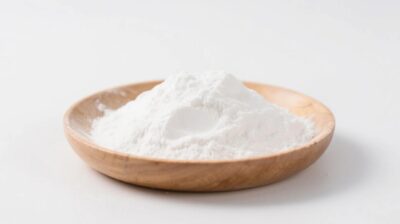
Organic Potato Starch Powder
Organic potato starch powder is a certified-organic native starch from non-GMO potatoes. With high…
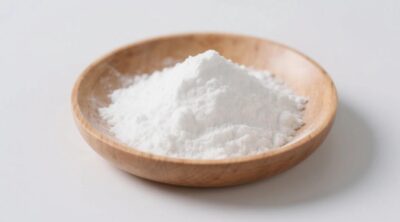
Mung Bean Starch
Mung bean starch is a native starch with high amylose content and exceptional gel…
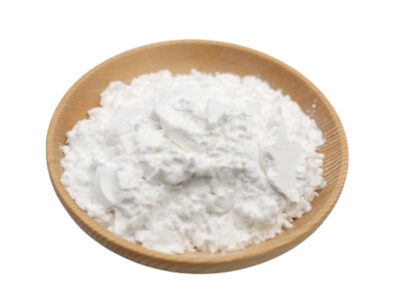
Rice Starch
Organic rice starch is a certified-organic native starch with very fine granules and a…
Related Posts


