
In today’s competitive food market, shelf life is one of the most critical factors for manufacturers. Whether you produce ready-to-eat meals, snacks, bakery products, or sauces, maintaining product freshness and stability directly affects customer satisfaction and profitability.
How Organic Potato Starch Extends Shelf Life
Shelf life in a packaged food is decided by how quickly water moves and how quickly the structure firms up. Starch is central to both processes, which is why a starch that holds its water differently changes the date on the pack. Potato starch supports three levers at once: it binds water, it slows the firming of the starch network, and it carries fat in a way that reduces the amount of free oil on the surface.
| Mechanism | What happens in the pack | Where potato starch helps |
|---|---|---|
| Moisture migration | Water moves from the moist phase to the drier one, and the drier region firms first | Bound water stays with the starch phase and moves less freely |
| Starch firming | Part of the starch network reorganises over time and the texture hardens | Starch that has already swollen during processing firms more slowly |
| Free oil on the surface | Oil that has migrated out of the matrix oxidises and the product looks and tastes stale | Starch as a fat carrier keeps more oil inside the structure |
| Glass transition | A product can go soft or hard as the temperature changes | More bound water means a more stable texture across the storage range |
Shelf Life Levers in a Packaged Food Line
The starch is one lever among several, and it is worth setting them side by side before a formula is locked. The packaging is usually the cheapest lever to change, the water activity of the filling the most direct, and the fat level the one that trades against texture.
| Lever | Direction | Trade-off |
|---|---|---|
| Modified atmosphere or vacuum packing | Slows oxidation of the oil phase | Cost and line complexity |
| Filling water activity | Lower activity slows mould and firming | Taste, salt balance and the mouthfeel of the filling |
| Fat level in the matrix | Less free oil means less to oxidise | Richness and mouthfeel; usually compensated with starch or fibre |
| Starch system in the matrix | Holds water and carries fat inside the structure | Texture changes, which is why the trial has to be a sensory one |
| Storage temperature | Stable and cool slows every mechanism | Distribution and retail conditions |
For a buyer specifying the material, two points on the order matter more here than elsewhere: the granulation, because it decides how the starch disperses and therefore how evenly it carries the fat and the water, and the certificate requirements, because a packaged product carries the organic claim through to the shelf. BIOSTARCH supplies organic potato starch in powder grades with the granulation confirmed per order, and the organic resistant dextrin line covers the case where a very low-fat, high-fibre matrix is wanted. For how the material behaves in a dry blend rather than a matrix, our overview of starches in industrial applications sets out where each type is used at production scale.
Among natural and clean-label ingredients, organic potato starch powder stands out as a multifunctional tool to enhance product stability and extend shelf life—without the use of artificial preservatives or modified starches.
1. Why Shelf Life Matters in Modern Food Manufacturing
Shelf life defines how long a product maintains its quality, texture, and flavor under specific storage conditions. In packaged foods, factors such as moisture migration, oxidation, temperature changes, and microbial growth can lead to spoilage or loss of freshness.
Manufacturers are increasingly looking for natural ingredients that can help stabilize their formulations. Organic potato starch powder meets this demand perfectly—it is plant-based, allergen-free, and effective in maintaining texture, moisture, and structural integrity across a wide range of products.
2. The Functional Role of Organic Potato Starch Powder
Organic potato starch is extracted from organically grown potatoes using a physical separation process. It is free from chemicals, GMOs, and synthetic additives, making it ideal for clean-label food applications.
Functionally, it provides three key benefits that directly impact shelf life:
- Moisture retention: Prevents products from drying out during storage.
- Freeze–thaw stability: Protects frozen foods from texture damage after thawing.
- Structural stability: Maintains product shape and consistency under various conditions.
These properties help preserve the sensory quality—taste, texture, and appearance—of packaged foods for a longer period.
3. Improving Moisture Retention and Preventing Dryness
One of the most common causes of quality degradation in packaged foods is moisture loss. Baked goods, snacks, and processed foods tend to become dry or hard over time.
Organic potato starch powder acts as a natural humectant and binder, effectively holding water within the product matrix. This helps maintain a soft and moist texture, particularly in:
- Bakery items such as muffins, cakes, and cookies
- Ready-to-eat meals or instant foods
- Plant-based meats and patties
By reducing water migration, organic potato starch also helps prevent staling—a key factor that shortens product shelf life.
4. Enhancing Freeze–Thaw Stability
For frozen and refrigerated products, temperature fluctuations can cause water molecules to separate, forming ice crystals that damage texture and structure.
Organic potato starch powder helps maintain freeze–thaw stability by forming a stable gel network that traps water molecules and prevents them from leaking out during thawing. This ensures that frozen foods, such as dumplings, sauces, and desserts, retain their original consistency and quality even after multiple freeze–thaw cycles.
Manufacturers in the frozen food industry value this feature as it reduces product waste and improves consumer satisfaction.
5. Supporting Texture Stability in Packaged Foods
Over time, packaged foods can experience texture breakdown, especially in sauces, gravies, and soups. Organic potato starch powder works as a natural stabilizer and thickener, preventing phase separation and maintaining a uniform texture.
Because it forms a smooth, glossy gel, it is ideal for applications that require both visual appeal and consistent viscosity, including:
- Ready-to-eat sauces and soups
- Instant meal kits
- Clean-label gravies and dips
Unlike chemically modified starches, organic potato starch provides stability through natural physical properties—perfect for brands promoting “100% natural” or “organic certified” products.
6. Clean-Label Advantage: Natural Preservation without Additives
Today’s consumers are wary of artificial preservatives and synthetic stabilizers. Using organic potato starch powder allows manufacturers to maintain extended shelf life naturally while keeping ingredient labels short and transparent.
Because it is certified organic, non-GMO, gluten-free, and vegan, it supports multiple marketing claims that enhance consumer trust and product value.
This makes it especially suitable for:
- Organic and natural product lines
- Vegan or allergen-free food brands
- Export products with strict label regulations
7. Recommended Applications and Dosage
The versatility of organic potato starch powder makes it applicable across multiple food categories:
- Baked goods: Improves softness and moisture retention.
- Sauces and soups: Provides stable viscosity and prevents separation.
- Frozen foods: Enhances freeze–thaw stability.
- Snacks: Improves crunch retention and prevents oil migration.
Typical usage levels range from 2% to 8%, depending on product formulation and desired texture.
8. A Sustainable and Ethical Choice
In addition to functionality, organic potato starch powder supports sustainable agriculture. It is derived from organically grown potatoes cultivated without pesticides or harmful fertilizers, reducing environmental impact.
By using this ingredient, manufacturers not only improve shelf life but also promote responsible sourcing and eco-friendly production—values that resonate strongly with modern consumers.
Organic potato starch powder offers a natural and effective way to extend shelf life in packaged foods while maintaining quality, freshness, and clean-label integrity. From baked products to sauces and frozen meals, it provides multifunctional benefits that reduce waste and enhance consumer satisfaction.
At BIOSTARCH, we supply premium-quality organic potato starch powder that meets international organic certification standards and ensures consistent performance for food manufacturers worldwide.
Contact us today to learn how our organic ingredients can improve your product shelf life and production efficiency.
Q: How does starch affect the shelf life of packaged food?
A: Through three mechanisms at once. Starch binds water and slows its migration, it holds back the firming of the starch network over time, and it can carry fat inside the matrix so that less free oil sits on the surface to oxidise. That is why the starch system in a filling often has a larger effect on the date on the pack than the packaging does.
Q: What packaging gives the best shelf life for starch-thickened products?
A: Modified atmosphere or vacuum packing slows the oxidation of the oil phase, which is usually the limit in a starch-thickened matrix. Packaging alone cannot fix a product that firms up quickly, so the water activity of the filling and the starch system both have to be specified alongside it.
Q: Can potato starch replace part of the fat to extend shelf life?
A: It is commonly used that way, because the starch holds water and carries fat within the structure rather than letting it migrate out. The trade-off is richness and mouthfeel, so the reduction is usually partial and confirmed in a sensory trial rather than set by calculation alone.
Q: How do I specify potato starch for a packaged food line?
A: State the granulation, because it decides how the starch disperses and how evenly it carries water and fat, and state the fat and water targets of the finished matrix so the supplier can confirm the grade. Each lot should arrive with a certificate of analysis, an organic certificate, a specification sheet and a safety data sheet.
Recommended Products
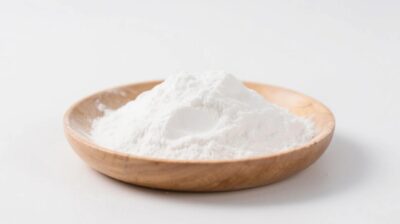
Organic Potato Starch Powder
Organic potato starch powder is a certified-organic native starch from non-GMO potatoes. With high…
Organic Resistant Dextrin
Organic resistant dextrin is a certified-organic soluble dietary fiber (≥90% dry basis) from non-GMO…
Related Posts


