
Gluten-free baking can be challenging. Achieving the perfect texture, moisture, and elasticity without traditional wheat flour often feels impossible. This is where organic potato starch powder comes to the rescue. Also known as organic Solanum tuberosum starch, organic potato starch, or organic potato flour substitute, this natural ingredient offers a solution for bakers seeking high-quality, clean-label alternatives.
Potato starch is not a flour in the literal sense. It is a functional starch, and it behaves differently from rice, corn, or tapioca starch in the same batter. Knowing how it swells, sets, and holds water is what lets a formulator use it deliberately rather than by guesswork.
Why Organic Potato Starch Powder Works
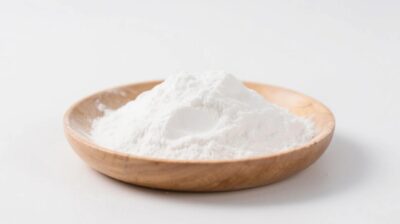
Organic potato starch powder is a fine, white powder extracted from organically grown potatoes. Unlike modified starches, it retains its natural properties, providing excellent water absorption and gelatinization. This allows gluten-free dough and batter to hold together better, resulting in baked goods with improved texture and softness.
Chemically, potato starch granules are large and swell quickly. In water they gelatinize across a broad window that typically begins in the high 50s to mid 60s °C and reaches full viscosity well below the boiling point of a normal bake. That early swelling traps water inside the crumb, which is a large part of why a gluten-free loaf springs back instead of collapsing in the middle. Because the granule itself is large, potato starch holds more water than rice or corn starch, so less free water migrates to the crust while the loaf cools.
Potato starch also carries a small amount of naturally bound phosphate. That phosphate raises paste viscosity and produces a clearer, less cloudy gel than unmodified corn starch, which matters in fruit fillings and glazes where appearance counts. In baked goods it shows up as a crumb that stays soft and a surface that browns more evenly.
If you want to compare it against the ingredient it most often replaces, organic potato starch versus cornstarch is the comparison that most reformulation projects start with.
Key Benefits in Gluten-Free Baking
- Improved Texture: Organic potato starch helps mimic the elasticity of gluten, giving bread, cakes, and cookies a tender and soft crumb.
- Moisture Retention: Its excellent water-holding capacity keeps gluten-free baked goods from drying out quickly.
- Better Binding: When combined with other gluten-free flours, organic potato starch powder helps prevent crumbling and enhances structure.
- Clean Label Friendly: Being 100% natural and organic, it suits consumers looking for healthier, clean-label products.
- Neutral Flavour: Potato starch contributes almost no taste of its own, so it does not compete with cocoa, vanilla, or whole-grain notes in a formula.
- Freeze-Thaw Stability: Baked goods built on potato starch hold their structure through freezing and thawing more reliably than formulations based on rice starch alone.
Applications in Gluten-Free Recipes
- Bread and rolls
- Cakes and muffins
- Cookies and biscuits
- Thickening sauces and fillings for desserts
How Much to Use in a Gluten-Free Formula
Usage levels depend on the rest of the blend, but the ranges below are typical in commercial and serious home baking. In a gluten-free bread formula, potato starch usually accounts for 15–30% of total flour weight, while cakes and muffins sit closer to 10–20%. In cookies the starch is often kept under 15% because too much of it makes the dough spread thin. As a thickener for fruit fillings and pastry cream, a 4–8% slurry by weight is common: disperse the starch in cold liquid first, then heat gently with stirring until the mixture turns glossy and coats a spoon.
One practical detail: potato starch thickens at a lower temperature than corn starch, so a filling can go from loose to set very quickly. Pull the pan off the heat slightly early and let carry-over heat finish the job.
Blending It With Other Gluten-Free Flours
No single starch replaces wheat on its own. Potato starch brings water-holding and tenderness; a protein-bearing flour such as sorghum, millet, or buckwheat brings structure; and a gum such as xanthan or psyllium brings elasticity. A workable starting point for a gluten-free bread blend is roughly 40% whole-grain or protein flour, 30% rice starch, 20% potato starch, and 10% tapioca starch, adjusted with 1–2% psyllium husk for dough cohesion.
Because potato starch and potato flour are often confused at the shelf, it is worth being precise about which one a recipe calls for — this explanation of the difference between potato starch and potato flour covers where each belongs. For a deeper walkthrough of formulation targets, the guide on how to improve gluten-free baking quality goes into crumb, volume, and shelf-life measurements.
B2B Insight
For food manufacturers and bakery professionals, sourcing high-quality organic potato starch powder is essential for producing consistent, superior gluten-free products. BIOSTARCH offers reliable, certified organic potato starch that meets global food standards, making it an ideal ingredient for both small-scale artisan bakeries and large industrial production.
When you evaluate suppliers, ask for the specification sheet, a certificate of analysis for the current batch, and the organic certificate that covers the actual production site. Key parameters to fix in your specification include moisture, pH, whiteness, granule fineness, and water-holding capacity, because these are what keep a reformulated loaf tasting the same from one delivery to the next.
Making the Switch in Your Own Kitchen
Start by replacing roughly a quarter of the wheat flour weight in a favourite recipe with potato starch, then add a binder and enough liquid to bring the batter back to its usual consistency. Its natural texture-enhancing, moisture-retaining, and binding properties make it a must-have ingredient in modern gluten-free baking. Bake a small test batch first, note the crumb and the weight of the cooled loaf, and adjust from there. Explore our high-quality organic potato starch powder when you are ready to scale a formula across a full production run.
About Our Organic Potato Starch
Our organic potato starch is produced from organically grown potatoes and offered as a fine, free-flowing white powder with a neutral taste. It is certified organic and non-GMO, and it carries no gluten or allergen declaration, so it fits clean-label bread, cake, cookie, and filling systems. BIOSTARCH supplies it in bulk for bakery pre-mixes, gluten-free product lines, and industrial thickening, with specification sheets, COAs, and organic certificates available on request.
Recommended Products
Organic Potato Starch Powder
Organic potato starch powder is a certified-organic native starch from non-GMO potatoes. With high…
Related Posts


