
In modern cooking and food production, achieving the perfect texture is just as important as flavor. Whether you’re preparing a silky sauce, a rich soup, or a smooth dessert, organic cornstarch powder is one of the most effective natural thickening agents available. Its clean-label appeal and versatile functionality make it a preferred choice for both home cooks and professional food manufacturers.
Matching the Amount to the Consistency You Want
Most thickening failures are not failures of technique. They are failures of arithmetic, where the amount of starch was chosen for one consistency and the recipe needed another. A light body and a heavy body are separated by a fairly narrow margin on the spoon, and the useful skill is deciding in advance which one the dish wants. Working from a target rather than from a package instruction gives a much better result than adding until the sauce looks right, because the last additions are always too much.
| Consistency you are after | Starting point for about a cup of liquid | What it looks like in the pan | Dishes this suits |
|---|---|---|---|
| Lightly thickened | About one level teaspoon | Coats the back of a spoon thinly and runs off it almost at once | Clear soups, light pan sauces, and the base of a dish that will be finished with something else |
| Medium, the usual target for a sauce | About one level tablespoon | Clings to the spoon and leaves a thin film as it is lifted away | Stir-fry sauces, cream sauces, gravy, and fillings that should hold their shape on a plate |
| Heavy | Roughly two level tablespoons | Coats the spoon in a visible layer and holds briefly before it falls | Pudding-like desserts, fruit fillings, and a sauce that has to sit without spreading |
| Almost a paste | Roughly three level tablespoons, usually with some of the liquid reduced first | Holds a mound on the spoon and drops slowly in a single piece | Structures that are moulded or shaped rather than poured |
These are starting points rather than fixed quantities, because the liquid itself changes what the starch has to do. A thin broth needs less than a reduction that has already concentrated the flavour, a dairy base carries fat and milk solids that add body of their own, and an acidic liquid behaves differently again once it is heated. If a dish has three or four other ingredients contributing thickness, start well below the line in the table rather than at it. Holding back a little of the slurry and adding it at the end is the practical way to land on the target without overshooting.
Cornstarch Slurry Against a Butter and Flour Roux
Roux and slurry are often described as interchangeable ways to thicken, and they are not. A roux is flour cooked into fat, and it brings three things with it: the body of the flour, its toasted flavour, and the gluten that the flour contains. A cornstarch slurry is a suspension of starch in water, and it brings a neutral taste, a clear sheen, and nothing else. Which one is right depends on what the dish is meant to taste like and how it is meant to look when it reaches the table.
| Point of comparison | Cornstarch slurry | Butter and flour roux |
|---|---|---|
| What it is made from | Starch dispersed in a little cold liquid before it meets the heat | Flour cooked into fat until the mixture smells toasted |
| The flavour it adds | None worth detecting, so the taste of the sauce stays as the recipe intended it | A distinct toasted note that becomes part of the dish |
| How it looks in the finished dish | Glossy and translucent, which suits a sauce where the colour of the ingredients should show | Opaque with a matte finish, which reads as a richer, heavier sauce |
| How it behaves under prolonged heat | Loses body if it is boiled hard or held at a rolling boil for a long time | Tolerates long cooking and reduction far better, because the thickening is built into the flour |
| How it behaves with acid | Prolonged acidic cooking weakens the thickening, so it suits a dish finished quickly rather than one that simmers for hours | Stands up to long simmering and to recipes with tomato or citrus in them |
| What it contributes besides thickness | Nothing else, which makes it the cleaner choice for a clear or light-coloured preparation | Body, flavour, and some of the fat from the butter, which can be an advantage in a rich sauce |
| How it is used at the end of a cook | Added in a slurry off the heat and stirred through, so it can be adjusted to taste | Usually built at the start of the cook, so the final seasoning has to be added after it |
A working rule follows from the comparison. If a dish is meant to taste of the ingredients that went into it, a slurry keeps it honest. If it is meant to taste of a cooked, rounded base and will simmer for a while, a roux is the better tool, and a slurry added at the end can be used alongside it to finish the body without the risk of cooking the starch out. There is no penalty for using both in the same pan, and in a long-cooked sauce it is a common approach rather than a compromise. The starch itself should also be fine and free of lumps, since a slurry made from a lumpy powder starts the cook with lumps already present. BIOSTARCH supplies organic cornstarch as a single-ingredient powder with lot-level information, so a ratio that works in one batch can be matched in the next, while the cooking and baking with organic starches overview covers the wider range of jobs a starch can do beyond thickening, and the complete guide to organic starches compares the starches against each other for anyone choosing a different thickening behaviour.
What Makes Organic Cornstarch Powder an Ideal Thickener?
Organic cornstarch powder is derived from certified organic corn and processed without synthetic chemicals. It offers several advantages:
- Neutral taste that doesn’t affect flavor
- Fine texture for smooth consistency
- Strong thickening ability with small quantities
- Compatibility with clean-label and organic formulations
These qualities make it a reliable ingredient across a wide range of culinary applications.
How to Use Organic Cornstarch Powder Correctly
1. Create a Slurry Before Heating
To avoid lumps, always mix organic cornstarch powder with cold water or liquid before adding it to hot mixtures. This mixture, known as a slurry, ensures even distribution.
Basic ratio:
- 1 tablespoon cornstarch
- 2 tablespoons cold water
Stir until fully dissolved before use.
2. Add at the Right Stage of Cooking
Once your slurry is ready, gradually add it to your hot liquid (such as soup or sauce) while stirring continuously. The thickening effect activates quickly when heated.
3. Control Thickness Easily
Organic cornstarch powder allows precise control over texture:
- Use small amounts for light thickening
- Add more slurry gradually for thicker consistency
This flexibility is especially useful in both home cooking and industrial recipes.
4. Avoid Overcooking
After thickening, avoid prolonged heating, as excessive heat can break down the starch and reduce viscosity. Once the desired consistency is achieved, remove from heat or reduce cooking time.
Common Applications in Food and Beverage
Organic cornstarch powder is widely used in:
- Sauces and gravies: Creates smooth, glossy finishes
- Soups: Adds body without heaviness
- Desserts: Perfect for custards, puddings, and pie fillings
- Baking: Improves texture and moisture retention
- Beverage powders: Acts as a stabilizer and anti-caking agent
Its versatility makes it an essential ingredient across multiple product categories.
Clean-Label Advantage for Modern Consumers
Today’s consumers are increasingly looking for natural and organic ingredients. Organic cornstarch powder supports:
- Clean-label product development
- Non-GMO and organic certification requirements
- Allergen-free and vegan-friendly formulations
This makes it especially valuable for brands aiming to position their products as healthy and transparent.
B2B Applications: Scalable Thickening Solution
For food manufacturers, consistency and efficiency are critical. At BIOSTARCH, our organic cornstarch powder is designed for reliable performance in large-scale production.
Why Choose Our Organic Cornstarch Powder?
- Certified organic and non-GMO
- High viscosity and stable thickening performance
- Fine particle size for easy dispersion
- Suitable for hot and cold processing systems
- Bulk supply tailored for industrial needs
From sauces and ready meals to bakery and beverage applications, our product ensures consistent results while meeting strict quality standards.
Contact us at info@bio-starch.com to request samples or discuss bulk supply solutions tailored to your business.
Q: How much cornstarch do I need for a cup of liquid?
A: About one level tablespoon is the usual starting point for a medium sauce that should coat the back of a spoon. A light thickening needs closer to a teaspoon, and a heavy body takes roughly two. These are starting points rather than fixed quantities, since the other ingredients in the pan and the acidity of the liquid both change what the starch has to do. Holding back part of the slurry and adding it at the end is the safest way to reach the target.
Q: Is a roux better than a cornstarch slurry?
A: They suit different dishes. A roux of butter and flour adds a toasted flavour, a matte opacity, and the body of the flour, and it holds its thickness through long cooking and reduction. A cornstarch slurry adds a neutral taste and a clear sheen, and it is easier to adjust at the end of a cook, but it weakens under prolonged heat and long acidic cooking. Choose by what the dish is meant to taste like and how long it will cook.
Q: Why does my sauce thin out after it has thickened?
A: Heat and time are the usual reasons. A sauce that is boiled hard or held at a rolling boil for a long period will lose the body that the starch gel was carrying, so it should be brought to a simmer rather than a full boil and taken off the heat once it reaches the target. Acid is the other cause, since prolonged acidic cooking weakens the thickening, which is why a tomato or citrus dish that simmers for hours is better built on a roux.
Q: Can I thicken a sauce after it has already cooked?
A: Yes, and a fresh slurry is the way to do it. Take the pan off the heat, whisk a new slurry with a little cold liquid, stir it back into the sauce, and return the pan to a gentle simmer for a short moment so the starch sets. This is why holding back part of the slurry through the cook is worth doing, because it gives you a correction that you can still use once the flavour is settled and the seasoning is right.
Recommended Products
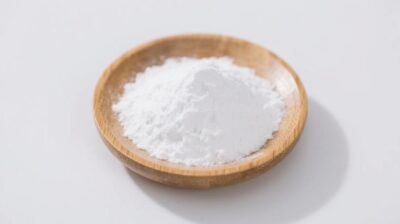
Organic Cornstarch Powder
Organic cornstarch is a certified-organic native starch from non-GMO corn. A versatile thickener and…
Related Posts


