
Why Manufacturers Choose Organic Xylitol
Food manufacturers face mounting pressure on multiple fronts. Consumers demand reduced sugar without sacrificing taste or mouthfeel. Retailers tighten nutritional criteria for shelf placement. Regulators accelerate front-of-pack labeling mandates. In this environment, ingredient selection becomes a strategic decision rather than a simple procurement exercise.
Organic xylitol has emerged as a primary tool for addressing these converging demands. Its adoption across food manufacturing sectors has accelerated year over year, driven by several structural market forces.
The global sugar reduction movement is the dominant driver. Over 65 countries have implemented sugar taxes or mandatory labeling policies. Xylitol offers a 1:1 sweetness equivalence to sucrose, which simplifies reformulation considerably compared to high-intensity sweeteners that require bulking agents.
Equally important is the oral health positioning opportunity. Xylitol carries clinical evidence supporting non-cariogenicity and the EU-authorized tooth-mineralization claim, creating meaningful shelf differentiation in oral care, confectionery, and functional food categories.
The keto and low-carb movements provide a third tailwind. With a caloric value of 2.4 kcal/g and a glycemic index between 7 and 12, xylitol fits cleanly within ketogenic, diabetic-friendly, and low-glycemic formulations.
Labeling considerations also favor xylitol. As a sugar alcohol derived from plant sources, it qualifies for “naturally sweetened” and “no artificial sweeteners” front-of-pack statements. BIOSTARCH carries organic certification credentials that extend this positioning further.
Oral Care Products
Oral care represents the most evidence-backed application category for xylitol. Streptococcus mutans and other cariogenic bacteria cannot metabolize xylitol as an energy source. Over repeated exposure, bacterial populations shift away from acidogenic strains, reducing the cariogenic potential of dental plaque.
For chewing gum, clinical research supports a threshold of 5 g to 10 g of xylitol per day across multiple exposures for meaningful dental benefit. The European Food Safety Authority recognizes xylitol’s contribution to tooth mineralization at consumption levels of 2–3 g per chewing occasion.
Toothpaste formulations incorporate xylitol at 10–25% of total formula weight, functioning as both humectant and active. Its non-fermentable character complements fluoride systems without interfering with remineralization chemistry. For a deeper look at these mechanisms, see our detailed analysis of xylitol’s dental benefits.
Mouthwash formulations typically include xylitol at 5–15% w/v. The solubility profile — approximately 64 g/100 mL at 25°C — supports clear, stable solutions. Mouthwash formulators frequently pair xylitol with erythritol or sorbitol to balance sweetness intensity and mouthfeel.
Labeling claims fall into three categories: sugar-free, tooth-friendly, and remineralization support. Manufacturers must maintain minimum effective concentrations and document xylitol content at levels meeting local regulatory requirements.
Sugar-Free Confectionery
Confectionery applications place the highest technical demands on sweetener systems. Sugar provides bulk, texture, sweetness, mouthfeel, cooling character, glass transition behavior, and Maillard browning — all of which must be addressed when reformulating for sugar-free declarations.
Hard candies represent the most established xylitol application. Because xylitol melts at 92–96°C and gradually discolors when held above roughly 160°C, candy cooking operations should run at about 140–160°C, with hold time above 160°C minimized to limit discoloration. A critical processing consideration is cooling rate: rapid cooling promotes glass formation, while slower cooling encourages crystallization that can produce graininess. Typical use levels range from 95–99% of the sweetener system.
The cooling effect is both a feature and a formulation variable. Xylitol’s heat of solution is approximately -153 J/g. For mint applications, the cooling sensation enhances consumer perception. For fruit-flavored products, formulators may blend xylitol with sorbitol to modulate cooling intensity. The BIOSTARCH organic xylitol product specifications detail physical properties relevant to confectionery processing.
Soft chews and gummies benefit from xylitol’s non-hygroscopic character, as formulations resist moisture pickup during processing and shelf life. Formulators typically combine xylitol with gelatin, pectin, or modified starch systems, adjusting water activity for the desired texture. Typical inclusion rates range from 30–45% of total formula weight.
Chocolate and compound coatings require careful tempering control. Xylitol-sweetened masses behave differently during conching and tempering; many manufacturers mill xylitol to 20–30 microns followed by optimized conching profiles that compensate for sugar’s absence.
Xylitol’s low hygroscopicity reduces the risk of stickiness, blooming, and texture degradation during distribution in tropical or high-humidity markets.
Bakery Applications
Bakery products represent a distinct formulation challenge because sugar performs structural roles that go well beyond sweetness. In cookies, crackers, cakes, and pastries, sugar influences spread, browning, moisture retention, starch gelatinization, and protein denaturation — all of which are altered or eliminated when xylitol replaces sucrose.
The most consequential difference for bakers is the absence of Maillard browning. Xylitol is a non-reducing sugar alcohol that does not participate in Maillard reactions with amino acids. Products formulated exclusively with xylitol emerge with a pale appearance. Mitigation strategies include reducing baking pH, incorporating small quantities of reducing sugars, or using color-based inclusions such as cocoa or fruit preparations.
Binding and spread behavior also change. Cookie formulators typically adjust fat-to-flour ratios or modify mixing protocols — shorter creaming times and reduced water addition — to achieve target spread and texture. In protein bars, xylitol contributes sweetness and shelf stability without the crystallization issues associated with sucrose in intermediate-moisture systems.
Working starting points: Cookies — xylitol at 15–25% of flour weight, with a 10–15% reduction in liquid components. Crackers — 3–8% of flour weight. For recipe development guidance, our baking with organic xylitol guide provides additional context.
In low-net-carb bars, xylitol provides sweetness without contributing to “net carb” calculations. The non-hygroscopic character reduces bar hardening over shelf life compared to glycerin-heavy systems.
Beverages
Beverage applications leverage xylitol’s solubility advantage — approximately 64 g/100 mL at 25°C — which exceeds that of many competing polyols and enables clear, physically stable solutions at commercially relevant concentrations. This is particularly important for ready-to-drink (RTD) formats where visible clarity and absence of sedimentation are quality expectations.
Ready-to-drink functional beverages represent the primary beverage application. Xylitol at 2–8% w/v provides sweetness equivalent to 20–80 g/L of sucrose, dissolving readily under ambient mixing conditions without the heating steps required for less soluble polyols. Its clean taste profile supports naturally sweetened positioning.
Powdered drink mixes benefit from xylitol’s low hygroscopicity, maintaining flowability during storage without the caking issues typical of sugar-based powder systems. Dissolution time in cold water is comparable to sucrose.
At typical beverage inclusion rates of 2–5%, the cooling sensation is generally well-received in mint, citrus, and berry systems. For neutral profiles, blending with a small proportion of erythritol moderates the effect.
In sports drinks, xylitol contributes sweetness with a glycemic index of 7–12, making it appropriate for diabetic-friendly and low-GI beverage formulations. See our sourcing and quality guide for more on this positioning.
Carbonated beverages require additional stability testing, as xylitol can participate in pH-dependent degradation at very low pH values over extended storage. Formulators should verify stability at their target pH and shelf life; the product specification pH range of 5.0–7.0 for BIOSTARCH organic xylitol provides a reliable starting baseline.
Nutraceuticals and Pharmaceuticals
The nutraceutical and pharmaceutical sectors use xylitol as both a functional excipient and an active ingredient, depending on the application. Its physical properties — free-flowing crystalline form, good compressibility, pleasant taste, and non-cariogenic character — make it suitable across multiple dosage forms.
Chewable tablets are the highest-volume application, with inclusion rates from 20–60% of tablet weight. The negative heat of solution creates a pleasant cooling sensation that improves consumer acceptance, particularly in children’s formulations.
Lozenges rely on xylitol’s slow dissolution characteristics and saliva-stimulating effect. Unlike rapidly dissolving sugars, xylitol-based lozenges maintain structural integrity while releasing active ingredients over an extended period, making them appropriate for throat lozenges and cough drops. As a non-cariogenic sweetener, xylitol does not compromise the oral health positioning of medicated lozenge products.
The compressibility profile compares favorably with other direct-compression sugar alcohols, supporting high-speed tablet press operations. Pure xylitol compacts can exhibit capping at high compression forces; formulators address this through low-percentage binders or co-processing with other polyols.
Dosage levels in nutraceutical products vary widely. Gummy supplements: 15–30%. Chewable tablets: 20–60%. Powdered drink mixes: 5–15% of dry weight. Syrups: 30–50% w/v. In all these applications, the organic certification and supply chain transparency that BIOSTARCH provides support the ingredient story that nutraceutical brands increasingly communicate to consumers.
Regulatory and Labeling
Product developers and regulatory affairs teams must navigate a multi-jurisdictional regulatory framework when formulating with xylitol. The ingredient enjoys broad acceptance, but specific claims, labeling requirements, and permitted use levels vary by market.
In the United States, xylitol holds GRAS status. The FDA permits sugar-free, no added sugar, and does not promote tooth decay claims under 21 CFR 101.60 and 21 CFR 101.80, subject to specified conditions. The applicable Food Chemicals Codex monograph establishes identity, purity, and quality specifications.
The European Union classifies xylitol as a sweetener (E967) permitted quantum satis in most food categories under Regulation (EC) No 1333/2008. The Nutrition and Health Claims Regulation authorizes the claim that foods containing xylitol instead of sugar contribute to the maintenance of tooth mineralization — applicable at minimum 0.46 g/100 g, with consumption of 2–3 g at least three times daily after meals. Our complete guide to organic xylitol covers the consumer-facing implications.
Other major markets maintain aligned regulatory positions: Codex Alimentarius (GSFA listing), Japan (recognized food additive), China (GB 2760), and Australia/New Zealand (FSANZ Schedule 15).
Labeling requirements for sugar alcohols deserve attention. In the US, sugar alcohols must be declared in the Nutrition Facts panel. EU labeling declares polyols under carbohydrate with a 2.4 kcal/g conversion factor. The advisory statement “excessive consumption may produce laxative effects” is mandated in multiple markets. For consumer tolerance data, see our discussion of xylitol and gut effects.
BIOSTARCH organic xylitol meets organic certification standards through verified supply chains, supporting organic ingredient declarations across North American and European markets.
Industrial Formulation Table
The following table summarizes application categories, typical use levels, key functions, and formulation notes for organic xylitol across major food and adjacent manufacturing sectors.
| Application Category | Product Types | Typical Use Level | Key Function | Formulation Notes |
|---|---|---|---|---|
| Oral Care | Toothpaste, mouthwash, chewing gum | 5–25% (toothpaste); 5–15% w/v (mouthwash); 30–65% (gum) | Non-cariogenic sweetener; humectant; cooling agent | Minimum 0.46 g/100 g for EU tooth-friendly claim; 5–10 g total daily intake for dental benefit from gum |
| Hard Candy | Deposited and formed sugar-free candies | 95–99% of sweetener system | Bulk sweetener; cooling sensation; glass formation | Control cooling rate during forming; rapid cooling favors glass state; verify thermal history below 160°C |
| Soft Chews & Gummies | Gelatin- and pectin-based chews | 30–45% of total formula | Sweetener; non-hygroscopic bulk | Combine with hydrocolloid systems; adjust water activity for texture |
| Chocolate & Coatings | Sugar-free chocolate, compound coatings | 35–50% of sweet solids | Sweetener; non-reducing character prevents browning | Mill to 20–30 micron target; optimize conching profile; manage tempering separately from sugar protocols |
| Cookies & Crackers | Sugar-free and reduced-sugar baked goods | 15–25% (cookies); 3–8% (crackers) of flour weight | Sweetness; structure modification | No Maillard browning; reduce liquid by 10–15%; adjust fat ratio for spread control |
| Protein & Nutrition Bars | Low-net-carb bars, meal replacement bars | 10–25% of formula weight | Sweetener; shelf stability | Non-hygroscopic character reduces hardening; supports low-net-carb labeling |
| RTD Beverages | Functional waters, sports drinks, flavored waters | 2–8% w/v | Sweetener; soluble bulk | Verify stability at target pH for carbonated products; cooling effect complementary to mint/citrus |
| Powdered Drink Mixes | Stick packs, bulk powder blends | 5–15% of dry weight | Sweetener; free-flow aid | Low hygroscopicity maintains flowability; dissolution time comparable to sucrose |
| Chewable Tablets | Multivitamins, minerals, herbal supplements | 20–60% of tablet weight | Direct compression sweetener; excipient | Monitor for capping at high compression; add binder for complex geometries |
| Lozenges | Throat lozenges, cough drops | 30–60% of formula | Extended dissolution matrix; saliva stimulant | Non-cariogenic supports oral health positioning of medicated products |
BIOSTARCH organic xylitol is supplied with a purity specification of at least 99.5%, supporting consistent performance across all application categories above. For technical data sheets, quality documentation, and sample requests, the product specification page provides current information.
About Our Organic Xylitol
BIOSTARCH supplies organic xylitol to food, beverage, oral care, and nutraceutical manufacturers worldwide. Our product begins with certified organic plant sources and is processed under documented quality management systems that deliver the batch-to-batch consistency required for industrial-scale formulation.
The standard product specification includes purity of at least 99.5%, sweetness equivalence of approximately 100% of sucrose, and a glycemic index of 7–12. Caloric value is 2.4 kcal/g, solubility reaches approximately 64 g/100 mL at 25°C, and thermal stability is adequate for typical cook temperatures of about 140–160°C.
These values are documented in certificates of analysis shipped with each batch. We support formulators with application guidance across the categories discussed in this article, from initial concept through commercial production. Sample quantities are available for benchtop trials and pilot-scale production runs. For a broader perspective, our complete benefits overview covers additional applications.
Technical inquiries and sample requests can be directed through the product page or by contacting our applications support team directly.
Recommended Products
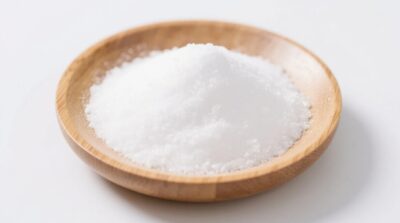
Organic Xylitol Powder
Organic xylitol is a certified-organic sugar alcohol from non-GMO plant fiber. With about 40%…
Related Posts


