
Sourcing organic maltitol looks straightforward on the surface, yet the certification chain behind a compliant supply is deeper than most buyers expect. Between organic starch feedstock, multi-stage processing, and layered certification requirements, the pool of suppliers offering verified product is far smaller than the conventional maltitol market. This buyer’s guide explains how to source organic maltitol with confidence: the grades available, the specification parameters to demand, the certifications that matter, the supplier evaluation criteria that separate verified producers from intermediaries, and the documentation package to require before committing to any volume.
Why Organic Certification Matters for Maltitol
Maltitol occupies a unique position among sugar alcohols. With 90 percent of the sweetness of sucrose and a cooling effect far milder than xylitol or erythritol, it is the go-to bulk sweetener for sugar-free chocolate, baked goods, and chewable confectionery. The procurement path for organic maltitol is narrower and more documentation-intensive than many buyers anticipate, and the reason is the raw material.
Maltitol is produced through enzymatic hydrolysis of starch followed by catalytic hydrogenation of the resulting maltose-rich syrup. Organic corn starch and organic wheat starch are the two primary feedstocks. Corn must be certified organic and free of GM varieties, a verification burden that intensifies when feedstock originates from regions where GM corn dominates planted acreage. Wheat starch must be certified organic with gluten levels declared, since residual gluten can restrict end-market eligibility.
Organic certification extends to every processing input: enzymes for liquefaction and saccharification must derive from organic-compliant sources, the hydrogenation catalyst must avoid prohibited processing aids, and crystallization solvents must meet USDA NOP or EU organic requirements. When any single input falls outside the certified chain, the finished maltitol loses organic status. This cascading structure explains why verified organic maltitol commands a premium and the supplier pool remains limited.
For procurement teams sourcing maltitol for organic-labeled products, the certification chain is the regulatory foundation of market positioning. A batch of conventional maltitol labeled organic exposes brands to enforcement action, retailer de-listing, and loss of trust. Understanding the full organic maltitol landscape before evaluating suppliers is a prerequisite.
Key Specification Parameters
Organic maltitol must meet purity and impurity thresholds matching or exceeding those required for conventional-grade product. The parameters below should appear on every supplier’s product data sheet and Certificate of Analysis.
Purity. Commercial organic maltitol is traded at a minimum purity of 98.0 percent, with premium grades exceeding 99.0 percent. The figure represents combined maltitol and closely related sugar alcohol isomers. Purity below 98.0 percent suggests incomplete hydrogenation or inadequate purification; the missing percentage points typically consist of sorbitol, maltotriitol, and higher-molecular-weight hydrogenated oligosaccharides that alter crystallization behavior and may produce unexpected sweetness or texture outcomes.
Sorbitol and maltotriitol content. These are the principal impurities in commercial maltitol. Sorbitol content should remain below 1.5 percent, and maltotriitol below 1.0 percent, in high-purity grades. Elevated sorbitol introduces a cooling sensation and increases hygroscopicity. Elevated maltotriitol may affect crystallization when maltitol is used as crystalline powder in chocolate or coating applications.
Water content. Maltitol powder must maintain moisture below 1.0 percent by Karl Fischer titration. Maltitol syrup, at approximately 70 percent solids, contains roughly 30 percent water by design, with solids content maintained within 69 to 71 percent to ensure consistent batching. Syrup with solids below 68 percent introduces excess water that risks microbial stability and increases shipping weight.
Melting point and specific rotation. Crystalline maltitol powder melts in the range of 144 to 150 deg C. Deviation below this range indicates impurities. Specific rotation, measured by polarimetry, falls between +105.5 and +108.0 degrees for pure maltitol. These physical constants serve as identity confirmation parameters.
Heavy metals. Limits for lead, arsenic, cadmium, and mercury mirror those applied across the sugar alcohol category. Lead should not exceed 0.1 mg/kg, arsenic 0.1 mg/kg, cadmium 0.05 mg/kg, and mercury 0.01 mg/kg by ICP-MS. These thresholds align with CODEX Alimentarius and EU Commission Regulation (EU) 2023/915 on maximum levels for certain contaminants in foodstuffs. For organic maltitol used in food manufacturing, heavy metal compliance is a non-negotiable requirement.
Microbiological limits. Standard food-grade microbiological specifications apply: total plate count below 1,000 CFU/g, yeast and mold below 100 CFU/g, and absence of E. coli in 10 g and Salmonella in 25 g. Maltitol syrup, with higher water activity, warrants monitoring for osmophilic yeasts.
Powder vs Syrup Grades
Organic maltitol is available in two primary forms, each suited to distinct manufacturing applications. The procurement decision depends on intended application, production line configuration, and logistics.
Maltitol powder is a white, crystalline, free-flowing product with particle size typically in the 20 to 60 mesh range. It ships in 25 kg multi-wall paper bags with an inner polyethylene liner for moisture protection. Powder suits dry-blend applications — sugar-free chocolate, compressed tablets, powdered drink mixes — where precise weighing and dry-mix uniformity matter. Palletization is standard at 40 bags (1,000 kg) or 48 bags (1,200 kg) per pallet. Storage requires conditions below 25 degrees Celsius and relative humidity below 65 percent.
Maltitol syrup is a clear, viscous, colorless to pale yellow liquid at approximately 70 percent solids. It ships in 275 kg food-grade polyethylene drums, 1,300 kg IBCs, or food-grade tank trucks for high-volume buyers. Syrup suits liquid-phase processing — sugar-free syrups, sauces, and confectionery requiring a pumpable ingredient for continuous production. The higher water content means logistics cost per unit of dry maltitol is higher, but eliminating dissolution steps at the point of use can justify the freight premium.
The product page provides both powder and syrup specification sheets. Buyers evaluating both forms should confirm that the organic certification covers the specific form they intend to order, and should compare specification sheets for both forms line by line — the key parameters are summarized in the table below.
Organic Certification Requirements
Organic maltitol certification is a layered structure, with multiple standards operating simultaneously. Understanding what each standard covers prevents procurement assumptions that create downstream compliance gaps.
| Certification | Governing Standard | Core Requirements | Key Limitation |
|---|---|---|---|
| USDA Organic | NOP 7 CFR Part 205 | Organic feedstock; NOP-compliant processing aids and enzymes; annual on-site inspection; organic system plan | Does not independently verify Non-GMO status or address Kosher/Halal |
| EU Organic | Regulation (EU) 2018/848 | Organic farming origin; approved processing inputs under EU list; traceability through all handlers; EU-accredited certifier | Separate from USDA NOP; dual certification needed for transatlantic market access |
| Non-GMO Project Verified | Non-GMO Project Standard | No genetically modified inputs at any production stage; ongoing testing protocol; supply chain segregation | Does not certify organic farming practices or processing compliance |
| Kosher | OU / OK / Star-K standards | No animal-derived processing aids; approved kosher-compliant equipment; rabbinic supervision | Does not cover organic or GMO status |
| Halal | IFANCA / Halal Food Council standards | No haram contaminants; approved processing aids; Islamic supervision of production | Does not cover organic or GMO status |
The structural limitation of any single certification is the most important procurement insight. USDA Organic confirms farming and processing compliance but does not independently verify Non-GMO status. Non-GMO Project Verified confirms GMO-free inputs but does not certify organic farming. For maltitol used in products labeled both USDA Organic and Non-GMO Project Verified, both certificates must be current.
For products entering both North American and European markets, dual organic certification (USDA NOP plus EU Regulation 2018/848) is often required. While the two systems share foundational principles, their approved-input lists, audit frequencies, and enforcement mechanisms are administered independently.
When requesting certificates, verify the expiry date, the certifier’s accreditation body, and the product scope. A certificate for “organic sugar alcohols” does not necessarily cover maltitol specifically. Certificates should name the product, the production facility, and the standard under which certification was granted. Expired certificates, or those listing only a trading entity rather than the production site, warrant follow-up before contract negotiation. For maltitol positioned against competing sweeteners, certificate scope completeness is a competitive differentiator.
Supplier Evaluation Checklist
A structured evaluation process separates verified producers from intermediaries who cannot provide production-level traceability.
Certificate of Analysis consistency. Request CoAs for the last five consecutive production batches. Compare lot-to-lot variation in purity, sorbitol content, water content, and heavy metal levels. A supplier delivering purity at 98.2 to 98.4 percent across batches operates with acceptable process control. A supplier oscillating between 98.1 and 99.5 percent has an instability problem that will eventually deliver an out-of-specification batch.
Batch-to-batch specification data. Request the supplier’s internal batch record summary covering minimum, maximum, and mean values for critical parameters over the preceding 12 months. A tight distribution around the target confirms mature production. A wide distribution signals process drift or variable feedstock quality.
Audit status. The supplier should hold FSSC 22000 or ISO 22000 certification with scope coverage for maltitol production. Request the most recent third-party audit report, including non-conformances and corrective actions. Minor non-conformances with documented corrections are normal. Major non-conformances in traceability or contamination control should disqualify a supplier pending resolution and re-audit.
Minimum order quantity and lead times. Organic maltitol MOQs typically range from 1 to 5 metric tons. Lead times for standard orders range from four to eight weeks. Suppliers offering lead times under two weeks may be holding finished inventory; verify that storage conditions during the holding period meet organic segregation requirements.
Organic chain-of-custody. The supplier must demonstrate traceability linking each finished maltitol lot through hydrogenation and saccharification back to the organic starch supplier and farm. A producer with a facility-level organic certificate but no organic certificates from its starch feedstock sources is breaking the chain. Certifiers audit end-to-end traceability; any gap invalidates the downstream claim.
Documentation Package
Every shipment of organic maltitol should include a complete documentation package delivered before or concurrent with the bill of lading. The documents below constitute the minimum set; procurement teams should not accept partial delivery.
Certificate of Analysis. The CoA covers the specific lot shipped and includes numerical results for every specification parameter. Pass/fail entries without measured values, or CoAs that omit heavy metals or micro results, do not constitute a complete CoA. The testing laboratory must hold ISO 17025 accreditation for the methods cited.
Organic Certificate. A current, unexpired certificate issued by an accredited certifier, listing the specific product and production facility. Certificates issued to a trading company without naming the production facility do not provide valid chain-of-custody documentation under USDA NOP or EU organic rules.
Allergen Statement. Maltitol derived from corn starch is generally free of major allergens. Maltitol derived from wheat starch may contain residual gluten. The supplier must provide a written allergen statement declaring the feedstock source, gluten content if applicable, and allergen cross-contact risks from shared production equipment. For facilities that also handle dairy, soy, or tree nut ingredients, the statement must document segregation and cleaning protocols between production campaigns.
Safety Data Sheet (SDS). Required under OSHA Hazard Communication Standard and GHS for occupational safety compliance.
Non-GMO Statement. Even with a formal Non-GMO Project Verified certificate in place, a supplier-issued Non-GMO statement provides additional documentation for internal quality systems and customer-facing transparency.
Pricing Factors
Organic maltitol pricing is shaped by a cost structure that differs from conventional maltitol in several ways. Understanding these drivers helps procurement teams benchmark quotes and identify price points that signal risk rather than value.
Raw starch cost. Organic corn starch and organic wheat starch trade at premiums of 30 to 50 percent over conventional starch, depending on region and harvest cycle. This passes through directly to the maltitol price. During periods of tight organic grain supply, the starch premium can spike sharply; suppliers with long-term starch contracts are better insulated against spot-market volatility.
Hydrogenation energy. The hydrogenation step consumes significant energy, with hydrogen typically produced on-site through steam methane reforming. Natural gas price movements affect hydrogenation cost; organic producers cannot switch to alternative hydrogen sources without verifying organic compliance.
Organic certification overhead. Maintaining organic certification involves annual audit fees, separate handling and segregation costs for organic product, dedicated storage, and incremental administrative workload for chain-of-custody documentation. These costs are structural and recurring, distributed across a production volume necessarily smaller than conventional maltitol throughput.
Volume and contract terms. Annual contract volumes above 50 metric tons typically achieve pricing 8 to 15 percent below spot quotations. Predictable delivery schedules reduce supplier and scheduling overhead. Contract terms with commodity-linked price adjustment clauses tied to organic corn or wheat starch indices provide a transparent mechanism rather than ad hoc renegotiation.
Specification Comparison
The following table compares specifications for organic maltitol powder and syrup.
| Parameter | Organic Maltitol Powder | Organic Maltitol Syrup |
|---|---|---|
| Physical Form | White crystalline powder | Clear viscous liquid, colorless to pale yellow |
| Purity (Maltitol content, dry basis) | 98.0%+ | 98.0%+ (dry basis) |
| Solids Content | 99.0%+ | 69.0 to 71.0% |
| Water (Karl Fischer) | 1.0% max | 29.0 to 31.0% (by difference) |
| Sorbitol | 1.5% max | 1.5% max (dry basis) |
| Maltotriitol | 1.0% max | 1.0% max (dry basis) |
| Melting Point | 144 to 150 deg C | Not applicable |
| Specific Rotation | +105.5 to +108.0 deg | +105.5 to +108.0 deg (dry basis) |
| pH (10% solution) | 5.0 to 7.0 | 5.0 to 7.0 |
| Lead (Pb) | 0.1 mg/kg max | 0.1 mg/kg max |
| Arsenic (As) | 0.1 mg/kg max | 0.1 mg/kg max |
| Cadmium (Cd) | 0.05 mg/kg max | 0.05 mg/kg max |
| Mercury (Hg) | 0.01 mg/kg max | 0.01 mg/kg max |
| Total Plate Count | 1,000 CFU/g max | 1,000 CFU/g max |
| Yeast & Mold | 100 CFU/g max | 100 CFU/g max |
| E. coli | Absent in 10 g | Absent in 10 g |
| Salmonella | Absent in 25 g | Absent in 25 g |
| Packaging | 25 kg multi-wall paper bags with PE liner | 275 kg drums, 1,300 kg IBCs, or tank trucks |
| Shelf Life (recommended storage) | 24 months | 12 to 18 months |
The key difference from a specification standpoint is water content. The powder’s low moisture supports long-term dry storage stability, while syrup requires closer shelf-life management due to higher water activity. Syrup buyers should request osmophilic yeast monitoring data, as this parameter directly affects syrup stability over time.
About Our Organic Maltitol
BIOSTARCH organic maltitol is produced from certified organic corn starch under a complete certification stack — USDA Organic, EU Organic (Regulation 2018/848), Non-GMO Project Verified, Kosher, and Halal — with end-to-end chain-of-custody documentation from the organic farm through finished product. Every production batch is issued a detailed Certificate of Analysis covering all specification parameters, with testing conducted by ISO 17025-accredited laboratories and numerical results replacing pass/fail summaries.
The product is available in both powder form (crystalline, 25 kg bags with PE liner) and syrup form (69 to 71 percent solids, 275 kg drums or 1,300 kg IBCs). Both grades maintain the same purity threshold on a dry basis, with sorbitol and maltotriitol impurity levels held below the limits required for premium confectionery and baking applications. BIOSTARCH operates a batch-level traceability system linking every finished lot to its organic starch lot, the hydrogenation campaign, and the certifying organic inspection body, providing the documentation depth that food manufacturers, co-packers, and brand owners require for regulatory audit readiness.
Procurement teams seeking an organic maltitol supply that meets food-grade specifications without certification gaps can review our organic maltitol complete guide for the technical property set behind these requirements, and request sample CoA documentation to evaluate batch-level consistency before committing volume.
Recommended Products
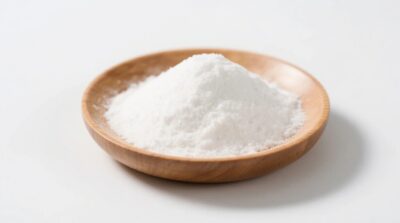
Maltitol Powder
Maltitol powder is a sugar alcohol from non-GMO corn starch with about 90% of…
Related Posts


