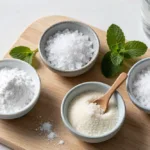
Our maltitol powder is a high-purity sugar alcohol (polyol) produced by catalytic hydrogenation of maltose derived from non-GMO corn or wheat starch (gluten-free processed). With ≥98% maltitol content and a sweetness profile at 90% that of sucrose, it delivers a clean, sugar-like taste without the bitter aftertaste common in other polyols.
Unlike artificial sweeteners, maltitol is heat-stable, non-cariogenic, and suitable for “sugar-free” and “no added sugar” labeling—making it a preferred choice for premium confectionery, low-glycemic foods, and clean-label bakery applications.
Note: Our wheat-derived version undergoes rigorous gluten removal and testing (<5 ppm), but we also offer a corn-based option for strict gluten-free requirements.
What Is Maltitol?
Maltitol (C₁₂H₂₄O₁₁) is a disaccharide alcohol formed by reducing maltose. Our maltitol powder is manufactured under protocols using food-grade hydrogenation catalysts, followed by crystallization and drying—without synthetic solvents, bleaching agents, or chemical modification.
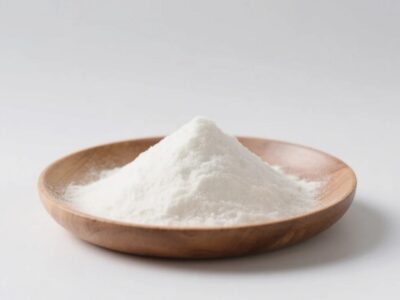
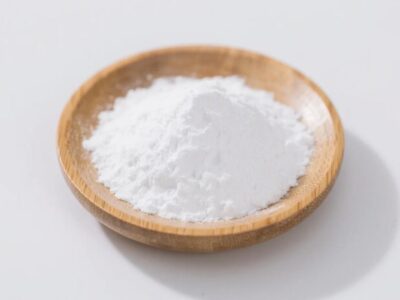
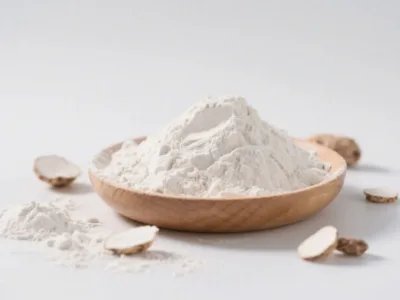
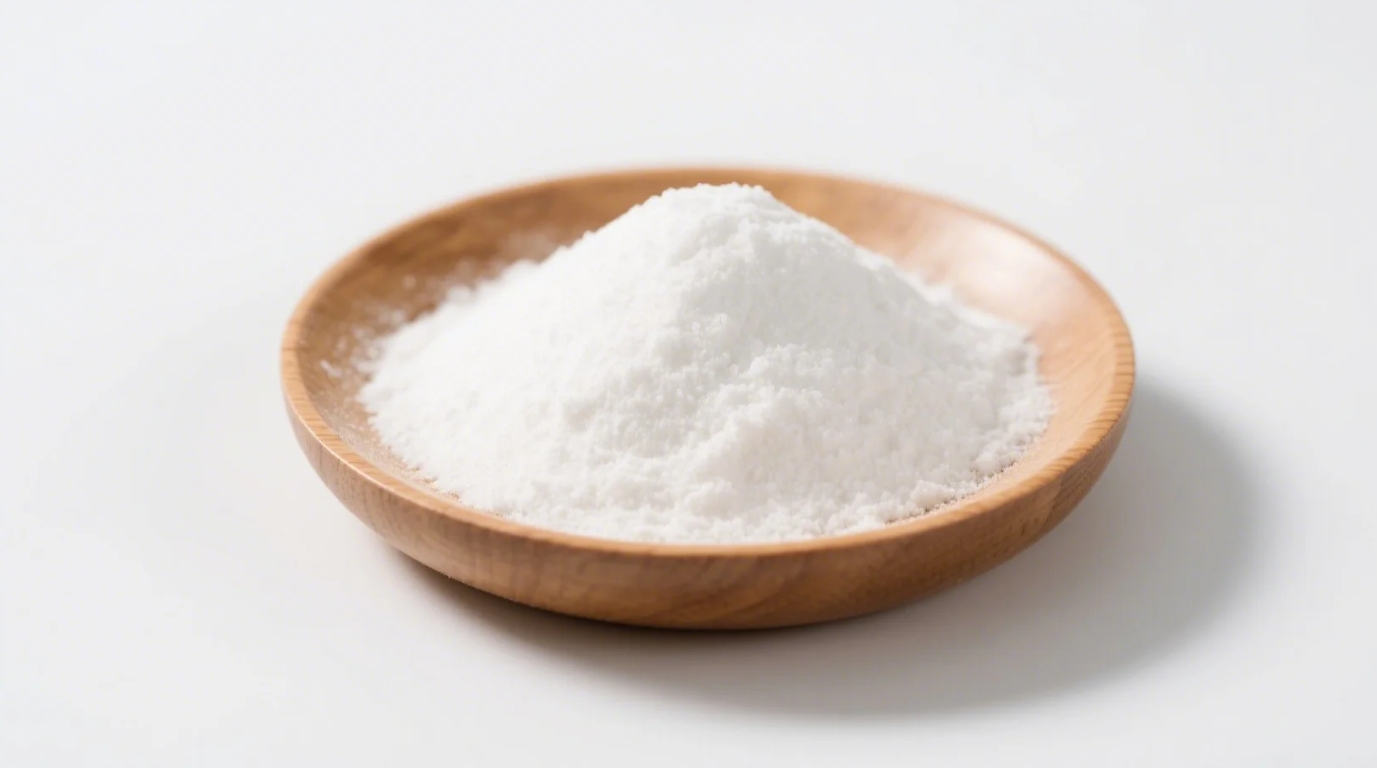
The final product appears as fine, white, free-flowing crystals with excellent solubility and minimal hygroscopicity, ideal for dry and semi-moist formulations.
Also Known As: Names and Synonyms in the Trade
Maltitol appears under several names in specifications, pharmacopoeial texts and supplier literature, and the term a document uses can signal whether the crystalline powder or the syrup is meant. The list below covers the names that come up most often in enquiries, technical data sheets and customs paperwork.
- Maltitols (E 965(i) / INS 965, CAS 585-88-6) – the EU name for the additive family with the specific entry for the crystalline product, quoted with the Codex INS number and the CAS registry number on specifications and customs paperwork
- 4-O-α-D-Glucopyranosyl-D-glucitol – the systematic chemical name carried in JECFA-style monographs and on pharmacopoeial datasheets
- Crystalline maltitol – the trade designation for the powder grade, used to separate it from the syrup
- Maltisorb – a trade name for crystalline maltitol that is still found in formulation guides and older supplier literature
- Amalty – the trade name under which crystalline maltitol was first commercialised in Asia, still quoted in some enquiries
- Disaccharide polyol (sugar alcohol) – the class description used where a document names the group rather than the individual substance
The name on the label has to agree with the name on the specification sheet, and the specification has to state the dry basis and the assay method. Maltitol powder and maltitol syrup are separate articles under the same E-number family, so the grade, the dry-basis content and the botanical source have to be lined up before the two are treated as equivalent.
Technical Specifications
| Parameter | Maltitol Powder |
|---|---|
| Source Options | Corn starch or wheat starch (gluten-removed) |
| Appearance | White, crystalline, free-flowing powder |
| Odor & Taste | Odorless; sweet, cooling effect (mild) |
| Maltitol Content (Dry Basis) | ≥98.0% (HPLC method) |
| Moisture Content | ≤0.5% |
| pH (10% solution) | 5.0 – 7.0 |
| Specific Rotation | +128° to +132° |
| Melting Point | 148 – 152°C |
| Bulk Density | 0.60 – 0.80 g/mL |
| Particle Size (D[90]) | ≤250 µm (standard); custom milling available |
| Residual Sugars (Glucose + Maltose) | ≤1.0% |
| Ash Content | ≤0.1% |
| Shelf Life | 36 months (stored sealed in cool, dry place) |
| Heavy Metals (Maximum Limits) | |
| – Lead (Pb) | ≤0.1 mg/kg |
| – Arsenic (As) | ≤0.1 mg/kg |
| – Cadmium (Cd) | ≤0.05 mg/kg |
| – Mercury (Hg) | ≤0.01 mg/kg |
| Microbiological Criteria | |
| – Total Plate Count | ≤1,000 CFU/g |
| – Yeast & Mold | ≤100 CFU/g |
| – Escherichia coli | Absent in 1 g |
| – Salmonella spp. | Absent in 25 g |
| – Listeria monocytogenes | Absent in 25 g |
| Allergen Status | Corn version: Gluten-Free, Soy-Free, Dairy-Free Wheat version: Processed to <5 ppm gluten (not certified GF unless specified) |
| Certifications | Non-GMO Project Verified, Kosher, Halal (available), Gluten-Free Certified (corn version only) |
Analytical methods: HPLC per USP/EP standards. Permitted in the EU under Regulation (EC) No 1333/2008 (E 965), with purity criteria in Regulation (EU) No 231/2012; in the United States maltitol is self-affirmed GRAS and listed in FDA’s Substances Added to Food inventory; JECFA has assigned an ADI of “not specified”.
Sourcing, Certification and Regulatory Status
| Jurisdiction / Standard | Regulatory status | Legal name | Notes |
|---|---|---|---|
| European Union | Authorised sweetener (E 965) | Maltitols (E 965(i) maltitol; E 965(ii) maltitol syrup) | Listed in the Union list in Annex II to Regulation (EC) No 1333/2008 as a Group IV polyol, with purity criteria in Regulation (EU) No 231/2012; the crystalline material is the E 965(i) entry while the syrup is a separate entry, so the entry as well as the food category has to be checked. EFSA’s re-evaluation of the maltitols is ongoing, and foods carrying more than 10% added polyols fall under the laxative warning requirement of Regulation (EU) No 1169/2011. |
| United States | GRAS (self-affirmed) | Maltitol | Maltitol is used in the US on the basis of self-affirmed GRAS status rather than through a listed food-additive regulation; US labelling counts it at 2.1 kcal/g, and it is one of the sugar alcohols named in 21 CFR 101.80(c)(2)(ii)(A), the provision that sets the conditions for a “does not promote tooth decay” claim. |
| Japan | Permitted food additive | Maltitol | Food additives in Japan are controlled under the Food Sanitation Act, which requires a substance to appear on the list of designated additives or on the List of Existing Food Additives; maltitol is used as a sweetener and bulking agent in sugar-reduction formulations, and each import consignment passes through the MHLW quarantine-station notification. |
| Codex Alimentarius | Food additive; permitted in accordance with GMP | Maltitol (INS 965(i)) | JECFA has evaluated maltitol and maltitol syrup and assigned both an ADI “not specified”; the polyols sit in the General Standard for Food Additives (CXS 192-1995), where they are permitted in food in general, in accordance with good manufacturing practice. |
Compliance turns on the dry-basis content, the residual sugars and the microbiological limits rather than on the naming convention, so those are the figures to line up when comparing offers. Confirm the legal name, the botanical origin declared on the label and the permitted category with the destination market before the first shipment.
Applications
- Sugar-Free Chocolate: Prevents bloom, provides smooth mouthfeel
- Baked Goods: Retains moisture, browns like sugar (Maillard reaction limited)
- Hard & Soft Candies: High solubility enables clear, non-sticky textures
- Chewing Gum & Lozenges: Long-lasting sweetness, dental health claims
- Nutritional Bars & Tablets: Binder and sweetener in one
- Ice Cream & Frozen Desserts: Lowers freezing point, improves scoopability
Format and Grade Selection
Two questions are settled before a specification is agreed: which botanical source, and which grind. Both follow from the formulation and from the allergen policy rather than from the label.
- Corn-starch derived – the default route for gluten-free and allergen-sensitive formulations, where the gluten-free certificate has to stand without further processing evidence
- Wheat-starch derived – the route where the gluten has been removed to below 5 ppm, chosen when the source is set by the supply chain and the gluten statement can be supported batch by batch
- Standard grind – the free-flowing crystal at D[90] of 250 µm or below, for confectionery, chocolate and dry blends where flow and dissolution rate matter
- Custom-milled fine powder – the route into tableting and dry mixes, where a tighter particle-size distribution controls segregation and compressibility
- High-purity crystallised grade – chosen when the dry-basis content has to stay at 98.0% or above and the residual sugars below 1.0%
Handling Note: Maltitol behaves like sugar in bulk but not in moisture, so a 1:1 swap usually means trimming the added liquid, and the powder still belongs in moisture-protective packaging.
Tell us the source, the application and the process when requesting a sample, and we will quote the source and the grind that fit it. The figures in the specification table above are the ones the certificate of analysis is written against.
Why Choose Our Maltitol?
We source only from certified farms and use dedicated production lines to prevent cross-contamination. Our hydrogenation process avoids nickel residues through advanced filtration, and every batch is tested for purity, allergens, and heavy metals.
We clearly label the botanical origin (corn or wheat) to support your compliance and consumer transparency needs.
Available packaging:
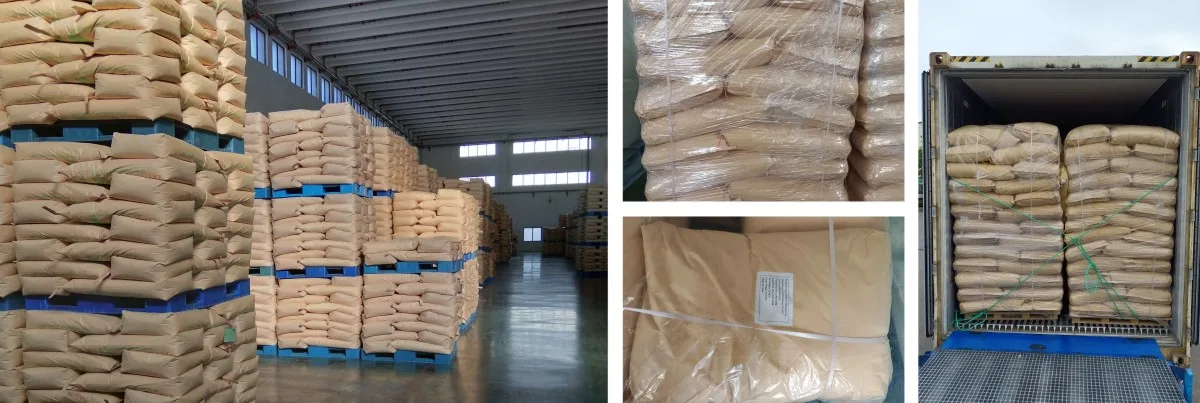
- 25 kg multi-wall paper bags with PE liner
- 500 kg–1,000 kg FIBCs for industrial users
- Custom particle size (fine or coarse grind) upon request
FAQs
Q: Is maltitol powder suitable for low-glycemic diets?
A: Maltitol has a moderate glycemic index (GI ≈ 35–50), causing a slower blood sugar response compared to sucrose. It may be used in reduced-sugar formulations; individuals with diabetes should consult a healthcare professional.
Q: How does maltitol compare to erythritol or xylitol?
A: Maltitol has higher solubility and mimics sugar’s texture more closely, but has slightly higher calories.
Q: Can it replace sugar 1:1 in recipes?
A: Use at a 1:1 ratio for sweetness, but reduce liquid content slightly due to maltitol’s hygroscopicity.
Q: Does it cause digestive discomfort?
A: Consumed in excess (u0026gt;20g/day), it may cause laxative effects—common with sugar alcohols.
Packing