
In the world of cooking and baking, we all have our go-to ingredients. Flour, sugar, butter… but what if there was one humble powder that could transform your dishes, support your health, and simplify your time in the kitchen? Enter organic potato starch powder.
Potato starch is the starch washed out of the potato, not dried potato flour, and that distinction explains most of its behaviour. What is left after washing is a neutral powder with almost no protein, no fiber and no potato flavor, which is why it can be stirred into a vanilla custard without changing how the custard tastes.
Often overshadowed by its more famous cousin, cornstarch, potato starch is a true kitchen hero. It’s a fine, white powder made from dried, ground potatoes. But unlike the processed, conventional starches you might find, the organic version is a pure, clean-label product free from GMOs and pesticides.

Why is it your new secret weapon?
First, for gluten-free bakers, it is a dependable upgrade. Potato starch gives baked goods a light, airy crumb that other flours can’t replicate. Say goodbye to dense, heavy bread and hello to fluffy cakes and delicate pastries.
The reason is granule size and water binding. Potato starch granules are among the largest of the commercial starches and swell to several times their original volume, so a small amount thickens a large volume of liquid. The granules also carry phosphate groups that keep the cooked paste clear and slow the retrogradation that turns other starch gels cloudy and watery.
Potato starch gelatinizes at a lower temperature than cornstarch, usually between 58 and 65 degrees C, so it thickens earlier in the cook and needs less time at a boil. That is useful in a pastry cream or a fruit filling where a long boil would drive off flavor.
How Much Potato Starch to Use
For sauces, gravies and soups, 2 to 4 percent w/w of the liquid weight is a typical starting point, and the starch is slurried in cold water at roughly one part starch to two parts water before it goes into the hot liquid. Adding dry powder straight to a hot pan creates lumps that no amount of whisking will remove.
In a gluten-free flour blend, potato starch usually makes up 10 to 20 percent of the total flour weight, paired with a whole-grain flour such as brown rice or sorghum and a binder such as xanthan gum. Above that range the crumb starts to feel gluey.
Second, it’s an incredible thickener. Whether you’re making a silky smooth gravy, a rich stew, or a glossy fruit pie filling, a small amount of potato starch works wonders. It thickens without leaving a chalky residue and creates a beautiful, translucent finish. And unlike cornstarch, it holds up better to freezing and thawing, making it perfect for meal prep.
Potato Starch Compared with Cornstarch and Tapioca
Cornstarch is the closest substitute and the least similar in performance. It gives a shorter, more opaque gel, it thins out when a sauce is boiled for a long time or stirred hard, and it breaks down in acidic mixtures and after freezing. Potato starch holds viscosity through freezing and thawing and stays stable in an acidic fruit filling, which makes it the safer choice for pies that will be frozen. Our comparison of organic potato starch powder vs cornstarch sets the two side by side.
Tapioca starch is the other common swap. Tapioca is clearer and gives a longer, more elastic texture that suits fruit pies, while potato starch sets firmer and holds its shape.
Beyond its culinary uses, organic potato starch has a secret health benefit: it’s a resistant starch. This type of starch passes through your small intestine undigested, acting as a prebiotic that feeds the good bacteria in your gut. A healthy gut microbiome is linked to improved digestion, better immunity, and even enhanced mood.
Cooking changes that picture. Most of the resistant starch in raw potato starch is lost once the starch is fully gelatinized, so a sauce thickened with it delivers far less than a spoonful of raw powder. Cooked and then chilled potato, potato salad for instance, forms resistant starch again as the gel re-organizes, which is why the fiber figure depends on how the food is served. For a fuller treatment, see resistant starch and gut health.
Buying, Storing and Labeling Potato Starch
Organic potato starch is hygroscopic. It takes up moisture from the air, so unopened bags are stored below 25 degrees C and away from strong odours, and opened bags are resealed quickly; a starch that has taken on water will cake and will not disperse cleanly.
The procurement questions are the same as for any starch: the organic certificate covering the site, a non-GMO statement, the specification sheet and a certificate of analysis per lot covering moisture, pH, viscosity and granule size. Our notes on how to choose the best organic potato starch list what to check before a grade is approved.
From making the crispiest fried chicken to creating the perfect gluten-free dough, organic potato starch is the versatile, health-conscious ingredient your pantry has been waiting for. It is a simple change that improves the texture of almost everything it touches, which is why professional chefs and home bakers alike keep a bag within reach.
About Our Organic Potato Starch
BIOSTARCH supplies organic potato starch powder produced from non-GMO potatoes and certified to organic standards. It is a fine white powder with a neutral taste and high water-binding capacity, supplied in 25 kg bags and bulk quantities for bakeries, sauce makers and frozen-food producers.
Each lot ships with a certificate of analysis, a specification sheet and the organic documentation your quality team will need, and sample quantities are available for trials.
Recommended Products
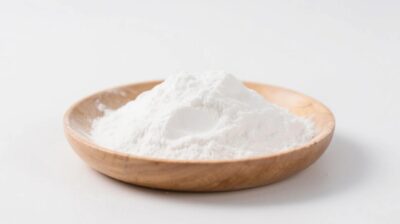
Organic Potato Starch Powder
Organic potato starch powder is a certified-organic native starch from non-GMO potatoes. With high…
Related Posts


